
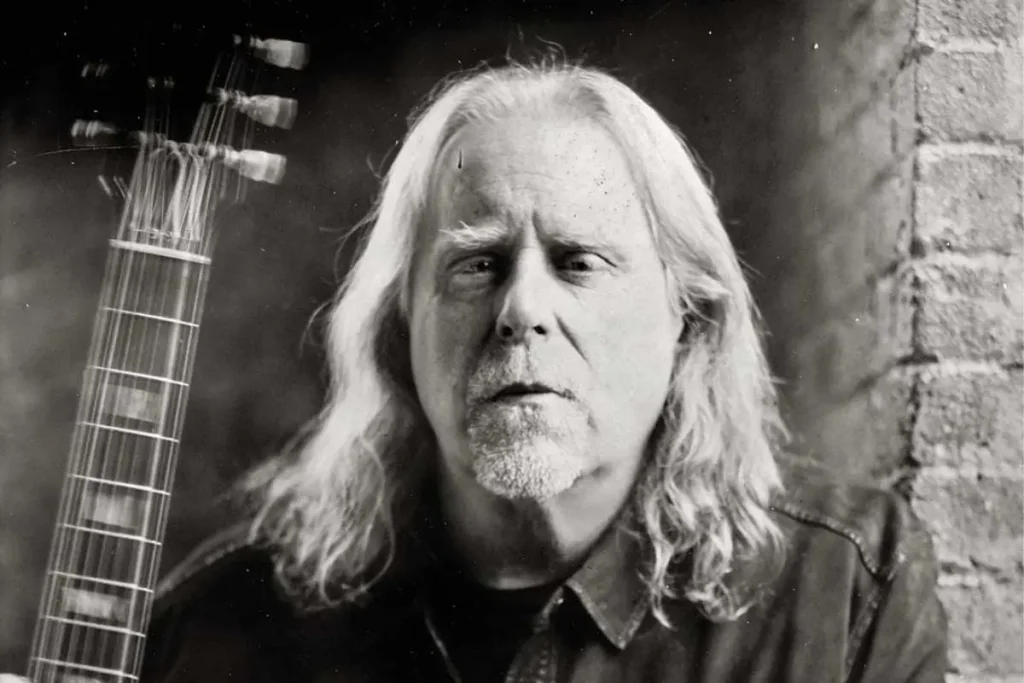
Warren Haynes has spent decades being “the guy who can burn” – with Gov’t Mule, the Allman Brothers Band, and seemingly every jam-friendly stage that will hold a cranked amp. Yet in a revealing interview with journalist Amy Harris, he points to an unglamorous truth: progress is often subtraction. He talks about listening back to old recordings and thinking, “what’s the hurry?” and then landing on a grown-up north star: slow down, make each note count, and let silence do some of the talking.
“When I listened to tapes, recordings of me playing ten years ago, 20 years ago, 30 years ago, whatever it is, I always think, what’s the hurry? Why are you playing so many notes?”
Warren Haynes, interview by Amy Harris
This is not a cozy “practice more” platitude. It is an edgy critique of modern guitar culture: the internet rewards speed, but audiences remember phrasing. Haynes is basically saying the same thing blues masters have been saying forever, only louder and with better overdrive.
From guitar “heroes” to guitar “ancestors”
Haynes name-checks his early holy trinity: Eric Clapton (in Cream), Jimi Hendrix, and Johnny Winter. That is a crash course in tone, attitude, and high-voltage blues-rock vocabulary. Each of those players built a signature voice from older blues language, then pushed it through bigger amps and wilder arrangements.
Clapton’s long arc as a career steeped in blues tradition and guitar craft helps explain why Cream-era fire could later evolve into spacious, vocal phrasing.
The enduring role of Hendrix as a pioneering guitarist and songwriter matters here because innovation is not the same thing as playing more notes.
Johnny Winter as a blues-rooted virtuoso and bandleader is a reminder that speed can be part of the story – but it is rarely the whole story.
Then Haynes talks about “connecting the dots” by moving backward: B.B. King and Albert King as the source code behind much of rock guitar. That backward step is where many players level up. You stop chasing licks and start chasing meaning.
The “fewer notes” idea is not anti-technique – it’s anti-noise
Haynes’ point is not “never play fast.” It is “stop being compulsive.” Many guitarists play flurries because they are nervous about space. The uncomfortable truth: space exposes your time feel, your vibrato, and whether your note choice actually says anything.
His solution is almost brutal in its simplicity: make each note more meaningful. That means targeting dynamics, timing, and articulation first. Speed becomes optional seasoning, not the meal.
A quick reality check: what listeners actually hear
Most non-guitarists cannot tell you what scale you used. They can tell you if the solo “spoke,” if it built tension, and if it resolved like a good sentence. B.B. King understood this so well that his phrasing often feels like a vocalist taking a breath at exactly the right moment.
The Blues Foundation’s Hall of Fame entry positions B.B. King as one of the central architects of modern blues guitar, which fits Haynes’ claim that fewer notes can make more music.

Why B.B. King still embarrasses busy players
B.B. King’s magic was not density. It was identity. A single note with the right vibrato and timing can be more recognizable than an entire run of “correct” pentatonics.
Even a high-level summary of B.B. King’s life and impact on blues and popular music shows how broadly his approach shaped the guitar world, reinforcing why Haynes points to him as a model of economy.
Try this mental exercise the next time you solo: imagine you only get to play five notes total. Not five per bar – five for the entire statement. Your brain will suddenly care about phrasing like it is rent money.
Practical “B.B. mindset” moves you can steal today
- Hold notes longer than feels comfortable (your band will thank you).
- Vibrato is not decoration – it is the emotional content.
- Answer yourself: play a short phrase, then reply with a variation.
- Make silence rhythmic: rests can swing harder than notes.
Haynes’ provocative claim: Albert King may have shaped rock guitar more than anyone
Haynes says Albert King likely influenced rock guitar playing more than any other blues guitarist because his style was “outlandish” and hard to trace to earlier players. That is a spicy take, but it is not crazy. Albert’s wide bends, dramatic minor-to-major ambiguity, and razor phrasing are basically a blueprint for emotional lead guitar in rock.
The towering status and influence of Albert King supports the idea that his vocabulary became a deep reservoir for later generations.
Stax Records’ Albert King artist page further situates him in the Memphis soul-blues universe that produced enduring recordings and a distinct style, which helps explain why his phrasing feels like a separate branch of the family tree.
Connecting the dots: influence flows upstream and down
Haynes’ “dots” metaphor is important. Rock guitarists often learn in the wrong order: they start with rock gods, then eventually find the blues kings. When you reverse-engineer the chain, you stop copying surfaces and start borrowing foundations.
| Haynes’ early obsession | What it can teach you | Where the “fewer notes” lesson shows up |
|---|---|---|
| Clapton (Cream) | Melodic blues phrasing in loud bands | Motif-based solos, not endless runs |
| Hendrix | Rhythm and lead as one language | Leaving room for chords to speak |
| Johnny Winter | Precision and fire without losing blues feel | Fast passages that still “say” something |
| B.B. King | Vibrato, timing, space | One note can be a chorus |
| Albert King | Big bends, bold intervals, drama | Short phrases with maximum impact |
Where the Allman Brothers fit in: melody, twin guitars, and patience
Haynes also cites The Allman Brothers Band with Duane Allman and Dickey Betts as major influences. That matters because ABB lead guitar is not just “blues licks over changes.” It is thematic, interlocking, and often surprisingly restrained for a band associated with long improvisations.
Dickey Betts’ lyrical, song-forward lead work is a reminder that ABB’s vocabulary includes melodic composition, not only blues vocabulary.
In practice, the Allman lesson is this: build a solo like a composition. If it cannot be sung back, it probably has too many notes.
The modern trap: guitar content that rewards speed over story
Here is the uncomfortable part. Many players learn to “solo” by collecting bite-sized tricks optimized for attention: a lick, a sweep, a tap, a faster lick. It is not that these tools are bad – it is that the format discourages the slower skills like tone control, phrasing, and developing motifs over time.
Broader culture and songwriting context for guitarists can be a helpful counterweight to algorithm-driven virtuosity.
If you want to sound like a musician instead of a demo, you need to practice the unsexy things: time feel, bends that land in tune, and the courage to stop playing.
The “slow down” practice routine (15 minutes, no excuses)
- One-string solo: improvise for two minutes on a single string. Focus on timing and bends.
- Two-note call-and-response: play a two-note phrase, then answer it with another two-note phrase.
- Vibrato audit: sustain a note for four beats, add vibrato only on beat three.
- Space challenge: after every phrase, force a full bar of rest.
Gov’t Mule and the art of being heavy without being busy
Haynes’ current-day identity is inseparable from Gov’t Mule, a band that can be dense, loud, and improvisational without turning every moment into a technical flex. The best Mule solos feel like pressure building in a pipe, not like someone sprinting through a scale pattern.
And for the completists: Haynes also maintains an official site that centralizes his projects, which helps explain how his phrasing philosophy travels across bands and contexts.
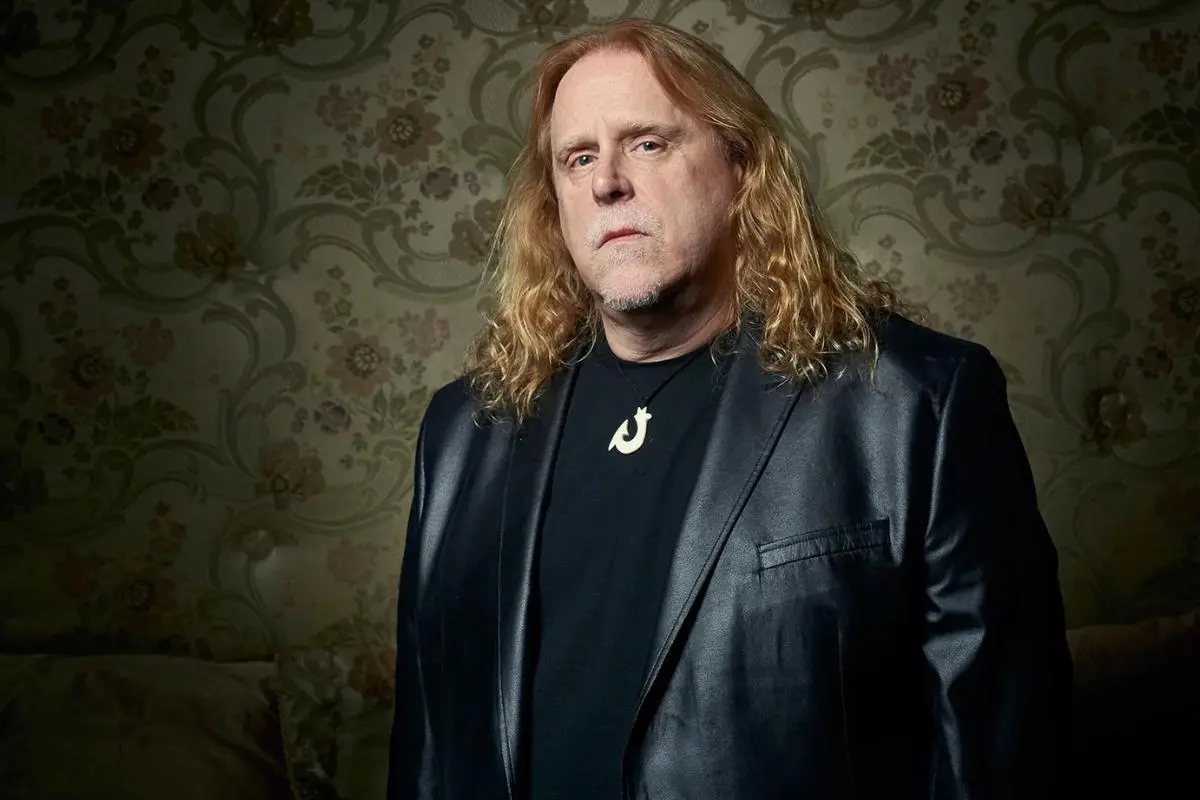
What “meaningful notes” actually means (and how to hear it)
A meaningful note is not mystical. It is a note that lands with intention: in tune, in time, and with a dynamic shape that fits the band. It is also a note that acknowledges what came before it and implies what comes next.
Listen to your own recordings the way Haynes does. If you hear constant motion, ask why. Are you building intensity, or are you filling space because silence feels risky?
“If you can make more music with fewer notes. It’s always the better option.”
Warren Haynes, interview by Amy Harris
Conclusion: the most rebellious move is restraint
In a guitar world that often confuses difficulty with depth, Haynes’ message lands like a dare: slow down and expose your musical soul. Study your heroes, but then study their heroes, and you will discover the real tradition is not speed. It is feel, phrasing, and the patience to make one note sound like a whole story.


