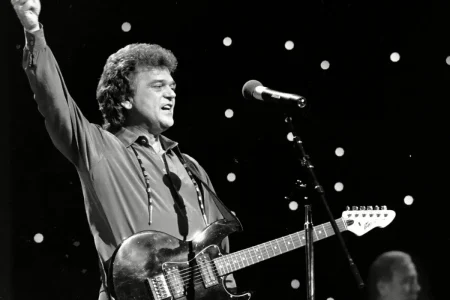
Phil Collins spent the 1980s being accused of many things: being everywhere, being too polished, and turning rock drama into adult-contemporary comfort food. Then he released “A Groovy Kind of Love” and proved something even more unsettling: sometimes the gentlest record is the most ruthless hit. His 1988 cover, built on a simple electric piano and a voice that sounds like it’s leaning in closer, became a massive global success and a defining moment from the Buster soundtrack of “A Groovy Kind of Love”.
“When I’m feeling blue, all I have to do is take a look at you.”
Phil Collins, “A Groovy Kind of Love” (as released on the Buster soundtrack)
From swinging ’66 to sleek ’88: the song’s two big lives
“A Groovy Kind of Love” did not start as a Phil Collins song at all. It was written by Carole Bayer Sager and Toni Wine, two Brill Building era songwriters whose work helped define pop’s professional, hook-first craft.
The first famous recording came from The Mindbenders in 1965-66, landing as a bright, romantic single that still carries the era’s optimistic snap. That original version reached No. 2 on the U.S. Billboard Hot 100, which is exactly the kind of “almost” that makes a later No. 1 cover feel like an alternate-history correction.
Why Buster mattered more than people admit
Collins’ version was issued as part of the Buster soundtrack, tied to the British crime film about Buster Edwards and the Great Train Robbery fallout.
Here’s the provocative claim: without the film, the song might still have been a hit, but it probably would not have felt inevitable. Soundtracks in the late ’80s were a cheat code for radio dominance, letting a single arrive with a built-in mood, storyline, and marketing runway.
Soundtrack placement as emotional branding
“A Groovy Kind of Love” isn’t a plot song. It’s an atmosphere song. In a movie context, atmosphere becomes identity – and identity is what makes radio program directors comfortable adding a record that is slow, soft, and unapologetically sentimental.
The chart story: a quiet takeover
In the UK, Collins’ “A Groovy Kind of Love” hit No. 1 on the Official Singles Chart and held the top spot for two weeks, confirming it wasn’t just a U.S. phenomenon.
Across the Atlantic, the single reached No. 1 on the U.S. Hot 100 and also topped the Adult Contemporary chart, the format where romantic restraint tends to print money.
If you want to understand the scale of this record’s reach, look at its international footprint: it also charted strongly in markets like Germany, where it ranked in the top tier of the singles listings.

The arrangement: why it sounds “simple” but wins anyway
Collins’ rendition is a masterclass in controlled minimalism. The central instrument is a steady, hymn-like keyboard figure, leaving the vocal to carry the intimacy, the phrasing, and the payoff.
What changed from The Mindbenders’ version?
- Tempo and touch: Collins slows the emotional metabolism. The song breathes more, and the pauses become part of the hook.
- Less band, more confession: The original is a classic mid-’60s pop performance; Collins makes it feel like a private promise overheard.
- Production aesthetic: Late-’80s sheen, yes – but the core is deliberately under-busy, which is why it ages better than many “bigger” ballads.
Instrument nerd corner: the “anyone can play it” illusion
On piano, the song sits in comfortable, singer-friendly terrain, which is one reason it became a go-to wedding slow dance and lounge standard. Published sheet music commonly places it in an approachable pop key and structure, reinforcing how performable it is for working players.
But performance ease is not the same as impact. The sustained chords demand consistency, and the vocal requires a kind of calm confidence that is harder than belting.
Phil Collins as a lightning rod: why this hit annoyed the “cool police”
By 1988, Collins was the ultimate mainstream target: a musician with real chops who chose mass appeal, then collected the spoils. That tension helped create a backlash narrative that still follows him, even as listeners keep returning to the songs.
“A Groovy Kind of Love” poured gasoline on that cultural argument because it wasn’t trying to be edgy. It was trying to be effective – and it was. If your definition of rock credibility requires discomfort, this song is practically a prank.
Songwriting DNA: Brill Building craft in a late-’80s frame
Bayer Sager and Wine wrote a lyric that is intentionally plainspoken, almost conversational. That’s the Brill Building trick: make the language feel obvious so the feeling lands as personal.
Rights databases and repertory listings attribute the composition to the original writers, underscoring that Collins’ triumph here is interpretive, not authorship-based.
A love song with no plot twist (and that’s the twist)
There’s no dramatic turn, no betrayal, no grand metaphor. The hook is the commitment to uncomplicated devotion. In an era packed with power ballads and glossy angst, that simplicity reads as either corny or brave – and the charts sided with brave.
How to recreate the vibe (without sounding like a karaoke clone)
If you play keys, guitar, or sing, this track is a useful study in how to do more with less. Here’s a practical blueprint.
For keyboard players
- Keep the dynamics narrow: aim for steady warmth, not theatrical swells.
- Pedal discipline: sustain enough to glue chords, but clear on changes so it doesn’t smear.
- Let the vocal lead: the accompaniment is a floor, not a spotlight.
For singers
- Under-sing the verses: save intensity for the “groovy kind of love” payoff.
- Phrase like speech: avoid over-vibrato; the charm is directness.
- Commit to sincerity: irony kills this song on contact.
The music video factor: calm visuals, maximum familiarity
Part of the record’s stickiness is that it arrived as a complete, easily replayed package in the MTV era. The official music video has remained widely accessible and helps explain how the song embedded itself into late-’80s pop memory.
What the hit ultimately proved
Collins did not “improve” The Mindbenders so much as he re-framed them for a different emotional economy. In 1966, “groovy” was youthful slang; in 1988, it became a gentle throwback, a safe word for romance that didn’t demand cynicism.
And that’s the uncomfortable genius: “A Groovy Kind of Love” is a No. 1 built on restraint. It wins by refusing to fight for attention, then quietly taking it all.

Conclusion
“A Groovy Kind of Love” is one of Phil Collins’ most deceptively powerful records: a cover that out-charted its original in key places, a soundtrack single that felt personal, and a minimalist production that made sincerity sound modern. Love it or roll your eyes, it remains proof that pop’s softest punch can still land hardest.