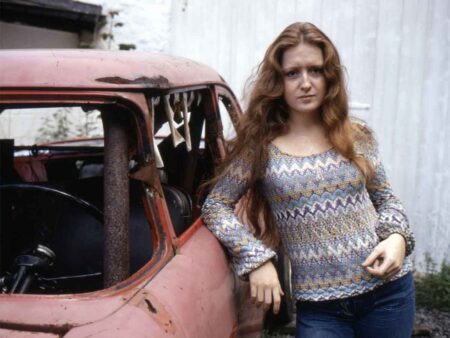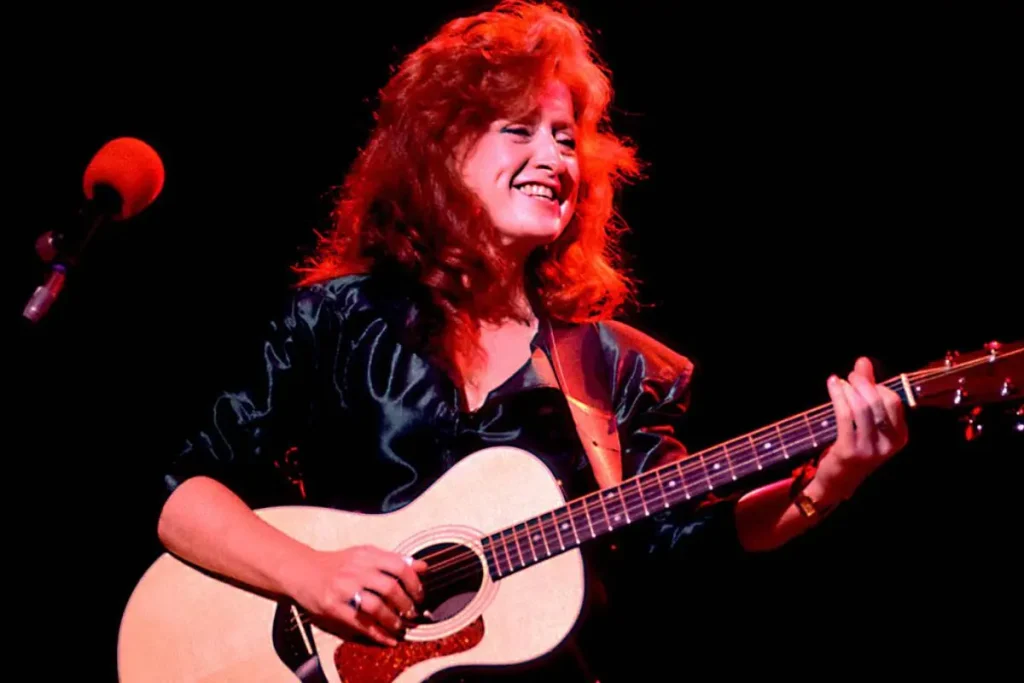
Bonnie Raitt likes to say she did not pick up the guitar as a “girl in rock”. She picked it up because she was obsessed with voices and songs, and the instrument was simply her way inside them. Gender, at least in her mind, came second.
Listen closely to the heroes she rattles off in interviews and you get a very different story from the usual “guitar god” origin myth. Quaker meetings, Joan Baez, obscure 60s blues women, streetwise legends like Memphis Minnie and Sippie Wallace, and the churchy grind of Aretha Franklin and Ray Charles all collide in her playing. That mix is why B.B. King could look at this red haired folk kid and decide she was the best slide player working.
A Quaker kid with a Joan Baez obsession
Raitt grew up in a musical, politically minded family shaped by Quaker values, where songs and social conscience were part of the same conversation. At Radcliffe College she planned on a life in African studies and activism, not in smoky bars. That changed when blues promoter Dick Waterman pulled her into his orbit and introduced her to Delta giants like Son House and Mississippi John Hurt, convincing her to take time off school just to play and learn.
Her first romance, though, was not with a grizzled bluesman but with Joan Baez. Raitt has recalled teaching herself guitar because she was in love with Baez’s voice and noticed, crucially, that Baez was also a Quaker. In a single crush you can see the whole blueprint: music as moral force, folk technique married to protest, and a woman leading the song without apologizing for it, something she would later liken to the “queen of slide guitar” energy she came to embody.
That mix of spirituality and stubbornness mattered. Instead of waiting for permission to be “a female guitarist”, teenage Bonnie simply started copying the records she loved. The freckled kid with the cheap Stella was already training the ears that would later steer one of the most expressive slide tones in American music.
No lessons, no YouTube, just worn out records
Raitt took piano lessons as a child but never studied guitar formally. She has described her entire approach as listening and mimicking, learning from the way Fred McDowell, Son House and Robert Johnson moved through chords and turnarounds, then reverse engineering it on her own instrument. There was no slow motion video, no tabs, and she has joked that there was certainly no YouTube, so she had to do it all by ear in a relentless process of digging in deep.
By the late 1960s that bedroom practice had consequences. In Cambridge, Waterman began putting her on bills with the very people whose records she had been wearing out, including Son House, Fred McDowell and Sippie Wallace. Within a few years she was opening shows for them, then heading to a deserted Minnesota summer camp to cut her first album live to tape, already confident enough to put a Robert Johnson tune on side one.
If you are an older player coming back to the instrument, that origin story should feel both terrifying and liberating. Terrifying, because ear training is hard work. Liberating, because it proves you do not need pristine technique or a conservatory degree to play serious music. You need a few records and stubborn attention.
- Pick one slow country blues track and learn just eight bars entirely by ear before you touch a tab.
- Sing every lick back to yourself before you find it on the fretboard.
- Only when you can hum the solo in time should you let your fingers chase it.
This is how Raitt learned, and it is exactly why her slide lines sound like another voice, not a scale exercise.
Race, “trespass” and giving herself permission to play the blues
As a young white woman falling in love with Black blues, Raitt understood there was a line between influence and theft. She has said that early folk revivalists like Dave Van Ronk, John Hammond Jr. and the Minnesota trio Koerner, Ray & Glover were the first musicians who made her feel it was actually acceptable for a white kid to play blues, that she was not trespassing on sacred ground if she did the homework and showed respect.
Respect, in her case, meant more than name checking the masters. She traveled, toured and recorded with elders such as Sippie Wallace, then used her growing clout to push for better treatment of old blues and R&B players and to campaign for fairer royalties inside the industry. In later years she would speak bluntly about how many of her heroes had been robbed, and used her platform to argue that activism without financial justice is just posture.
That is an uncomfortable stance if you are a white blues fan who just wants to play licks and forget the history. Raitt’s answer was harsher and more honest: if you are going to profit artistically from Black music, you had better be prepared to show up for Black artists in the real world as well.
The women behind Bonnie’s blues
Barbara Dane & Judy Roderick: white women who refused to behave
Raitt likes to point out that when she was coming up, there were only a handful of white women visibly singing real blues. One was Barbara Dane, a Detroit born firebrand whose career fused jazz, folk, blues and radical left politics. Dane turned down major label opportunities, traveled to revolutionary Cuba and even performed in North Vietnam, treating music as a weapon against racism and war as much as a job.
Another was Judy Roderick, a Colorado trained singer who cut searing folk blues albums for Columbia and Vanguard in the mid 60s. Allmusic’s William Ashford calls her one of the finest white folk blues singers of that era, with records that swung between delicate ballads and vicious, funny revenge songs. When Raitt says these two women “knocked me out”, she is tipping her hat to a model of female artistry that was tough, political and completely uninterested in pleasing polite society.
Memphis Minnie & Sippie Wallace: blues queens with knives in their handbags
Two of Raitt’s deepest heroes were Memphis Minnie and Sippie Wallace, women whose lives would have made most rock autobiographies look tame. Minnie was a ferocious guitarist and songwriter whose street performances, bawdy lyrics and unapologetic toughness carved out space in a scene that barely tolerated women at all. Raitt has said she was fascinated by stories of Minnie busking on the streets and even disguising herself as a man when that was the only way to get paid without being harassed.
Sippie Wallace, meanwhile, came roaring back from obscurity in the 1960s with songs like “Women Be Wise” and “Mighty Tight Woman”, writing blues that told other women exactly how to handle unreliable men. The Michigan Women’s Hall of Fame notes that Wallace’s later career included festival triumphs and a long partnership with Raitt, who recorded her songs, produced a comeback album and helped bring her music to a new generation.
For a young Bonnie, these were not quaint museum pieces. They were living proof that a woman in the blues did not have to play nice, and that swagger and vulnerability could live in the same voice and the same guitar solo.
Aretha, Ray and the art of self accompaniment
Raitt has also singled out Aretha Franklin and Ray Charles, not just as singers but as pianists who could accompany themselves with terrifying authority. That detail matters. It taught her that the instrument is not background decoration for a voice, it is a second mind that can argue with, tease or comfort the lyric in real time.
When you hear her slide guitar wrap around a vocal phrase, that is the lesson in action. The band can be rocking, the lyric can be tender or furious, and the guitar is still having its own conversation with the song rather than just filling the gaps.
From outsider to first woman with a Fender signature
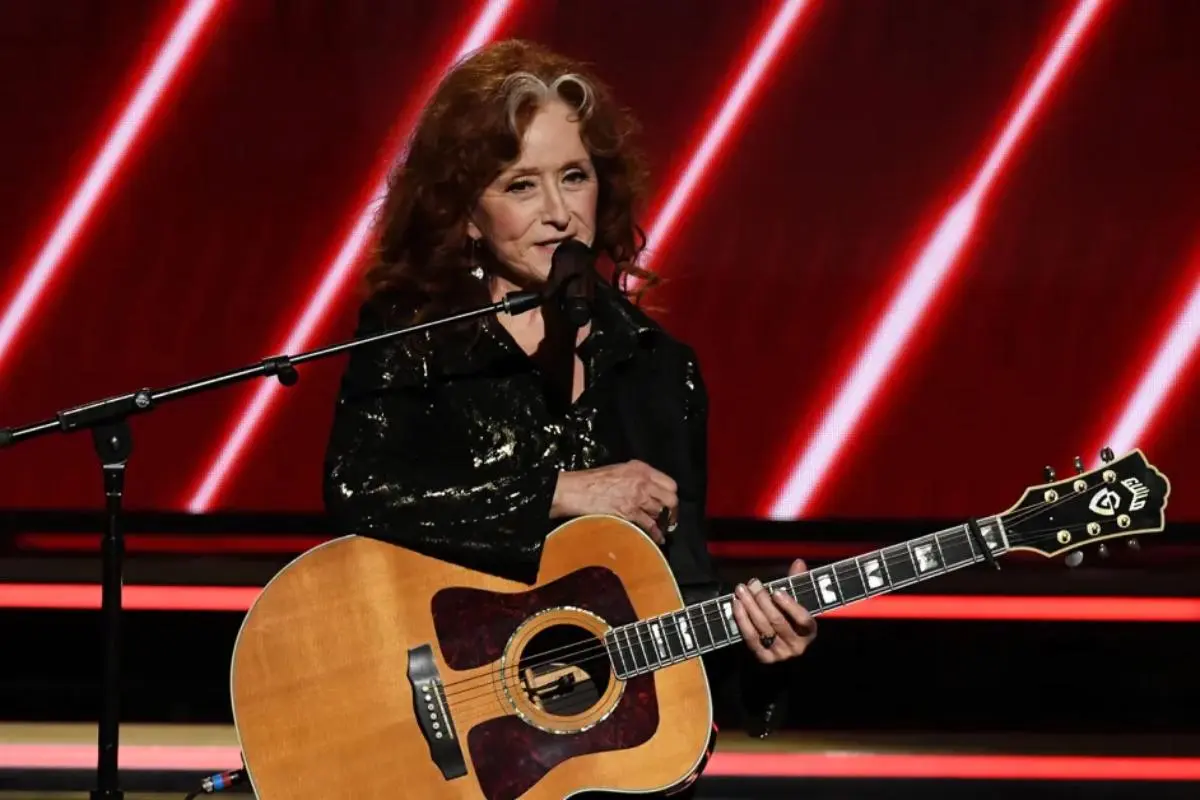
For all the romantic talk about campfire guitars and folk clubs, Raitt’s career nearly derailed in the 1980s. She was dropped by her label, wrestling with alcoholism and watching younger acts climb the charts. Then came 1989’s “Nick of Time”, a brutally honest record about aging and desire that won multiple Grammys and turned a forty year old blueswoman into a mainstream star almost overnight.
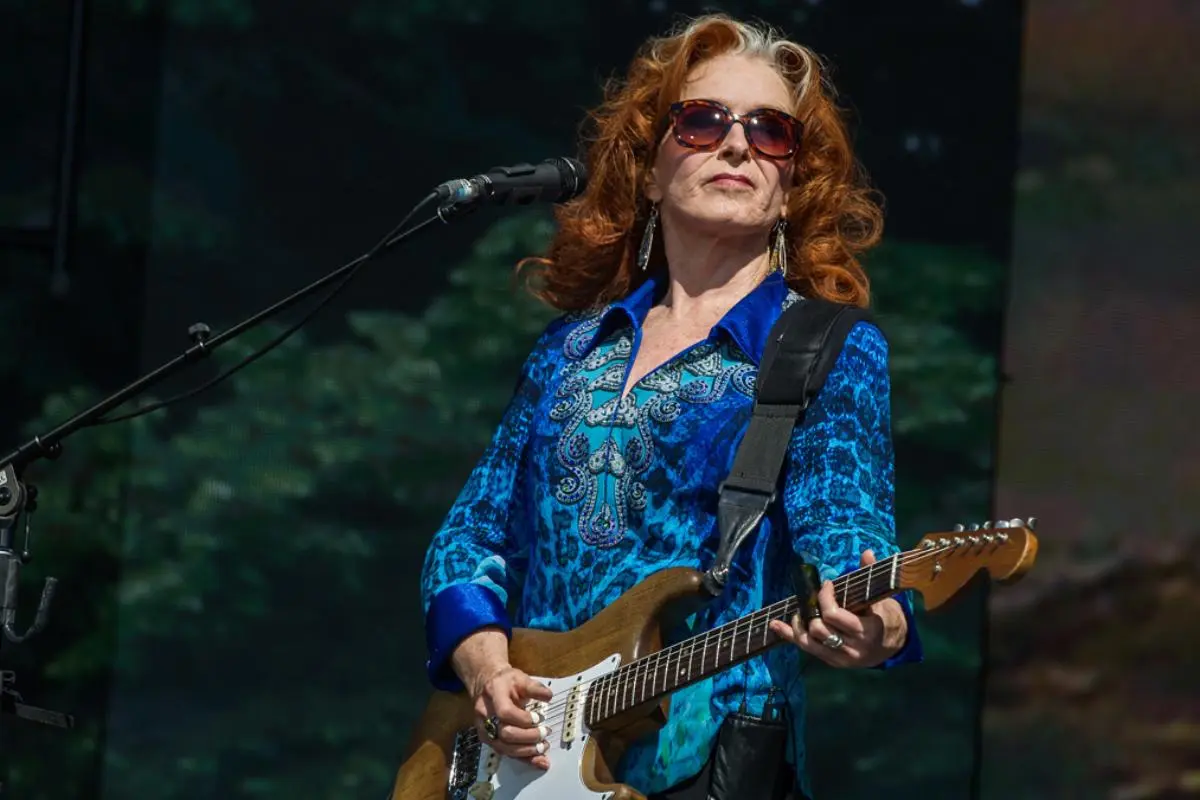
The industry finally caught up with what the old blues men had already known. In the mid 1990s Fender issued a Bonnie Raitt Stratocaster, its first signature model for a woman, built around her battered, stripped down “Brownie” Strat. Raitt funneled proceeds into programs that put guitars into the hands of kids, especially girls, quietly turning a trophy of corporate respect into a weapon for the next generation.
Around the same time, writers were quoting B.B. King’s verdict that she was the “best damn slide player working today”, while critics marveled at how her glass slide on that old Strat could moan, weep and snarl inside a single solo. The red headed Quaker kid who learned from records had become one of the definitive electric slide voices of her era.
What guitarists can actually steal from Bonnie Raitt’s origin story
All of this history is inspiring, but it is also practical. You do not have to share Raitt’s politics, gender or faith to steal her methods.
| Influence | Why it mattered to Bonnie | What you can steal |
|---|---|---|
| Joan Baez | Showed her a woman could front songs, play serious guitar and tie music to conscience. | Stop waiting to be “good enough” to lead. Sing and play at the same time, however imperfectly. |
| Barbara Dane & Judy Roderick | Modeled uncompromising white women in a Black rooted idiom who refused to soften the edges. | Let your life and politics into your phrasing. Blues gets boring when you sand off the anger. |
| Memphis Minnie | Proved a woman could be the toughest guitarist in the room and still write sharp, sensual songs. | Practice rhythm as hard as solos. Minnie’s drive came from her right hand, not just flashy licks. |
| Sippie Wallace | Brought bawdy, witty classic blues into Bonnie’s set list and into the modern festival circuit. | Learn at least one older song so well that you can bend it to your personality on stage. |
| Aretha & Ray | Taught her that accompaniment should argue with and answer the vocal, not just strum under it. | Record yourself playing fills between your own sung phrases, then edit ruthlessly until they feel conversational. |
- Build your ear first, your gear second. A $25 guitar and cheap amp got Raitt closer to the blues than any boutique pedal board.
- Steal from singers and pianists as much as from guitarists. Phrase like a human voice, not a metronome.
- Do your homework on where the music comes from, then decide what “respect” looks like in your own scene.
Conclusion: beyond “girls with guitars”
The funniest part of Bonnie Raitt’s story is that she genuinely did not sit around worrying whether women were allowed to play bottleneck blues. She was too busy wearing out records, asking questions of her elders and chasing the sound she heard in her head.
Half a century later, the rest of the world is still catching up. Her origin story is a quiet rebuke to every lazy blues rocker and every sexist gatekeeper, and a roadmap for anyone who wants to play with real feeling: love the music enough to learn it properly, then play it like you mean to change something, onstage and off.