Disclosure: We are a professional review site that receives compensation from the companies whose products we review.
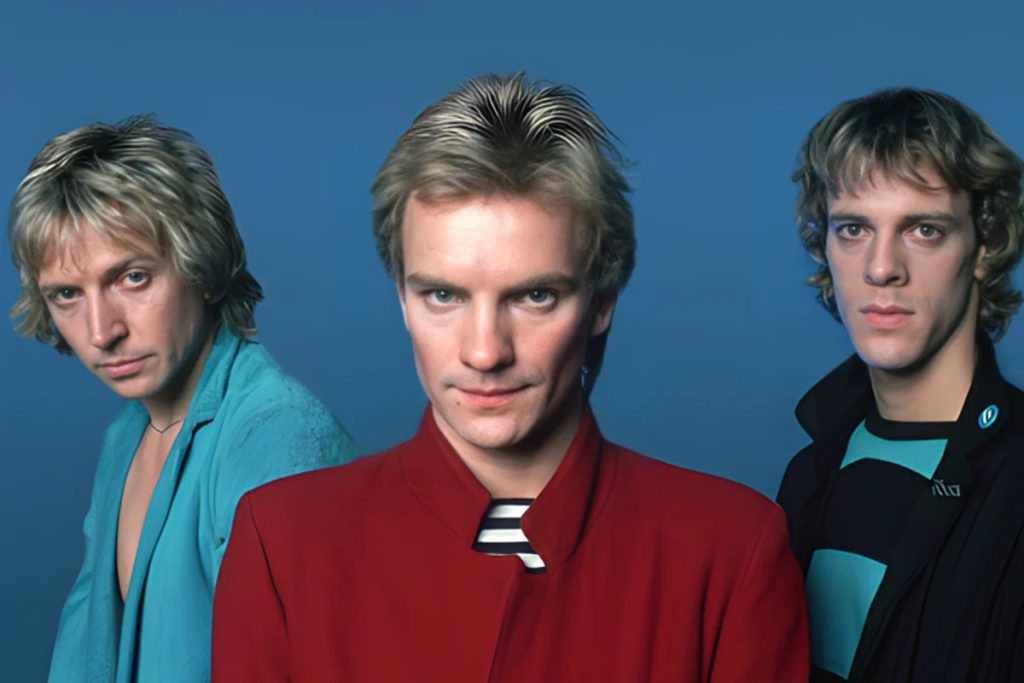
Stewart Copeland still can’t talk about Sting without reaching for the word “homicide.” In a new interview with The Telegraph, published November 27, the Police drummer, now 74, calls his old bandmate’s songs “life-changing” while admitting that Sting’s “desire to be dictatorial” was “not real easy to deal with.” He also speaks openly about the royalty case that has put the two men on opposite sides of a London courtroom, and insists the friendship has survived it.
It is a familiar dynamic told with fresh bite. Copeland is the man who founded the band, and he has never pretended the Police were a happy family. What is new is the timing: the interview lands while Copeland and guitarist Andy Summers are still pursuing Sting through the High Court over money from the band’s catalog.
“Only one artistic truth”
Copeland told The Telegraph that the band peaked creatively on its second album, Reggatta de Blanc (1979), when the trio was “balanced, happy and together.” After that, he says, Sting’s determination to control how his songs were played turned the studio into a pressure cooker.
“If I would fault my dear colleague in one thing, it is that I am a little more broad-minded,” Copeland said. “You can play a great song as reggae or as heavy metal, it’s still a great song. For another member of the band, there is only one artistic truth.”
By the time the Police made Synchronicity (1983) in Montserrat, the paper reports, Copeland and Sting could not stand to be in the same room. Copeland has joked for years about wanting to strangle Sting over his hi-hat parts, and he gave that line a new twist: “The times I came most close to homicide were when he was right.” He also offered sympathy to producer Hugh Padgham, who had been used to working with Genesis and was then “thrown into the rat pit with us three” (Copeland’s next word is not printable here).
Synchronicity went eight times platinum in the US and was the band’s last studio album. When the Police reunited for their 2007-08 world tour, Copeland says, the old rivalry was still potent enough that the three needed group therapy. Their conclusion, as he tells it, was that the fights were not about jealousy or greed but about listening to music for different reasons. “I doubt if Stingo has any Slipknot on his playlist,” he said.
The royalty fight
The sharper edge of the interview is the lawsuit. Copeland and Summers claim they are owed arranger’s fees, a 15% share of publishing income from songs Sting wrote alone, on streaming and download income. According to MusicRadar, the claim was put at more than $2 million when it was filed.
Learn to play Sting songs
Guitar Tricks has step-by-step video lessons for Sting songs, with tab, slow-down and looping, taught by professional guitarists. It is the online course we recommend for beginners, and you can try everything free for 14 days.
See the Sting song lessons or read our Guitar Tricks review.
Sting’s lawyers argue that the old agreements do not cover streaming at all. MusicRadar reported their position that streaming “counts as ‘public performance’ and not a sale,” and RTÉ, carrying the Press Association report, said Sting’s side relies on a 2016 agreement covering mechanical income only “from the manufacture of records.” Lawyers for Summers and Copeland countered that the same deal covers income from “all manner of commercial exploitation.”
The case reached a two-day preliminary hearing before Mr Justice Bright in January 2026. RTÉ reported that Sting has paid more than $800,000 in admitted historic underpayments since the action began. The reported figures vary from outlet to outlet: CMU put the payment at £647,000, and MusicRadar’s own report gives both $800,000 and $870,000. Accounts of when the suit began differ too. RTÉ cites court documents filed in December 2024, while other reports date the filing to 2025.
CMU also reported that the claimants wanted to expand the case to a sum “considerably more” than £8 million, which Sting’s side said had “no real prospect of success.” No trial verdict has been reported.
Copeland told The Telegraph he dislikes the arrangement. “Unfortunately, there’s this thing between my dear friend [and I] that we have to get through, and officially we have to be on opposite sides of a table, and I don’t like that,” he said. “But I’m sure it’ll all be resolved, and whichever way it goes, let the judge decide. You know, it’s fine. We’re still good.”
Asked whether Sting’s reported £200 million-plus catalog sale in 2022 felt unfair, Copeland said no: “He wrote some of the best songs of our era.” Then he listed Sting’s homes in Tuscany, Wiltshire, New York and Malibu, grinning as he went.
What comes next
Copeland is not slowing down. He was in Philadelphia for the penultimate date of a US spoken-word tour when he spoke to The Telegraph, and he is finishing an opera he has worked on for more than a decade. He is also writing How to Survive Your Mojo, a tongue-in-cheek handbook about fame that he calls “a literary version of Spinal Tap.”
In March 2027 he brings Police Deranged for Orchestra, his orchestral reworking of the band’s songs, to Glasgow Royal Concert Hall on March 26 and London’s Royal Albert Hall on March 28. The London show marks 50 years since the Police played their first gig, in Newport, South Wales, on March 1, 1977.
The court case, meanwhile, is unresolved. However it ends, Copeland’s account of the band is the one fans have heard for decades: a frontman with one fixed vision, a drummer who wanted to play it his way, and a catalog that made them rich and kept them arguing.