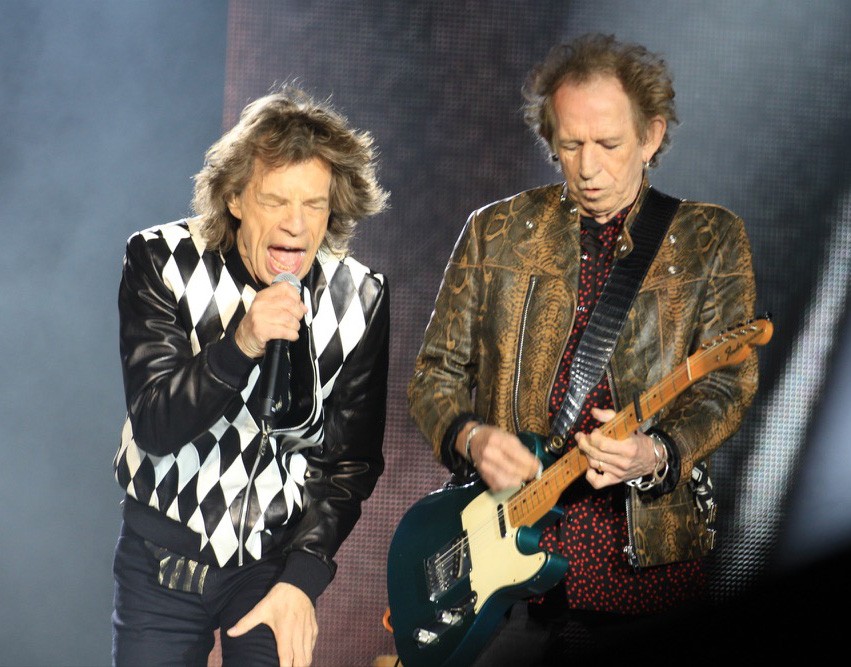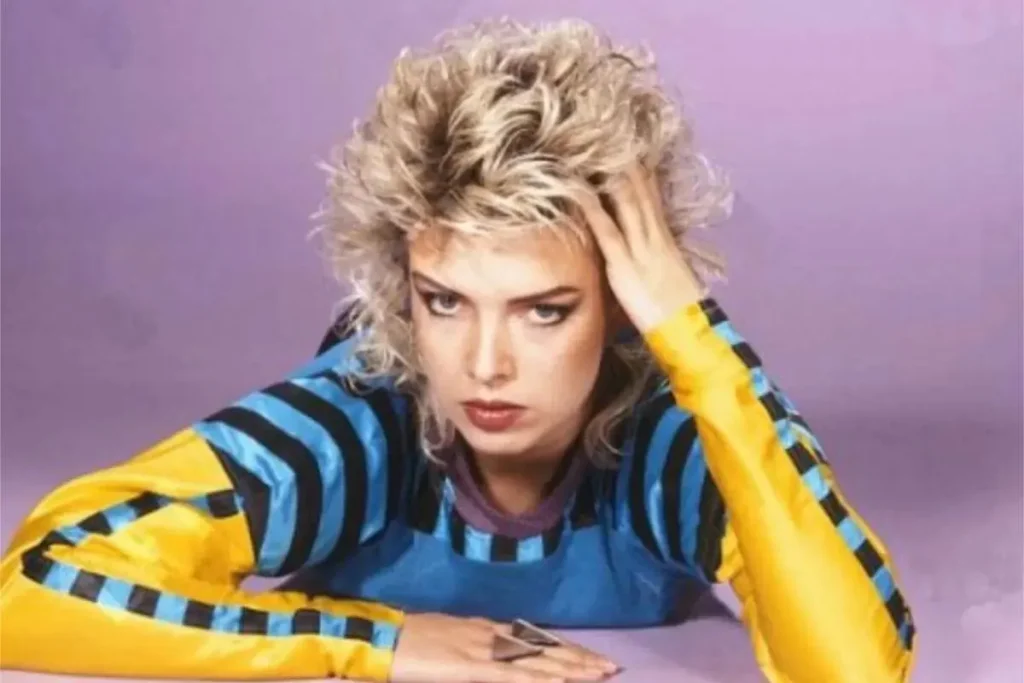
Kim Wilde at 18: standing on the brink of the 80s
At 18, in 1978, Kim Wilde was not yet the neon blonde on your TV, just a sharp-eyed art student in Hertfordshire with rock ‘n’ roll parents and a half-formed dream of making music. Within a few short years she would crash into the charts with “Kids in America”, a new wave, synth-pop blast that became one of the early 80s’ most recognisable anthems and a permanent fixture on nostalgia playlists.
Growing up Wilde: rock ‘n’ roll in the family home
Born Kim Smith in Chiswick, West London in 1960, she moved with her family to Hertfordshire at nine, went through Presdales School and finished a foundation course at Hertfordshire College of Art & Design in 1980, just before signing to producer Mickie Most’s RAK Records. Hertfordshire College of Art & Design Those bare facts make her sound like any other ambitious art student, but the household she grew up in was anything but ordinary.
Her father, Marty Wilde, had been one of Britain’s first home-grown rock idols in the late 1950s, while her mother Joyce Baker sang with the Vernon Girls on TV show ‘Oh Boy’; by her teens Kim was already stepping up as a backing vocalist for her dad on stage. Backing vocalist for her dad That meant that by the time she was worrying about exams and portfolios, she also knew her way around a studio talkback mic and understood how songs were stitched together from the inside.
1978: art school rebel, dreaming of a band
By the late 1970s, as she turned 18, Wilde was commuting to art college in St Albans, more interested in bands and records than in gallery openings; she later admitted that one of her main motives for going to art school was that she had heard it was a good place to start a band. A good place to start a band In other words, the supposed detour into the visual arts was really a stealth route into music.
Growing up side-stage watching Marty work crowds made the touring life feel normal, but her ambitions were surprisingly modest: she saw herself as a future backing or session singer, not a marquee name. Backing or session singer The idea was to blend in on other people’s records, not to become the face of Britain’s next great pop export.
The RAK Records twist: backing vocals that changed everything
The turning point came courtesy of her younger brother Ricky, who had left school early to tour with their father before moving into songwriting and production; when he brought his own tracks into RAK Records, label boss Mickie Most liked what he heard and zeroed in on the backing singer whose voice cut through the mix – Kim. Label boss Mickie Most In an era when producers were constantly hunting for the next Suzi Quatro or Debbie Harry, Wilde suddenly looked like raw material for a new kind of British pop star.
She later recalled turning up at RAK in black-and-red punk trousers and freshly bleached hair that one art tutor had jokingly praised as her most creative work. Black-and-red punk trousers Most immediately asked Ricky whether his sister could sing and pushed him to write for her, leading Ricky and their father Marty to bash out ‘Kids in America’ on a cheap Wasp synth and record it with prog band The Enid in a Hertfordshire studio full of reptiles; the finished single then sat on the shelf for a year while Wilde pulled pints in a local pub, only to rocket up the charts so fast that compilers briefly suspected a scam as it stalled at number two behind Shakin’ Stevens. Rocket up the charts.
‘Kids in America’: the three-minute suburban explosion
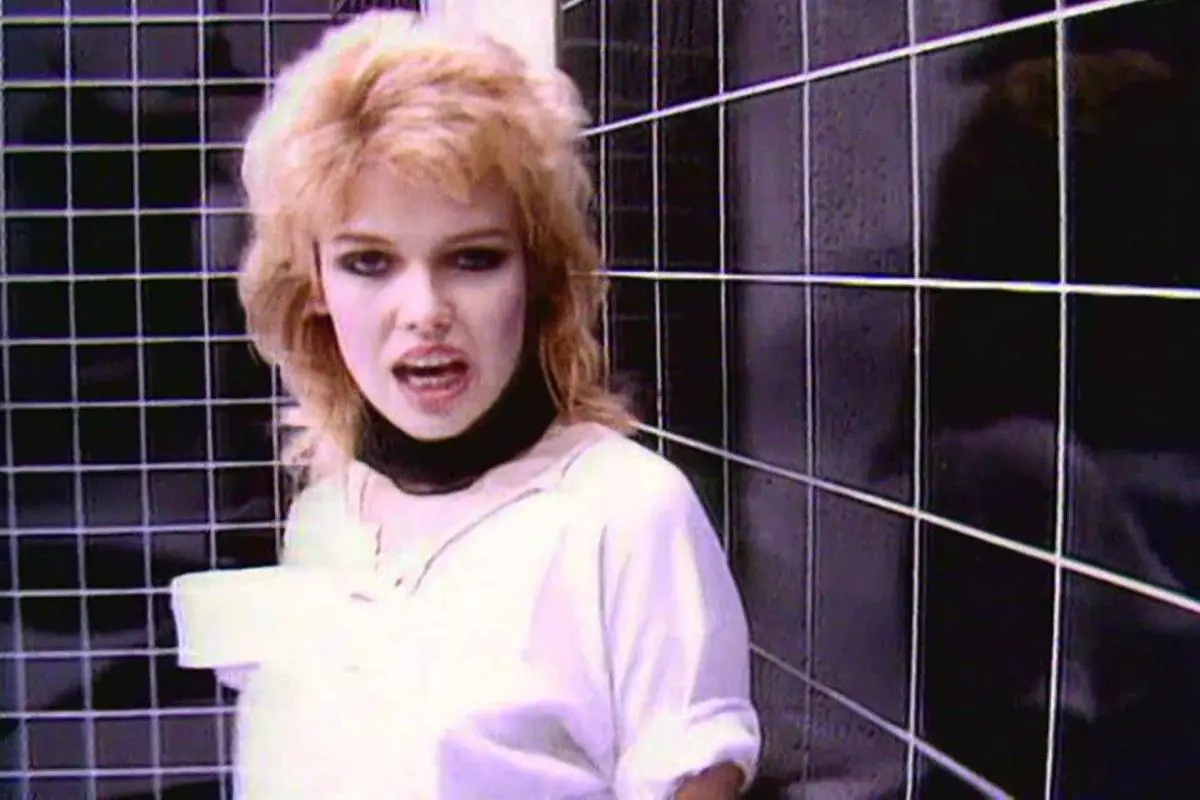
‘Kids in America’ finally appeared in January 1981 as Wilde’s debut single, recorded at RAK in London but sounding like it had been blasted straight out of a drive-in cinema PA system. The track has since been framed as synth-pop and new wave, its crunching guitars and siren-like synths wrapped around a chorus designed for teenage chanting rather than polite singalongs. Synth-pop and new wave
The single tore across international charts, peaking at number two in the UK, topping lists in Finland, South Africa and Zimbabwe, and lodging itself in the Top 40 in both Canada and the United States at a time when MTV was just beginning to beam British acts into American suburbs. Topped lists in Finland, South Africa and Zimbabwe For a singer who had been serving drinks a year earlier, it was the kind of whiplash success that either destroys careers or forges them in steel.
From ‘suburban Monroe’ to the most-charted British female of the 80s
Hit singles arrived in quick succession: the swaggering ‘Chequered Love’, neurotic earworm ‘Water on Glass’ and the darker, cinematic ‘Cambodia’ kept Wilde pinned to ‘Top of the Pops’ and European TV screens. By the end of the decade, one magazine was calling her Hertfordshire’s ‘suburban Monroe’ and noting that she had become the most-charted British female solo artist of the 1980s, despite doing relatively little gigging compared with peers and focusing instead on records, videos and ruthlessly catchy TV performances. Most-charted British female solo artist of the 1980s.
Beyond the first rush: how her sound evolved
Crucially, Wilde did not vanish once the early 80s new-wave moment cooled; through the middle and late part of the decade she stacked up UK Top 20 singles, from her turbocharged cover of ‘You Keep Me Hangin’ On’ and duet ‘Another Step (Closer to You)’ to sleek, radio-perfect cuts like ‘You Came’ and ‘Never Trust a Stranger’, with ‘You Keep Me Hangin’ On’ even giving her a hard-earned US number one. Hard-earned US number one If ‘Kids in America’ made her a star, that second act proved she was no novelty.
Among those later singles, ‘Never Trust a Stranger’ has become a particular fan favourite: written by Kim and Ricky for the ‘Close’ album, issued as a 1988 single in multiple 7 and 12 inch mixes and revived on nearly every major tour since, it shows how comfortably she could pour adult heartbreak into the same big, dramatic pop framework that powered her early hits.
What made early Kim Wilde so compelling?
Part of the magic lies in the contradictions. On record she sounded cool and slightly detached, yet the lyrics were full of restless, hormonal energy – less bubblegum and more bubblegum with teeth.
The production that Ricky Wilde built around her voice married punky guitars to icy synths in a way that felt tougher than most chart pop of the time but still ruthlessly commercial. Even now, ‘Kids in America’ or ‘Chequered Love’ can make slick modern radio playlists sound strangely tame by comparison.
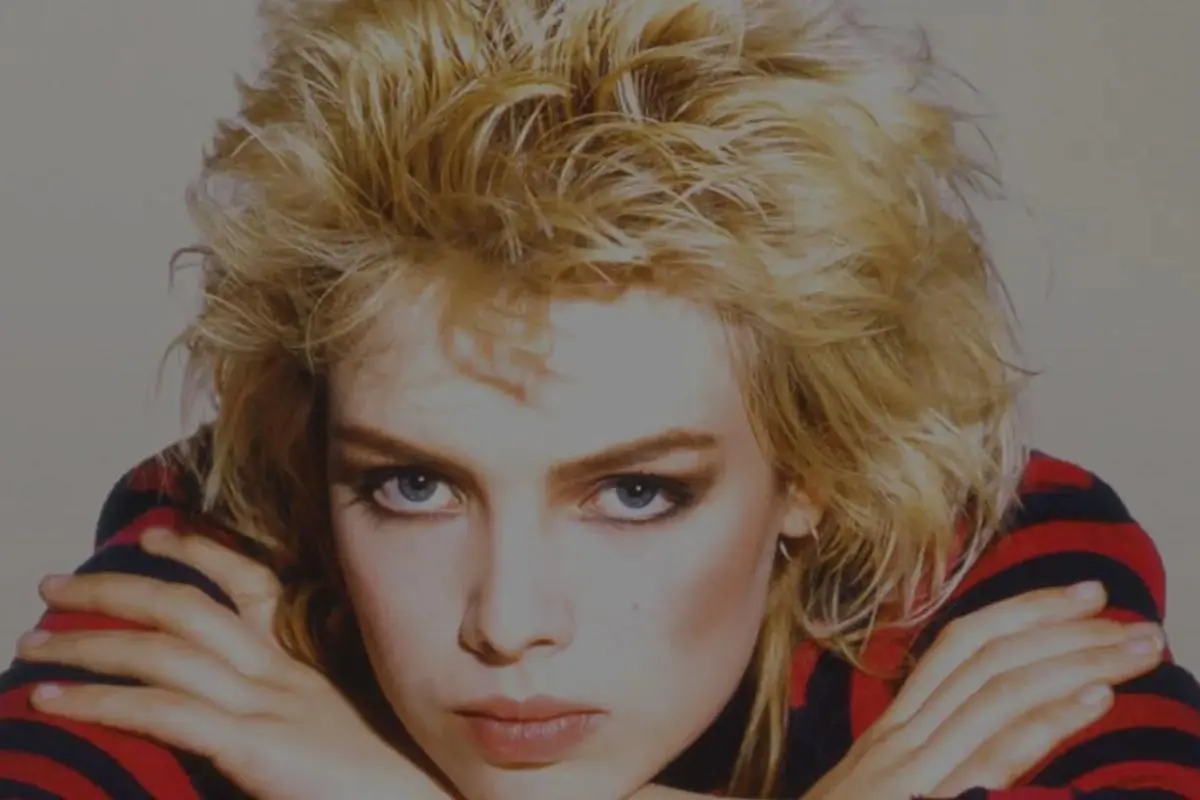
Visually she hit another sweet spot: not a dolled-up disco diva, not a spiky art-school eccentric, but a slightly dangerous version of the girl from down the road. That image mattered in an era when MTV turned pop into moving wallpaper – Wilde looked like someone you might actually meet in a pub, only armed with better cheekbones and a lethal chorus.
Essential Kim Wilde tracks from the breakthrough years
If you want to revisit (or discover) the best of Wilde’s early catalogue, this mini-playlist covers the crucial moves from bratty synth-pop to widescreen late-80s drama.
| Song | Year | Why it matters | Play it when you want |
|---|---|---|---|
| ‘Kids in America’ | 1981 | The definitive Kim Wilde track – a snarling, sugar-rush snapshot of suburban boredom and transatlantic fantasies that still wipes the floor with most “serious” new wave. | When you need an instant hit of early-80s adrenaline or to kick off an 80s party playlist. |
| ‘Chequered Love’ | 1981 | A leaner, rockier follow up that turns a simple lyric about opposites-attract romance into a pounding, handclap-heavy stomp. | To follow ‘Kids in America’ without dropping the energy, or to show how sharp her early singles run really was. |
| ‘Water on Glass’ | 1981 | Jittery, slightly paranoid pop that hints at tinnitus and information overload long before social media – proof that her early material was stranger than the image suggested. | When you want something less obvious from the debut era that still crackles with hooks. |
| ‘Cambodia’ | 1981 | A moody, synth-drenched story song about loss and war that showed she could handle darker, more cinematic themes without losing the pop punch. | Late at night with the lights low, ideally between Human League and Ultravox on a playlist. |
| ‘You Keep Me Hangin’ On’ | 1986 | A radical, icy reimagining of the Supremes classic that turned Motown desperation into hi-NRG drama and finally cracked the American chart wide open for her. | Any time you want to surprise people who only know the original – this version still sounds more dangerous. |
| ‘You Came’ | 1988 | Glowing late-80s pop with a huge chorus and a lyric about salvation through love that avoids cliche by sheer melodic force. | Driving with the windows down, or whenever you want proof that Wilde’s songwriting grew up without losing its bite. |
Why that 18-year-old gamble still matters
Looking back, the most striking thing about Kim Wilde at 18 is how close she came to disappearing into the background as just another hard-working backing singer. Instead, a cheeky ask for a bit of session work at RAK turned into one of the most successful debuts of the decade and a catalogue that still fills arenas and 80s festivals.
There were plenty of more hyped acts in that era, but few whose records have aged as well as Wilde’s early singles. For listeners who grew up with them, they are madeleine cakes soaked in hairspray; for new ears, they remain proof that pop can be catchy, slightly feral and quietly subversive all at once.
If you want to understand why early-80s British pop still casts such a long shadow, start where she did: picture an 18-year-old art student with punk trousers and peroxide hair walking into a London studio, and then hit play on ‘Kids in America’.