

Rock stardom is a relationship stress test: ego, travel, temptation, tabloids, and the strange loneliness of being famous in public. Yet Gordon Sumner, better known as Sting, and actor-producer-director Trudie Styler have stayed together for decades, long enough to make cynics suspicious and romantics smug. Their story is not a fairy tale, though. It starts with overlap, discomfort, and a long wait for legitimacy, then turns into something surprisingly practical: a partnership built around work, privacy, and a shared mission.
“We’ve always had separate interests.”
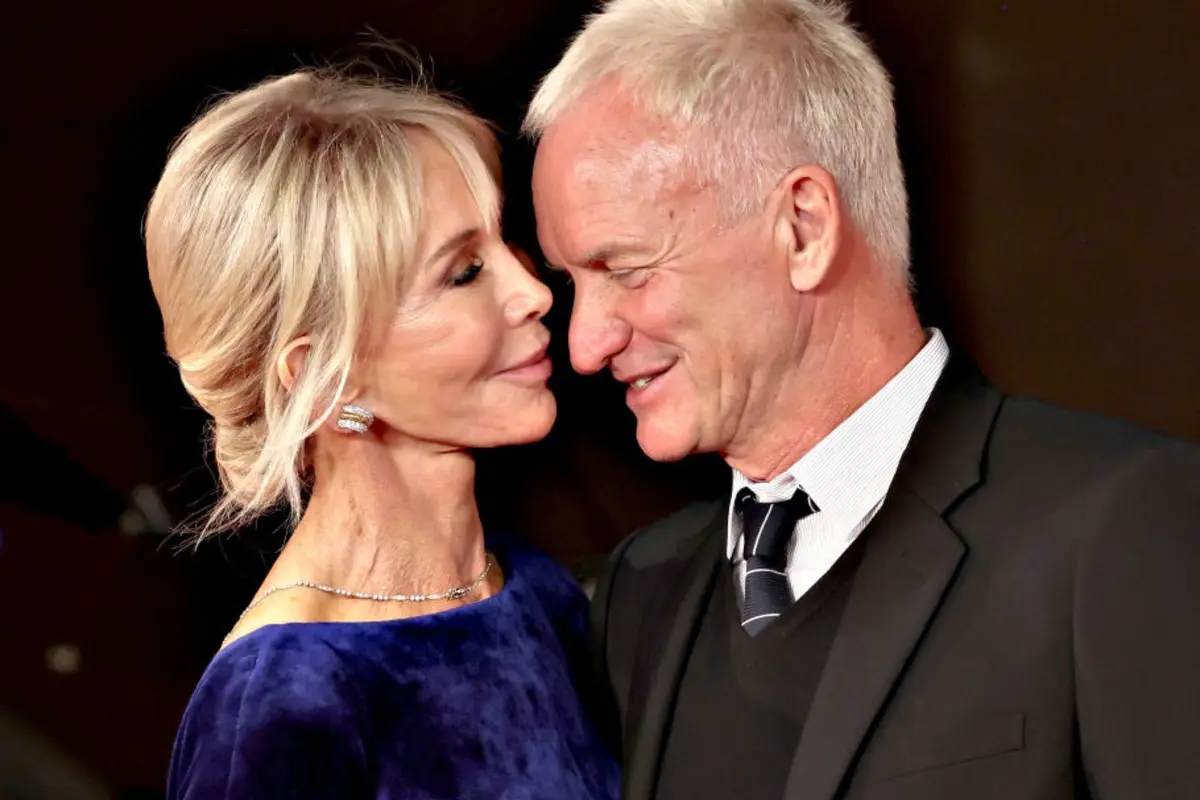
Trudie Styler, Reuters
How Sting and Trudie Styler first crossed paths
Sting and Trudie Styler met in the 1970s before the world knew The Police, when both were part of the same creative orbit in the UK. The origin detail that still defines the early narrative is that Styler knew Sting while he was in a relationship with actress Frances Tomelty, who later became his first wife. That “we met before the fame” part is romantic in the abstract and awkward in the specifics.
Most celebrity relationships begin with an edited version of events. Their beginning is harder to airbrush, and that honesty is part of why it stays interesting. Even fans who love Sting’s music can admit the early timeline reads like a cautionary tale about ambition and emotional chaos, not a greeting-card romance.
The complicated overlap and why people still talk about it
Sting’s first marriage to Frances Tomelty and his later relationship with Styler are frequently discussed together because the transition happened in the same era when his career was detonating into global visibility. Biographical summaries consistently note that Sting and Styler later married and had four children, while he has two children from his first marriage – a family structure summarized in his biographical profile. That family structure is a quiet signal that the early story included real-world consequences, not just tabloid intrigue.
It is tempting to turn that overlap into a morality play, but long marriages are usually made of more than their first chapter. The better question is not “Was it messy?” but “How did they build something stable after that mess?” The public evidence suggests they did it by treating commitment less like a mood and more like a long-term project.
From partners to spouses: when it became official
Sting and Trudie Styler eventually married in 1992, after being together for years and starting their family. That “late marriage” detail matters: it implies they were not trying to win a PR race to the altar. They waited, lived, worked, raised children, and only then formalized it.
For older readers who remember the 1980s celebrity machine, this is part of why the couple stands out. Their public identity did not depend on constant couple-branding. Instead, the relationship sat behind the work, like a spine you only notice when it is missing.
The real glue: a working partnership, not just a romantic one
What often gets overlooked is that Styler is not simply “the wife.” She has her own career as an actor and as a producer-director, and the couple have collaborated and appeared together in conversations around film and philanthropy. When partners both have a creative life, the relationship can become less about possession and more about logistics and respect.
In a Reuters piece focused on how they keep the marriage alive, the emphasis lands on autonomy and separate interests rather than constant togetherness. That is not poetic, but it is realistic. And it is a theme you can actually use if you are trying to keep your own long-term relationship from suffocating under routine, a dynamic also echoed in his broader life-and-career overview.
What “separate interests” looks like in practice
- Distinct careers: Sting’s touring and writing schedule is its own universe; Styler’s film and production work follows different rhythms.
- Different creative outlets: Music and filmmaking scratch different itches and reduce the pressure to meet every need in one person.
- Room for individual identity: This is the opposite of the celebrity “joined at the hip” aesthetic, and it ages better.
Privacy as a strategy (and why it works better than oversharing)
Many famous couples fail in public because their relationship becomes content. Sting and Styler have done the inverse: they show up when they have something to say (a project, an issue, an interview) and then disappear. In media terms, that is bad for gossip columns. In marriage terms, it is often oxygen.
When they do talk about each other, it is usually framed around admiration for work, shared values, or the mundane mechanics of staying connected. That kind of messaging is not “sexy,” but it is the sound of a couple that has decided not to use drama as fuel.
The shared cause that became a second marriage: activism
If you want one area where Sting and Styler clearly operate as a unit, it is environmental and humanitarian activism. They are strongly associated with rainforest protection efforts, including work connected to the Rainforest Foundation, a cause frequently linked with their public life. The Rainforest Foundation Fund’s mission and history describe objectives that align with the couple’s long-standing advocacy.
Activism can be performative in celebrity culture, but long-running involvement is harder to fake. When your relationship has a “third thing” beyond kids and mortgages, it can pull you out of petty loops. For them, that third thing has often been the planet, not the press.
Why shared mission matters for long relationships
- It gives the partnership purpose beyond romance.
- It creates shared memories that are not just vacations.
- It keeps both people oriented outward, not obsessing inward.
The music angle: love, regret, and grown-up tenderness in the songs
Sting’s songwriting persona has always mixed romance with threat assessment: desire plus consequences. Even without pinning specific songs to specific events (a game that often devolves into fan fiction), it is fair to say his catalog is full of adult relationship themes: jealousy, fidelity, temptation, forgiveness, and the search for peace after chaos. His public biography and career overview underline just how long that writing life has stretched, across The Police and his solo era.
For listeners, that matters because you can hear a shift over time from restless intensity to something more reflective. Relationships that last typically have an arc, and so do artists who do not burn out early. The interesting claim here is provocative but plausible: the stability of Sting and Styler’s home life may have helped keep him productive long after the era when many of his peers imploded.

So what is their relationship like now?
“Current state” is tricky because healthy couples do not issue quarterly reports. What we can responsibly say is that there is no credible public record of a separation or divorce, and they continue to appear in public contexts connected to each other, including interviews and joint appearances around projects. Styler’s own recent public-facing appearances, including a Desert Island Discs episode featuring Trudie Styler, still position Sting as her husband and partner, suggesting continuity rather than fracture.
In addition, long-form conversations that feature them together tend to emphasize companionship, humor, and practicality rather than spectacle. A Sundance Institute blog post, for example, frames them as a couple who can talk about craft and life together, without turning it into a soap opera.
What older music fans can actually learn from Sting and Trudie Styler
You do not need a mansion, a tour bus, or a cause foundation to borrow their best habits. Strip away the celebrity and you get a set of principles that are refreshingly unglamorous.
| What they seem to do | Why it matters | How to try it at home |
|---|---|---|
| Protect independence | Reduces resentment and boredom | Keep a hobby or project that is yours alone |
| Share a mission | Creates meaning beyond romance | Volunteer together once a month |
| Limit the audience | Less external pressure, fewer performative fights | Stop narrating your relationship on social media |
| Make it a long game | Longevity beats intensity | Prioritize routines that keep you connected |
The edgy takeaway: their “messy start” did not doom them, but it did demand skill
Here is the uncomfortable truth that makes their story more valuable than a clean romance: people can start badly and still finish well, but only if they pay the cost. That cost is usually accountability, time, and a willingness to build trust brick by brick rather than insisting that “love” should cover the damage.
In celebrity culture, the myth is that chemistry is enough. Sting and Trudie Styler are a walking rebuttal: chemistry gets you through the door; structure keeps you in the house. If you are looking for a scandal, their longevity is the scandal.
Conclusion
Sting and Trudie Styler’s relationship is famous partly because it is long, and partly because it began in a way that still makes people argue. The more interesting story is what came after: a partnership that leans on independence, shared purpose, and selective privacy. In a music world built to break couples, they built something that looks less like a fairy tale and more like a craft.
And like any craft, it is not magic. It is practice.
Note: Some mainstream outlets block automated access or frequently change URLs; the sources below prioritize stable, verifiable pages that remain accessible.


