

Every generation of guitar fans thinks it has the blues figured out. Then someone like Steve Cropper opens his mouth and cheerfully blows up the rulebook.
In a few offhand comments, he manages to praise a nylon string Puerto Rican guitarist as his favorite electric player, dismiss modern note perfect blues as sterile, and remind you that real soul came out of church pews and cheap studios, not boutique pedals.
Steve Cropper’s “weird career” and the real roots of blues guitar
Cropper likes to joke that he has had a “weird” career – raised on country music and church singing, knocked sideways by rhythm and blues at ten, and then hopelessly addicted to it. In the same interview he names José Feliciano as his favorite electric guitarist, recalls watching him cover both Dickey Betts and Duane Allman parts at once, and warns younger players to be careful what they play on sessions because they may be ordered to reproduce it note for note on stage later.
That odd mix of roots is not a pose. Cropper has talked about growing up around gospel singalongs, falling in love with the sound of an uncle’s unused guitar kept around for Sunday visitors, and teaching himself enough chords to hold down local gigs before Memphis came calling.
Once he landed at Stax, the supposedly “country and church” kid quietly became the house guitarist and de facto architect of the label’s lean, snapping guitar sound, backing Otis Redding, Sam & Dave, Wilson Pickett, Albert King and more while co writing and producing records that defined 60s soul.
One of those was “(Sittin’ On) The Dock of the Bay,” the first posthumous number one single in U.S. chart history, which Redding began on a houseboat and finished with Cropper at Stax, complete with seagull and wave effects that the guitarist added in the control room.
Despite that résumé, Cropper still deadpans that his playing “has always sucked” and only works because he keeps it simple, obsessing over groove, staying “in the box” and learning to play rhythm and lead at the same time so the track never collapses when he steps forward.
José Feliciano – the “flamenco” electric guitarist Cropper swears by
Most greatest guitarist lists are stuffed with the usual suspects – Hendrix, Page, Clapton, SRV – but José Feliciano tends to get filed away as the guy who did “Feliz Navidad” and a mellow cover of “Light My Fire.” In reality he is a Puerto Rican born virtuoso whose career has fused Latin pop, blues, jazz, soul and rock, and who is widely described as the first classical style nylon string guitarist to crash the English language pop and rock charts.
His own site barely bothers with genre labels and instead foregrounds a lifelong love affair with the instrument – concert photos framed around his battered Concerto Candelas, updates about recent tours and the “Behind This Guitar” documentary, and notes on how he still treats the guitar as his primary voice after decades on the road.
In 1968 he walked into Game 5 of the World Series, sat on a stool with his guide dog beside him and delivered a reharmonized, Latin jazz tinged national anthem that produced both cheers and a storm of boos, jammed phone lines at the ballpark and network, and sparked such outrage that Top 40 radio largely stopped playing his records, effectively collapsing his American hit making run and pushing him toward international markets.
Culturally, he paid for being ahead of the curve twice – first for daring to stylize the anthem, and again when history forgot that the same “flamenco” player who upset baseball fans was also a monster electric guitarist. Even a mainstream guitar list that lovingly details Hendrix, Page, Clapton, Muddy Waters and Carlos Santana does not find room for Feliciano, which only makes Cropper’s admiration more pointed.

Two Allman Brothers in one pair of hands
Cropper’s claim that Feliciano can play both Dickey Betts and Duane Allman’s parts at once is not casual name dropping. The Allman Brothers Band practically invented 70s Southern rock by welding country twang, deep blues and long, jazz influenced jams on albums like At Fillmore East, where twin lead guitars chased, harmonized and collided for entire album sides.
Duane Allman in particular brought a ferocious, vocal slide tone, honed in Muscle Shoals sessions and on Wilson Pickett’s “Hey Jude,” squeezing howls, sobs and horn like phrases out of a Les Paul and a glass Coricidin bottle while helping define the sound of modern Southern rock and reshaping slide guitar vocabulary.
To cover both of those roles alone you have to supply harmony lines and melodic lead work simultaneously, implying two voices with double stops, wide interval leaps and counterpoint while keeping the groove pinned in place. It is less about circus trickery and more about hearing the whole band in your head and orchestrating it through six strings and ten fingers.
That is exactly the kind of thing that thrills players of Cropper’s generation – people who had to be their own rhythm section and horn stabs in small studios – and it explains why he lights up talking about a supposedly “acoustic” artist who can juggle that much musical information without resorting to gimmicks.
The real “secret” to blues guitar: stop sounding like the record
When Cropper grumbles that modern guitarists play exactly what they did in the studio on stage, he is not just being cranky about young players. He is pointing at a culture where blues solos have been turned into sacred museum pieces, drilled from tablature and replayed like classical etudes instead of tossed off in the moment.
If you want a counter example, look at Jeff Beck, who spent his career pushing a fairly ordinary Strat and a few pedals into sounds that slipped between blues, jazz, funk and global music rather than treating genre boundaries as cages, and whose legacy is defined less by licks than by the idea that tone and feel can ignore all the usual fences.
The same is true of the Rolling Stones at their peak, who started as hardcore blues disciples playing Willie Dixon and Slim Harpo covers in London clubs, then recorded at Chess in Chicago and finally flipped that vocabulary into their own dangerous, radio smashing songs, helping drive the 60s blues revival instead of just imitating their heroes forever.
| Old session mindset | Modern jukebox mindset |
|---|---|
| Write the part on the spot, serving the song. | Copy the part from the record, down to every ghost note. |
| Accept that tonight’s solo will be different. | Panic if one bar diverges from the studio take. |
| Gear is basic, touch does the work. | Pedalboard is epic, touch is an afterthought. |
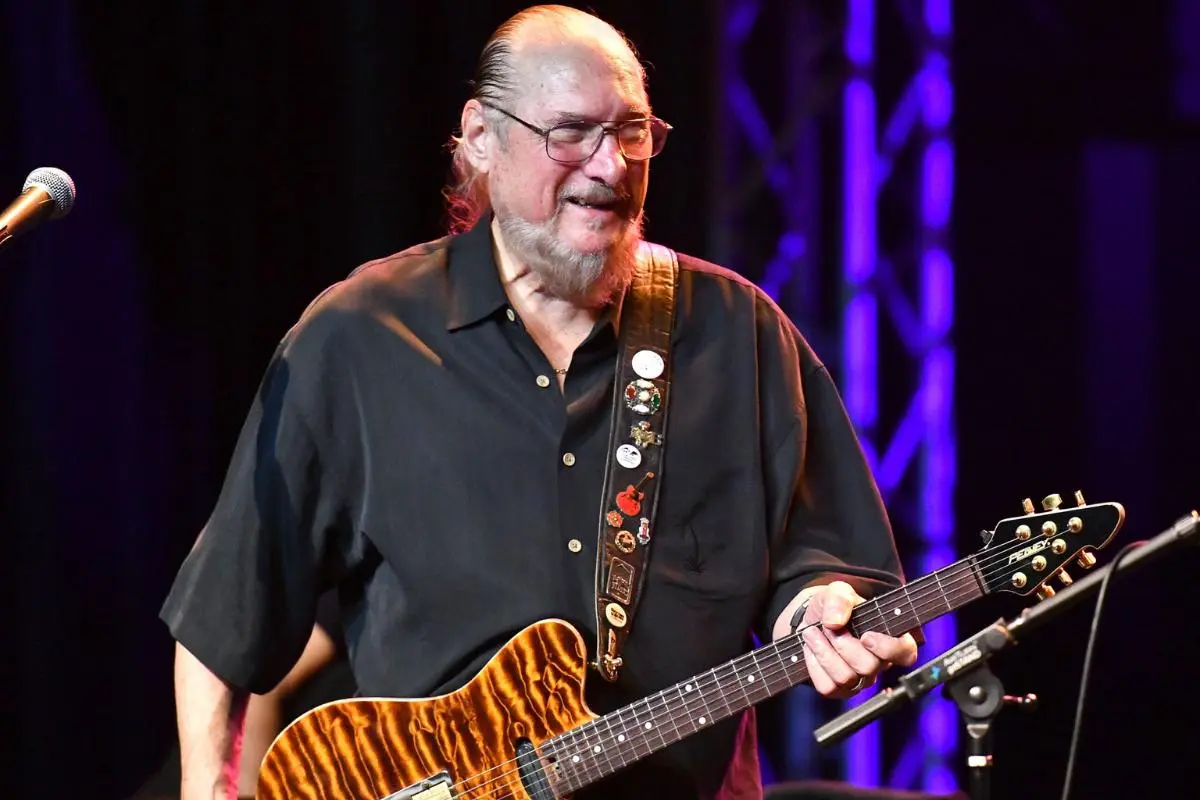
Cropper style rules for players who are sick of safe blues
- Steal feel, not notes. Learn classic solos, then deliberately change them on stage.
- Practice carrying rhythm and melody at the same time, even if it is just a 12 bar shuffle and a simple top line.
- Limit your gear for a while – one guitar, one amp – and force your hands to do the tone shaping.
- Treat every solo as a first draft, not a museum exhibit. If you cannot surprise yourself, you will not surprise anyone else.
- Listen to singers, not shredders, and phrase like you are trying to make words understandable, not scales impressive.
What to steal from Cropper and Feliciano
The first lesson is uncomfortable for purists: roots music has always been a mongrel. A kid raised on country ballads and Sunday hymns can end up defining soul guitar, and a blind Puerto Rican virtuoso can embody electric blues phrasing more deeply than half the players worshiped on T shirts.
The second is harsher. If your blues solo sounds exactly like the record every night, you are not honoring the tradition – you are embalming it. Cropper and Feliciano, in their very different ways, both chose risk, personality and groove over perfection, and that is why their playing still riles people up decades later.
You do not have to match their résumés or their chops. But if you take their advice seriously, your next solo should scare you a little, and it definitely should not sound like something you copied off a YouTube cover. That is where the real blues still lives.


