Some artists get crowned “legend” after a long career. Jimi Hendrix got the crown, the throne, and the future of rock guitar in roughly four years of international visibility – and then he was gone. That short timeline is exactly why he still feels dangerous: the story never had time to get safe.
One friend, filmmaker Tony Palmer, summed up the mythic version in a single provocation: Great musicians are not created; they are born. Jimi was meant for music.
(Tony Palmer). Producer Jack Joseph Puig puts the modern punchline even sharper: What so many players today are missing is what Jimi had – feeling.
(Jack Joseph Puig).
This article isn’t about turning Hendrix into a saint. It’s about treating him like what he was: a musician who made a whole instrument behave differently, on record and on stage, and who still makes “good” guitar playing sound slightly irrelevant.
The uncomfortable claim: Hendrix didn’t get “better” at guitar – he made “better” the wrong goal
Plenty of guitarists can outplay Hendrix in a sterile, modern sense: cleaner alternate picking, faster arpeggios, tighter quantization. Hendrix’s attack on the instrument was never a track meet. It was a language.
His solos often feel like speech: pauses, stutters, screams, whispers, sudden laughter. That’s why Puig’s “feeling isn’t transferable” line lands. You can copy notes; you can’t copy urgency.
What so many players today are missing is what Jimi had – feeling. A feeling is not transferable.– Jack Joseph Puig
If you want a working definition of “Hendrix-level,” stop counting notes and start tracking intent. When the intent is strong enough, even “mistakes” become hooks.
Born Jimi Hendrix: the origin story is less magical, more brutal
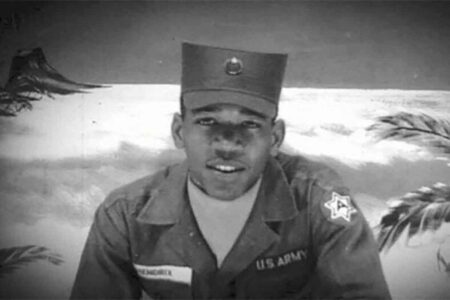
Hendrix was born in Seattle on November 27, 1942, and died in London on September 18, 1970. Those dates get repeated like a headline because the gap between them is so small for someone who changed so much in a lifetime documented across standard biographies.
Before the iconic London breakout, he did the hard, anonymous work: backing gigs, learning how to survive bands, and absorbing American R&B, blues, and soul at street level. That apprenticeship mattered because it gave him groove, not just vocabulary – an early path covered in many career overviews.
The seductive myth is “he just appeared.” The reality is he built an inner library of rhythm parts, fills, and vocal phrasing – then he detonated it with volume.
Hendrix’s real superpower: turning limitations into signatures
Hendrix was left-handed, and often played right-handed guitars flipped over. That meant the controls and string tension relationships felt different under his hands – not a cute trivia fact, but a physical reality that can push phrasing into unusual places on his life and career timeline.
That physical difference intersects with a deeper one: Hendrix treated the guitar like a full band. He could imply bass motion, chords, melody, and percussion all at once, then explode into lead without the “now I’m soloing” gear-shift.
For players who want to learn from him, this is the most practical lesson: don’t wait for your “ideal setup” to become expressive. Use what you have until it becomes personal.

The Hendrix sound wasn’t just fuzz – it was controlled chaos
Hendrix’s tone is often reduced to a shopping list: Strat, Marshall, fuzz, wah. But the real “effect” was his relationship with feedback and speaker interaction. He didn’t merely tolerate noise; he tuned it like a second instrument.
That’s why his best live moments feel like risk. He’s not presenting a finished sculpture; he’s shaping molten metal in public.
Mini table: what Hendrix actually did with “effects”
| Tool | Common misconception | Hendrix’s musical use |
|---|---|---|
| Fuzz | “More distortion = more rock” | Dynamic shading – from sputter to sustain depending on touch |
| Wah | “A funky filter sweep” | Vowel-like phrasing that mimics singing and speech |
| Feedback | “Accidental squeal” | Pitchable, controllable tones that extend notes past the fingers |
Modern players often add pedals to “get Hendrix.” Hendrix added intention to whatever he touched. That’s the uncomfortable part.
Monterey: the moment the guitar stopped behaving politely
At the Monterey Pop Festival in 1967, Hendrix didn’t just play well. He performed a confrontation between musician and instrument – captured vividly in his Monterey set footage – a spectacle that made the guitar feel newly physical and theatrical.
The famous burning guitar image is easy to meme. The deeper point is that his stage presence matched his sound: unstable, expressive, and seemingly one step from collapse. It made the era’s “nice” virtuosity look tame.
When people talk about Hendrix “changing rock,” this is the kind of cultural moment they mean: not a technique, but a permission slip.
Woodstock’s “Star-Spangled Banner”: not a solo, a news report
Hendrix at Woodstock is often treated like a single iconic performance, and that’s fair: it’s a piece of musical storytelling so vivid it still splits opinions. The festival appearance and billing context is preserved in the official profile.
But the “Banner” itself is bigger than the event. It’s a demonstration of how electric guitar can act like a sound collage: melody, sirens, explosions, distortion-as-commentary. Hendrix didn’t make the anthem “pretty.” He made it honest.
If you want a quick re-listen, the Woodstock performance is widely available as video documentation.
Electric Lady Studios: Hendrix wasn’t only a player – he was building a future workflow
One reason Hendrix still matters to modern musicians is that he cared about production, recording, and environment. Electric Lady Studios as a vision for controlling sound and process wasn’t just a celebrity vanity project; it was part of his attempt to control sound and process end-to-end.
And as a piece of cultural real estate, Electric Lady’s status as a New York music landmark captures how the studio itself became part of the city’s musical infrastructure, long after Hendrix.
This matters because it reframes him: not merely a wild performer, but an artist with long-term sonic plans. If he had lived longer, he might have been remembered as much for records he produced as solos he played.
What to steal from Hendrix (without pretending you can be him)
Trying to “play like Hendrix” is the fastest way to sound like a tribute act. The better route is to steal his principles. Here are the ones that actually translate.
1) Treat rhythm guitar as the main event
Learn to make one guitar part feel like two: thumb-over bass notes, partial chords, and melodic fragments on top. Hendrix’s rhythm vocabulary is why his band could sound huge even as a trio.
2) Make the amp a collaborator
Practice at volumes where touch matters and feedback exists, even if only occasionally. The goal isn’t deafness; it’s learning the instrument-plus-speaker system as one organism.
3) Build solos out of singing, not scales
Hendrix phrases like a vocalist: bends that cry, vibrato that speaks, lines that end where a breath would end. Sing your lines before you play them, then match the contour.
4) Stop polishing the life out of takes
Hendrix’s best moments feel immediate. If your recording process removes all risk, you might remove the point. Keep some first-take energy, even if it’s imperfect.

The man, the myth, and the messy ending
Hendrix died in London in 1970 at 27, and the circumstances have been discussed for decades; retrospectives on his final days and legacy show why the story remains a magnet for speculation.
The important musical takeaway isn’t conspiracy. It’s fragility: the most incandescent artists can be both visionary and vulnerable, often at the same time.
Why Hendrix still scares guitar culture
Hendrix is intimidating because he challenges the industry’s favorite lie: that the next purchase, the next course, or the next “secret scale” will deliver greatness. His playing suggests greatness is a worldview – and a willingness to sound uncomfortably human in public.
That’s why Tony Palmer’s quote rings like destiny talk, even if you don’t buy destiny. Hendrix doesn’t feel engineered. He feels inevitable.
Great musicians are not created; they are born. Jimi was meant for music.– Tony Palmer
Conclusion: Hendrix is the proof that “feel” is the final frontier
Jimi Hendrix didn’t just expand rock guitar. He exposed a permanent gap between playing correctly and playing truthfully. That gap is why his records still sound alive, and why so many modern guitarists, even brilliant ones, can sound strangely safe.
If you want to honor Hendrix, don’t chase his tone. Chase his nerve.