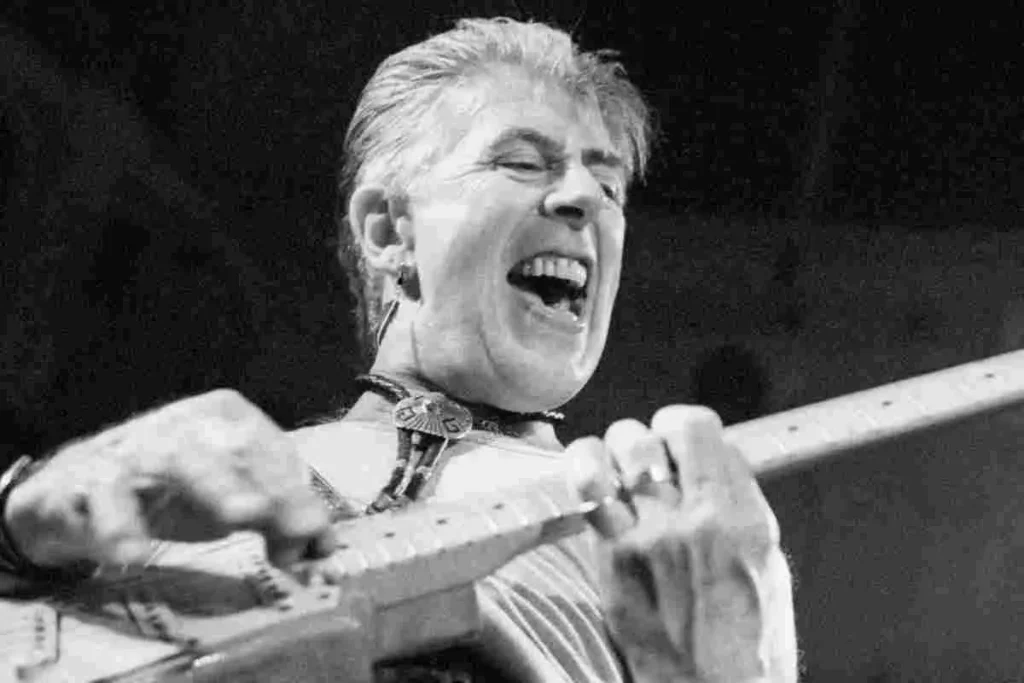
John Mayall’s most radical move was never a guitar lick. It was management.
In the quote that sparked this piece, Mayall explains his approach with the calm confidence of a craftsman who knows his tools: build a band around a sound, hire the right personalities to execute it, and then keep evolving. It is the language of Ellington and Basie more than it is the language of bar-band blues.
“If you go into blues history… you find bands formed around the bandleaders… The main man chose the musicians to create a specific sound.”
John Mayall, quoted in The Guardian interview referenced by the reader
That mindset is why the Bluesbreakers became less a single “group” and more a rolling institution: a place where young players got sharpened, tested, and then launched. If you want to understand British blues and a big chunk of British rock, you do not start with a record sleeve. You start with Mayall’s ears.
Mayall’s secret weapon: the bandleader mindset
Mayall framed his role in the traditional bandleader sense: not just frontman, but curator and sonic director. In practice, that meant he treated personnel changes as sound design, not drama.
His official biography of forming the Bluesbreakers after moving to London highlights how the band’s shifting lineups intersected with the rise of major British blues-rock figures. That revolving-door history is not an accident, it is the whole model.
Why this is “edgy”: Mayall made authenticity a job requirement
Plenty of musicians say they value “feel.” Mayall operationalized it. If a player could not deliver the tone, the time, and the attitude that matched his concept, they did not stay long.
That can sound cold, but it is also honest. Blues is emotional truth delivered with technique, and Mayall treated technique as the entry ticket, not the destination.
“The blues singer should sing songs about his own life”
Mayall’s other big claim in the quoted passage is even more provocative: blues is not primarily about copying. It is about testimony. This idea collides head-on with how the British blues boom is sometimes caricatured as imitation.
Mayall did cover American blues masters, and he did it with seriousness rather than costume. But he also insisted on writing from his own experience once he found his voice, a point emphasized in career overviews of his catalog and long arc as an original writer.
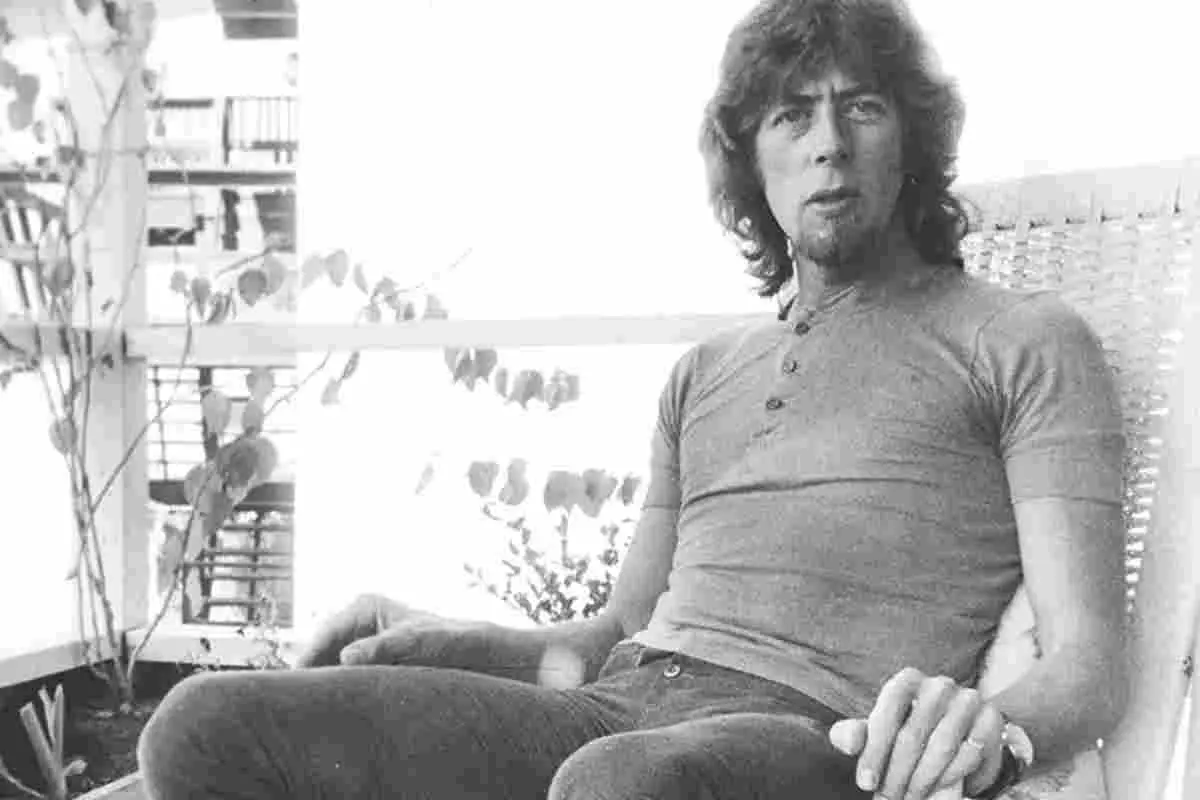
The uncomfortable truth: “authentic” blues is not a museum exhibit
Some fans use the word authentic like a fence, not a compliment. The fence says: stay inside the tradition, do not mix, do not modernize, do not admit you learned anything from outside the genre.
Mayall did the opposite. He treated blues as a living language, and living languages borrow words. Which leads to his most under-discussed ingredient.
Mayall’s jazz upbringing changed his blues phrasing
In the reader-provided quote, Mayall says jazz was in the house because of his father’s work. That matters because jazz training changes what a musician listens for: chord movement, dynamics, space, and conversation.
Profiles of his jazz-adjacent sensibilities underline Mayall’s long-running openness to horns, extended forms, and improvisational flexibility.
Think of it this way: a straight blues band can be a photograph. A Mayall band often feels more like a film scene. Players react in real time, and the arrangement breathes.
The Bluesbreakers as a “talent engine” (and why it worked)
Mayall’s claim that the later careers of his bandmates prove his selection skills is not mere bragging. It is measurable. The Bluesbreakers’ alumni list reads like a map of British blues-rock’s power grid.
Even a broad overview of notable Bluesbreakers alumni shows the breadth of musicians who passed through Mayall’s orbit over decades.
What Mayall actually recruited for
- Tone discipline – players who could shape sound without hiding behind volume.
- Time feel – the pocket mattered more than flash.
- Respect for the song – solos served narrative, not ego.
- Curiosity – openness to jazz colors, different lineups, and new material.
That last point is key. A band built purely for replication eventually collapses under its own nostalgia. A band built for interpretation can keep changing and still feel like itself.
One record, one snapshot: “Blues Breakers with Eric Clapton”
You cannot discuss Mayall’s bandleading legacy without confronting the elephant in the room: the era when Eric Clapton joined and the Bluesbreakers became a cultural lightning bolt. The album often gets treated as Clapton’s moment, but it is equally Mayall’s proof of concept.
The album’s history, personnel, and context are widely documented, including how it captured a specific British take on electric blues at a pivotal time – an era later recognized in institutions like the Blues Hall of Fame.
| Mayall’s role | What listeners often credit instead | Why Mayall still matters |
|---|---|---|
| Sound direction and repertoire choices | “The guitarist made it” | The guitarist was hired into a concept |
| Band chemistry and pacing | “It just happened” | Chemistry is curated, not wished into existence |
| Respectful tradition + personal evolution | “A perfect tribute band” | Tribute was the starting line, not the finish |
Mayall’s real innovation: treating blues like a framework, not a script
Mayall’s statement “I’ve never thought the blues was a matter of copying other people” is easy to applaud and hard to practice. The deeper implication is that you should steal the method, not the surface.
Method means: tell the truth, keep the groove honest, and make the band sound like a single organism. Surface means: the same turnaround, the same licks, the same vocal affectations.
A practical takeaway for working musicians
If you lead a blues band (or any band), Mayall’s approach is a blueprint you can use without needing 1960s London.
- Write a one-sentence sound goal – “Chicago bite with jazz harmony” or “dry Texas shuffle with pop hooks.”
- Audition for listening, not playing – ask how they would leave space for the vocal.
- Build the set around contrast – fast/slow, loud/quiet, minor/major, tight/loose.
- Use covers as confession – explain why the song fits your life now.
That last step is where many bands chicken out. It is safer to cosplay a classic record than to reveal anything real. Mayall’s point is that the blues does not reward safety for long.
Legacy without worship: why Mayall still challenges blues fans
Mayall’s career can be read as a rebuke to two lazy extremes: the purist who freezes blues in amber, and the rocker who uses blues as a shortcut to “cred.” He managed to honor the tradition while refusing to be trapped by it.
When retrospectives of his role as a British blues pioneer and career catalyst summed up his life, they repeatedly emphasized how central he was to the scene – and how many other careers he helped ignite.
Where to start listening (a guided path)
- Early Bluesbreakers era – to hear the blueprint of British electric blues.
- Albums with expanded instrumentation – to catch the jazz influence in arrangement choices.
- Later-period live recordings – to hear how a bandleader keeps a language alive over decades.
For a quick overview of just how wide his recorded output is, summaries of his extensive discography are a useful map.
Why the Guardian quote matters (even if you disagree)
The reader’s excerpt is more than a nice pull-quote. It is an argument about authorship. Mayall is saying: the band sound is not an accident, and the blues is not a photocopy machine.
If that irritates you, good. Blues should irritate you a little. It was born from friction: between pain and pride, between structure and improvisation, between tradition and the need to speak in the present tense.
Mayall chose musicians the way great bandleaders always have: to make a specific sound real. Then he demanded that sound tell the truth about someone’s life, ideally the person singing it.

Conclusion: Mayall’s ears were the instrument
John Mayall is often praised as a pioneer, but “pioneer” can sound quaint, like a plaque. A better description is that he was a working bandleader with unusually high standards and unusually wide taste.
He did not just play the blues. He built an environment where the blues could evolve, where careers could ignite, and where the music stayed personal instead of becoming a reenactment.
If you want to honor Mayall’s message, do not only learn the licks. Build the band. Write the truth. And let your upbringing, whatever it was, leak into the groove.