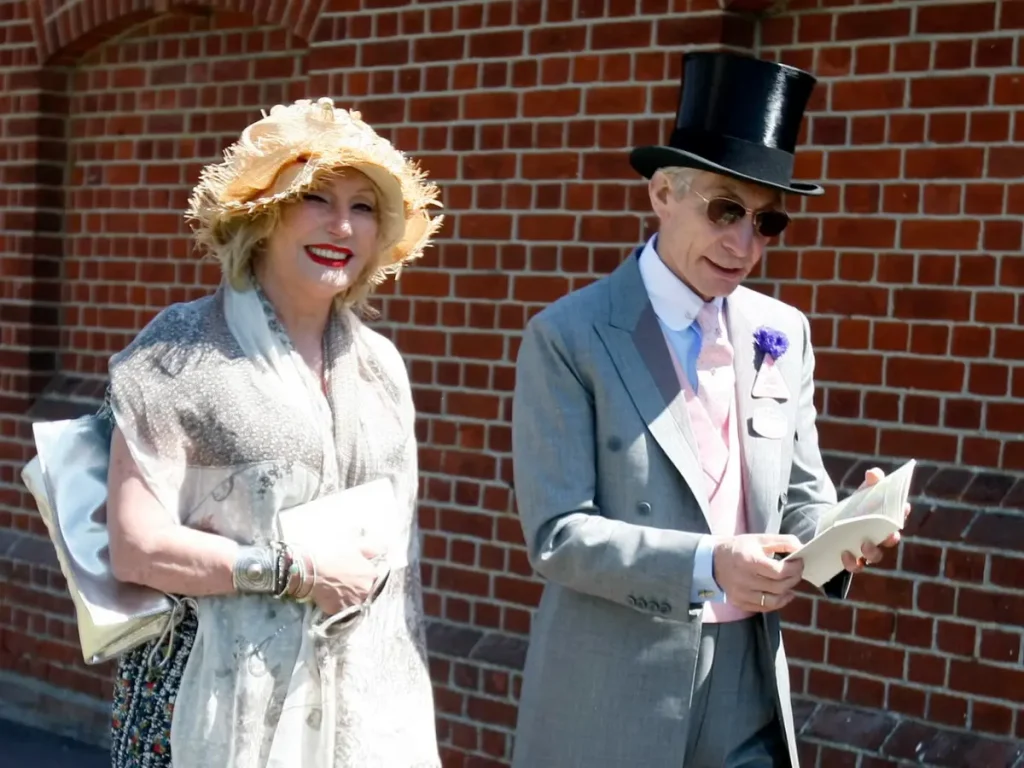
In a band built on excess, Charlie Watts and his wife Shirley quietly wrote one of rock’s strangest love stories.
While the Rolling Stones burned through scandals, wives and girlfriends, Charlie and Shirley stayed married for 57 years. Their story is not some tidy fairy tale – it runs through art school romance, rage at rock’s sexism, heroin, alcoholism and a 600-acre Arabian horse sanctuary in Devon.
Art school, jazz clubs and a London girl named Shirley
Shirley Ann Shepherd grew up in London and by the early 1960s had made it into the Royal College of Art, the cool nerve center of Britain’s art scene. There she met another quiet student with sharp suits and a sketchbook – a young graphic artist and part-time drummer named Charlie Watts.
According to equestrian accounts, the pair met in 1961 while both were studying at the Royal College of Art and married in 1964, the year after Charlie officially joined the Rolling Stones. They would eventually have one daughter, Seraphina, in 1968, and remain married until Charlie’s death in 2021, a near-unheard-of run for a major rock musician.
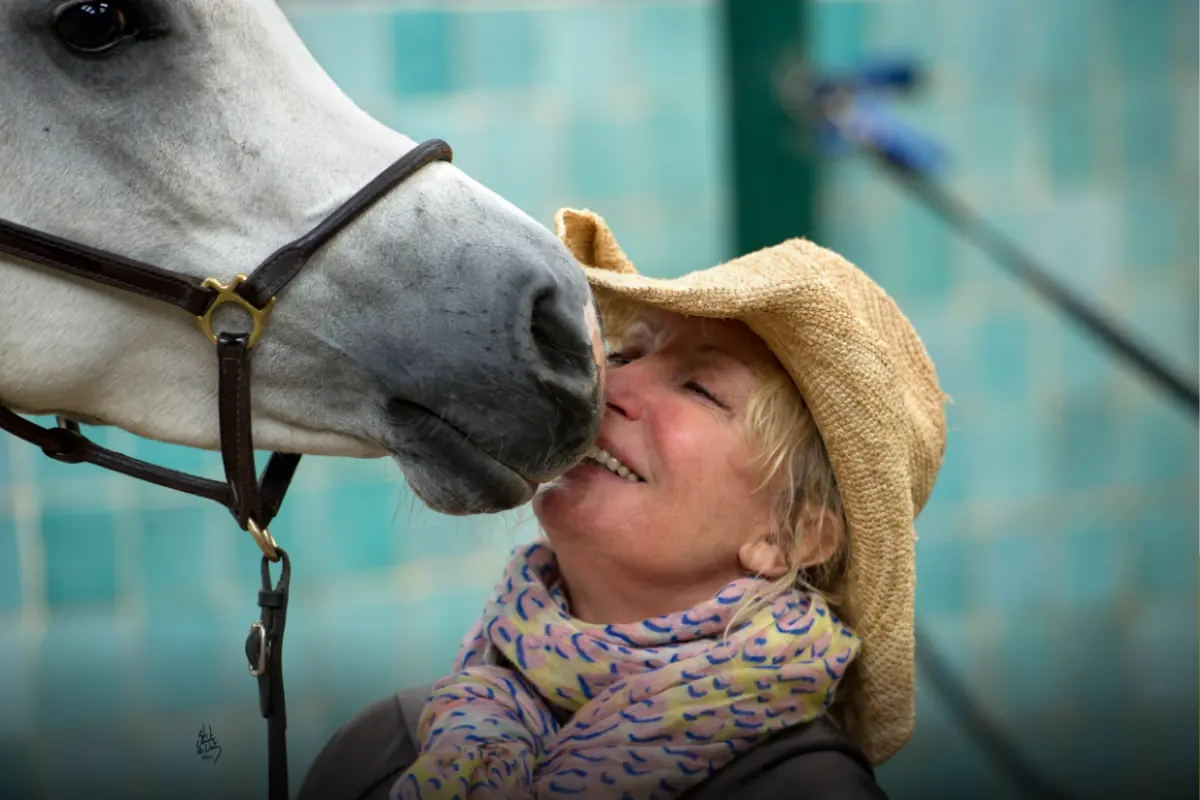
Their shared life quickly grew beyond London. The couple developed a serious passion for Arabian horses, eventually founding Halsdon Arabians on a 600-acre estate in north Devon that housed around 200 horses at its peak, alongside rescue animals and beloved greyhounds. In that rural bubble, Charlie the rock star was often just “Mr Watts from the stud down the lane.”
A rock star wedding the label did not want
Charlie and Shirley’s marriage began as a quiet act of rebellion. In 1964, with the Stones’ popularity exploding and management terrified of killing the band’s sex appeal, the couple slipped away to Bradford, married without even telling the other Stones, and celebrated with a modest pub lunch instead of a showbiz reception. For a time Charlie denied to reporters that he was married at all, fretting that it would damage his career, while Shirley calmly confirmed the truth and said they simply could not stand living apart any longer, as later recounted in accounts of her life.
Shirley vs the Rolling Stones machine
Shirley never pretended to enjoy the circus that came with her husband’s job. Years later she described being “pitched into the life of the Rolling Stones” as overwhelming and said she felt lost for decades inside that world. She liked the individual band members “up to a point”, but had harsh words for rock culture itself, especially the way it treated women and the particular macho attitude around the Stones. In her view, respect was in short supply, as she put it in later interviews.
At home, though, she was more of a fan than Charlie. He famously disliked listening to his own band’s records, while she would play Stones albums around the house and maintain warm relations with Mick Jagger and Keith Richards. Yet she also carried deep anger about the band’s drug-fuelled lifestyle and the collateral damage it caused. Shirley herself slid into alcoholism for a time and later said she fought her way back partly by spending long, solitary hours sculpting horses and dogs in her studio.
She was no passive rock wife. Shirley was arrested at Nice airport in 1971 after attacking customs officers who were allegedly targeting Charlie, and decades later threatened legal action against Polish officials over the treatment of Arabian mares at a state-run stud. This was a woman who hated the rock-star world, but would absolutely go to war for her husband and her horses, a pattern remembered in obituaries.
Key milestones in the Watts marriage
| Year | What happened |
|---|---|
| 1938 | Shirley Ann Shepherd is born in London. |
| 1941 | Charlie Watts is born in London. |
| 1961 | Charlie and Shirley meet while studying at the Royal College of Art. |
| 1963 | Charlie joins the Rolling Stones as drummer. |
| 1964 | The couple marry quietly in Bradford, away from the spotlight. |
| 1968 | Their daughter Seraphina is born. |
| Early 1980s | They develop Halsdon Arabians into a major Arabian horse stud in Devon. |
| Mid 1980s | Charlie’s drinking and heroin habit nearly destroys the marriage. |
| 2012 | Charlie secretly buys the prized mare Etnologia at auction as a surprise for Shirley. |
| 2021 | Charlie dies at 80; the marriage has lasted 57 years. |
| 2022 | Shirley dies at 84, after a short illness in Devon. |
Devon instead of decadence: building Halsdon Arabians
By the early 1980s, the couple had found their escape route from rock’s madness in the hills of north Devon. Shirley recalled turning down a tiny country lane marked “Halsdon” and suddenly seeing a medieval manor house framed by woods, river and valley that felt like the end of the world. Both she and Charlie fell for the place instantly and decided to make it home, later calling Devon their personal heaven.
Halsdon Arabians became a powerhouse of the Arabian horse world, packed with elite Polish-bred mares and a roster of stallions whose names meant more in breeding circles than any Rolling Stones hit. Shirley threw herself into the breeding program with almost frightening intensity, while Charlie, usually anonymous in a flat cap and tweed, quietly attended auctions and shows at her side. In 2012 he even arranged, behind her back, to buy the fiercely contested mare Etnologia at the Pride of Poland sale as a surprise gift, a gesture that left Shirley visibly overwhelmed.
Friends from the horse world talk about days spent walking the paddocks with the Wattses, visiting foals and retired champions while greyhounds and rescue horses roamed the grounds. Shirley said what she loved most was simply being among the horses, feeling their breath and earning their trust. That daily rhythm – mucking out, breeding decisions, long walks in the rain – was the antidote to stadium tours and hotel rooms.
The groove that made space for another life
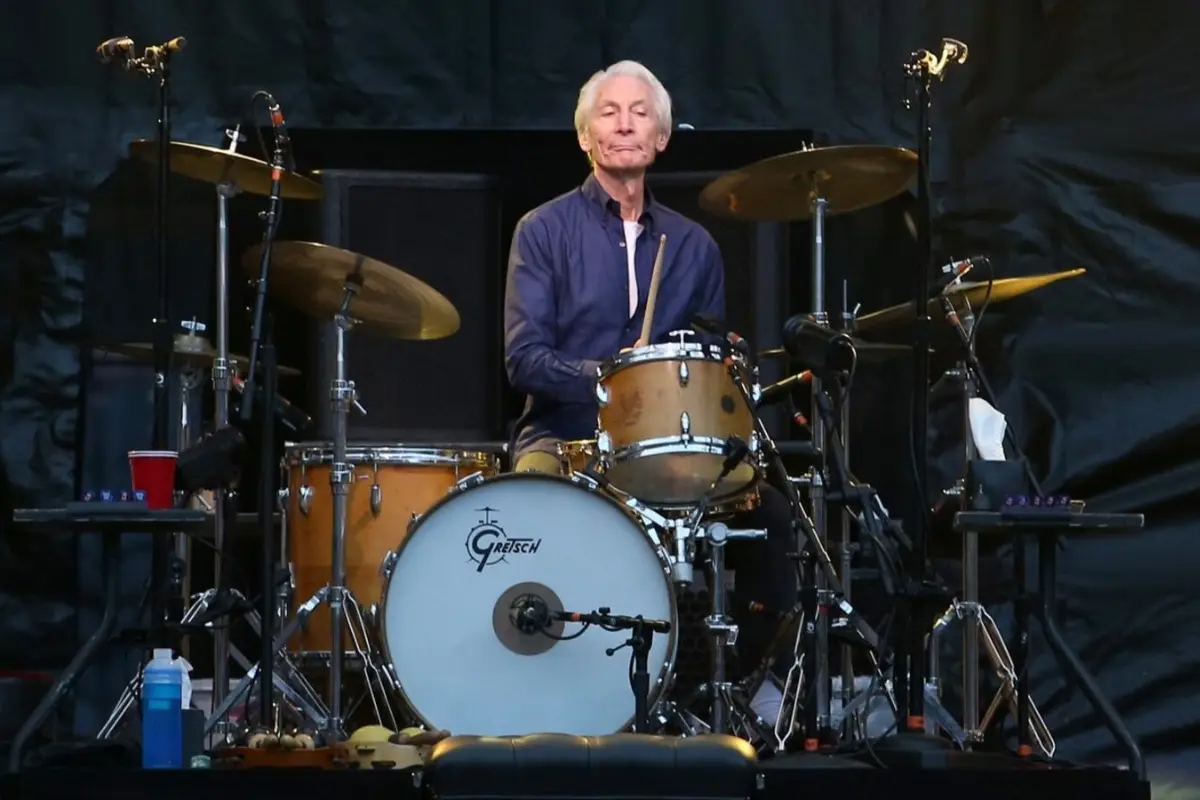
Musically, Charlie was the anti-showboater. Where many rock drummers chased fills, he came from jazz and blues, keeping the beat slightly behind the guitar to create that loose, dangerous Stones swing. In the early 60s the band were fanatics for American blues, filling their sets with Willie Dixon and Slim Harpo tunes, and Charlie’s feel helped turn that obsession into something that could fill arenas without losing its grit.
That same instinct for leaving space defined his life offstage. He rarely chased the spotlight, avoided the fashionable London scene when he could, and poured his creative energy into graphic design projects, small jazz bands and the low-key routines of home. It is no coincidence that the one Rolling Stone who consistently played “just enough and never too much” is also the one who tried hardest to preserve a private, almost old-fashioned marriage.
The crack in the china: when Charlie nearly blew it
For years Charlie cultivated the image of the “sensible Stone” – a married man, more interested in suits and sketches than starlets, who would rather sit in a hotel sketching the furniture than hit the clubs. He was known for refusing groupies and, on the infamous visit to the Playboy Mansion in the early 70s, supposedly spent his time playing games rather than joining the party. Away from the road, he lived with Shirley at Halsdon House in Devon, where their Arabian horse stud made them local country gentry as much as rock royalty, as noted in biographical profiles.
But in the mid 1980s that cool self-control cracked. Charlie later admitted that around 1983 his moderate drinking and occasional drug use turned into something darker; he became, in his words, a different person and came close to losing his wife because of his behaviour. What had been a model of restraint plunged into a classic rock narrative: bottles, powders and a marriage on the brink, a fall documented in accounts of his life.
Family stress, Dirty Work and heroin
The timing could hardly have been worse. The Dirty Work sessions were fractious, with Jagger and Richards at each other’s throats and the future of the Stones in question. At home, their teenage daughter Seraphina was expelled from school for smoking dope, piling domestic strain on top of band turmoil. Under that pressure, Charlie’s drinking escalated and, shockingly to those who thought of him as unshakeable, he developed a heroin habit. He later said he hit an all-time low in his personal life, became someone “not a nice person” and nearly lost his wife and family as a result.
Unlike some rock star addictions, his spiral was short but brutal. He never became a street-level junkie, but his health deteriorated and his professionalism slipped. The man who prided himself on showing up sober, on time and in a suit suddenly found himself collapsing in the studio and falling down cellar steps drunk. For a couple who had always defined themselves against the clichés of the band, this was the nightmare they thought they had dodged.
Getting clean: Shirley as lifeline, not accessory
Charlie later acknowledged that the addiction nearly cost him his career and even his home, and that it was Shirley who helped anchor him while he quit. One obituary notes that things got so bad even Keith Richards – hardly a poster boy for moderation – told him to get it together, a warning that finally cut through. Charlie kicked heroin, stopped drinking heavily and slowly rebuilt his life around jazz projects and the calmer routine at Halsdon, according to remembrances of his final years.
In the documentary series “My Life as a Rolling Stone”, he looks back on that period with a mix of embarrassment and clarity. He admits that he took a lot of drugs late in life and “did not do it very well”, saying he nearly lost both his marriage and his life. Keith’s verdict was blunt: Charlie Watts was one of those people who simply did not need stimulants. Coming from the man who had once defined rock excess, that was a brutal kind of love – and it helped push Charlie back toward the person Shirley had married, as explored in the documentary recap.
Shirley’s anger and her own road back
It would be tidy to portray Shirley as the eternally patient wife who saved her man, but the truth is more jagged. She spoke openly about the rage and disorientation she felt in the Stones’ world and about how deeply the band’s drug culture cut into her life. Her own drinking turned destructive before she clawed her way back to sobriety, largely through art and the monastic focus of breeding and caring for animals.
That parallel struggle matters. This was not a saint dragging a sinner to safety, but two damaged, stubborn people trying not to drown in the same storm. By the end of the 1980s they had both chosen the hard, unglamorous work of staying: staying together, staying sober enough, staying out of the spotlight on a farm where the most important schedule was feeding time.
Until the end: what their story means
Charlie died in 2021, Shirley the following year, and the Arabian horse community grieved them as fiercely as rock fans did. Tributes from breeders described them not just as celebrity owners but as serious, hands-on stewards whose horses knew them by sight and voice, a view captured in tributes from the Arabian world.
In a band built on chaos, their marriage was the quiet, fragile center that almost shattered once and somehow held. It survived record-company pressure to hide it, decades of touring, drugs, anger at misogyny, and two separate battles with addiction. If you listen to a classic Stones track now and focus on Charlie’s restrained backbeat, it is hard not to hear Shirley in there too – the woman who despised the circus, loved the man, and insisted that there was more to life than eternal Saturday night.
The edgy truth about Shirley and Charlie Watts is that they did not transcend rock’s darkness so much as live with it and outlast it. Their story will never be as famous as the scandals that surrounded the Stones, but for many older fans it is the more subversive one: two flawed people choosing, repeatedly, not to walk away.