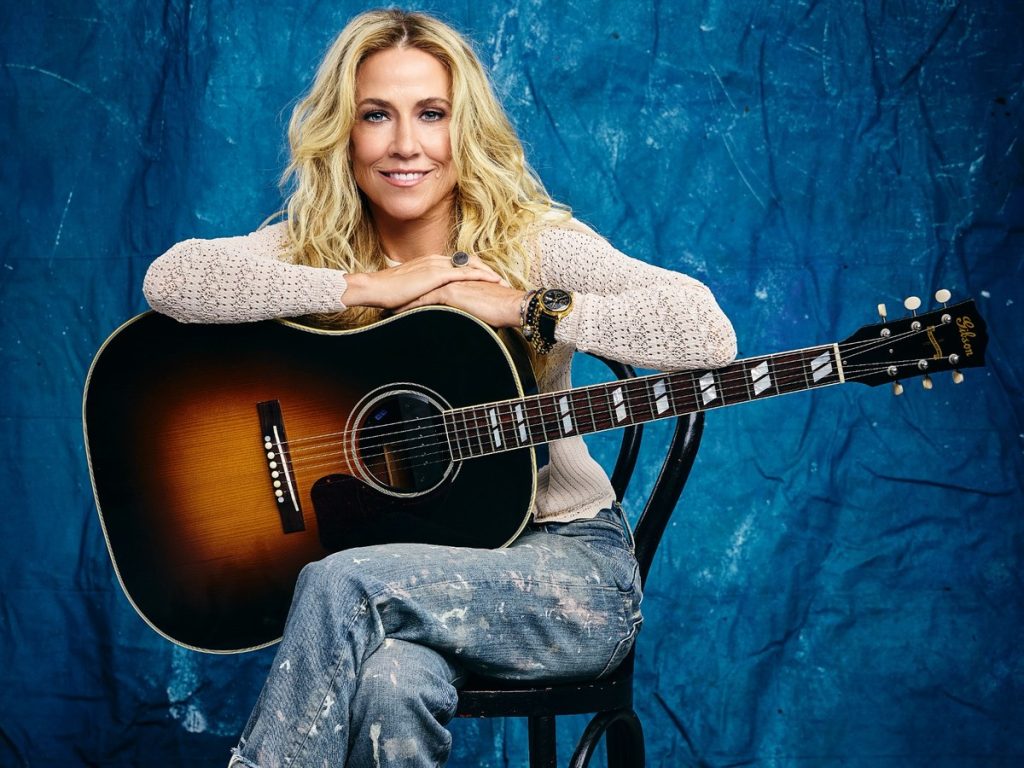
Sheryl Crow has never been shy about politics, but her latest interview goes further than most. Speaking to Spain’s El País in a conversation published on November 28, the nine-time Grammy winner said the United States is not a dictatorship yet, but that President Donald Trump “is following the rulebook for creating one.”
The interview was meant to promote her new album, Pick You Up. It turned into one of the bluntest political statements a major American rock artist has made this year.
What she actually said
Asked by El País whether the country can recover from the divisions of the Trump era, Crow told the paper that the president “has done an insurmountable amount of damage,” but added that “he won’t be around forever and we will recover.” She argued that Trump knew how to exploit a segment of the population that was willing to buy into fear and hate, and said she hopes Americans eventually understand how they were manipulated.
She did not stop at Trump. Asked what is driving the increasingly aggressive tone of politics around the world, Crow pointed at money, telling the paper that “we have allowed billionaires to become trillionaires” and predicting a pendulum swing the other way.
The line El País chose for its headline came from a question about her two teenage sons and whether she sees young men drifting toward conservative positions. Crow said the family has had “uncomfortable conversations in the kitchen” about it, and blamed social media algorithms that feed boys content from what she called the manosphere. She said she asks her sons what is really encroaching on their freedom: a woman’s success, someone changing their sex, or someone bringing a gun into their school. Only the last one, she told them, actually does.
She also tied the MAGA movement directly to her worries about technology. Her greatest fear, she told El País, is that people lose the ability to think critically and accept whatever they read as true, adding: “That’s how the MAGA movement happened: many people bought what they were sold.” She described herself as terrified of how far artificial intelligence is reaching into daily life.
It is worth being precise about what Crow did and did not say. She did not say the US is a dictatorship; she explicitly said it is not, “yet.” Her claim is about direction of travel, and it is her opinion, given in an interview. No response from the White House had been reported when this article was published.
A long record of speaking out
None of this comes out of nowhere. Crow has been one of the more consistently political voices in mainstream rock and country-adjacent music for three decades, from her outspoken support for gun-control measures to her environmental activism.
In 2025 she made headlines when she sold her Tesla in protest at Elon Musk, telling an interviewer at the time that she was “fighting for my kids.” The same year, she told Variety that she calls her representatives every single morning, and she has spoken openly about what it is like to be a liberal artist living in a deep-red state like Tennessee.
Her fears about AI also have a track record. Crow has said in previous interviews that artificial intelligence helped push her into making new music, and she repeats that worry to El País, describing the possibility of AI being used against people as terrifying.
So the El País interview is less a change of direction than a sharpening of it. What is new is the language: “dictatorship” is a word mainstream artists usually avoid, even when they are openly critical of a president.
The album behind the interview
The occasion for all this is Pick You Up, Crow’s 12th studio album, which she released on October 9. It was trailed by the single “Freedom Bus,” featuring Jesse Welles, and was announced in August as a record about freedom, hope and unity.
In the El País piece, Crow frames the album as a reaction to a world shaped by screens and algorithms. She says she finds beauty “in nature and with my kids,” and that she has to put her phone away to experience it. She told the paper she hopes listeners feel the hope in the record and realize they are not alone.
She also used the interview to talk about the women coming up behind her. Asked about younger stars such as Olivia Rodrigo, Lorde and Haim citing her as an influence, she called it “the highest compliment.” She recalled that when she started out, every position of power in the music business was held by men with opinions about how she should dress and whether she should produce her own records, and she said that in some respects the industry is now backsliding.
What happens next
Crow’s comments are likely to land the way her political statements usually do: cheered by fans who share her views and sharply criticized by those who think musicians should keep politics out of it. That argument has followed her for years, and she shows no sign of turning the volume down.
Next year also brings a milestone that puts her back in the spotlight. 2027 marks 30 years since Lilith Fair, the all-female touring festival she helped make famous alongside Sarah McLachlan, Bonnie Raitt and others. Crow told El País the tour proved that women could sell tickets when promoters and male agents insisted they could not.
For now, the question her interview leaves hanging is the one her critics and supporters will argue over in equal measure: is she sounding a fair warning, or should she stick to music?