
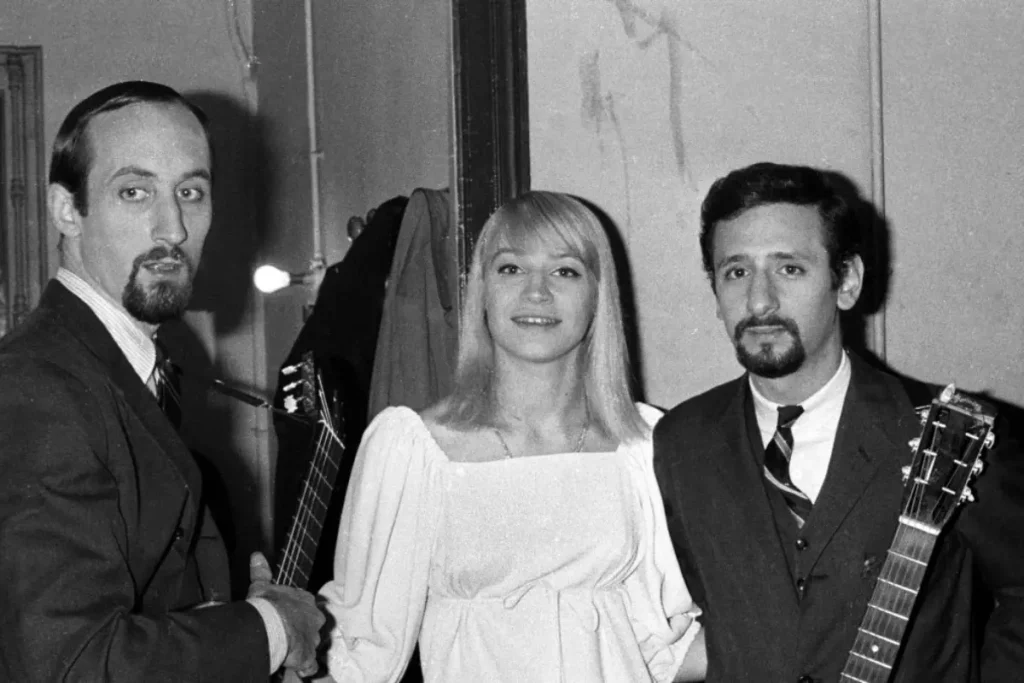
Folk music was not supposed to “win” in 1962. It was supposed to be earnest, maybe a little scruffy, and safely parked in coffeehouses while rock and pop fought for the charts.
Then Peter, Paul & Mary arrived and did the unthinkable: their self-titled debut climbed to No. 1 on the U.S. album chart. The project didn’t just sell well, it rewired what mainstream America thought folk music could do: be political and popular, communal and commercial, gentle on the ears but sharp on the conscience.
The No. 1 moment that made the industry blink
By late 1962, the trio’s debut was sitting at the top of the album pile, elbowing aside the idea that folk belonged in a niche. The chart proof still lives in the trade paper record, where the album appears at the summit of Billboard’s LP listings for that week.
That achievement matters because it happened before the British Invasion, before “folk rock” was a label, and before Dylan became a household name. This was folk’s big commercial test, and it passed with flying harmonies.
Three voices, one carefully engineered collision
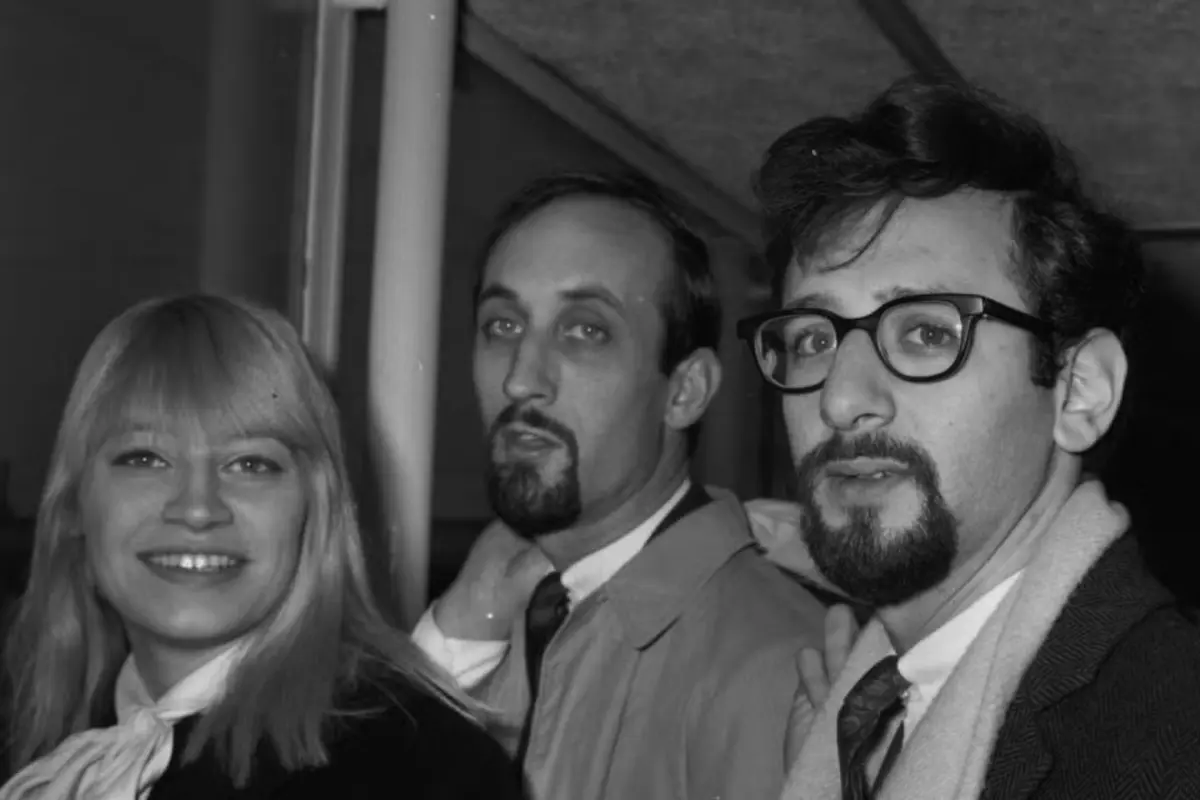
The lineup is etched into American music memory: Peter Yarrow (tenor), Noel Paul Stookey (baritone), and Mary Travers (contralto). Their blend sounded effortless, but the group itself was a kind of controlled experiment: put three strong personalities in one mic circle and let them become a single instrument.
Even the plain facts underline how “designed” the result was, right down to the clean presentation and consistent repertoire choices on the debut’s track list.
“The answer, my friend, is blowin’ in the wind.”
– Bob Dylan
The debut album’s secret weapon: material with a message
Lots of early-60s pop hits were built on novelty, teen romance, or dance crazes. Peter, Paul & Mary leaned into something riskier: songs that carried social weight, historical memory, and moral urgency, without sacrificing melody.
Seeger’s songs: protest that could be sung in tune
Two of the most famous entries in the trio’s orbit came from Pete Seeger’s world, where sing-alongs weren’t mere entertainment, they were a strategy for solidarity. Smithsonian Folkways’ catalog context keeps “If I Had a Hammer” tied to Seeger’s songwriting legacy and the folk tradition that powered it.
“Where Have All the Flowers Gone” belongs to the same lineage, with Folkways documenting its place in the American folk canon and the way it traveled across generations as an antiwar lament.
Here’s the provocative part: the trio didn’t “soften” protest songs so much as weaponize beauty. The harmonies made the message harder to ignore because radio couldn’t dismiss it as noise.
“500 Miles” and the art of emotional minimalism
Another pillar of the debut’s appeal is how spare arrangements amplify the lyric. A folk trio can create huge emotional space with almost nothing: a steady guitar pulse, blended voices, and the confidence to let silence do some of the work.
That restraint became a blueprint for countless acoustic acts later, including singer-songwriters who learned that intimacy can scale to arenas if the song is strong enough.
“Lemon Tree” and the pop crossover trick
The album also understood a truth the purists hated: variety sells. Light, melodic material helped the record live in living rooms where hard-edged topical songs might have been unwelcome. It wasn’t selling out so much as expanding the doorway.
Albert Grossman’s era: when folk got managed like a business
Peter, Paul & Mary are often treated as an organic “we just sang together” story. The bigger reality of the folk boom is that it had infrastructure: managers, booking networks, label strategy, and publicity.
Grossman’s broader world is closely associated with Dylan’s early professional machine, and the Dylan camp’s memoir literature captures how significant management and publishing decisions were in that ecosystem. Call it cynical if you want, but it’s also why folk music was able to compete with pop: it started behaving like a serious industry, not only a scene.
The Dylan connection: folk’s most profitable “right of refusal”
One of the smartest career advantages the trio had was proximity to Dylan’s songwriting just as it was igniting. Their version of “Blowin’ in the Wind” became the gateway for a lot of mainstream listeners who might not have embraced Dylan’s rawer delivery first.
Dylan’s official song entry preserves the core text and lineage of “Blowin’ in the Wind”, underscoring how quickly it became a standard that other voices would carry into public life.
Here’s the edgy claim that holds up: Peter, Paul & Mary helped turn Dylan into a mass-market songwriter before he was a mass-market artist. That distinction matters, because it’s how protest ideas slip into the bloodstream: as “great songs,” not lectures.
From charts to marches: why this trio mattered in the civil rights era
The group’s timing put them directly into the cultural engine of civil rights activism. The Library of Congress notes the centrality of music to the movement, from mass meetings to public demonstrations, where communal singing created courage and cohesion.
That same institutional record helps explain why folk artists weren’t just “celebrity supporters.” Their format was functional: portable songs, easy choruses, and moral clarity that could be shared quickly.
The March on Washington and the folk front line
The trio performed at the 1963 March on Washington in a lineup that also included Dylan and Joan Baez.
When people debate whether music “changes anything,” this is your case study. Songs didn’t pass laws, but they helped build the human momentum that made inaction politically expensive.
How the debut album actually sounds (and why it still works)
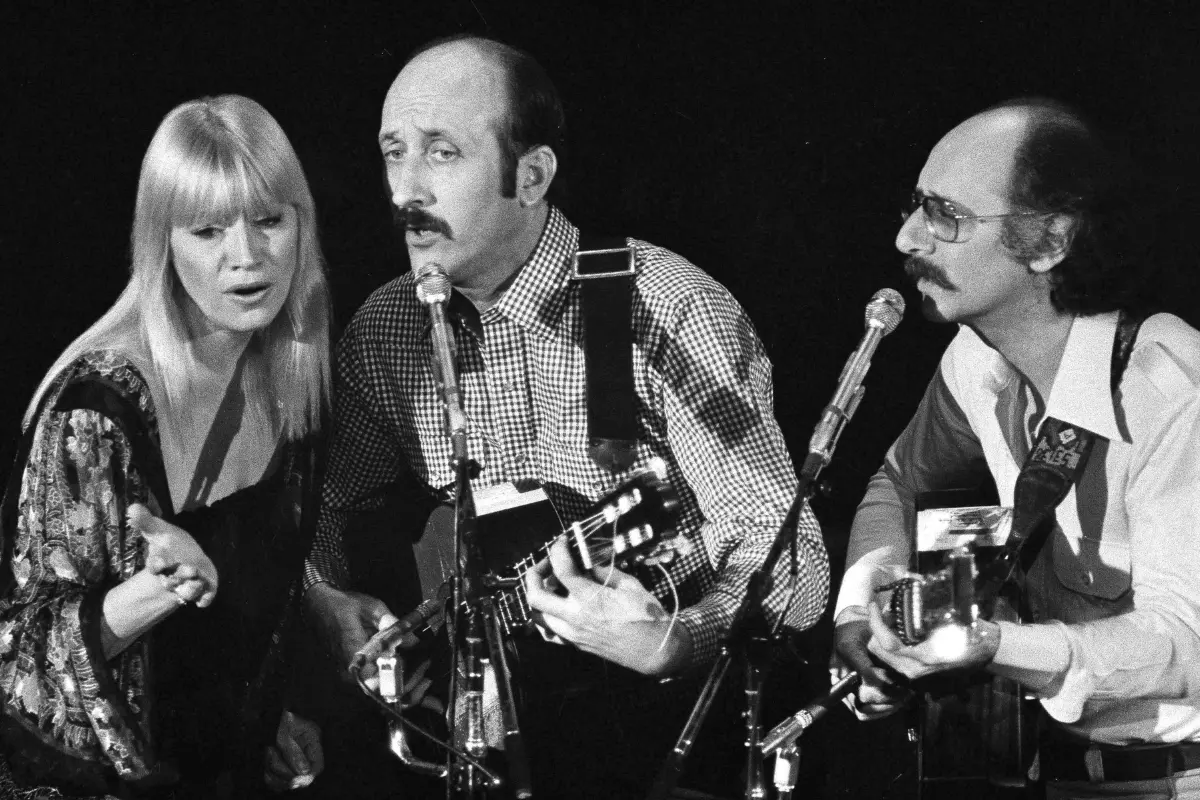
A lot of early-60s recordings feel dated because they’re glued to studio gimmicks. This album holds up because it’s mostly three voices plus acoustic instrumentation, captured with clarity rather than spectacle.
If you’re listening with musician ears, focus on these elements:
- Blend discipline: vowel shapes match across voices, so chords lock.
- Dynamic control: they swell together, then pull back without losing pitch center.
- Role swapping: lead lines move between members, keeping textures fresh.
- Lyric priority: arrangements stay out of the words’ way.
Quick “impact audit”: what this No. 1 album proved
| What people assumed | What Peter, Paul & Mary demonstrated |
|---|---|
| Folk music can’t compete with pop on charts | It can, if the songs are undeniable and the presentation is radio-ready |
| Protest songs are too “heavy” for mainstream audiences | Beauty and harmony can carry political ideas farther than shouting |
| Serious songwriting belongs outside commercial entertainment | A hit record can be a Trojan horse for conscience |
Awards and legacy: the establishment eventually caught up
The Grammys are a useful barometer of when the mainstream decides something is “officially important.” Peter, Paul & Mary appear in the Grammy archive across the era, reflecting the group’s visibility in the industry’s top-tier recognition machinery.
Even if you don’t care about trophies, the institutional footprint matters: it shows how deeply folk, via this trio, entered the center of American culture.
The long game: why this album’s success still irritates the purists
There’s an old argument that Peter, Paul & Mary were “too polished” to be authentic folk. That critique misses the point. Folk music has always been adaptive: it changes clothes to survive and spread.
And in a culture where mass media often sanded down radical ideas, this trio pulled a neat trick. They made “nice” records that smuggled in uncomfortable questions, then let the public sing them at full volume.
“They performed at the March on Washington.”
– Library of Congress contextual documentation on civil rights-era culture
Conclusion: the day folk stopped asking permission
Peter, Paul & Mary’s debut hitting No. 1 wasn’t just a chart stat. It was a cultural signal flare: folk music could sell, could persuade, and could show up where history was being made.
If you want one record that explains how the early-60s went from entertainment to engagement, put on Peter, Paul & Mary and listen to what happens when harmony meets purpose.


