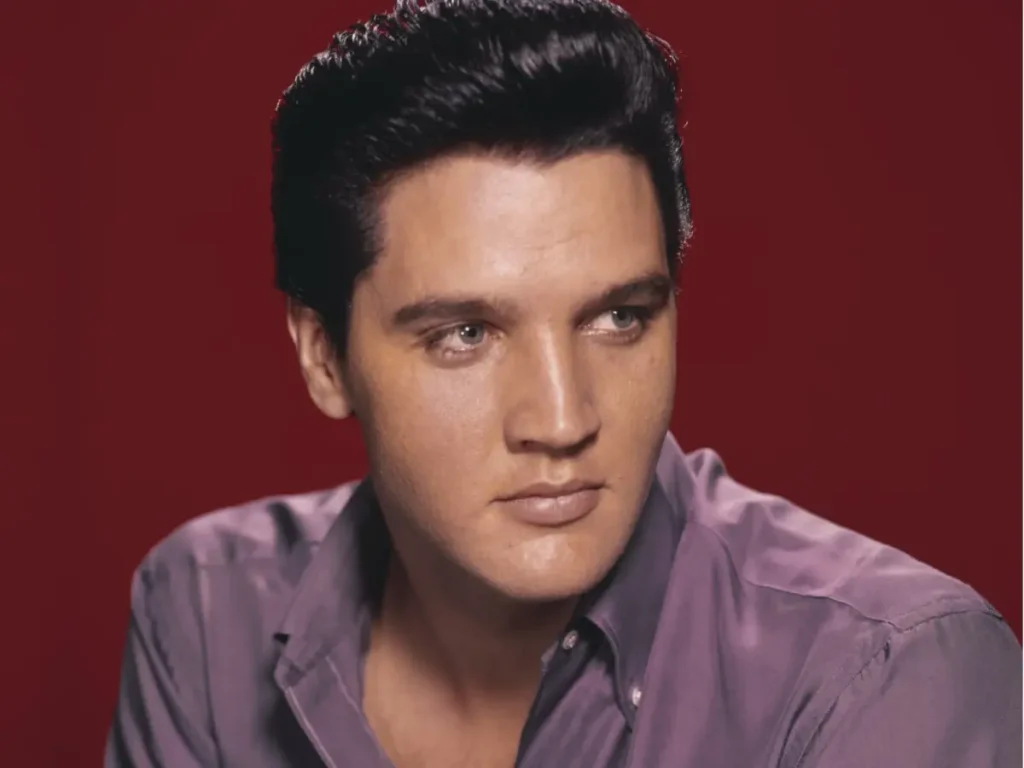
Elvis Presley has been so imitated that it is easy to forget how weird he looked the first time he hit American living rooms. Slick hair, bedroom eyes, a guitar slung low, and that restless, dangerous wiggle.
Strip away the Vegas jumpsuits and the Halloween costumes and you are left with one fact: a poor kid from Mississippi detonated the postwar music business and rewrote global pop culture. This is how he actually did it, why his legacy is still argued over, and why, decades after his death, the King refuses to vacate the throne.
From Tupelo kid to global lightning rod
Elvis Aaron Presley was born in 1935 in Tupelo, Mississippi, a surviving twin in a working class family that leaned heavily on church and radio for escape.[S1] As a teenager in Memphis he soaked up Black gospel at the Assembly of God, hillbilly music on the airwaves, and Beale Street blues, then cut a rough demo at Sun Studio that led producer Sam Phillips to capture the jittery, hybrid sound of “That’s All Right” in 1954.
Within two years he was on national TV, unleashing “Heartbreak Hotel,” “Hound Dog” and “Love Me Tender” on The Ed Sullivan Show and triggering a moral panic that only boosted his sales.[S2] Hollywood snapped him up for a run of glossy films, the U.S. Army drafted him in 1958, and by the time he died of heart failure in 1977 at just 42 – after years of heavy prescription drug use – he had scored around 18 U.S. number one singles and even won three Grammys, all for gospel records rather than rock.
The numbers behind the crown
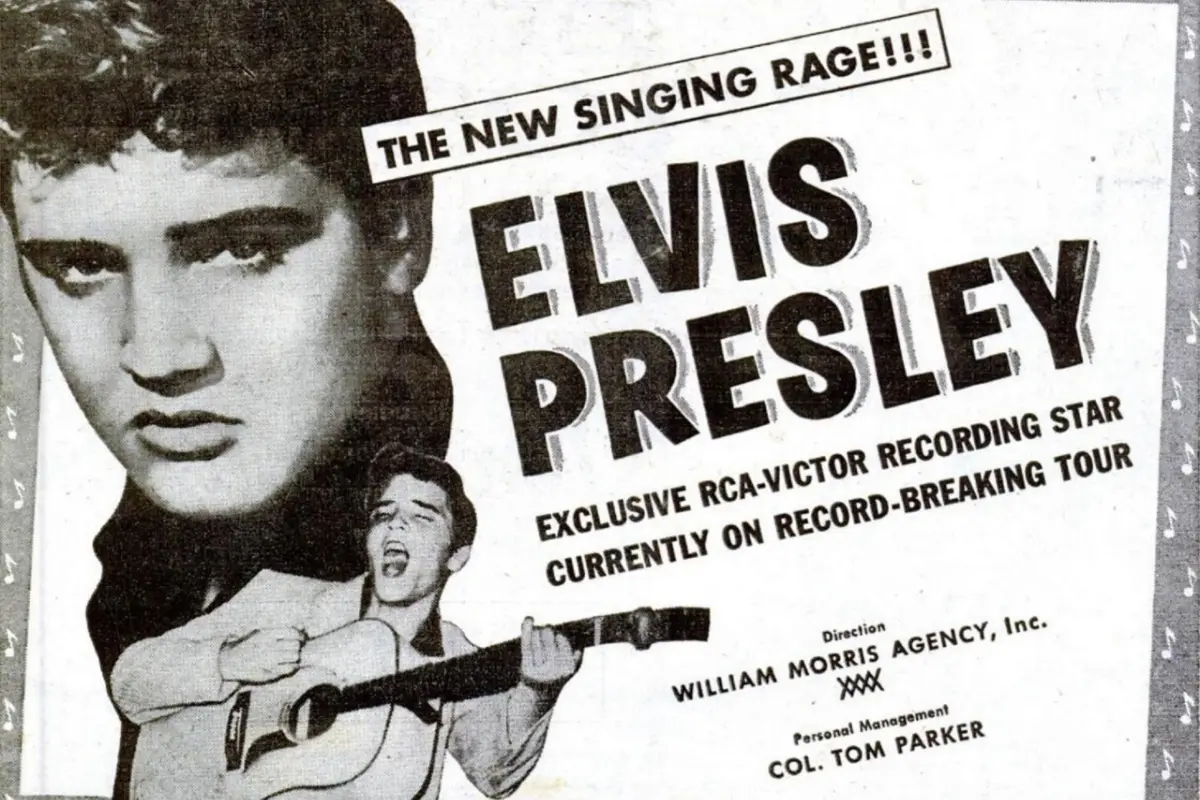
Industry bodies usually shy away from grand titles, yet the Recording Industry Association of America still has to grapple with Elvis’s stats. In the United States alone he has more than 146.5 million certified album units and more gold records than any other act, with 101 separate albums hitting that mark.
Globally, Guinness World Records lists him as the best selling solo artist in history, crediting him with an estimated one billion records sold worldwide, including well over 100 million in the U.S. The exact numbers are fuzzy – they always are with mid century artists – but every serious audit still leaves him in a different commercial league from almost any other solo singer.
On the charts he is just as dominant, holding records for the most albums ever to reach the Billboard 200, the most RIAA certified gold and platinum albums, and an unmatched run of U.K. number one singles and albums for a solo artist. In boring statistical terms, the King still rules a landscape increasingly driven by streaming and short attention spans.
The sound that scandalized America
Rock and roll had multiple parents, but Elvis was the explosive child who walked it into white America’s living rooms. The Rock & Roll Hall of Fame describes how his take on blues, country, rhythm and blues, pop and gospel “ignited a musical and cultural revolution” by delivering Black influenced music to vast mainstream audiences.
At a technical level, his gift was not guitar virtuosity but timing, phrasing and tone. He could yelp like a backwoods rockabilly on “Jailhouse Rock,” croon delicately on “Can’t Help Falling in Love,” then plunge into gospel testifying within a single show, stitching together sounds that were never meant to share a stage.
That fusion came from very specific places, many of them Black and poor, and critics have long accused him of cultural theft. In interviews around Baz Luhrmann’s biopic Elvis, star Austin Butler bluntly said, “We do not have Elvis without Black music and without Black culture,” pointing to his time in Memphis Black neighborhoods, Beale Street clubs and sanctified churches as the true source of the King’s sound.[S9]
Guitars, hips and the live wire show
Although he is thought of first as a voice, Elvis without a guitar looks strangely incomplete. Graceland’s archives trace how he received his first guitar at 11, graduated to a battered 1942 Martin D 18 in the Sun Records era, then moved to flashy Gibson J 200 acoustics and custom Ebony Dove models that became visual centerpieces of his concerts and TV specials.
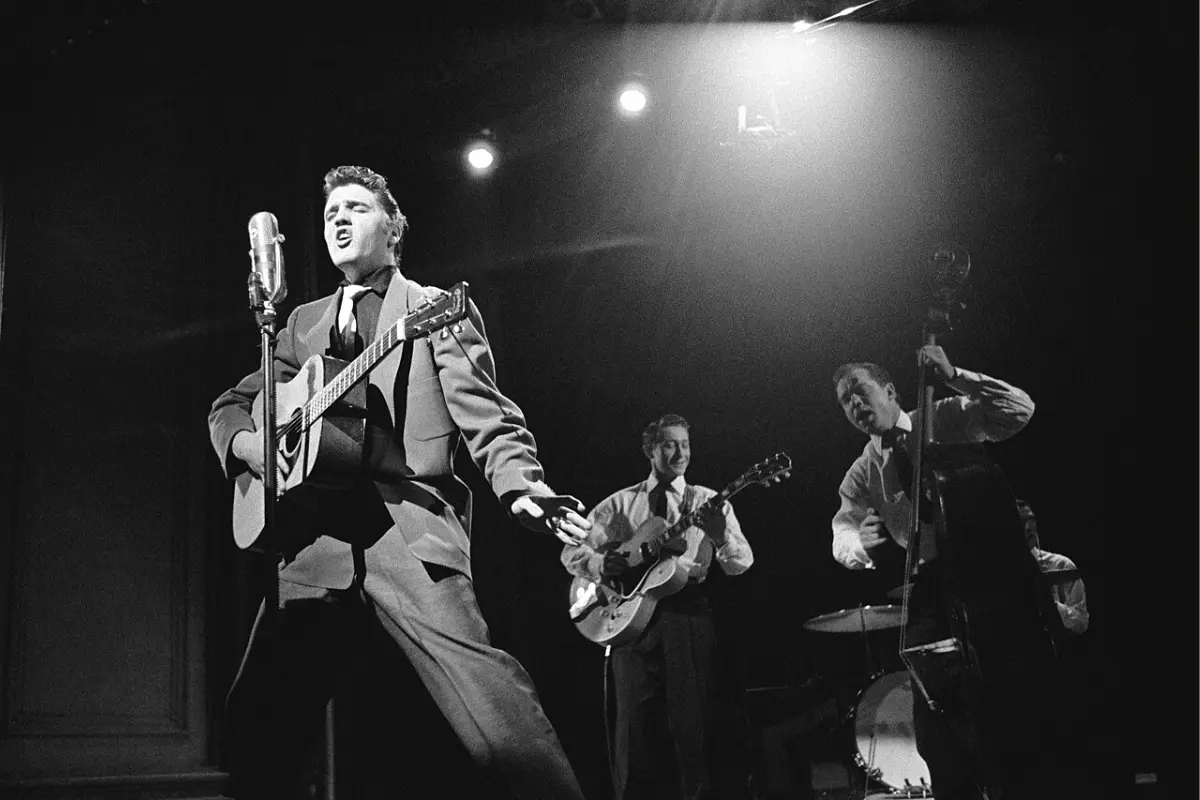
Onstage he often treated the guitar almost like a prop, something to hang off his body while the real show unfolded in his shoulders, knees and pelvis. For mid 1950s television norms that mix of hillbilly glamour and barely disguised sexual energy was so shocking that, infamously, one network started filming him from the waist up to calm outraged sponsors.
By the late 1960s the movies and the pills were dulling his edge, but the 1968 television “comeback special” yanked him back into focus: leather clad, sweating, laughing, and reinvested in the small band rockabilly that made him dangerous in the first place. The HBO documentary Elvis Presley: The Searcher treats that performance and the subsequent From Elvis in Memphis sessions as a late career high point, proof that there was a serious artist under the tabloid caricature.[S7]
Graceland, myth and the messy legacy
Drive up to Graceland today and you are not just visiting a star’s old house; you are entering one of the strangest shrines in American culture. Writers have described how the mansion functions as a kind of secular pilgrimage site, a place where fans project their own hopes and disappointments onto a story that runs from Southern poverty to obscene wealth to lonely, medicated decline.[S8]
That mythmaking has always had a darker edge. Priscilla Presley recently felt the need to publicly swat down stubborn conspiracy theories that Elvis faked his 1977 death, even as she reminded people that she first met him as a 14 year old schoolgirl in Germany while he was a world famous soldier.
His story also sits awkwardly in modern debates about race and power. A white Southerner who adored Black music, hired Black musicians and sometimes spoke against segregation, he still made far more money than most of the Black artists who inspired him, and his megastar image often obscured their contributions even when he tried to credit them.
So why does Elvis still matter?
If you grew up with him, the answer is visceral: few sounds hit as hard as that first slap of echoing guitar and hiccuping vocal on “That’s All Right” or “Mystery Train.” For younger listeners, the question is whether they can hear past the kitsch and scandal long enough to notice how feral and inventive the core records still are.
You can argue, in good faith, that other artists wrote more, played better or fought harder for justice. What is hardest to deny is that Elvis Presley permanently changed how popular music moves, looks and feels, and that everyone from the Beatles and Dylan to Springsteen had to process, copy or reject what he unleashed when he shook his hips and stepped up to the mic.