In the summer of 1975, a Memphis bank teller leaned into the window of a custom Cadillac, just to sneak a look at the King’s car. Seconds later, Elvis Presley himself was at her shoulder, asking if she liked what she saw.
What came next has been retold as a soft-focus fairy tale about an elderly woman dreamily staring at cars she could never afford. The real story is sharper, stranger, and, if anything, even more rock and roll.
The Cadillac gift that actually happened
The documented version begins on Sunday night, July 27, 1975, at Madison Cadillac in Memphis. Elvis had finished a tour and dropped by his favorite dealership, where he was already in the habit of buying cars by the dozen. Out front sat his custom Cadillac limo, the kind of machine that stopped traffic on its own.
Bank teller Mennie L. Person, 33 years old, was admiring that limo when Elvis walked up and asked if she liked it. Stunned, she managed to compliment the car, at which point he told her, in classic Presley deadpan, that the limo was his but he would buy her one of her own. He took her into the lot, told her to pick one out, and she chose a gold and white Cadillac listing for around 11,500 dollars, which he then paid for, even throwing in a check so she could buy clothes to match the car to match the car.
That single act of generosity was only part of an outrageous shopping spree. Accounts from the dealership recall Elvis dropping around 140,000 dollars that day on a fleet of Cadillacs for friends, family, and staff. For Madison Cadillac it was just another night when the King turned the showroom into his private toy store for Madison Cadillac.
Later writeups identified Person not just as a bank teller but as a black working woman who already owned a used Cadillac with her husband. Elvis told her to keep the old one too and do whatever she wanted with it. In other words, this was not a charity case in rags, but a blue-collar couple suddenly catapulted into owning two luxury cars courtesy of the biggest star in America owning two luxury cars.
How the story turned into legend
If you spend five minutes on social media, you will meet a very different version. In that retelling, Elvis is in a Memphis showroom picking out his own car when he spots an elderly woman staring sadly at the Cadillacs. She confesses she is only daydreaming because she can never afford one. Elvis, halo glowing, immediately buys her a gold and white Cadillac and a wardrobe to match a gold and white Cadillac.
The bones are the same: a stranger, a gold-and-white Caddy, and a jaw-dropping act of generosity. But details quietly shift. The 33-year-old bank teller becomes a vague “elderly lady.” The specific dealership disappears. The racial and class dynamics are scrubbed out in favor of a Hallmark image of pure need and pure benevolence. That is how rock mythology usually works: sand off the edges until everyone involved looks safely saintly.
Key facts at a glance
| Detail | Historical record | Popular legend |
|---|---|---|
| Recipient | Mennie L. Person, 33-year-old bank teller | Unnamed elderly woman |
| Setting | Outside Madison Cadillac, admiring Elvis’s limo | Inside dealership, staring at cars she cannot buy |
| Car | Gold-and-white Cadillac Eldorado | Gold-and-white Cadillac, model rarely specified |
| Extras | Check for new clothes, on top of a day-long buying spree | Check for clothes, usually presented as a one-off gesture |
Elvis, Cadillacs and the American dream
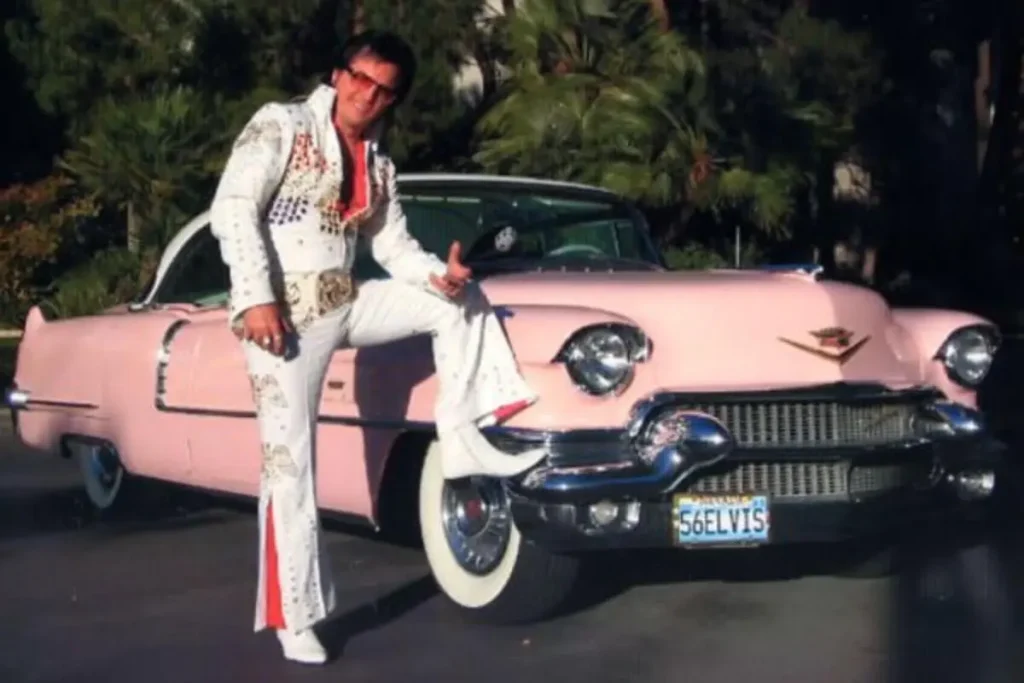
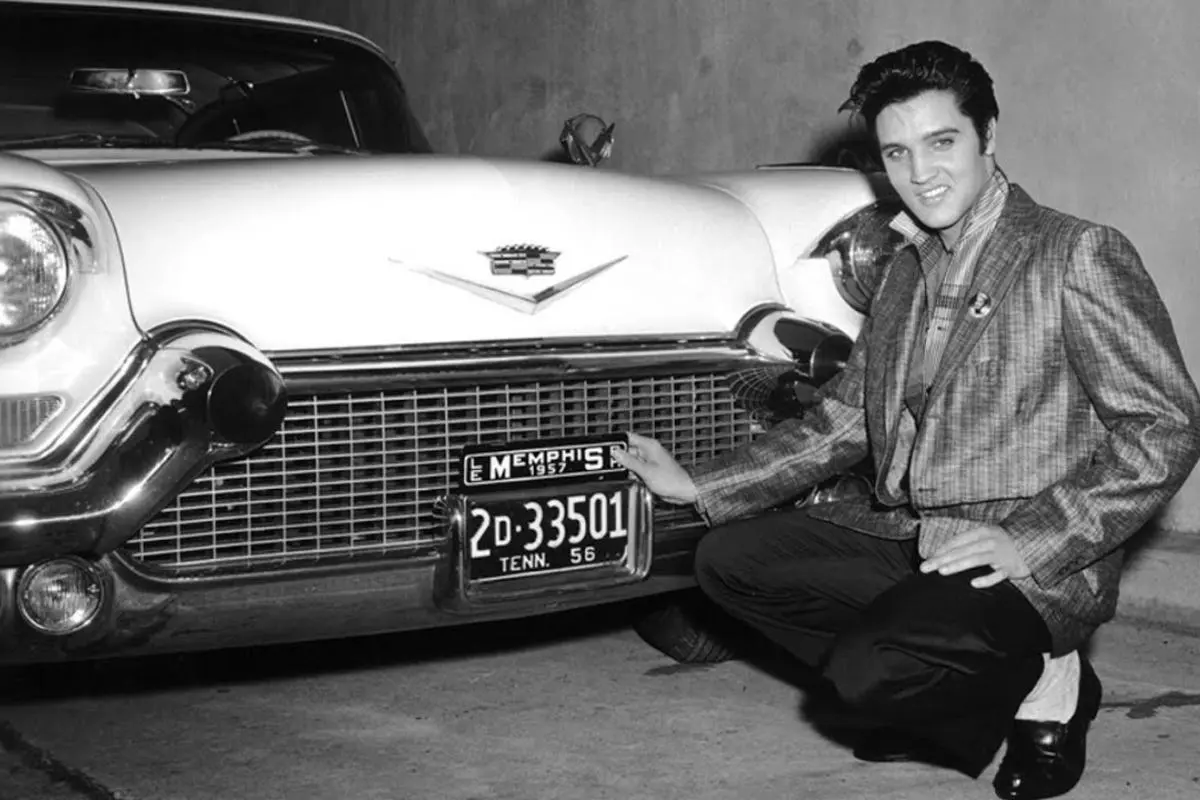
Elvis’s fixation on Cadillacs started long before that Memphis night. One of his earliest splurges was the famous pink Cadillac he gifted to his mother Gladys after his first burst of success, a car that became so iconic it still sits on display at Graceland as a kind of relic of rock and roll’s birth of excess.
From there, cars became his signature gift. A documentary titled 200 Cadillacs interviewed people who received vehicles from Elvis and tallied a staggering number of cars he bought for others over two decades. Salesmen, friends, girlfriends, sidemen and total strangers all remembered the same thing: Elvis liked to solve problems with a set of keys to something with tail fins to something with tail fins.
The habit escalated in the mid seventies. On another spree in Denver, he bought Cadillacs for policemen, a doctor, and a couple of bystanders who just happened to be on the lot when he was in the mood to play automotive Santa. At least one of those cars now sits in a transportation museum, less a vehicle than a fossil of Presley’s outrageous generosity Presley’s outrageous generosity.
Was it kindness, guilt, or both?
Fans like to present these stories as proof that Elvis was simply a good country boy who never forgot the poor. There is truth in that, but there is also something more complicated. Writers who have sifted through his car-buying binges note that he liked to say that sharing money was what gave it value and that if he really liked you, a Cadillac might drop into your life out of nowhere a Cadillac might drop into your life.
At the same time, those same observers point out that the gifts ramped up as his personal life grew darker. When you are lonely, heavily medicated, and surrounded by employees, buying loyalty in gleaming chrome can look a lot like love. That does not make the generosity fake, but it does make it human: part kindness, part impulse, part attempt to paper over an emptiness that a hit single could not touch.
And Cadillacs were not his only currency. He reportedly once turned a stiffed restaurant tip into a Cadillac for a waitress, bought a car and ten thousand dollars’ worth of “sorry you almost skipped your wedding” money for a newlywed couple, and gave his longtime cook not just multiple vehicles but a house. These are not the actions of a man clinging to his fortune; they are the actions of someone who hardly trusted it in his own hands a Cadillac for a waitress.
The view from inside Elvis’s circle
People who actually lived inside the Presley bubble back this up in less polished ways. Jerry Schilling, one of the Memphis Mafia who knew Elvis from football games long before the white jumpsuits, has said he wrote his memoir Me and a Guy Named Elvis to show the deeply intelligent, generous, even vulnerable Elvis that tabloids never cared about. He wanted fans to understand that behind the caricature there was a man who thought hard about music, money, and how he treated people Me and a Guy Named Elvis.
From Schilling’s angle, the Cadillac episode is not a miracle but a snapshot: a poor Southern kid turned superstar who never quite stopped testing how far his success could reach into other people’s lives. Sometimes that meant bad decisions. Sometimes it meant a bank teller going home in a gold Eldorado she never dreamed she would own.
Why this story still hits fans in the gut
Part of why this tale refuses to die is that it fits the way older fans still feel about Elvis’s music. His catalog never really left the culture; even secondary hits like “Little Sister” still turn up in covers by everyone from Dwight Yoakam to Robert Plant, proof that the songs hit nerves across generations.
For listeners who grew up with 50s rock and 60s radio, the idea of Elvis casually rewriting a stranger’s life in a parking lot lines up perfectly with how his records felt the first time: like someone had pulled you off the sidewalk and handed you a different future. The legend smooths the edges because people want a fable they can hum along with.
Strip away the sentimentality, though, and the core fact remains brutal and beautiful. On a humid Memphis night in 1975, a working woman put her head inside a famous man’s car. Minutes later, she owned one just as grand, bought outright by a star who could not stop turning his money into other people’s dreams.
You can argue all day about Elvis’s motives, his demons, or his decline. What you cannot argue with is the image of Mennie L. Person driving a gold-and-white Cadillac Eldorado home from Madison Cadillac, knowing it came from a chance encounter with the most famous singer on Earth. That is rock and roll generosity in its rawest form: loud, excessive and impossible to forget.