
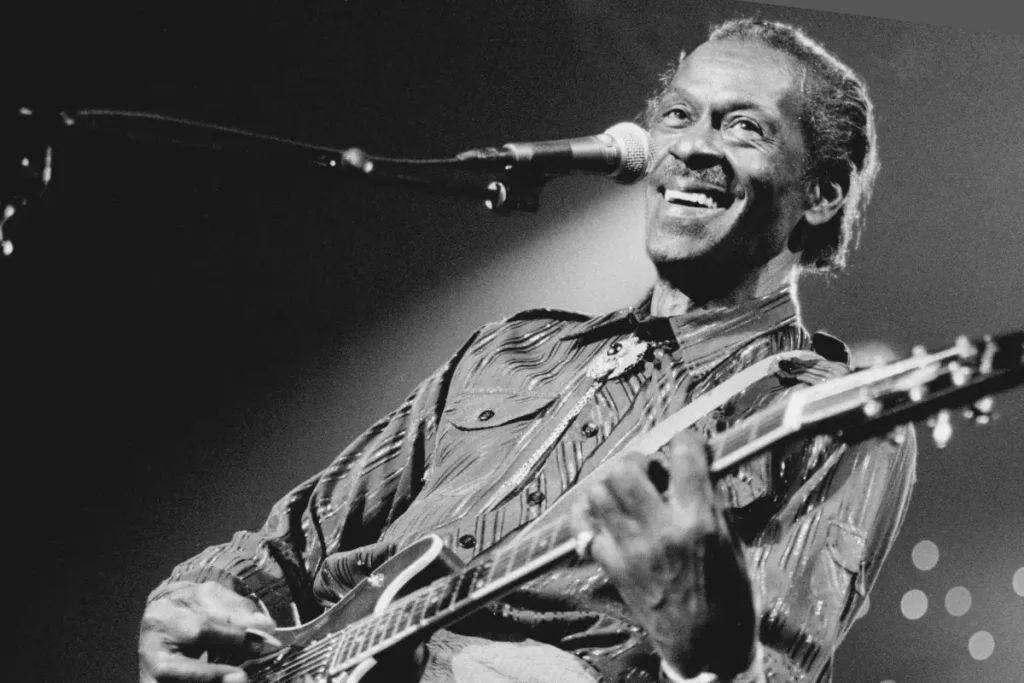
There are rock songs that feel famous, and then there’s Johnny B. Goode
, which feels inevitable. The opening guitar figure is basically a fire alarm for anyone holding a pick: drop everything, crank the amp, chase the sound. Chuck Berry built a three-minute short story about hunger, talent, and the ruthless physics of show business, and he packed it into a recording so energized you can hear him trying to outrun his own lyrics.
“Chances are you have talent. But will the name and the light come to you? No! You have to go!”
Chuck Berry, quoted in Songfacts
Hillel Italie’s take is right on the money: the song is both ecstatic and archetypal. It’s the narrative template for every would-be rocker, from garage bands to stadium headliners, because it insists on one blunt truth: dreams don’t float up to the porch; you kick the door down.
The plot that launched a thousand bands
Berry doesn’t waste time. He sets the scene like a novelist on deadline: Deep down Louisiana close to New Orleans
. In a few lines, you get geography, class, isolation, and a kid with nothing but a guitar and nerve.
The story is simple, but it’s engineered. Johnny can’t read music so well
, yet he can play the guitar just like ringing a bell
. That’s rock’s core argument: formal training is optional; feel is not.
| Song element | What it signals |
|---|---|
| Fast, declarative opening riff | Immediate identity – the guitar is the narrator |
| Country-boy framing | Outsider ambition – fame as escape velocity |
| Mother’s prophecy | Myth-making – stardom as destiny with a deadline |
| “Go, Johnny, go!” refrain | Audience participation – the crowd becomes the engine |
“Country” vs. “colored”: the line that changed the future
One of the most provocative facts about Johnny B. Goode
isn’t musical at all: it’s linguistic. Berry originally considered calling Johnny a colored boy
, then changed it to country boy
to widen the song’s reach. That lyric change from “colored boy” to “country boy” didn’t just help radio play; it turned the hero into a universal vessel that musicians of any background could step into.
There’s a cynical way to read that as commercial calculation, and a generous way to read it as tactical survival in a segregated industry. The uncomfortable truth is that both can be true at once, and the song’s immortality is partly built on that tension.
Johnnie Johnson’s shadow in the groove
The Italie passage mentions Johnnie Johnson, Berry’s boogie-woogie piano collaborator, as an inspiration for the name and the spirit. That matters because Johnny B. Goode
is not a “guitar song” in isolation; it’s a band record, driven by a rolling rhythm section and piano energy that keeps the track from stiffening into a mere riff showcase.
Berry’s own camp has long acknowledged Johnnie Johnson’s importance to the Chess-era sound, even as credit and mythology often concentrate on the frontman. The provocation here: rock history loves the lone hero, but rock records are usually the product of a small, under-credited ecosystem.
Why this riff feels like a law of nature
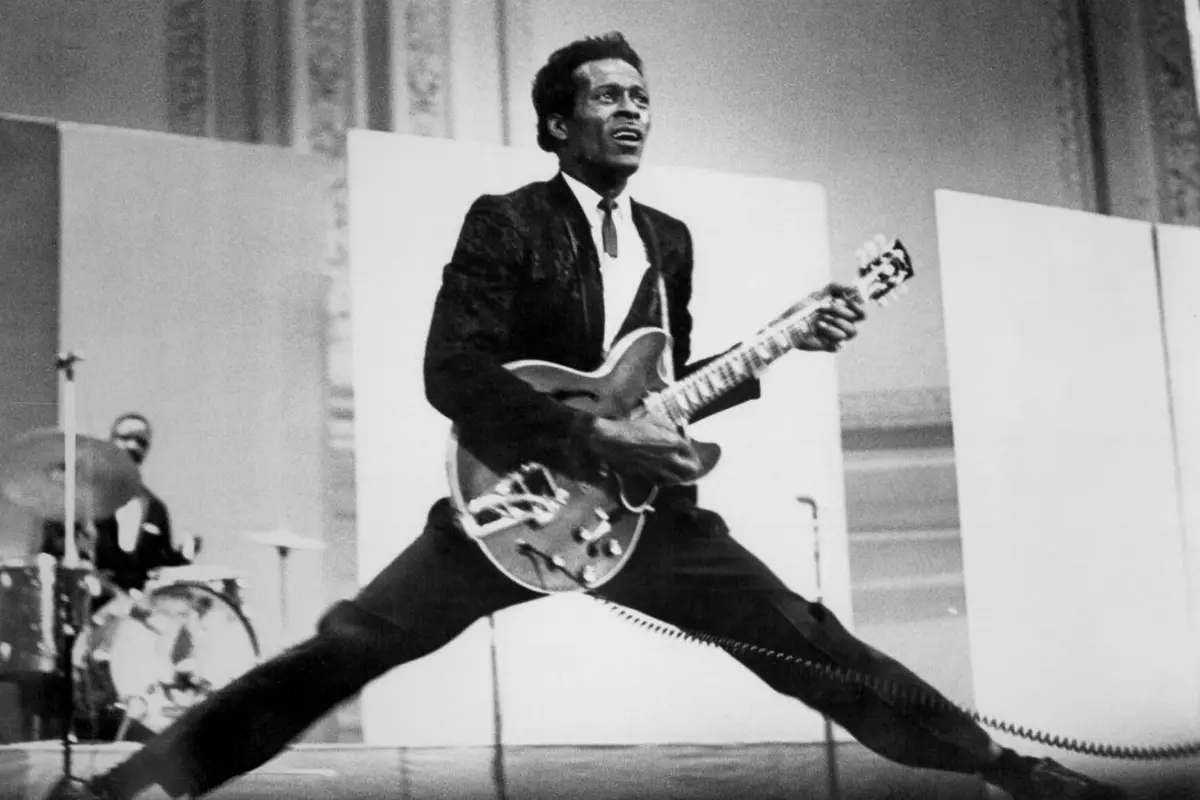
Berry is frequently called the first true guitar hero, and Johnny B. Goode
is Exhibit A. The guitar doesn’t decorate the vocal; it competes with it, answers it, pushes it, and occasionally steals the whole scene. That was a new kind of frontman behavior: the guitar as co-star, not accompaniment.
Guitarists will argue forever about the genealogy of the intro lick, but the more useful point is what Berry did with it: he turned a hot idea into a clear, repeatable hook. Rock guitar becomes a language here, and the riff is the sentence everyone learns first.
Steal this, but steal it correctly
If you want the Johnny B. Goode
feel without doing a museum reenactment, focus on these practical elements:
- Attack: pick like you mean it – the riff is percussive.
- Time: keep it dancing, not dragging – it should feel like forward motion.
- Call-and-response: let vocals and guitar talk over each other instead of taking polite turns.
- Dynamics: the band swells under the “Go, Johnny, go!” moments like a cheering crowd.
The recording: controlled chaos, not sloppy excitement
What makes the record so ecstatic is that it’s tight. The tempo is urgent, but the track doesn’t smear. Berry sings with a breathless edge, as if the story itself is chasing him, yet the band keeps the floor stable enough for him to sprint.
That’s the paradox many modern recordings miss. You can quantize a performance into perfect grid alignment and still fail to create lift. Johnny B. Goode
lifts because humans are driving it, and the humans are not calm.
From jukeboxes to outer space: the song as cultural export
If you ever need proof that Johnny B. Goode
became bigger than rock, consider its strangest accolade: it’s part of the audio sent into space on the Voyager Golden Record. NASA’s official overview of the Golden Record contents lists the sound selections meant to represent life and culture on Earth, and Berry’s recording made the cut on the Voyager Golden Record.
This is a wild idea when you sit with it. Earth had one shot to send a musical introduction to the cosmos, and we effectively said: here’s our electricity, our joy, our teenage hunger, our swagger. If aliens ever build a band, the first rehearsal might start with that riff.
The influence web: from British Invasion to arena rock
Berry’s clarion guitar style became the melting pot: country flash fused to rhythm and blues propulsion. It’s hard to find a major rock guitarist who didn’t absorb some of this DNA early.
Keith Richards has been especially blunt about the debt. His official site has frequently highlighted Berry as a foundational influence on the Stones’ roots. The deeper point isn’t hero worship; it’s that entire genres are built on a few reusable breakthroughs, and Berry’s breakthroughs were extremely reusable.
Even the way rock bands look onstage owes him something: the forward-facing guitarist as the show, not just the soundtrack. Berry’s performance style and the song’s narrative of ascent fused into a single proposition: play loud, play fast, and act like the future is watching.
Myth vs. biography: why the story works on everyone
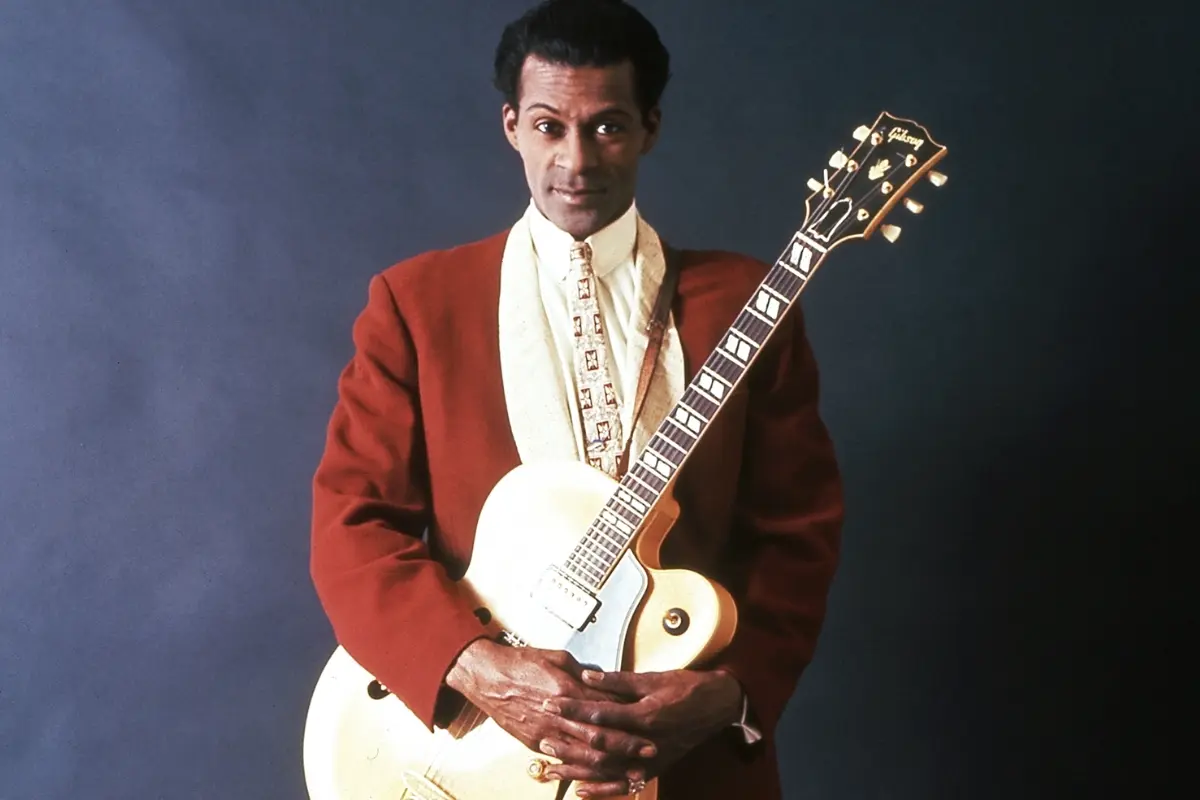
Italie notes that the tale could have been Berry’s, Presley’s, or countless others, and that’s exactly why it sticks. Johnny B. Goode
is not a diary entry; it’s a mass-produced myth. It takes specific details (Louisiana, New Orleans, the woods, the evergreens) and uses them to paint a generalized American dream of mobility through music.
The song’s durability also comes from its moral. Johnny doesn’t win because he’s pure or educated or well-connected. He wins because he plays and keeps playing until the world gives in.
A quick timeline snapshot
- 1958:
Johnny B. Goode
is released as a Chuck Berry single and quickly becomes a defining rock recording via its 1958 single release and early reception. - Decades later: it’s canonized in critics’ lists, including Rolling Stone’s all-time song rankings.
- Modern era: it remains one of the most covered, referenced, and quoted riffs in popular music culture, and its enduring status is reflected in widely documented cultural references and cover history.
Edgy claim: “Johnny B. Goode” is rock’s most successful act of marketing
Here’s the spicy take: this song is not just art, it’s the most effective branding campaign rock ever produced. It sells a product called “rock guitarist” and it makes the listener want to buy it immediately, preferably by starting a band tonight.
That doesn’t cheapen it. It reveals how smart Berry was. The chorus isn’t poetry, it’s a chant. The riff isn’t a solo, it’s a logo. And the story isn’t an autobiography, it’s an invitation.
How to hear it fresh (even if you’ve heard it 10,000 times)
To reset your ears, try these listening exercises:
- Listen for the band’s “push”: notice how the groove leans forward under the vocal.
- Track the guitar as a narrator: the fills are commentary, not decoration.
- Focus on diction and pacing: Berry’s delivery is part of the percussion.
- Turn it up, then back down: at low volume you hear arrangement; loud you feel why it became religion.
Conclusion: the riff that keeps yelling “go”
Johnny B. Goode
endures because it’s both a banger and a blueprint. It makes ambition sound fun, not noble, and it frames stardom as something you chase with your hands on the strings and your foot on the gas.
Berry didn’t just write a signature song. He wrote the job description for rock guitar, and then dared everyone else to apply.