Elvis, Vernon and the price of being Daddy’s boss
Elvis Presley did not just change music; he rewrote the rules of what a son could be to his parents. Within a few wild years he went from poverty in Tupelo to paying every bill his father ever saw.
Behind the rhinestones was a relationship that older Southern men rarely talked about out loud: love tangled up with disappointment, dependence and money. Elvis adored his parents, but he also ended up as his father’s employer, banker and sometimes judge.
Look closely at Elvis and Vernon and you see a quiet drama running under the big story of rock and roll – a father-son bond cracked by prison, grief, Vegas cash and bad business deals.
Tupelo roots: a fragile father figure
Vernon Elvis Presley grew up poor in rural Mississippi, drifting between farm work and odd jobs. In 1938 he was convicted in a check forgery case and sent to Mississippi’s Parchman Farm penitentiary, leaving Gladys at home with baby Elvis until a local petition won him an early release.
Those months of absence forced Gladys to be both parents, and they underlined how precarious the family’s life was. Later accounts of Elvis’s childhood describe a shy, bullied kid who clung to music and church singing as an escape from poverty and loneliness.
From the beginning, the emotional triangle was lopsided. Biographers note that Elvis and his mother were almost fused, while Vernon often seemed like an onlooker, later marvelling publicly at how unusually close his wife and son had always been.
Putting dad on the payroll
When fame hit in the mid 1950s, Elvis bought houses for his parents and eventually Graceland, dragging them out of shacks and rooming houses into celebrity suburbia almost overnight. Vernon, with little formal education and a history of financial missteps, slid into the role of handling his son’s day to day money and domestic affairs, signing checks and watching the gate.
That flipped the usual Southern script. The father was no longer the unquestioned provider; the son was the boss, and Dad was effectively on salary, living in a house his boy had bought and helping manage a lifestyle he had never been prepared for.
By the 1970s Elvis was supporting a small army of family members and friends on his payroll, on top of the cars, jewelry and houses he loved to give away. One recent biographer argues that he was working to medicate genuine health problems while carrying the crushing burden of being breadwinner to this entire extended tribe.

To understand how strange this dynamic was, it helps to see how Vernon’s roles kept shifting as Elvis got richer.
| Role | What Vernon did | Impact on Elvis |
|---|---|---|
| Struggling father | Took low paid work, did time in prison after the forgery case. | Taught Elvis early that adults can fail and money is never secure. |
| Household manager | Lived at Graceland, handled bills, dealt with staff and hangers on. | Made Elvis the real provider, effectively putting his own father on the payroll. |
| Executor of the estate | Tried to steer Elvis’s affairs after his death while relying on advisers and the Colonel. | Showed how little real financial power Vernon ever had without his son. |
When Gladys died, the triangle collapsed
In August 1958, while Elvis was in the Army, Gladys Presley died after a rapid decline in health. Witnesses described Elvis sobbing uncontrollably at the funeral and later calling her the ‘most wonderful mother anyone could ever have’, while Vernon, already a quiet man, seemed shattered and adrift.
With Gladys gone, father and son were suddenly alone with each other in a way they had never been. Elvis had lost the one person he trusted absolutely, and Vernon had lost the wife who handled most of the practical and emotional weight of the family.
Within barely two years Vernon had married a younger divorcee, Dee Stanley, and moved her into Elvis’s orbit. Friends recalled Elvis feeling that his mother had barely been buried before his father started over, and they say the Dee situation permanently hardened him toward Vernon; when Dee later peddled a lurid tabloid story claiming Elvis and Gladys had been lovers, Elvis’s cousin Billy Smith and pal Lamar Fike publicly dismissed it as nonsense, but the trust between father and son never really recovered.

Money, control and the Colonel
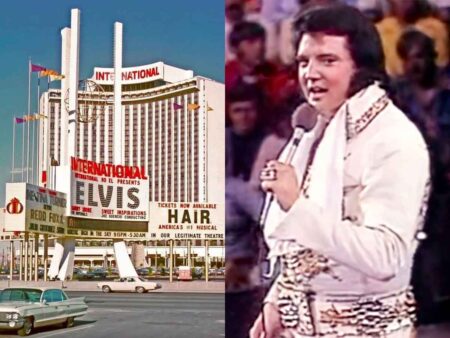
On the career side, Colonel Tom Parker was tightening his grip, locking Elvis into a Las Vegas residency that saw him perform more than 600 shows between 1969 and 1976. Those early Vegas years were thrilling, but by the mid 1970s the grind and the pills needed to get through it were visibly hollowing him out.
Parker controlled the big money deals; Vernon controlled the home front and personal finances; both men depended entirely on Elvis’s earning power. That double dependence made it dangerously easy to say yes to more tours and casino contracts, even when everyone could see the physical and emotional cost.
From Elvis’s side, the two older men often looked like a united front. If he pushed back against Parker, he ran into his father backing the Colonel’s judgment; if he resented Vernon’s decisions about firings or spending, he knew those decisions were being made in the shadow of Parker’s contracts and his own runaway generosity.
Executor, enabler, or victim?
When Elvis died at Graceland in 1977, his will named Vernon – who had long handled his son’s personal, non-career business affairs – as executor and trustee of the estate. The document also let Vernon distribute money to other relatives at his discretion, formalising on paper the role he had been playing for years inside the Presley clan.
But the old man was badly out of his depth. Within a few years, co executors of the estate hauled Parker into court, accusing him of taking commissions of up to 50 percent and pointing to his sale of Elvis’s pre 1973 back catalog to RCA for just $5.4 million, a deal that split the money between manager and star while starving the future estate of royalties and leaving the whole operation flirting with bankruptcy until Priscilla and outside advisers stepped in to save Graceland.
Seen from that angle, Vernon looks less like the secret mastermind some fans imagine and more like another dependent caught in the blast radius of Elvis’s fame. He signed what lawyers and the Colonel put in front of him, trying to keep the money flowing and the family afloat, only to leave behind a mess his son and grandson would never live to see resolved.

What Elvis and Vernon reveal about fathers, sons and fame
The odd, uneasy bond between Elvis and his father shaped more than their family dinners; it helped mould the way the King moved through the world. A boy who saw his dad sent to prison, then watched his own money rescue the family, was always going to feel both protective and suspicious around authority.
You can hear that tension in the way Elvis bounced between swaggering toughness and almost childlike vulnerability on stage. The same man who strutted through ‘Trouble’ could, a few minutes later, introduce his father to the crowd like a shy kid proud of having finally bought his parents a decent home.
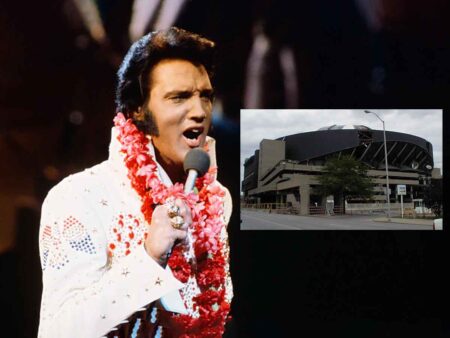
Footage and eyewitness reports from his final show in Indianapolis show an overweight, exhausted Elvis still determined to entertain, introducing his entourage at length and signing off with a weary ‘May God bless you, adios’ just weeks before his death.
In the end, the King of Rock and Roll was also a son who never really stopped trying to fix his broken family with money, houses and applause. Vernon was not the villain of that story so much as its most tragic supporting character – a father who let his boy grow into a myth while never quite managing to grow into being the kind of father that myth needed.