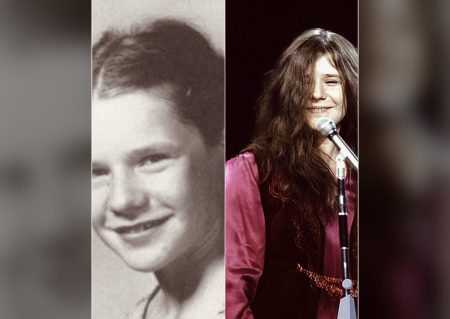
Put on Cheap Thrills from 1968 and then Pearl, recorded barely two years later, and listen only to the instrument. The difference is unmistakable. The voice on Pearl is deeper, rougher, more torn at the edges — magnificent, but audibly changed. In twenty-four months of singing the way no vocal coach on earth would sanction, Janis Joplin had spent a lifetime’s worth of voice. The last album is the sound of her learning, just in time, how to spend what remained.
Singing without a seatbelt
Joplin’s early style was total abandonment as technique — full-throttle, shredding, three climaxes per verse, every night sung as a finale. It was the sound that made her famous at Monterey, and it was ruinous as a long-term method. Screaming over one of San Francisco’s loudest bands through inadequate PA systems, amplified by whiskey and no formal training, the approach treated her voice as an infinitely renewable resource. Voices are not. Singers and engineers around her noticed the coarsening; by 1970 the top of her range had shortened and the rasp had thickened from seasoning into structure.
What makes Pearl remarkable is that the album confronts this instead of hiding it.
Rothchild’s intervention
Producer Paul Rothchild — famously exacting, fresh from wrangling the Doors — took on the sessions in the late summer of 1970 with a clear agenda: protect the singer from herself. The session tapes later released as The Pearl Sessions capture the working relationship between takes — a producer coaxing, teasing, and pacing her, take by take, toward performances built on control rather than immolation.
The results are all over the record. “Me and Bobby McGee” works in dynamics — conversational verses that earn the explosion at the end instead of starting there. “Cry Baby” deploys the shredded top end as a weapon held in reserve. “A Woman Left Lonely” is almost restrained, the rasp used for colour rather than volume. Behind her, the Full Tilt Boogie Band — the most disciplined group she ever had — left space instead of forcing her to fight for it. For the first time on record, Joplin sounds produced in the best sense: framed, not caged.
October 1970
The sessions’ timeline gives the album its terrible weight. On October 1, 1970, Joplin stepped to the microphone and delivered “Mercedes Benz” — a cappella, one take, laughing as she finished — a throwaway that became one of her most beloved recordings and, as it turned out, essentially the last full vocal she ever cut. Three days later she was gone, at 27, in a Hollywood hotel room.
She left one song unfinished in the most literal way possible: “Buried Alive in the Blues” sits on Pearl as an instrumental, the band’s track complete, the vocal slot empty. She was due to sing it the next day. No gesture in rock discography says more with silence.
The album’s two posthumous triumphs each carry the theme. “Me and Bobby McGee” — a Kris Kristofferson song she’d made her own — climbed to number one months after her death, the writer hearing her finished version only when it was too late to tell her what he thought of it. And “Get It While You Can”, the ballad chosen to close the record, turned into an accidental epitaph so on-the-nose no producer would have dared plan it: a technique-and-restraint masterclass wrapped around a lyric about urgency.
Credit, too, to the band that made the discipline possible. Full Tilt Boogie — young, tight, and hired to serve her rather than compete — gave Joplin the first rhythm section of her career that could play quietly without collapsing. Restraint is only possible on stage and tape when the people behind you can hold it; on Pearl, at last, they could.
The lesson singers still study
Pearl went to number one and stayed there for weeks; “Me and Bobby McGee” became her only chart-topping single. But the album’s afterlife among singers is about something more technical and more tender. It documents, within a single career, both edges of the eternal vocal bargain: the incandescent early recordings that made her legend and shortened her instrument’s life, and the late ones where craft arrived to rescue what passion had spent.
Vocal coaches use her as a cautionary tale, which is fair and yet misses what the record proves. In her last weeks, working with a producer she trusted and a band that finally served her, Joplin was solving it — learning restraint, dynamics, longevity, all the unglamorous skills that might have carried that voice into her forties and beyond. The tragedy folded into Pearl isn’t just the death. It’s the audible evidence of how much she had left to give, and how recently she’d learned how to give it sustainably.
The voice on Pearl is damaged, disciplined and completely alive. There are prettier vocal performances in rock history. There may not be a truer one.