
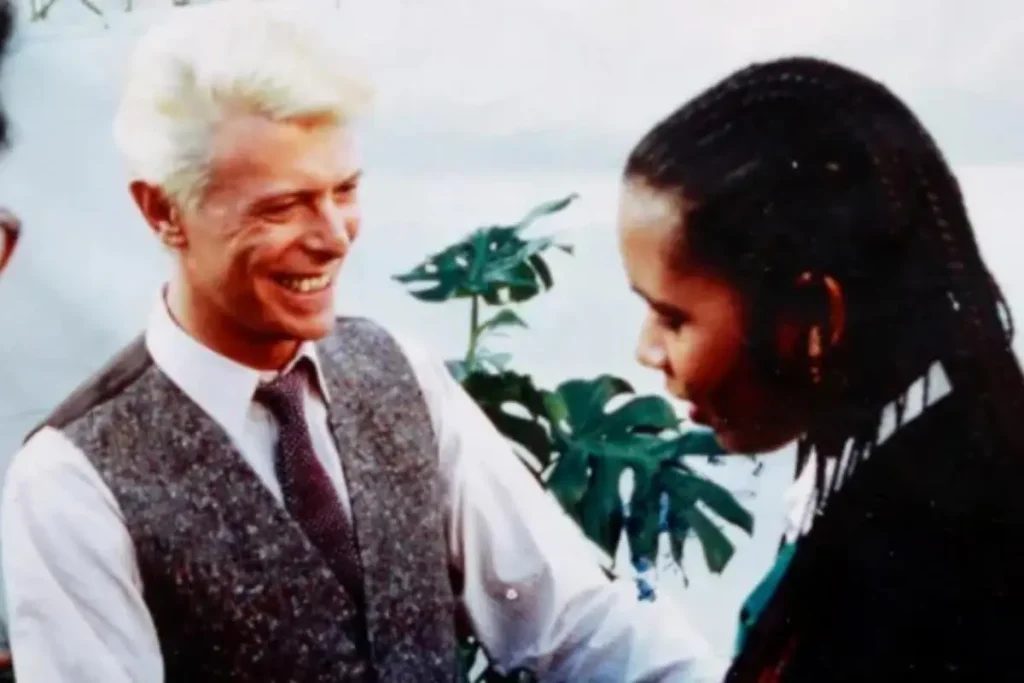
In 1983, David Bowie landed in Australia to film the “Let’s Dance” music video, and what could have been a glossy travel postcard turned into something sharper: a pop hit with a social conscience. The clip pairs Bowie’s sleek new mainstream persona with images of poverty, displacement, and racial tension, anchored by the presence of a young Aboriginal girl, Joelene King, moving through a hostile landscape as the “dance” becomes survival rather than celebration. The result is a rare artifact: a global smash that still carries teeth.
Setting the stage: 1983 Bowie, the pivot to pop, and why the video mattered
By the early 1980s, Bowie had already lived multiple artistic lives, from Ziggy Stardust to Berlin-era experimentation. “Let’s Dance” was the moment he decided to go direct: big grooves, bright hooks, and a mass audience, without abandoning his instinct to provoke.
The video is central to that pivot because it was designed for maximum visibility on the new kingmaker, MTV. It is also where Bowie smuggled in uncomfortable imagery under the cover of a dancefloor anthem: the camera repeatedly cuts from glamour to hardship, making the chorus feel like a taunt if you are paying attention. You can watch the official clip to see how aggressively it plays this contrast from the opening seconds.
Who was Joelene King, and why her role changes the entire meaning
Joelene King appears in the video as a young Aboriginal girl, placed at the emotional center of the story. She is not window dressing. She is the viewer’s guide through an Australia that looks beautiful in wide shots and bruised in close-ups.
In the video’s narrative, she and an Aboriginal man move through everyday scenes of exclusion: being watched, being pushed aside, being treated as “out of place” in their own country. Bowie’s presence is oddly spectral, like a pop-star narrator floating above the consequences, which makes King’s grounded realism hit harder.
Australian coverage of the rediscovery and discussion around the clip has repeatedly highlighted King’s participation and the video’s Aboriginal themes, helping reframe it as more than a stylish promo.
Where in Australia was it filmed? The outback as a character
The “Let’s Dance” video uses Australian locations not as neutral scenery, but as a metaphor. The outback, small towns, and roadside spaces read like liminal zones: places where people can be stranded socially and economically, not just geographically.
Even if you do not know the exact shooting points, the visual language is clear. Dust, heat shimmer, and long empty horizons are paired with cramped interiors and tense public encounters. The result is a story of visibility: who gets to be seen as belonging, and who is treated as disposable.
As a piece of music-video craft, the location shooting also helps explain why the clip has remained memorable. It does not look like a backlot “desert.” It looks like a real place that doesn’t care if a pop star is visiting.
The director and the concept: a dance hit that isn’t really about dancing
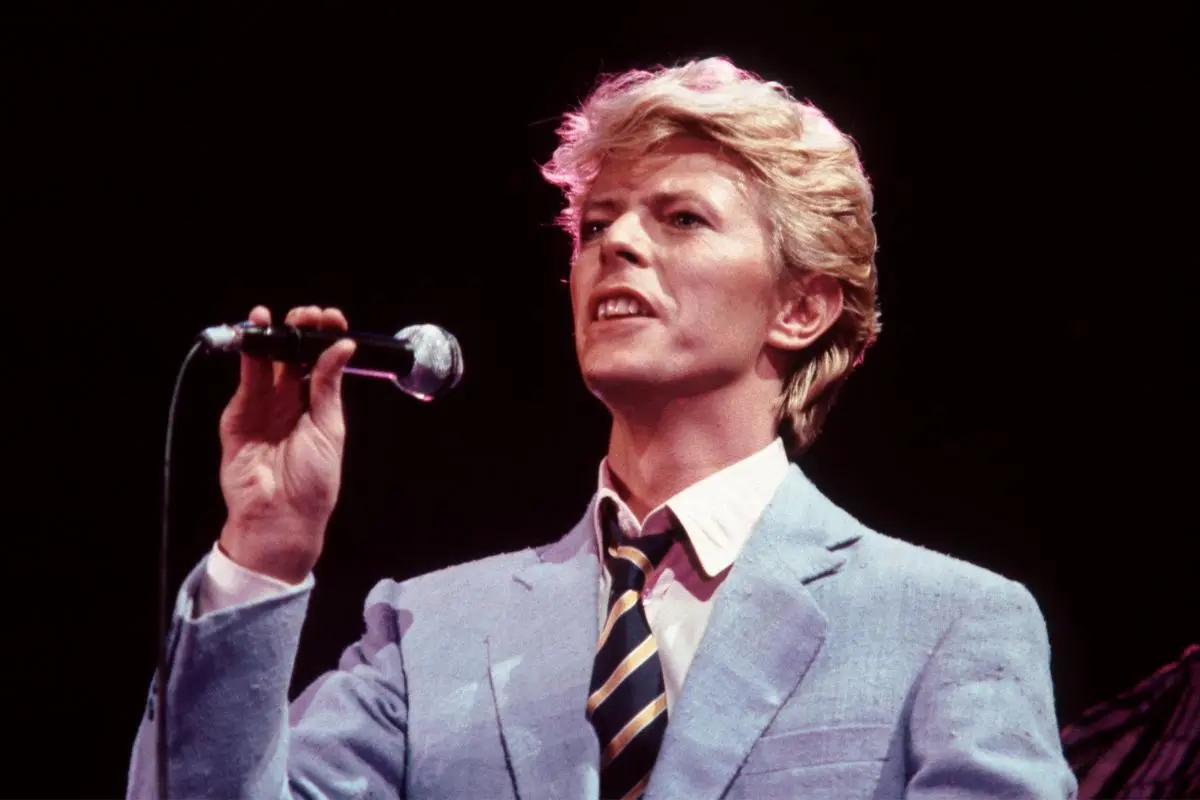
The video was directed by David Mallet, a key figure in shaping Bowie’s visual identity across eras. “Let’s Dance” is often discussed as an MTV-era triumph, but it is also an unusually narrative-driven promo for a single this massive, with key song credits and background that place it squarely in Bowie’s early-’80s pivot.
Instead of choreographed set pieces, the “dance” becomes an instruction delivered into an unequal world. The chorus feels joyous on the radio. On screen, it becomes ambiguous, even cruel: dance to fit in, dance to be tolerated, dance because you have no other power.
That mismatch is the video’s core trick, and it is why it still reads as edgy. It is not simply “Bowie goes political.” It is “Bowie weaponizes a party record.”
Is it activism, appropriation, or both? The uncomfortable debate the video invites
“Let’s Dance” is frequently described as a statement about racism and the treatment of Indigenous Australians, and it plainly depicts discrimination. But the clip also invites a harder question: what does it mean for an English superstar to parachute into Aboriginal pain as a narrative device?
This is where the video stays provocative, even for sympathetic viewers. Bowie’s presence is not that of a participant in the story’s suffering. He is stylish, powerful, and mobile. The Aboriginal characters are not. The camera is aware of this gap, but awareness is not the same as repair.
One way to read the clip is that it dramatizes the very power imbalance it risks reproducing. Bowie looks like a visitor because he is one. The story lingers with King and the Aboriginal man because they cannot leave the frame the way he can. If that interpretation feels like a defense, it is also a challenge: the video dares you to decide whether pop’s empathy is enough.
The song’s sound vs. the video’s sting: why the contradiction works
Musically, “Let’s Dance” is a masterclass in crossover: tight rhythm guitar, a huge groove, and a chorus engineered for arenas. The track’s success helped define Bowie’s 1980s mainstream peak and made the album of the same name his best-selling studio record, a status revisited in retrospectives on the song at 40.
That sound is precisely why the video could take risks. When a song is this infectious, viewers drop their guard. The clip uses that lowered guard to slip in scenes that are not “fun,” pushing the audience to notice injustice without the usual didactic framing of a protest song.
And it works because the video is not a lecture. It is a discomfort machine: it lets you enjoy the groove and then asks why you are enjoying it while the screen shows someone being humiliated.
Joelene King’s on-screen presence: small gestures, big implications
King’s performance is understated, which is part of its power. The video does not turn her into a saint or a spectacle. She is simply there, watching, moving, absorbing, enduring.
That restraint prevents the clip from collapsing into melodrama. Instead, it becomes observational, almost documentary-like at moments. Bowie is the headline, but King is the moral center, and the camera treats her gaze as evidence.
In a medium famous for treating women and marginalized people as props, this is a quiet reversal. The irony is that the reversal is still delivered through a mainstream pop vehicle, which keeps the debate alive: is the center really hers, or is it borrowed for the duration of a shoot?
What the video suggests about Australia in the early 1980s (without pretending it is the whole truth)
No music video can summarize a nation. But “Let’s Dance” does capture an atmosphere: a society where Aboriginal people could be visibly present yet socially excluded, where poverty and marginalization were not hidden behind tourist imagery.
The clip’s scenes of unequal treatment are not presented as isolated villains doing bad things. They feel systemic and casual, the kind of discrimination that does not announce itself as hatred. That is often how racism survives: not through drama, but through routine.
Australian and international retrospectives have emphasized how the video’s depiction of Indigenous discrimination and hardship set it apart from typical pop promos of the era.
Gear talk for the instrument crowd: what musicians can learn from “Let’s Dance”
Even if your main obsession is guitars, drums, or tone, this era is worth studying because it shows how arrangement choices can amplify or undercut a message. “Let’s Dance” is bright and propulsive, yet the video makes it darker without changing a note.
Practical takeaways
- Contrast is a tool: upbeat music can carry heavy themes if the framing is intentional.
- Repetition creates irony: a simple chorus phrase becomes loaded when visuals shift.
- Groove buys attention: a danceable feel can sneak complex ideas into wide audiences.
- Visual narrative is arrangement by other means: the video “arranges” the song emotionally.
If you want to hear how Bowie’s 1983 approach leaned into punch and clarity, 40th-anniversary coverage of “Let’s Dance” highlights how deliberately he aimed for accessibility, and how that choice divided fans.
A quick fact-check table: what’s solid vs. what’s often exaggerated
| Claim | What we can safely say |
|---|---|
| “Let’s Dance” was filmed in Australia in 1983 | The official video and multiple reputable retrospectives describe it as shot in Australia as part of the song’s visual concept. |
| Joelene King appears in the video | She is the Aboriginal girl featured prominently throughout the narrative. |
| The video is about racism and Indigenous marginalization | The imagery clearly depicts discrimination and hardship; interpretations vary, but the themes are overt. |
| Bowie’s intent was purely activism | Intent is debated; the video reads as political, but pop packaging complicates simple motives. |
The edgy takeaway: Bowie sold you a party and showed you the bill
“Let’s Dance” is often remembered as Bowie’s slickest reinvention, a move into big pop. But the Australian video complicates that legacy. It is glossy and accusatory at the same time, using Joelene King’s presence to keep the viewer’s attention on who pays for the illusion of carefree celebration.
If the clip leaves you uneasy, it is doing its job. The point is not to cancel the song or canonize the video. The point is to admit what great pop can do at its best: make you move, then make you think about why moving is easier than changing.
Conclusion: Bowie’s 1983 Australian shoot for “Let’s Dance” isn’t trivia. It is a case study in how mass culture can carry a critique inside the catchiest possible package, and how Joelene King’s on-screen role turns a hit single into a small, sharp political film.
Check the music video below:


