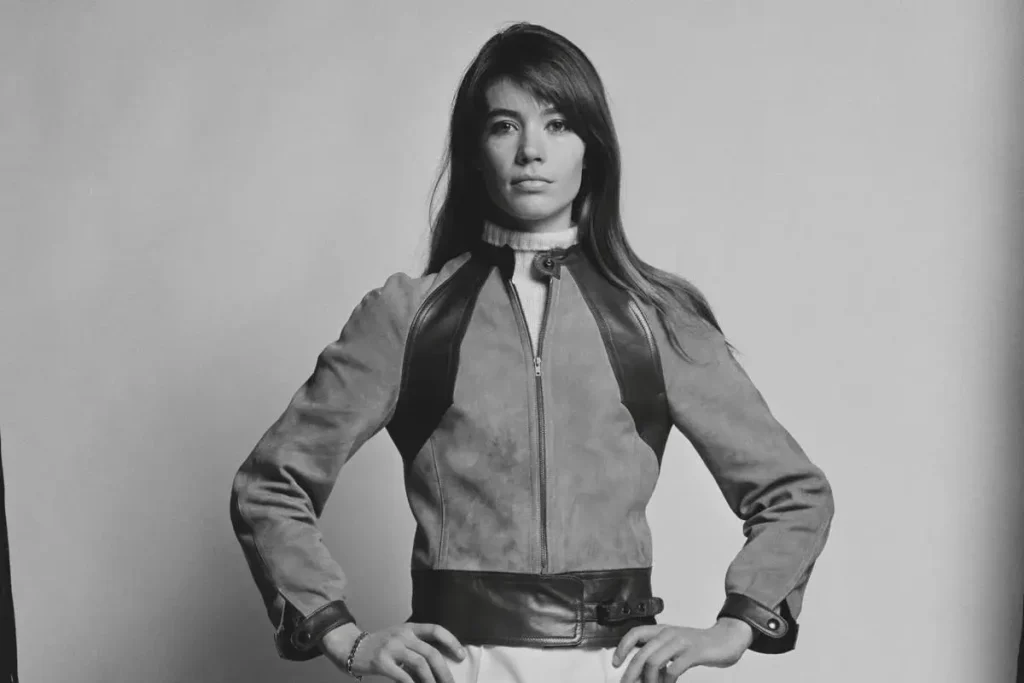
In the 1960s, pop stardom was getting louder: louder bands, louder TV shows, louder personalities. Françoise Hardy walked into that noise with a guitar, a curtain of bangs, and a voice that sounded like it was refusing to audition.
That refusal became her superpower. Hardy proved you could become internationally famous by being the opposite of an extrovert: private, a little awkward, and obsessed with melody over showmanship.
The million-copy single that weaponized loneliness
Hardy’s breakthrough came fast: her debut single “Tous les garçons et les filles” arrived in 1962 and sold a million copies, making her an instant star of the post-war yé-yé wave; in later interviews, she confessed, “Singing is not something that comes easily to me,” insisting she was a melody-maker before anything else, as reported in coverage of her life and career by Digital Journal. The hit also pulled her onto magazine covers, turning her fringe and bohemian minimalism into a global uniform.
What makes the song still sting is how unglamorous it is. While other teen hits sold romance, Hardy sold the ache of watching other couples hold hands while you stand alone, and she did it without melodrama.
Musically, it is a masterclass in restraint: a memorable vocal line, a steady pulse, and just enough harmonic shadow to keep the sweetness from turning saccharine. If you play an instrument, this is the first Hardy lesson: you do not need more notes, you need better ones.
Two things musicians can steal from that first hit
- Space: the arrangement breathes, so the lyric feels close-up.
- Melody: the hook is easy to hum, but too sad to forget.
Pop politics: the night France heard Hardy by accident
Hardy’s “overnight success” had an oddly bureaucratic trigger: she sang during TV interludes on the night France waited for the results of the October 28, 1962 referendum on electing the president by universal suffrage—and Le Monde reports that sales of her 45 rpm single surged the next day.
It is hard to imagine a modern pop star being broken by a constitutional news night, but that is the point: early-60s media was still small enough for one broadcast to tilt a whole culture. Hardy’s cool did not spread through algorithms, it spread through a shared national moment.
Yé-yé explained (and why Hardy was its darkest mirror)
The word “yé-yé” is France borrowing rock’s catchphrase: Merriam-Webster traces it to the English “yeah-yeah,” the exclamation often tossed into early rock and roll performances. So the whole movement is, at heart, French pop learning to flirt in a foreign language.
Hardy never fit the stereotype of bubbly, disposable teen pop. Her records kept one foot in bright, radio-friendly arrangements and the other in chanson-style melancholy, like she was already writing breakup songs for an older version of herself.
The songwriter behind the hair: melody first, ego last
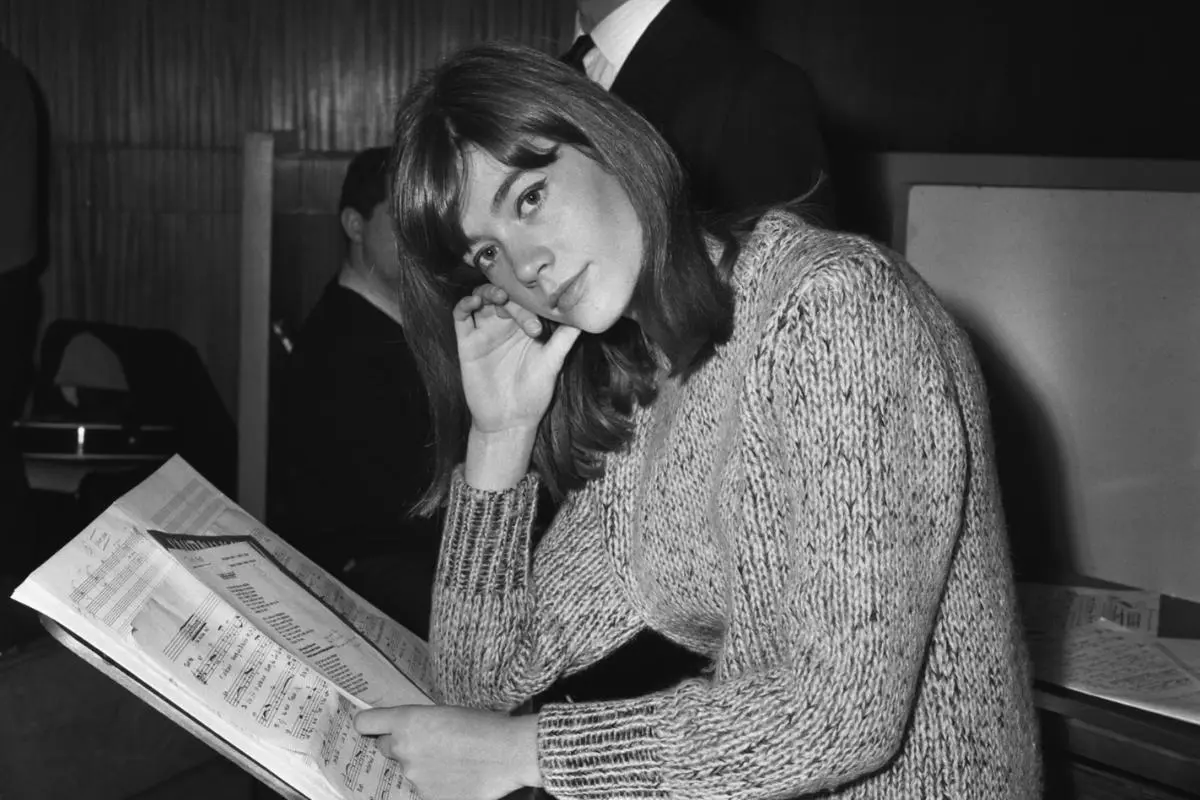
Hardy wrote and composed “Tous les garçons et les filles,” and she was unusually direct about her craft: “I always put the words on the music,” she told the Associated Press, describing a process where melody comes first and the lyric has to earn its place inside it. That mindset is stamped all over her 1960s catalogue: the tunes lead, the voice follows, and the drama stays just under the surface.
This is why Hardy is a cheat code for musicians who want to write better songs. She is proof that taste can be louder than technique, and that a limited range can still carry a world-class melody if the phrasing is truthful.
Dylan wrote the poem, Jagger did the quote, and the myth took over
Hardy’s international aura got an unusual boost from across the Atlantic: Bob Dylan printed a beat-style poem “for françoise hardy” on his 1964 album Another Side of Bob Dylan. On his official site, the poem opens: “for françoise hardy / at the seine’s edge / a giant shadow / of notre dame.”
There is a slightly uncomfortable truth here: Hardy became a global icon partly because famous men projected fantasies onto her. But she also quietly flipped the script, because her songs are not flirtation, they are self-portraiture, and they outlasted the crushes.
Fashion without trying: the fringe, the boots, the androgyny
Hardy’s look traveled faster than her French, and it helped sell the music before anyone understood the lyrics. Vogue frames her as a blueprint for “French-girl” style, spotlighting her Yves Saint Laurent-friendly tailoring, her go-go boots, and that choppy fringe that never looked calculated.
If that sounds like influencer culture, it should. Hardy was doing soft power branding in an era without social media: one silhouette, one stare, one understated song, and suddenly the world copied the attitude.
How to get the Françoise Hardy vibe on your instrument (without cosplay)
Hardy’s records reward fundamentals: time, touch, and melody. Whether you play guitar, keys, bass, or ukulele, aim for intimacy rather than volume, and let the groove do the heavy lifting.
1) Harmony: bittersweet, not busy
Many Hardy-era progressions live in that classic pop space where major chords carry a minor emotion. Start simple, then let one unexpected chord or bass note add the sting.
- Minor-pop loop: Am – F – G – Em
- Classic 60s cadence: C – Am – F – G
2) Touch: play like a singer
Her phrasing works because the band does not crowd her. Strum lightly, pick closer to the neck for a rounder sound, and let the silence between chords feel intentional.
- Choose steady rhythm over decorative fills.
- If you add a lead line, keep it hummable in one breath.
3) Atmosphere: make it 60s, not “retro”
You do not need museum gear to get the atmosphere. A clean tone, a touch of spring-style reverb, and gentle tremolo can hint at the era while still feeling honest.
| Element | Try this |
|---|---|
| Guitar tone | Clean or edge-of-breakup, light tremolo, minimal distortion |
| Rhythm feel | Mid-tempo, even eighth-notes, no rushed backbeat |
| Bass support | Simple roots with occasional walking approach notes |
The big trap is over-arranging. Hardy’s magic is that the listener hears the song first, not the studio tricks.
Starter playlist: 10 essential Hardy cuts (with what to listen for)
If you only know the big debut, use this list to hear how quickly Hardy expanded her palette inside the 1960s. These tracks also make great play-along studies because the parts are economical and the melodies are uncompromising.
| Track | Era | Listen for |
|---|---|---|
| Tous les garçons et les filles | Early 60s | Melancholy inside a pop frame, lots of air around the vocal |
| Le temps de l’amour | Early 60s | Brighter groove with a quietly wistful melody |
| L’amour s’en va | Early 60s | Chanson phrasing with radio-friendly rhythm guitar |
| All Over the World | Mid 60s | How she keeps her identity even singing in English |
| Mon amie la rose | Mid 60s | Ballad pacing, emotional restraint, lyric-first delivery |
| Je n’attends plus personne | Mid 60s | Sharper guitar attitude under a controlled vocal |
| La maison où j’ai grandi | Mid 60s | More adult storytelling, spacious arrangement |
| Voilà | Late 60s | Melody riding on groove, not on vocal fireworks |
| Ma jeunesse fout le camp | Late 60s | The teen-idol mask slipping, more edge in the writing |
| Comment te dire adieu | Late 60s | Heartbreak with wit, classic pop sophistication |
The real lesson of Hardy’s stardom
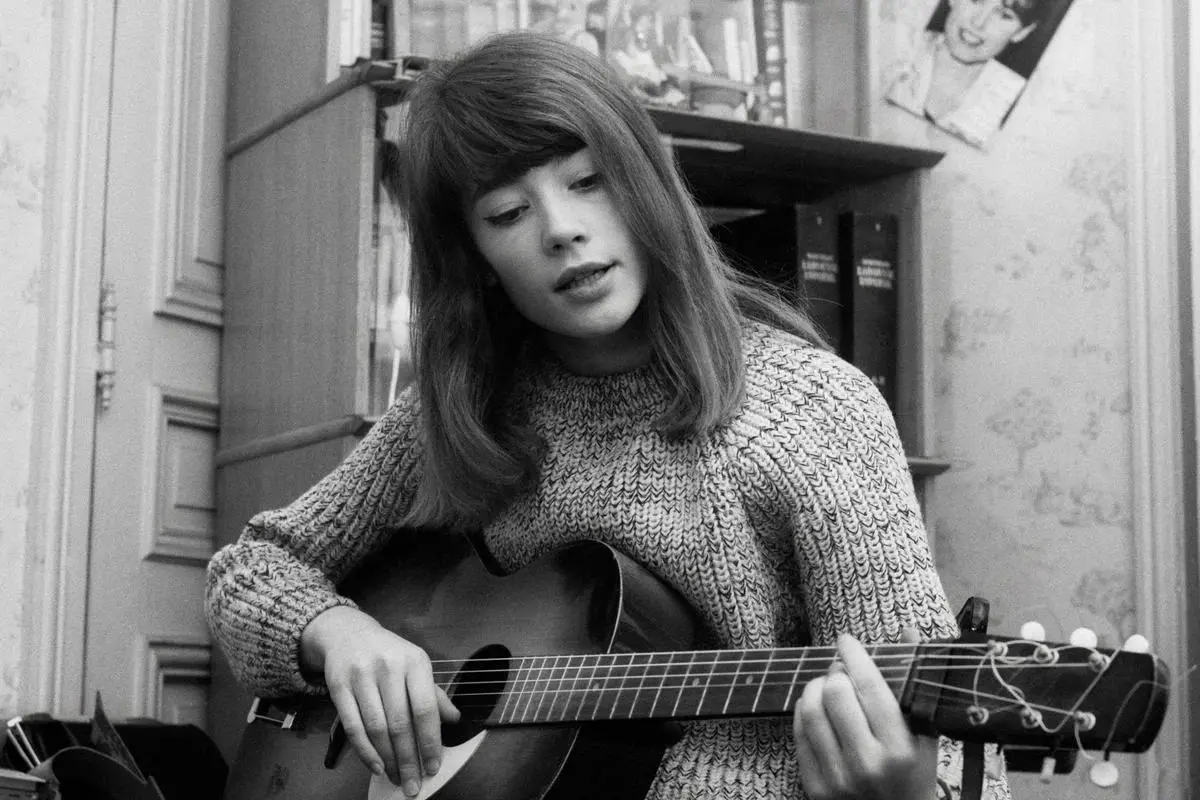
Hardy’s legend is often told through celebrity crushes and fashion spreads, but her real revolution was quieter. She made vulnerability commercial without turning it into spectacle, and she made “melancholy” feel like a style choice instead of a weakness.
If you want a practical takeaway, steal her priorities: put the melody first, play with restraint, and let understatement do the flexing. Loudness gets attention, but Hardy proved quiet can get remembered.