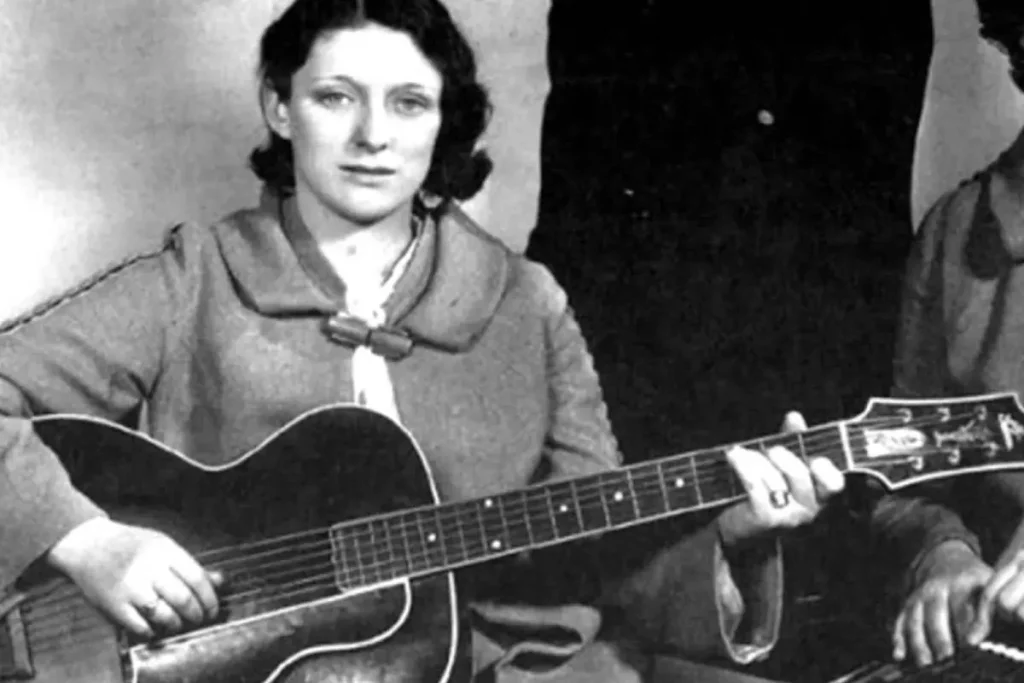
Ask most people who made the guitar a lead instrument in American music and they will jump to Chet Atkins, Chuck Berry or Jimi Hendrix. Long before any of them, a soft‑spoken mother from the Virginia mountains quietly turned rhythm guitar into a front line weapon, inventing a style that let one instrument sound like two and rewrote the job description for every country picker who followed.
“Mother” Maybelle Carter, born Maybelle Addington in 1909 near Nickelsville, Virginia, spent five decades on record and radio with the original Carter Family, later with Mother Maybelle and the Carter Sisters, on the Grand Ole Opry, on her son‑in‑law Johnny Cash’s TV show, and finally on the landmark album Will the Circle Be Unbroken. By the time she died in 1978 at 69, she and the Carter Family were in the Country Music Hall of Fame and their songs had become part of the basic vocabulary of country and folk music.
From Copper Creek to country’s first family
Maybelle Addington was born in the Copper Creek community of Scott County, in the Appalachian corner of southwest Virginia, where hymns, ballads and banjo tunes were everyday tools, not museum pieces. She grew up in a large musical family, moved from banjo and autoharp to guitar in her teens, and in 1926 married Ezra “Eck” Carter, younger brother of ambitious song hunter A.P. Carter.
A.P. recruited Maybelle and his wife Sara into a trio, then drove them over rough mountain roads to Bristol, Tennessee in 1927 to audition for Victor producer Ralph Peer. Across two days they recorded six sides that would become part of the famed Bristol Sessions, often called the “Big Bang” of commercial country music, and those records helped crown them “The First Family of Country Music” while showcasing Maybelle’s driving new guitar voice.
Inside the Carter scratch
Before Maybelle, most country guitarists simply strummed chords behind the singer. Her breakthrough was to hook her right thumb under the bass strings to play the song’s melody while her index finger brushed chord “scratches” on the higher strings, a sound immortalized on the Carter Family’s recording of “Wildwood Flower” and later copied endlessly by flatpickers and folk singers.
| Element | What Maybelle did | Why it mattered |
|---|---|---|
| Right hand | Thumb picked bass-string melody while index finger strummed rhythm on treble strings | Let one guitar handle both lead line and rhythm section at the same time |
| Left hand | Simple, solid chord shapes in singer-friendly keys like C and F | Kept the harmony clear so the intricate right-hand pattern never sounded cluttered |
| Feel | Clean, unhurried, slightly ahead of the beat when needed but never flashy for its own sake | Showed that groove and melody could be powerful without showboating |
She used the same idea in lowered tunings for her deepening voice and brought that melodic‑plus‑rhythmic mindset to the autoharp as well. Bluegrass historians now point to her as the first truly prominent female instrumentalist in commercial country music, a player whose “Carter lick” became standard issue for bluegrass and old‑time revivalists decades after those first records.
The original influencer
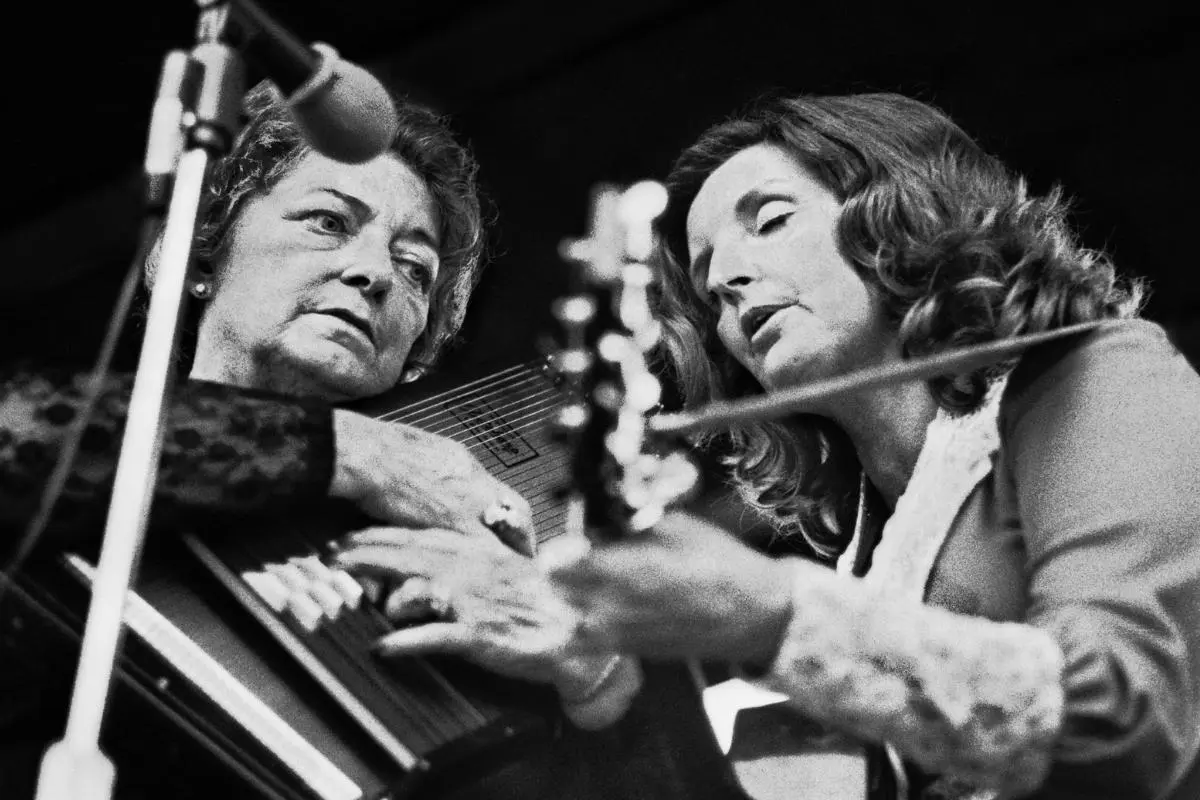
If guitar history were honest, Maybelle would sit on the same poster wall as Hendrix and Page. Earl Scruggs flatly said he owed his love of guitar in country music to Maybelle, praising the way she always “played the tune,” while Chris Hillman recalled that the first thing he learned on guitar was the Carter scratch and his first full piece was “Wildwood Flower.”
That influence bled into bluegrass, folk revival coffeehouses and rock stages alike, as generations of pickers tried to get their alternating bass and brushed chords to snap with the same authority. By the time the 1960s folk boom hit, copying “Mother Maybelle licks” was practically a rite of passage for any serious acoustic guitarist, whether they admitted it or not.
Mother Maybelle & the Carter Sisters
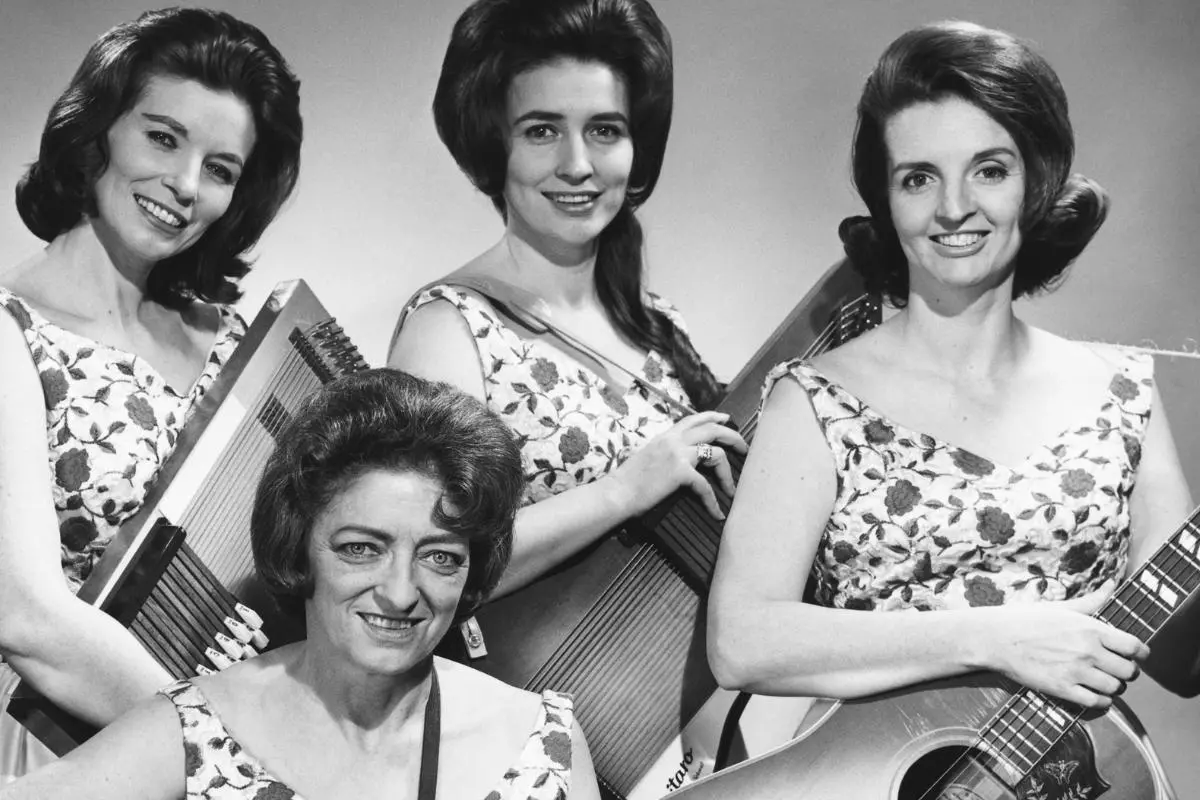
When the original Carter Family wound down in the early 1940s, Maybelle did not retreat to the kitchen. She reorganized with daughters Helen, Anita and June as Mother Maybelle and the Carter Sisters, with June mugging through comic numbers on autoharp, broadcasting from power-house border station XERA by 1939 and eventually becoming staples of the Grand Ole Opry in Nashville.
This was a matriarchal country band years before Nashville was comfortable with that idea. Their tight, road‑hardened show mixed old Clinch Mountain ballads, gospel, novelty songs and Maybelle’s instrumental breaks, and it quietly normalized the shocking sight of a woman leading a band with serious instrumental chops.
Solo work, festivals and a late‑career spotlight
Through the 1950s and 60s, while her daughters juggled families and show business, Maybelle kept recording, cutting solo albums that highlighted both her guitar and her much‑loved autoharp, and appearing as a featured guest on other artists’ records. Biographers describe a 50‑year career in which she moved from primitive radio studios to modern stereo LPs without ever abandoning the repertoire and right‑hand logic she learned as a mountain teenager.
The most visible capstone came when the Nitty Gritty Dirt Band invited her to Nashville for their 1972 triple album Will the Circle Be Unbroken, a project that put long-haired West Coast pickers in the studio with Roy Acuff, Mother Maybelle, Earl Scruggs, Doc Watson and other elders to cut more than thirty old-time standards live to tape.
On the title track of that album, Maybelle trades verses with Acuff and bluegrass singer Jimmy Martin while a roomful of musicians and family members roar in on the chorus, turning an old funeral hymn into a summit meeting. Dirt Band cofounder Jeff Hanna later recalled listeners telling him that parents and long‑haired kids who were not speaking to each other could sit down with that record and finally share something, proof that Maybelle’s Clinch Mountain guitar could bridge as easily as it crossed generations.
Illness, death and a long shadow
After her husband Eck died in 1975, Maybelle finally began to slow down, her body worn by arthritis and Parkinson’s even as her hands still reached instinctively for a guitar or autoharp. She died suddenly of a respiratory ailment on October 23, 1978, and was buried in what is now Hendersonville Memory Gardens just outside Nashville; by then the Carter Family had already become the first group inducted into the Country Music Hall of Fame, and later their recordings of “Can the Circle Be Unbroken” and “Wildwood Flower” would be singled out as historically significant by the recording academy.
In the 2020s, an awards‑show presenter casually joked that the Carter Family had “basically invented” country music, prompting a viral side‑eye from cohost Shaboozey and a much‑needed conversation about overlooked Black architects of the genre, including guitarist Lesley Riddle, who helped shape the Carters’ repertoire and informed Maybelle’s picking.
That debate is healthy, and it actually underlines just how central Maybelle was: she was brilliant enough to absorb Riddle’s blues lines, Baptist hymn shapes, parlor‑song sentimentalism and radio pop, then boil them down into something any farm kid with a cheap guitar could try to copy. If you can thumb a bass note while your fingers strum a chord, you are already borrowing her logic whether you know her name or not.
History did not give her a stadium tour or a wall of gold records, but Maybelle Carter did something more subversive. She snuck a technically radical guitar style into living rooms and kitchen radios until it felt like tradition, so natural that later generations forgot one woman had to invent it. For players who care about tone, touch and the power of understatement, she is still the mother of country guitar in the only way that counts: every time the circle of influence comes back around and some kid learns “Wildwood Flower” by ear.