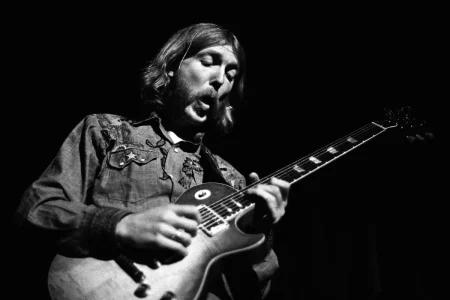
Ask most fans about ZZ Top and they jump to beards, hot rods, and MTV-era mythmaking. But if you want the real origin story, you zoom in on 1969: the year before the world had a name for them, but after the ingredients were already in the pan. In that one gritty stretch of time, Billy Gibbons pivoted out of psychedelia, Texas dancehalls tested the band’s stamina, and the eventual “Little Ol’ Band” identity started to feel less like a brand and more like a survival instinct rooted in Houston beginnings that later earned institutional recognition.
1969 is interesting because it is not a headline year. It is a blueprint year. The culture is loud, the business is predatory, and the stage volume is the only marketing plan that consistently works in a world where rock had become a festival-scale national event.
Where Billy Gibbons was coming from in 1969
Before ZZ Top became a power trio, Billy Gibbons was already a known quantity in Texas rock circles as the leader of the Moving Sidewalks. That group leaned into the late-60s psychedelic moment and even opened for Jimi Hendrix, which is the kind of detail that explains why Gibbons never sounded like he learned the blues from a textbook – he learned it in the blast zone, as his early-career bio makes clear.
By 1969, the psychedelic tide was receding and the hangover was real. In Texas, “back to the roots” was not a marketing slogan. It was what audiences actually paid for: hard grooves, familiar blues forms, and a band that could keep a dance floor moving without getting precious about it. Gibbons’ own bio frames this era as a formative pre-ZZ period that fed directly into what came next in his formative pre-ZZ years.
The Texas scene in 1969: why “authentic” was a contact sport
It helps to remember what 1969 felt like in American music. Nationally, rock was expanding in ambition and scale (think festivals and arena dreams), but a Texas working band still lived in a world of clubs, roadhouses, and constant travel. You did not build a reputation with press, you built it by being the loudest, tightest act on the bill, night after night – far from the symbolic, mass-audience peak represented by Woodstock’s cultural footprint.
Texas history references frame ZZ Top as a Houston-rooted band that emerged from that local ecosystem of bars and regional circuits. The point is not just geography. It is the discipline you develop when you cannot hide behind studio tricks, and the audience is close enough to heckle you between verses in that bar-and-circuit Texas ecosystem.
“We’re bad, we’re nationwide.” – ZZ Top, “Nationwide” (later era lyric, but it captures the Texas-to-everywhere ambition that was being forged long before the hit records).
So what exactly happened in 1969 for ZZ Top?
If you are looking for a single “band formed on this exact day” moment, 1969 can feel slippery. Many authoritative summaries place ZZ Top’s formation in 1969 in Houston, with Gibbons as the constant and early lineup shifts before the classic trio locked in. The band’s formation-and-evolution overview supports 1969 as the ground floor.
Here is the useful way to think about 1969: it is the year of commitment. Gibbons commits to a stripped-down, blues-driven direction after the Moving Sidewalks. The early ZZ Top concept commits to the power-trio economy: fewer moving parts, more space, more groove, more danger. And Texas audiences commit to telling you immediately whether it works – an arc that’s consistent with career summaries emphasizing how the identity hardened early.

The lineup reality: a band becomes “real” when the rhythm section fits
ZZ Top’s long-term identity is inseparable from the chemistry of guitar, bass, and drums. In 1969, that chemistry is still being hunted for. Later biographies of Dusty Hill and Frank Beard document the pre-ZZ Top paths that mattered: Hill’s and Beard’s background in blues-rock (including the American Blues lineage) is a key reason the eventual ZZ Top rhythm section felt like an engine instead of an accessory, as shown in Dusty Hill’s pre-ZZ background.
Even if you do not memorize every early personnel change, the takeaway is simple: 1969 is when the idea of ZZ Top stops being “Billy’s next band” and starts being a search for the exact kind of players who can make slow blues hit like a truck and fast boogies swing without rushing – something you can trace through the Frank Beard discography breadcrumbs.
The sound in 1969: ditching the kaleidoscope, keeping the bite
Listen to ZZ Top’s first album from a few years later and you can hear the residue of 1969 all over it: minimal overdubs, big-room rhythm guitar, and a vocal attitude that is more barroom storyteller than flower-power philosopher.
This is where a provocative claim fits the evidence: ZZ Top were “anti-psychedelic” without being conservative. They kept the volume and edge of the late 60s, but swapped the cosmic abstraction for sweat, double-entendres, and grooves that functioned like machinery. That choice was not just artistic. It was economic, because it played anywhere and sold the band as a reliable live act – exactly the kind of identity described in their blues-rooted minimalism profile.
The business lesson 1969 taught them: the road is the label
In 1969, record deals were not handed out to promising artists with a good aesthetic. They were often given to acts that could already draw, already tour, already survive. The band’s durable live-reputation narrative underlines how foundational that road-built credibility was to everything that followed. You do not get that reputation in the studio. You earn it in the same places you get your calluses.
That is why 1969 matters even if documentation is scattered. The year represents the period when the band’s future “machine” starts running: set lists get refined, tempos get standardized, and the material begins to sound like it comes from one identity instead of three different influences fighting each other – an early pattern consistent with their long-haul career arc.
1969 compared to the myth: what fans get wrong
Because ZZ Top’s most visible era came later, it is easy to imagine they sprang fully formed into pop culture. But the group’s official site and institutional profiles consistently frame their story as long-haul development: early Texas work first, major breakthroughs later. In other words, the beards were the billboard, not the foundation built through decades of touring and releases.
It is also tempting to over-credit “luck.” The truth is more brutal and more flattering: 1969 and the surrounding years were about outlasting other bands. Outlasting bad gigs, unreliable PA systems, endless drives, and the kind of crowds that only respect you after you have won them over twice – conditions implied by the band’s early regional grind.
A quick timeline cheat sheet: why 1969 sits at the center
| Era | What’s happening | Why it matters |
|---|---|---|
| Pre-1969 | Gibbons leads the Moving Sidewalks; Texas psychedelic rock peak | Stagecraft and tone get battle-tested (including Hendrix-adjacent experience) |
| 1969 | Gibbons pivots toward a harder blues-rock direction; early ZZ Top roots take shape | The “power trio + Texas groove” idea becomes the mission, not a side project |
| Early 70s | Classic lineup solidifies; albums begin; touring expands | The 1969 blueprint turns into a national product |
These broad strokes align with major career summaries even when specific day-by-day details vary across sources, including the standard biographical outline.
The cultural backdrop: 1969 made “roots” feel dangerous again
1969 is famous for maximalist rock moments, but it also seeded the backlash: the urge to get back to blues, country, R&B, and simpler forms. The Library of Congress notes on the Woodstock festival highlight how massive and symbolic rock had become. Against that backdrop, a Texas band choosing tight boogie and bar-band economy looks less small-time and more like an alternate future for rock: less spectacle, more swing, in contrast to rock’s newly monumental scale.
That tension is the magic. ZZ Top’s later success comes from sounding timeless, but the decision to chase timelessness starts in a very specific time: 1969, when everybody else was trying to sound like tomorrow – a dynamic reinforced by their canonized career narrative.
What to listen for if you want to hear “1969 ZZ Top” in later records
- Space in the riffs: the guitar does not fill every gap; it lets the rhythm section talk.
- Groove-first tempos: even fast songs have a danceable pocket, not a race-to-the-finish feel.
- Vocal attitude: more storyteller than showman, built for a room that might not care.
- Minimalism as power: fewer notes, more authority, and a tone that carries the narrative.
AllMusic’s profile framing is helpful here, because it ties their identity to blues-rooted minimalism and the trio’s locked-in feel.
The edgy takeaway: 1969 is when ZZ Top chose work over “cool”
There is a romantic version of rock history where bands win because they are fashionable. ZZ Top’s 1969 story suggests the opposite: they win because they are functional. They build a sound that survives bad rooms, uneven crowds, and the kind of touring miles that ruin weaker musicians – an approach consistent with the band’s reputation for durability.
And that is why 1969 deserves more attention. It is the year ZZ Top quietly decided that “authenticity” is not a pose. It is a daily job description.

Conclusion
ZZ Top in 1969 is not about chart positions or iconic videos. It is about the moment the band’s core philosophy snaps into focus: strip it down, groove harder, and let Texas audiences be the harshest producers you will ever meet. Once that mindset was in place, the rest of the story was just amplification built from Texas-tested roots.