
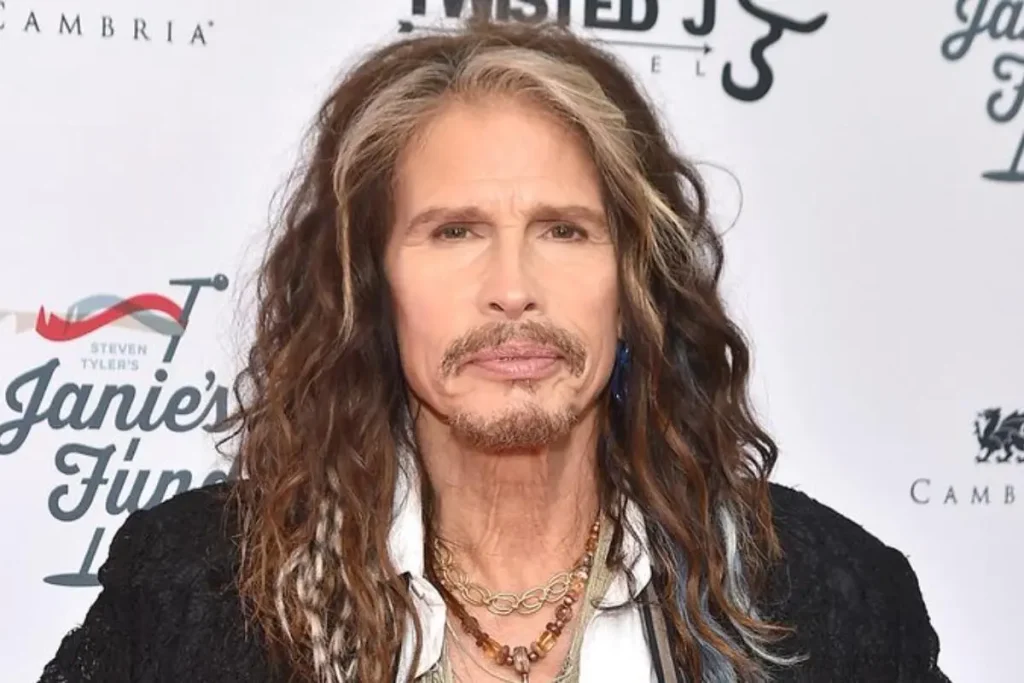
Steven Tyler is one of rock’s great contradictions: a velvet-scarf poet with a street-fighter voice, a pop hitmaker who still sells danger, and a survivor whose career is basically a long argument with gravity. His story is less “rise to fame” than “detonate, rebuild, detonate again, and somehow keep singing.” Here’s the mini biography from his early years to the present, with the messy parts left in (because they matter).
“I don’t regret drugs at all.” – Steven Tyler
Early life: a Bronx birth, a music household, and a restless streak
Steven Victor Tallarico was born in New York City and grew up around music, including the influence of his father, a classical musician and teacher. His early identity was split between disciplined musical exposure and a teenage impulse to chase volume, spectacle, and the freedom of rock and roll – details covered in his early life and background. Those two forces never stopped wrestling, and that tension became part of his art.
By the late 1960s, Tyler was playing in bands and developing the persona that would later look inevitable: the big-mouth microphone acrobat who could sell both blues grit and glittery romance. The “Tyler voice” was not just a natural gift – it was a worked-on instrument, built for range, rasp, and theatrics. It also came with a cost: that kind of singing is an athletic event, not a casual hobby.
Meeting the future: Joe Perry, the Boston-area spark, and Aerosmith’s formation
The meeting of Tyler and guitarist Joe Perry is one of rock’s classic chemistry experiments: combustible personalities, a shared love of blues-based rock, and an instinct for hooks that could punch through radio noise. Aerosmith formed in Boston in 1970, with Tyler as the focal-point frontman, but also a songwriter who wanted the band to be taken seriously as creators – something Tyler discussed in a “Walk This Way” interview.
From the start, Tyler’s job was bigger than “lead singer.” He was also the hype machine, the visual signature, the ringmaster who could make a club stage feel like a riot on purpose. That mattered in the early 1970s, when American rock bands were trying to stand out in the shadow of British giants.
1970s stardom: hard rock hits and the invention of a swagger template
Aerosmith’s 1970s run turned them into a defining American rock band, with Tyler as the voice that could sound dangerous, needy, funny, and feral inside the same chorus. The band’s growing popularity was tied to relentless touring and a catalog that mixed blues roots with pop instincts, and their legacy is now cemented with a Rock & Roll Hall of Fame profile. Their place in rock history is now institutionally stamped, but their early success was earned the loud way: stage by stage.
Tyler’s lyrics were often playful and suggestive, built on double meanings and street poetry rather than tidy storytelling. That approach made him a magnet for both fans and controversy because it blurred the line between performance and personal appetite. In the 1970s, rock culture rewarded excess, and Tyler became one of its most recognizable avatars.
The crash years: addiction, instability, and a band that nearly didn’t make it
Any Steven Tyler biography that skips the addiction years is basically fan fiction. Aerosmith’s momentum was badly damaged by substance abuse and internal fracture, with Tyler’s health and reliability increasingly threatened. When your brand is chaos, it is easy to mistake self-destruction for showmanship, right up until the machine stops working.
Tyler later spoke bluntly about his drug use and lack of regret, a statement that reads less like glamorizing and more like a complicated admission: he knows it shaped him and nearly killed him. That same kind of unvarnished, provocative tone shows up across NPR coverage and interviews about Steven Tyler.
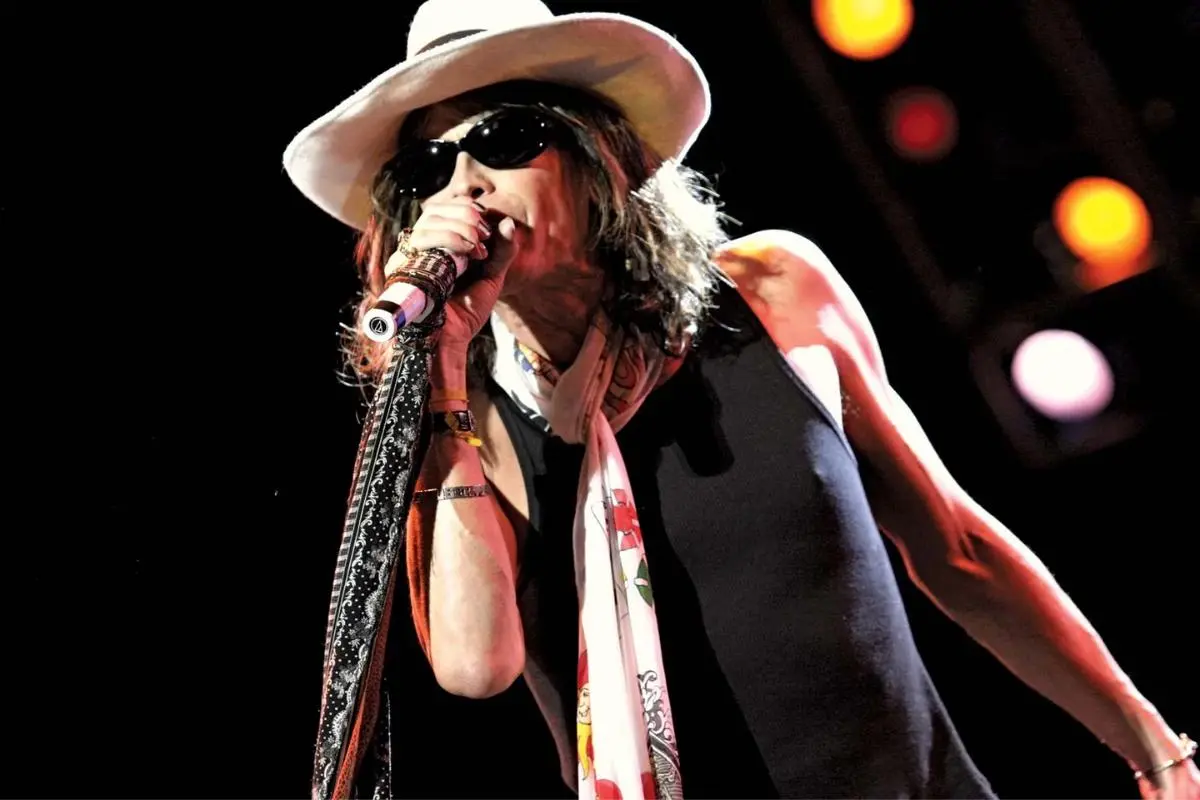
1980s redemption arc: the comeback that rewrote their future
Aerosmith’s turnaround in the 1980s is one of rock’s biggest second acts. Tyler got sober and the band reestablished itself, not as a nostalgia attraction, but as a current hitmaking force. The comeback wasn’t only about health – it was about learning how to function as professionals again while keeping the music hot.
Then came the crossover lightning bolt: the collaboration with Run-D.M.C. on “Walk This Way,” which helped reintroduce Aerosmith to a new generation and became a cultural hinge moment for rock and hip-hop crossover. That collaboration is widely credited with changing the mainstream conversation and pushing Aerosmith back into the center of pop culture – a kind of impact later reflected in the band’s long awards-era visibility within the GRAMMY Awards ecosystem.
1990s megastardom: pop power, MTV dominance, and the Tyler brand
In the 1990s, Tyler evolved into something rare: a classic-rock frontman who could still dominate new media. Aerosmith’s videos and singles kept them on the public’s radar, and Tyler’s style became a recognizable brand: scarves, lips, elastic movement, and a voice that could turn a ballad into a dare.
Tyler’s celebrity also grew beyond the band, helped by his willingness to be a character in the public eye. That visibility brought opportunities and scrutiny in equal measure, and it established him as a fixture of American entertainment, not just rock radio.
American Idol era: the frontman becomes “America’s rock uncle”
When Tyler joined American Idol as a judge, he stepped into a role that could have diluted his mystique. Instead, it showed how adaptable he is: he could be funny, blunt, and unexpectedly empathetic while still selling the idea that rock is a lived thing, not a museum piece. For older fans, it was surreal; for younger viewers, it was an introduction to the fact that this guy wasn’t a “celebrity,” he was the prototype.
That era also highlighted a truth about Tyler: he’s always been a performer first. Whether in a stadium or on a TV panel, he knows how to hold attention, and that skill is part of his longevity.
Solo moves, side quests, and the country detour
Tyler has periodically stepped outside Aerosmith to explore solo work and collaborations, including a notable flirtation with country music. Not every experiment has the cultural impact of the band’s biggest moments, but the point is the restlessness: he has rarely behaved like someone content to be a legacy act. Even when the output divides listeners, the impulse to try is consistent with his early years.
Philanthropy: Janie’s Fund and a different kind of stage
Later in life, Tyler has leaned into activism and charity work, most prominently through Janie’s Fund, which supports girls affected by abuse and neglect. The organization frames its mission around protection, recovery, and long-term support, and it has become a major part of Tyler’s public identity beyond music.
It’s tempting to treat celebrity philanthropy as image management, but Tyler’s involvement has been sustained and central, not a one-off press cycle. If his earlier decades were about pushing limits, this chapter has also been about rebuilding and directing attention toward something constructive.
Late-career reality check: injuries, vocal strain, and the end of touring
Tyler’s style has always demanded physical risk: leaping, screaming, stretching phrases until they snap, then landing them anyway. That kind of performance is thrilling but punishing, and by the 2020s the limits became unavoidable. Aerosmith announced their farewell touring plans, but the road proved brutal, and health issues reshaped the ending.
In 2024, Aerosmith publicly announced they were retiring from touring due to Tyler’s vocal injury, citing the difficulty of returning to full touring strength. The band’s own site framed it as a final, definitive decision after efforts to recover.
The present: legacy, influence, and what “still here” really means
“Present day Steven Tyler” is less about charts and more about impact. He remains one of the most imitated frontmen in rock history: the body language, the phrasing, the fearless blend of blues grit and pop drama. Aerosmith’s official channels continue to document the band’s status and the post-touring era, signaling that the story is still being curated even if the touring chapter is closed.
Tyler’s legacy is also complicated, and it should be. Rock history is full of genius tangled with bad judgment, and Tyler’s public life includes both inspiration and controversy. That complexity is part of why he remains compelling: he is not a clean myth, he is a loud human story.
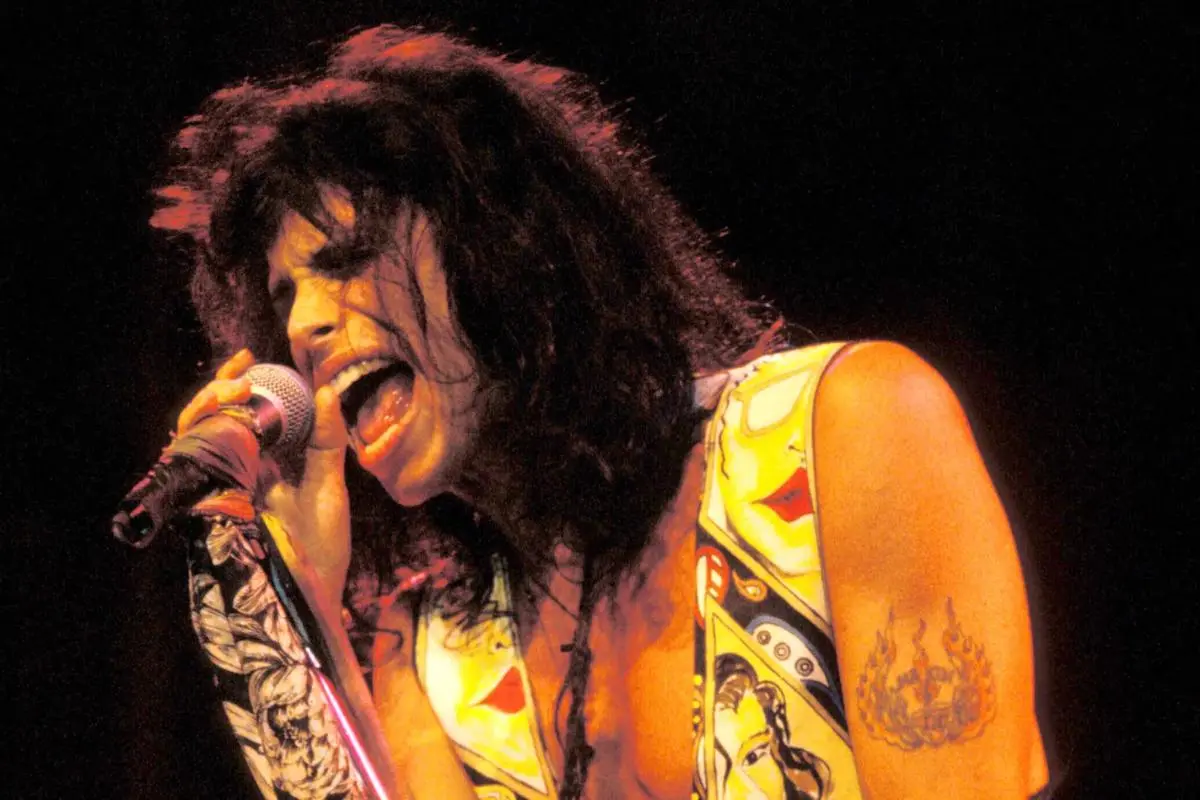
Steven Tyler in one sentence
He’s a singer who turned his voice into a high-wire act, survived the fall, and kept performing long enough to become both a warning label and a legend.
Quick timeline table (young man to now)
| Era | What’s happening | Why it matters |
|---|---|---|
| 1960s | Early bands; developing stage persona | Builds the vocal style and theatrical instincts |
| 1970-1979 | Aerosmith forms; breakthrough and 70s stardom | Defines an American hard rock swagger template |
| Early 1980s | Addiction and instability threaten the band | Near-collapse becomes part of the legend |
| Mid-to-late 1980s | Sobriety and comeback; Run-D.M.C. crossover | Reboots career and widens cultural footprint |
| 1990s | MTV era hits; mainstream domination | Turns Aerosmith into a multi-generation brand |
| 2010s | TV fame, side projects, charity focus | Expands “Tyler” beyond the band |
| 2020s-present | Health realities; Aerosmith stops touring | Closes the road chapter, cements legacy |
Conclusion: the myth survives because the man did
Steven Tyler’s biography isn’t neat, and that’s the point. He helped define what a hard rock frontman could be, then spent decades proving he could outlast the role’s worst temptations. Now, with touring over, the spectacle has slowed – but the influence is permanent.


