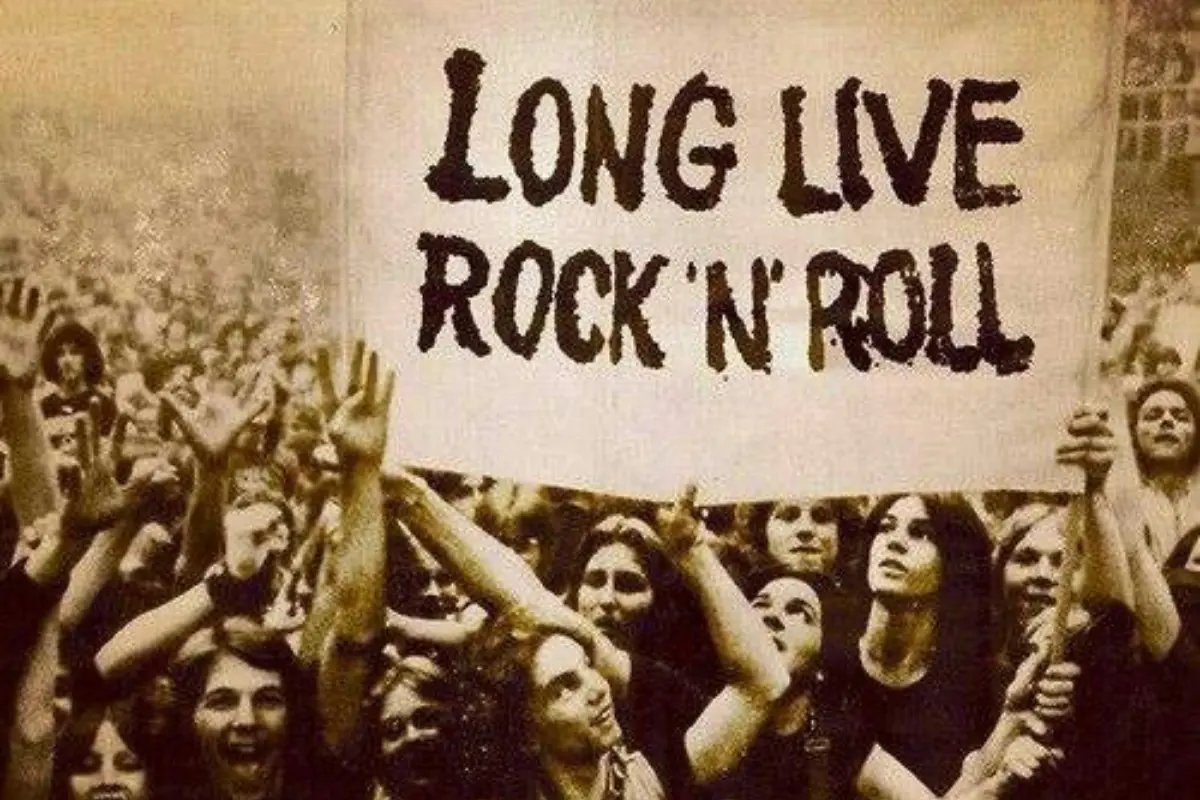
Rock ’n’ roll was never polite music. It was the sound of cheap amps, sweaty basements and adults muttering that the world was going to hell. For teenagers, that was exactly the point.
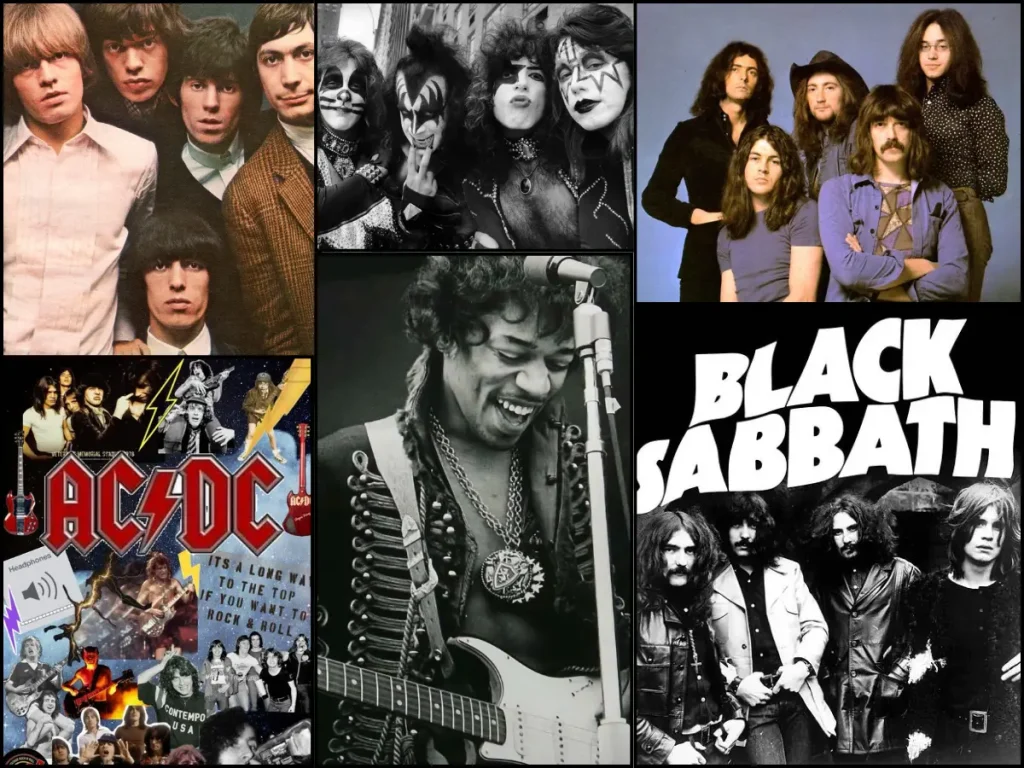
From the first jukebox shakers to AC/DC’s arena cannons, rock ’n’ roll is basically one long argument about how loud, how heavy and how outrageous you can make the backbeat before it stops being rock at all. Along the way you get The Rolling Stones’ swagger, Jimi Hendrix setting guitars on fire, Black Sabbath dragging the genre into darkness, Deep Purple building the archetypal riff, and Kiss turning rebellion into a traveling circus.
How Rock ’n’ Roll Was Born: Rhythm, Blues and Trouble
Rock ’n’ roll did not appear out of thin air in the 1950s. It grew out of African American rhythm and blues, jump blues, gospel and boogie, colliding with white country and hillbilly music in a volatile mix of backbeat, electric guitar and taboo lyrics. Rhythm and blues, jump blues and boogie shaped the sound that would soon be called rock ’n’ roll. What changed in the mid 50s was that this sound finally crashed the mainstream, powered by a new demographic: teenagers with money and no intention of behaving.
Disc jockeys like Alan Freed blasted hard R&B records over Northern radio, scandalizing parents while giving white kids their first real taste of Black dance music. Bill Haley, Elvis Presley, Little Richard and Chuck Berry did the rest, stripping the music down to insistent riffs, 12 bar changes and choruses about cars, sex and escape. It was simple, but it felt dangerous in a way crooners never did.
At the same time, folk music was heading into coffeehouses and protest rallies, giving a different kind of voice to the same restless generation. Rock ’n’ roll, though, appealed to the hips first and the conscience later. It was body music – a drum kit, a cheap amp and the sense that anything your parents hated had to be good.
The British Takeover: The Stones Make Rock Dangerous
By the early 1960s, British kids who had grown up on imported blues and first wave rock records decided they could out-sneer the Americans. None went further than The Rolling Stones, who wore their love of Muddy Waters and Chuck Berry on their sleeves while twisting those influences into a harder, more lascivious sound. Their gritty blues and rock swagger set them apart. Their records took American R&B and fed it back to the world with extra attitude and an unmistakable London sneer.
The Rock & Roll Hall of Fame flat out calls them a gritty blues and rock band whose swagger helped define the very idea of a “real” rock group, with Jagger and Richards as its dangerous twin engine. While The Beatles rewrote the rulebook on studio pop, the Stones made debauchery a business model and turned the three chord blues shuffle into something that sounded like it might actually get you arrested.
The myth of “Beatles vs Stones” still fuels late night arguments, but even other hard men took sides. Motörhead’s Lemmy Kilmister famously insisted the Stones were “mummy’s boys” and “shit” on stage compared to the Beatles, whom he saw as the true street toughs and revolutionaries. His comments about the Stones and Beatles sharpened the rivalry. He was half wrong and half right: the Beatles changed the harmonic language, but the Stones made rock ’n’ roll feel physically dangerous again.
Hendrix: When the Guitar Started Talking Back
Then Jimi Hendrix arrived and made almost everybody sound old overnight. The Rock & Roll Hall of Fame calls him the most gifted instrumentalist in rock history, a self taught guitarist who could bend electric tone into screams, sighs and sirens while still grounding everything in blues phrasing. On stage he treated the Stratocaster like a sacrificial weapon, coaxing feedback and noise that had previously been considered a recording mistake.
His debut album Are You Experienced fused blues, psychedelia and studio experimentation into a new kind of heavy, elastic rock, full of tape manipulation, backward guitars and chromatic riffs that still somehow swung. The album’s blend of blues, psychedelia and studio trickery reset expectations. The Monterey Pop Festival performance – complete with lighter fluid, a burning guitar and noise sculpture masquerading as showmanship – announced that rock ’n’ roll had entered its psychedelic, borderline psychedelic breakdown phase.
Hendrix proved you could stretch the music to the edge of chaos without losing its groove. Under the wah and feedback, the core was still pure rock ’n’ roll: backbeat, blues changes and songs about sex, alienation, war and escape. He opened a door every later guitarist, from metal shredders to indie minimalists, had to walk through whether they liked it or not.
From Rock to Metal: Black Sabbath and Deep Purple Darken the Sky
If Hendrix made rock trip out, Black Sabbath made it stare into the abyss. Emerging from working class Birmingham, they slowed the tempo, detuned the guitars and wrote about war, madness and evil with a bluntness that left 50s innuendo in the dust. Even mainstream news outlets now describe their debut as the moment heavy metal truly separated from regular hard rock, with follow up album Paranoid laying down “Iron Man” and “War Pigs” as permanent templates.
Guitarist Tony Iommi’s industrial accident – losing the tips of two fretting fingers in a factory – forced him to use homemade prosthetics and lighter string tension, nudging him toward down tuned, grinding riffs that changed rock guitar tone forever. In later interviews he has talked about this limitation as the seed of Sabbath’s colossal sound, an example of how physical damage accidentally invented a whole subgenre.
Deep Purple attacked heaviness from another angle. On Machine Head they perfected a lean, organ and guitar driven brand of hard rock that still sounds like the default setting for bar bands trying to sound huge. “Smoke on the Water” grew out of a real casino fire in Montreux, and band members have recalled how that now immortal four note riff was almost an afterthought until audiences reacted like someone had pushed a big red chaos button. Between Sabbath’s doom and Purple’s precision, rock ’n’ roll discovered it could be genuinely frightening and still built on the same old blues chassis.
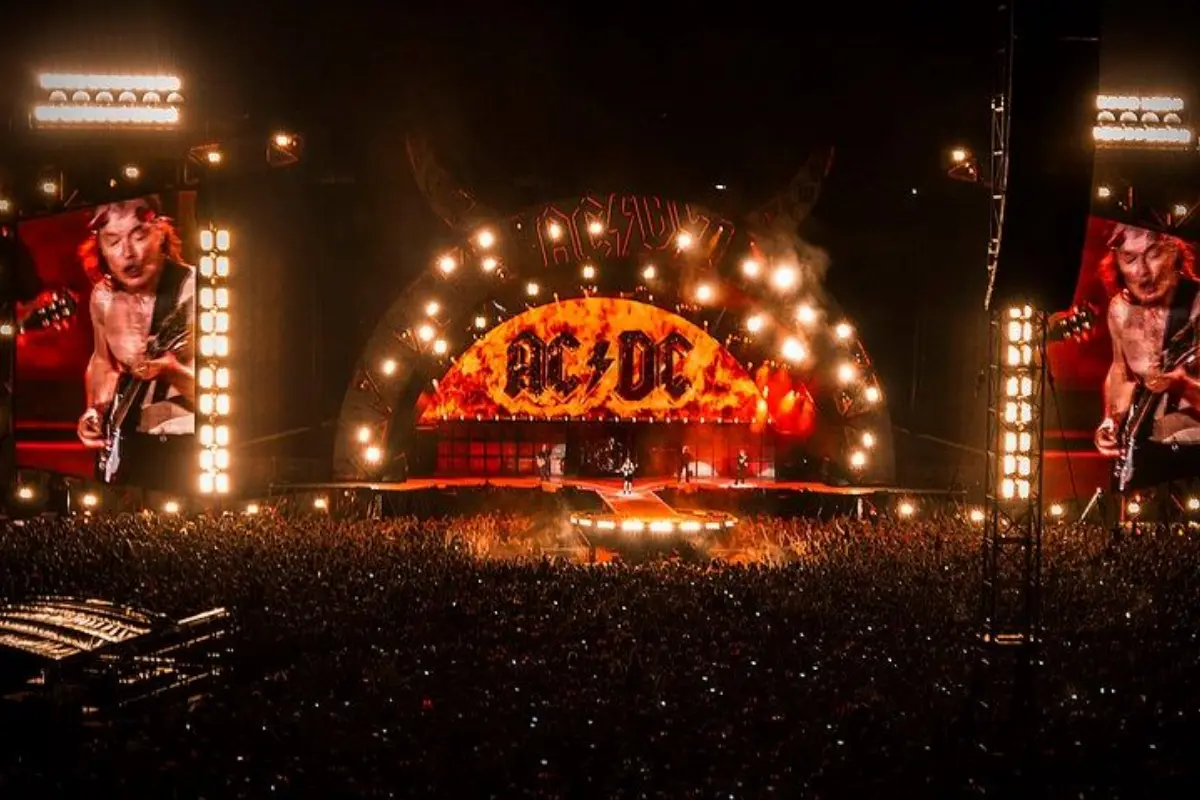
Stadium Shock Therapy: AC/DC, Kiss and the Return to Primal Rock
By the mid 1970s, rock had splintered into prog epics, folk introspection and virtuosic jazz fusion. AC/DC’s answer was basically: “No.” Their records strip everything back to headbanging riffs, four on the floor drums and choruses you can yell from the cheap seats. The Rock & Roll Hall of Fame sums them up as a scorched earth band sitting somewhere between punky hard rock and heavy metal, powered by anthems like “Highway to Hell,” “Back in Black” and “You Shook Me All Night Long”.
AC/DC’s secret is that almost nothing about their songs would have confused Chuck Berry. The rhythms are tighter, the amps bigger and the innuendo filthier, but harmonically it is mutated 50s rock ’n’ roll driven by Malcolm Young’s right hand and Angus Young’s unhinged lead breaks. In an era obsessed with complexity, they proved the most shocking move was doubling down on simplicity.
Kiss went the opposite way visually while keeping the music blunt and direct. Britannica describes them as one of the most influential rock groups of the 70s, famous for fire breathing, blood spitting, kabuki style makeup, levitating drum risers and other onstage stunts, with the live album Alive! and “Rock and Roll All Nite” finally bottling their concert chaos for radio. Underneath the costumes, the songs were straight, riff heavy rock ’n’ roll about sex, partying and defiance, delivered like a comic book version of everything parents feared in 1956.
By the 80s and 90s, players raised on Sabbath, Purple, AC/DC and Kiss pushed the aggression further without abandoning the core language. Zakk Wylde’s work with Ozzy Osbourne, for instance, rebuilt metal guitar around brutally loud Les Paul into Marshall tones, pentatonic runs and southern rock bends, co writing hits like “No More Tears” that are essentially muscular rock ’n’ roll with darker clothes.
| Band | Peak era | What they did to rock ’n’ roll |
|---|---|---|
| The Rolling Stones | Mid 60s – 70s | Turned Chicago blues into dangerous mainstream swagger. |
| Jimi Hendrix | Late 60s | Exploded the electric guitar into psychedelic, noisy art. |
| Black Sabbath | Early 70s | Slowed rock, tuned it down and invented heavy metal. |
| Deep Purple | Early 70s | Forged the textbook hard rock riff and arena sound. |
| AC/DC | Late 70s – 80s | Proved three chords and a backbeat can fill stadiums. |
| Kiss | Mid 70s | Turned rock rebellion into full scale theatrical spectacle. |
So What Was Rock ’n’ Roll, Really?
Strip away the hype and rock ’n’ roll is not a specific distortion setting or hair length. It is a mongrel of blues and country, played too loud, with lyrics that make somebody uncomfortable and a beat that refuses to sit still. Everything else is costume.
The Stones dragged that beat through London sleaze, Hendrix blew it open with feedback, Sabbath and Deep Purple buried it under riffs as heavy as factory machinery, and AC/DC and Kiss sold it back to us in stadium sized doses. Call the later results hard rock, metal or classic rock if you like, but the DNA is the same. Every time a kid plugs in, hits an open power chord and realizes it annoys the neighbors, rock ’n’ roll is starting all over again.