
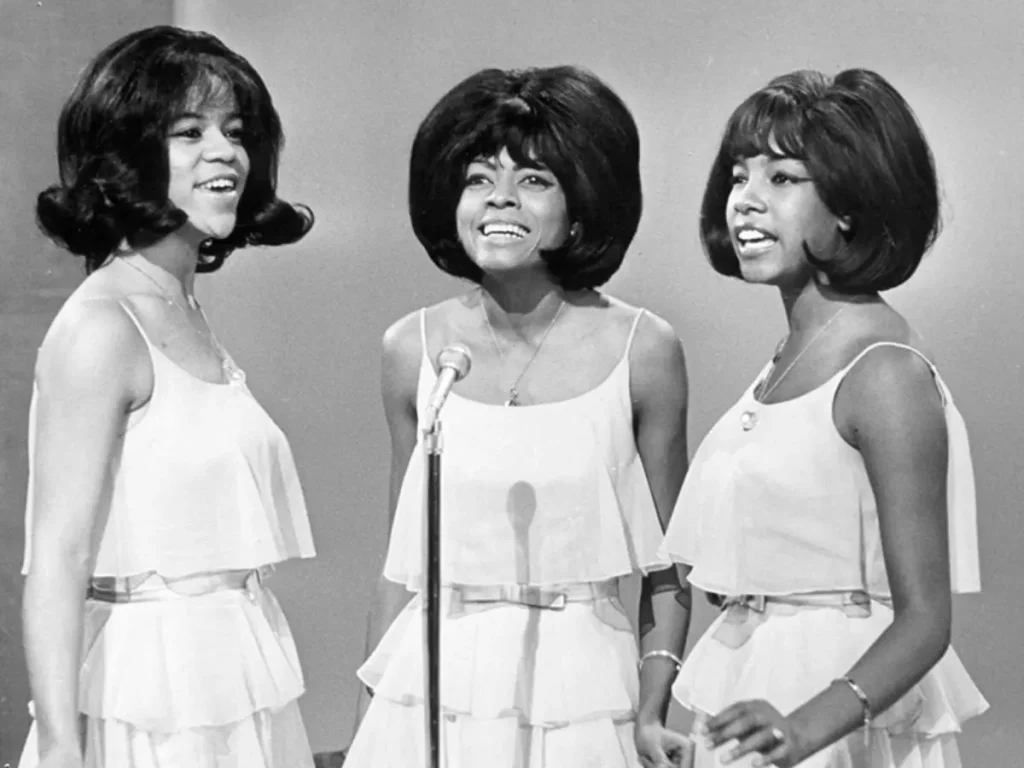
If you grew up with a transistor radio under your pillow, The Supremes were not just another girl group. They were the moment Black, female and glamorous crashed the pop mainstream in high heels and beaded gowns.
That cultural earthquake traces back to one seemingly small decision. In early 1961, four Detroit teenagers walked into Berry Gordy’s Hitsville U.S.A. offices as the Primettes and walked out as The Supremes. The contract was business; the new name was branding; together they quietly changed American music.
Detroit Teenagers With A Dangerous Dream
The story starts in Detroit’s Brewster-Douglass housing projects, where Florence Ballard, Mary Wilson, Diana Ross and Betty McGlown formed a vocal group in 1959. They called themselves the Primettes, a sister act to the Primes, the male outfit that would morph into the Temptations.
Nobody looking at those schoolgirls could have guessed they would become Motown’s flagship act and, by many counts, the most successful American vocal group ever, racking up a dozen Billboard Hot 100 number 1 singles. That is an absurdly long way to travel from a public housing courtyard to the top of pop.

Chasing Motown: Rejection, Hustle And A Detour To Lu Pine
Like every ambitious Detroit kid, the Primettes wanted Motown. They marched into Hitsville, auditioned for Berry Gordy in the hallway and impressed him enough that he made them sing their song twice. Then he did something surprisingly responsible for a hungry label boss: he refused to sign them until they finished high school, as Berry Gordy later recalled.
Most teenagers would have sulked. The Primettes simply moved in, figuratively. They hung around Hitsville after school, perched on the steps, flirting with musicians and volunteering for any session that needed background vocals or handclaps. Producers came looking for anonymous “oohs” and “baby, babys”; the girls made sure they were the first voices in the room, a hustle documented in accounts of their early Motown days.
When Gordy still would not put ink on a Motown contract, they tried a side door. In 1960 they cut a single for tiny Lu Pine Records, the doo-wop ballad “Tears of Sorrow” backed with “Pretty Baby” – a charming but derivative record that went nowhere and cost them original member Betty McGlown, who chose marriage over the grind, as later retrospectives on the group’s early recordings note.
January 15, 1961: The Day The Contract Finally Came
Their persistence paid off. After a year of singing on other people’s records and proving they could take direction, Gordy agreed in January 1961 to sign the group, but with a catch. Motown lyricist Janie Bradford handed Florence Ballard a list of possible new names and Gordy made the contract conditional on ditching “Primettes”. Ballard picked “Supremes”; the others hated it, and Ross in particular worried it sounded like a male group. As detailed in biographies of Florence Ballard, Gordy signed them anyway on January 15, 1961, under the new name.
Crucially, most of the choices on Bradford’s list shrank the group rather than elevated it. Names like the Darleens, the Sweet Ps, the Melodees, the Royaltones and the Jewelettes fit the industry habit of making women sound cute, small and decorative. Ballard refused, zeroing in on “The Supremes” – a name whose origin story is unpacked in pieces about how the group got its name and that planted a flag instead of fluttering behind somebody else’s.
Another version of the story, preserved by the Ed Sullivan Show archives, has Ballard choosing “The Supremes” precisely because it was the only option that did not end in “-ette”. Either way, the paperwork that day turned four local schoolgirls into The Supremes, the group that would go on to pile up 12 U.S. number 1s and become regulars on Sullivan’s Sunday-night pipeline into America’s living rooms.
From Primettes To Supremes: Sound, Image And Ambition
From doo-wop hopefuls to hit factory
Signing with Motown did not bring instant glory. Under their new name the Supremes cut early singles like “I Want a Guy” and “Buttered Popcorn” for Motown and its Tamla imprint, all of which missed the charts. Barbara Martin, who had replaced Betty McGlown, soon left, leaving Ross, Ballard and Wilson as the classic trio. Only in late 1963 did they sniff the Top 30 with “When the Lovelight Starts Shining Through His Eyes”, and in 1964 “Where Did Our Love Go” finally exploded to number 1, according to Motown’s own group history.
Once Holland-Dozier-Holland locked into the group’s sound, Motown had a monster on its hands. By 1965, the same year British bands were invading American radio, The Supremes were scoring back-to-back chart toppers like “Stop! In the Name of Love” and trading blows with the Beatles for airtime. As chronicled in features on Motown’s clash with the British Invasion, if you turned on a radio that year, Detroit R&B and London rock were fighting over the same speaker cones, and Diana Ross was right in the middle of the fight.
| Era | Group name | Label | Snapshot |
|---|---|---|---|
| 1959-1960 | The Primettes | Lu Pine / hustling for Motown | Teen doo-wop, talent shows, auditioning and singing anywhere they could. |
| 1961 onward | The Supremes | Motown | Polished pop-soul, TV-friendly image, a growing avalanche of hits. |

Gowns, charm school and coded respectability
The name change was only one part of Gordy’s master plan. Working out of the modest Hitsville house, he ran what was essentially a charm school: etiquette lessons, posture, diction, walking with poise in evening gowns. For audiences still nervous about “race music”, The Supremes were packaged as regal, glamorous and impeccably controlled, from their wigs to their eyelashes, an image that writers like Stu Bykofsky have argued reshaped mainstream views of Black performers.
That polish was not just about class; it was about politics. In a country still fighting desegregation battles, three young Black women appearing on national TV as elegant, witty and sexy without apology did quiet damage to a lot of racist fantasies. Their string of number 1s played like a soundtrack to a changing mental picture of who Black Americans were allowed to be, a shift often noted in obituaries and tributes such as those marking the passing of soul divas from the era.
What that bold name really signaled
Here is where the “Primettes” story turns provocative. Every other name on Bradford’s list diminished them: little sisters, sweet things, sparkly jewels. “The Supremes” sounded like a court that issued rulings. It was an act of low-key rebellion for a Black teenage girl from the projects to choose that word and insist on it.
That name worked like a spell. It gave Gordy something audacious to sell and it forced the group to live up to its promise. Once those records started hitting, the idea of calling Diana Ross, Florence Ballard and Mary Wilson anyone’s “-ettes” would have sounded ridiculous. In an industry that still routinely treated women as backup decoration, their very name insisted on command.
Inside The Group: The Cost Of Becoming “Supreme”
Of course, branding glory did not mean internal harmony. As Mary Wilson later recalled, the group began as three lead singers; onstage they were sisters, but behind the scenes Motown increasingly centered Ross as the face and voice of the act. Ballard – the founder who had named them – watched her own spotlight shrink as the label reshaped the group around Gordy’s favorite, tensions explored in long-form pieces like “Song of the Supreme Life.”
That tension, combined with brutal touring schedules and personal trauma, eventually helped push Ballard out of the group entirely. You can argue that the move from Primettes to Supremes did not just crown one group; it also started the slow, painful process of sidelining its most powerful original voice.
That is the uncomfortable flip side of this fairy tale. The same machine that turned a housing project trio into global icons also chewed up one of its co-founders. The name “Supremes” promised unanimity, but like most empires, it was held together by compromise and sacrifice.
Why That 1961 Rebrand Still Matters
Step back and that January 1961 contract looks less like routine paperwork and more like a hinge in pop history. Out of it came 12 U.S. number 1 singles, sold-out tours, and a template for the modern girl group: tight harmonies, consistent visual branding, and songs built to own the radio, not just the chitlin circuit, achievements highlighted in their R&B Hall of Fame profile.
More than that, it quietly helped desegregate the American imagination. Before The Supremes, it was easy for white listeners to keep Black artists in a separate mental box. After years of seeing Ross, Wilson and Ballard glide through living rooms in matching gowns, it was harder to pretend that Black femininity was anything but modern, stylish and central to the culture, an argument made explicitly in essays on how The Supremes improved America.
The Night Four Girls Became A Movement
So yes, on paper, 1961 was simply the year the Primettes changed their name and finally got a Motown deal. In practice, it was the night four Detroit schoolgirls stepped into a role that would upend chart politics, television, fashion and even race relations.
When you drop the needle on “Where Did Our Love Go” or “Baby Love” today, you are hearing more than great records. You are hearing the sound of a contract being signed, a name being stubbornly chosen, and a generation of young women deciding that “cute” was not good enough. They wanted to be supreme – and for a while, they really were.


