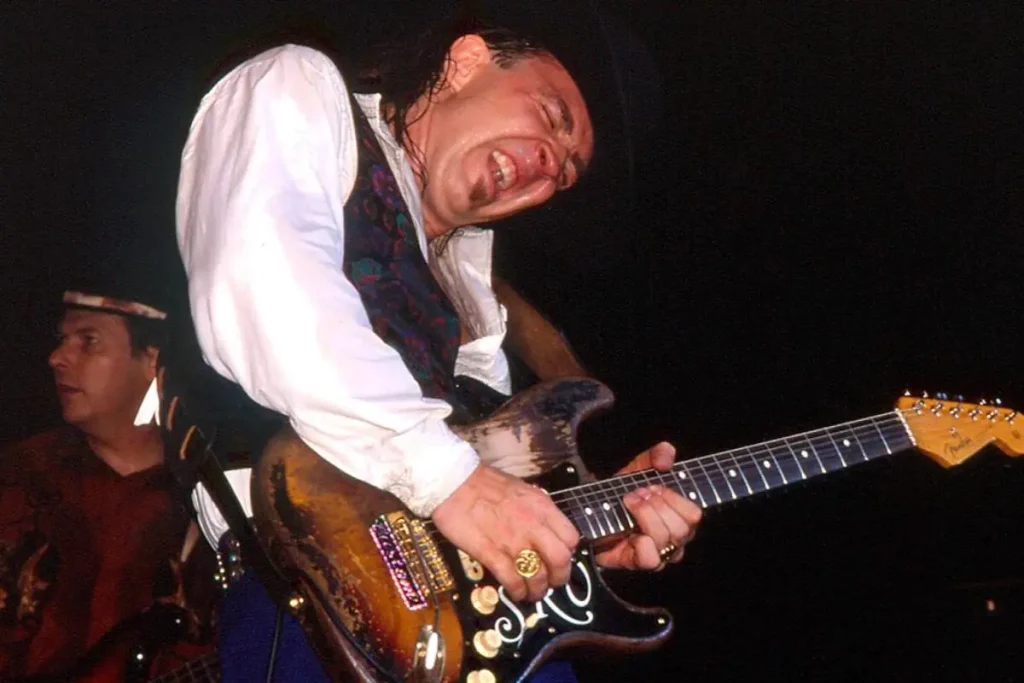
Some careers are launched by a perfect show, a perfect crowd, and a perfect review. Stevie Ray Vaughan’s international career? It arguably ignited in the messiest way possible: a blues-rock assault at the Montreux Jazz Festival in 1982 that left parts of the audience confused, unimpressed, and in some accounts, openly hostile.
Here’s the “sliding doors” twist that still makes musicians grin: while a section of the room didn’t get it, two people backstage absolutely did. David Bowie saw a guitarist who could put gasoline on pop, and Jackson Browne saw a talent worth putting in a serious studio. The crowd’s reaction became background noise. The backstage reaction became history.
Montreux 1982: When the room wanted jazz and got Texas
Montreux, by reputation and branding, invites a certain expectation: sophistication, swing, and the kind of musical conversation that politely nods before it disagrees. The festival’s jazz identity is part of the point, even as it has long booked beyond the genre.
Into that context walked Stevie Ray Vaughan and Double Trouble with a sound that was not “polite.” It was big-amp blues, hard attack, and a drummer and bassist who could hit like a bar fight with perfect timing.
Accounts of the set commonly describe a divided response, including booing from some attendees who expected something closer to traditional jazz programming. You can watch the Live at Montreux 1982 performance today and hear a crowd that does not consistently behave like a room that’s been won over.
“I play the blues. I don’t know nothing else.”
Stevie Ray Vaughan, quoted in a discussion of the Let’s Dance era and its wider context.
That quote is the key to understanding the night. Vaughan was not trying to “fit” Montreux. He was trying to detonate it, in the most musical way he knew.
The real audience was backstage
The Montreux legend survives because it shows how careers actually turn: not by unanimous approval, but by the approval of the right people at the right time. Vaughan didn’t need 4,000 fans that night. He needed two believers with leverage.
1) David Bowie hears a new weapon for pop
By the early 1980s, Bowie was a restless shape-shifter who understood something many “serious” rock critics still resist: pop can be a delivery system for radical sound. The story repeated across many biographies is that Bowie saw Vaughan at Montreux and soon after brought him in to play scorching guitar on Let’s Dance.
Bowie’s team was building a record designed to hit hard in clubs and on radio, and the album’s credits and documentation firmly place Vaughan on the 1983 sessions for Let’s Dance.
There’s also a subtle but important musical point here: Vaughan’s playing on Let’s Dance is not just “blues licks pasted on pop.” It’s the sound of a guitarist with huge dynamics, wide vibrato, and a controlled aggression that turns clean-ish funk-pop into something with teeth.
In other words, SRV was not a guest star. He was contrast. He made Bowie’s sleek grooves feel dangerous.
2) Jackson Browne provides something even rarer: studio access
In the SRV origin story, Jackson Browne is often the practical hero. Where Bowie offered international visibility, Browne offered infrastructure: time in a high-quality studio that a hungry new band could not casually afford.
Browne’s own official biography reflects a long-running reputation for craft and recording seriousness, which makes the “studio benefactor” role believable in a way that a random celebrity cameo would not. Vaughan and Double Trouble’s early momentum needed a clean capture, not another grainy club tape.
Studio time meant professional mic’ing, controlled rooms, and a chance to prove the band’s power without relying on stage volume to do all the talking.
That matters because Texas Flood did not win people over with gimmicks. It won with tone, feel, and performances that sounded like they were carved out of hardwood.
How those two doors fed directly into Texas Flood
It’s tempting to tell this story as a single lightning bolt: booed at Montreux, discovered by Bowie, instantly famous. Reality is more interesting. Montreux created opportunity, but opportunity still needed to be converted into a career with recordings, label movement, and relentless touring.
Texas Flood arrived in 1983 and quickly became a cornerstone of the blues-rock revival, anchored by the title track and a set list that balanced tradition with an unmistakably modern punch.
Even if you already know the album, it’s worth remembering what it signaled at the time: a young guitarist who could absolutely shred, but who put phrasing and groove ahead of speed. That combination made rock audiences respect him and blues audiences accept him.
Crucially, Bowie’s project put Vaughan’s name into a different ecosystem. You can call it “selling out” if you want, but the smarter take is that SRV smuggled the blues into the pop bloodstream and left scorch marks on the way out.
Why the booing matters more than the applause
Here’s the edgy claim: if Montreux had adored Vaughan immediately, the myth would be smaller. The discomfort is the point.
When a room boos, it’s often reacting to violated expectations, not poor musicianship. Montreux expected “jazz festival behavior.” SRV delivered “Texas bar at midnight” behavior, translated through Fender amps and a Stratocaster.
That tension does two things:
- It proves the artist is specific. Generic acts rarely get booed. They get ignored.
- It creates a story people repeat. “They didn’t get it” is a better engine than “everyone clapped politely.”
And in Vaughan’s case, the story is measurable: within a short window, he’s connected to Bowie’s blockbuster pop era and set up to make definitive recordings of his own.
Listen like a musician: what Bowie and Browne likely heard
You don’t need to be Bowie or Browne to hear the “career-launch” elements in that performance. Here are the traits that turn heads in any backstage area, in any decade.
Dynamics that feel physical
Vaughan could go from whisper to roar without losing time feel. That’s rare because it requires control, not just emotion.
Authority over the blues language
He wasn’t quoting the blues as a style costume. He spoke it fluently, then added rock volume and rhythmic bite.
A trio that sounds bigger than it is
Double Trouble is a masterclass in negative space: bass lines that imply harmony, drums that push without rushing, and guitar that fills the gaps without stepping on the groove.
A quick timeline table: why this gig is a “sliding doors” classic
| Moment | What the room heard | What the right people heard |
|---|---|---|
| Montreux set (1982) | Too loud, too rock, not “jazz enough” | A once-in-a-generation blues voice |
| Backstage reaction | Mixed crowd response | Bowie and Browne paying attention |
| Let’s Dance sessions (1983) | Pop record with hot guitar | Global platform for SRV’s sound |
| Texas Flood era (1983) | New blues-rock headline act | The blues revival has a modern face |
What players can steal from this story (without needing Montreux)
This isn’t just rock folklore. It’s a practical blueprint for musicians who want a career, not just compliments.
1) Stop chasing the “right crowd”
Vaughan didn’t tailor himself to Montreux’s expectations. He played his identity at full voltage. That’s what made him legible to people who mattered.
2) Build a sound that survives outside your scene
Austin understood SRV. The trick was getting New York and Los Angeles to understand him fast. The way you do that is with unmistakable tone, undeniable time feel, and a band that makes you sound like a headline act even on a short set.
3) Treat every gig as an audition for one person
Most rooms contain a hidden decision-maker: an artist, a producer, a manager, a festival booker, a journalist. Vaughan’s Montreux set is the extreme case, but the principle holds.
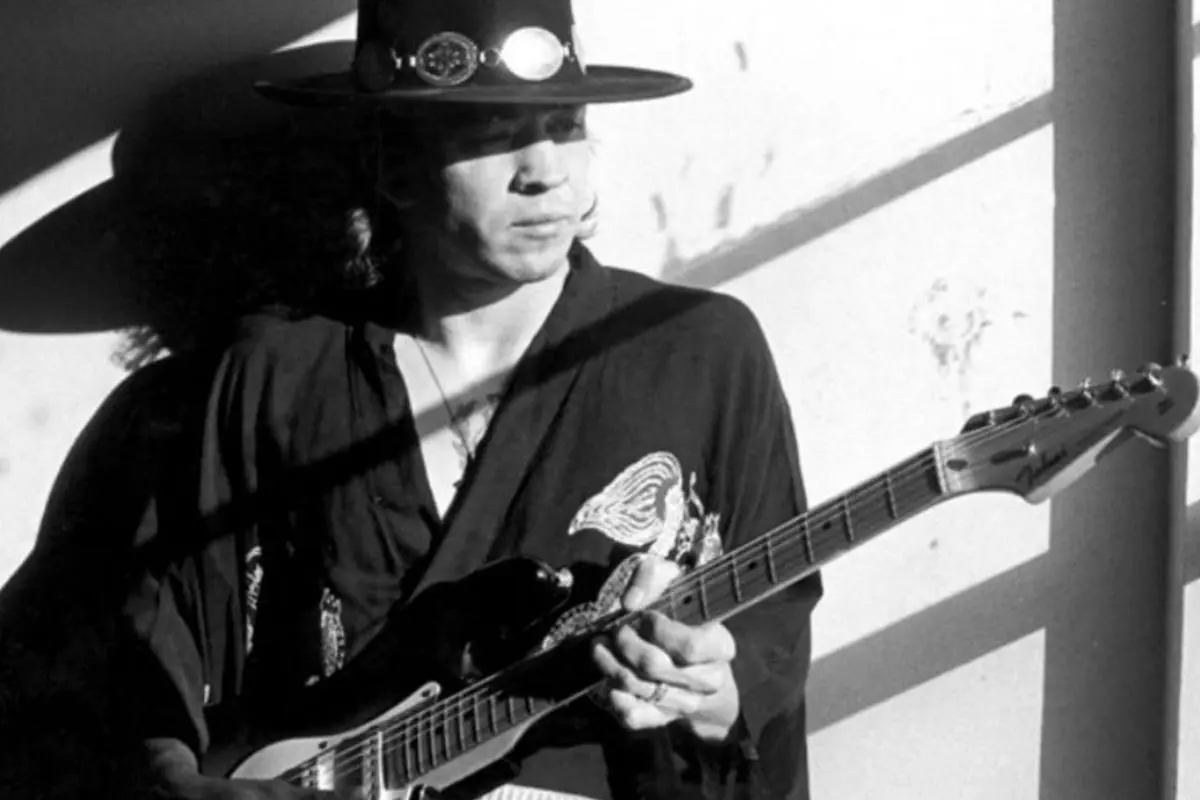
Legacy: the uncomfortable set that became a career accelerant
Today, SRV is enshrined as one of the defining guitar voices of modern blues and blues-rock, recognized broadly across the music world in lists like Rolling Stone’s ranking of the greatest guitarists.
But the Montreux lesson is sharper than “believe in yourself.” It’s this: sometimes the crowd is wrong in the moment, and sometimes that wrongness is the very signal that you’re doing something potent. Vaughan didn’t win the room. He won the hallway behind it.
And because Bowie needed fire, and Browne valued craft, the controversial gig didn’t end with bruised feelings. It ended with a chain reaction that helped carry Stevie Ray Vaughan from Texas hero to international benchmark.
That’s the sliding doors magic: the night that sounded like failure to some ears is now remembered as a turning point.