
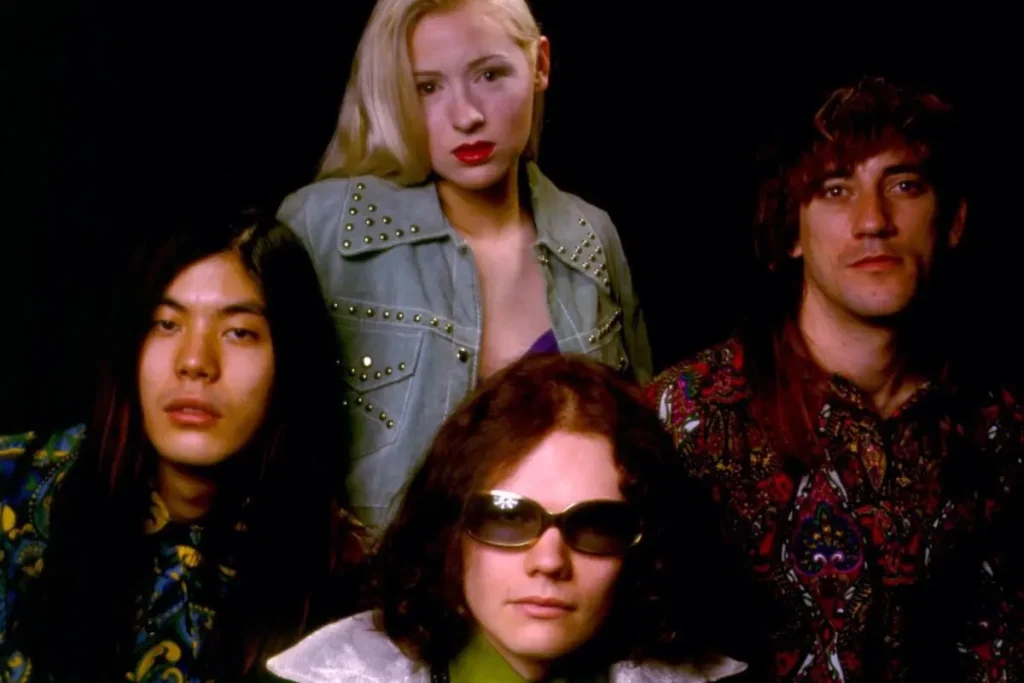
On May 28, 1991, The Smashing Pumpkins released Gish, a debut that didn’t politely introduce itself so much as kick a hole in the wall and then float through it like a ghost. It arrived months before Nevermind detonated the mainstream, but the record already felt like a future where alternative rock could be both punishingly heavy and strangely beautiful in the same breath. Officially, it’s simply the band’s first album in the catalog. In practice, it’s a manifesto.
“What’s interesting about ‘Gish’ is that it shows our influences and who we were as people before the real pressure came in.”
Billy Corgan (2021), via the band’s official Gish-era retrospective video on YouTube
Why Gish still feels dangerous
Plenty of debut albums have energy; few have control. Gish is tight enough to feel intentional, yet wild enough to sound slightly out of bounds, like the band is discovering its powers mid-song. That tension is the whole charm: it is the sound of ambition without the self-consciousness that fame brings.
In 1991, rock was in a weird limbo. Hair metal was collapsing under its own gloss, and college rock was still mostly an underground economy. The Pumpkins didn’t pick a side. They grabbed whatever worked: psychedelic sprawl, goth mood, hard rock muscle, and shoegaze texture, then welded it into a single, coherent identity.
Butch Vig’s “direct” alternative: big sound, no fake shine
One reason Gish holds up is its production philosophy. Butch Vig’s name is often linked to the era’s revolution because he captured bands as bands – organic performances with enough polish to punch through radio. His approach helped define the coming decade’s idea of “real” rock production: present, physical, and uncluttered.
That context matters because the early 90s weren’t just new songs; they were a new recording aesthetic. Nirvana’s official discography frames Nevermind as an era-defining statement, and it’s useful as a timestamp: by the time it hit, the cultural door was already opening.
Smart Studios and the vibe of the room
Gish was recorded at Smart Studios in Madison, Wisconsin, the scrappy, respected hub where Vig built his reputation. The studio’s reputation became notable enough to inspire a full documentary about its history and impact on alternative rock.
Here’s the edgy truth: Gish is proof that “expensive” isn’t the same thing as “big.” A modest-budget room, a hungry band, and a producer who understands guitars can outperform a million dollars of reverb and bad taste. That’s not nostalgia – it’s engineering and decision-making.
The Pumpkins weren’t “the next Nirvana” (and that’s the point)
It’s lazy to reduce 1991 to a single Seattle storyline. Nirvana came out of punk and hardcore traditions. The Pumpkins, by contrast, were more like magpies: they stole shimmer from the UK, darkness from goth, and brute force from metal, then made it all sound Midwestern and personal.
If you want a quick way to explain it to someone who only knows the hits: the Pumpkins were a texture band as much as a riff band. That’s why even the loudest sections feel layered, not just loud.
Track-by-track: the record’s secret architecture
Gish plays like a single night out that keeps changing neighborhoods: bright lights, then basements, then back to open sky. The pacing is a big part of why it still feels “album-first” rather than a collection of potential singles.
“I Am One”: the thesis statement
The opener is an immediate flex: Chamberlin’s drums lead with authority, the guitars arrive like weather, and Corgan’s vocal sits in that early Pumpkins sweet spot – dreamy but sharp. The band’s official album page still foregrounds the tracklist as a coherent set, and “I Am One” is clearly designed to be the front door.
“Siva”: velocity with a built-in comedown
“Siva” is a perfect early example of what the band would later refine: loud-soft dynamics that don’t feel glued together, but lived in. Instead of separating sections into “verse rock” and “bridge ambience,” the song breathes like a single organism.
“Rhinoceros”: the moment the band becomes itself
If you had to pick one track that predicts the Pumpkins’ 90s arc, it’s “Rhinoceros.” It has the hazy romanticism, the cryptic imagery, and the lift into a bigger emotional ceiling. A review praising the album’s blend of heaviness and atmosphere captures the balance “Rhinoceros” embodies in miniature.
“Bury Me” and “Snail”: riffs with long shadows
“Bury Me” moves like a fighter: tight, aggressive, and fast to change angles. “Snail” is the opposite, a slow, deliberate glide where the density becomes the hook. Together, they show the band’s core trick: using distortion as a color palette, not just a weapon.
“Tristessa”: the Sub Pop connection that people forget
Before Gish, the Pumpkins had a moment with Sub Pop: “Tristessa” was released as the label’s “Single of the Month.” The original Sub Pop page is no longer reliably accessible, but archived snapshots of the release page confirm the release and its place in that early scene.
“Window Paine”: the tempo switch as storytelling
“Window Paine” is a masterclass in escalation. The band starts with restraint, then tightens the screws until the track breaks into a faster, fevered ending. This is the Pumpkins’ early emotional language: not just loud vs quiet, but pressure vs release.
“Daydream”: D’arcy’s final word
Ending the album with D’arcy Wretzky on lead vocal is hookup-level smart. It reframes the whole record as a band statement, not just a frontman vehicle. The softness isn’t an afterthought; it’s the final color in the painting.
What’s actually “influential” about Gish?
Influence is hard to measure without turning into a fan argument. But you can hear Gish in the 90s and beyond in very specific ways: the normalized use of big muff-style fuzz for melody, the acceptance of prog-length structures in alternative rock, and the idea that a band can be both metal-adjacent and dream-pop-adjacent without apologizing.
Even a simple visualization tool like a related-artists map built from listener association reflects how The Smashing Pumpkins sit at the crossroads of multiple rock subgenres rather than belonging to a single lane.
Gear and arrangement lessons musicians can steal today
If you’re reading this on Know Your Instrument, you probably want more than mythology. Here are practical takeaways that translate directly to songwriting and recording.
1) Treat dynamics like composition, not “a vibe”
- Write the quiet section as seriously as the loud one.
- Use arrangement (drop drums, simplify bass movement) before reaching for automation.
- Make the transition the hook: the change is often what people remember.
2) Layer guitars by role, not by ego
- One guitar can be “chords and width,” another can be “melody and bite.”
- Pick different pickup positions and amp EQ curves to avoid frequency pileups.
- Double-track only what truly benefits from doubling.
3) Drums: swing inside the storm
Chamberlin’s playing is a quiet superpower of Gish. The performance feels fluid even when the guitars are bricking up the spectrum. If your band’s heavy parts feel stiff, the fix might not be more distortion; it might be letting the drummer breathe with the groove.
The “pressure” problem: why the debut feels freer than the classics
Corgan’s 2021 reflection lands because it names something fans feel: Gish is what the Pumpkins sounded like before expectation became a fifth band member. Once a group becomes important, every decision is judged against the legend. On Gish, the legend hasn’t arrived yet, so the band can chase instincts without writing press releases in their heads, as he notes in a 2021 Gish-era retrospective video.
And yes, later albums are bigger, more detailed, more iconic in pop culture. But Gish has a particular kind of clarity: the band discovering its language in real time, captured on tape before the world started grading their homework.
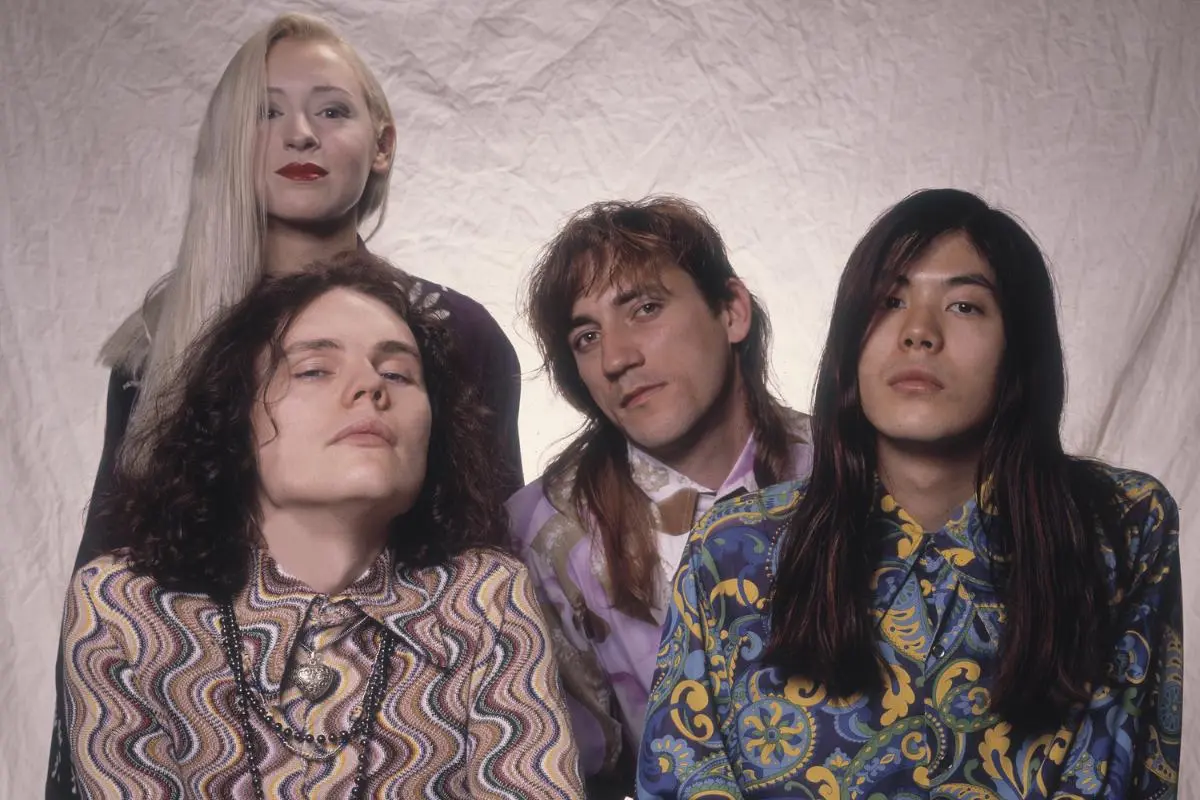
Quick-reference: the debut’s hard facts
| Item | Detail |
|---|---|
| Album | Gish |
| Release date | May 28, 1991 |
| Label | Caroline Records |
| Primary studio | Smart Studios (Madison, Wisconsin) |
Caroline Records’ official site preserves label identity and artist pages for historical context.
Conclusion: Gish is the sound of a band choosing its destiny
Gish isn’t just “a strong debut.” It’s the moment The Smashing Pumpkins decided they could fuse every beautiful thing they loved about rock music into one aggressive, dreamy, high-contrast language. If you want to understand why 90s alternative rock expanded beyond three-chord catharsis into something grander and stranger, start here.
Then turn it up until the quiet parts feel intimate and the loud parts feel like weather. That’s the Gish test, and it still works.
Listening reference: for modern listeners, the album’s track sequence and running order are easy to verify alongside listener history.


