
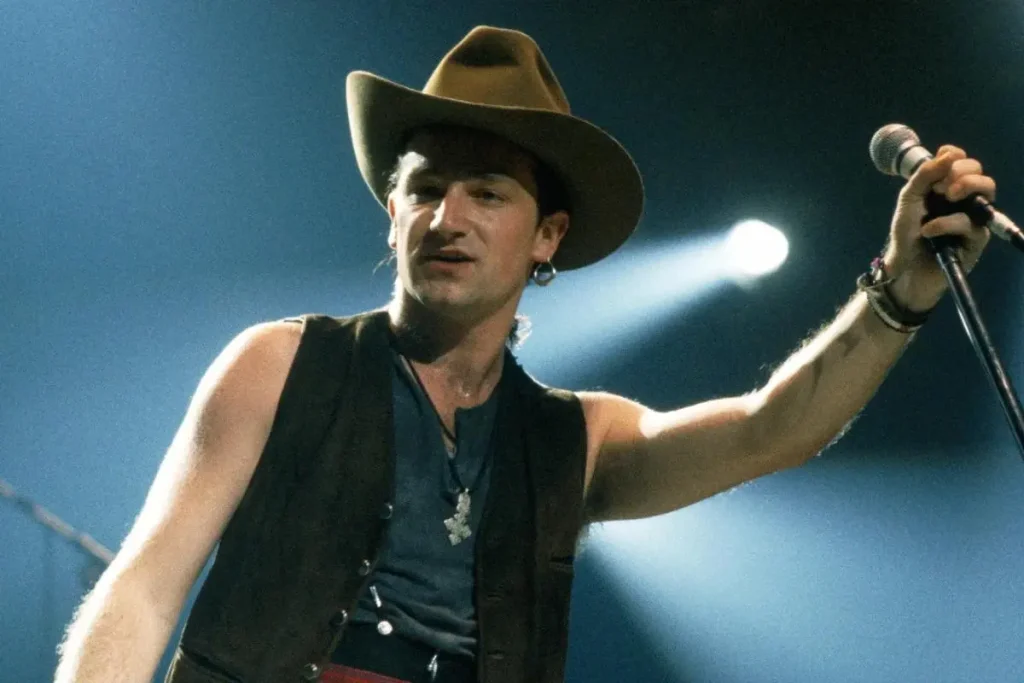
U2 wrote plenty of big songs in the 1980s, but few are as brazenly contradictory as “I Still Haven’t Found What I’m Looking For.” It is a stadium anthem built from gospel humility, a pop single that refuses to deliver pop certainty, and a spiritual confession that somehow became radio-friendly. If you have ever heard it blasting from a car stereo, a grocery store ceiling, or a reunion tour PA, you have witnessed its great trick: it sounds like an answer while insisting it is still a question.
Released on May 25, 1987 as the second single from The Joshua Tree, the track pushed U2 from major rock band to cultural weather system. And the video, shot on Fremont Street in Las Vegas on April 12, 1987, made the song’s search for meaning collide with America’s most unapologetic temple of desire: neon, cash, and tourists who are also looking for something, even if they cannot name it. Basic facts like the release date and video location are well documented in the song’s published lyrics page and notes.
Quick facts (for the impatient)
| Item | Details |
|---|---|
| Song | “I Still Haven’t Found What I’m Looking For” |
| Album | The Joshua Tree |
| Single release | May 25, 1987 |
| Video shoot | Fremont Street, Las Vegas (April 12, 1987) |
| Tour context | Filmed after the band’s Joshua Tree Tour stop in Las Vegas |
Why this song felt dangerous (and why that mattered)
In 1987, mainstream rock was still full of chest-thumping certainty: heroes, villains, victory laps. U2 walked in with a song that basically says, “I have climbed, kissed, and believed…and I’m still not done.” That is not weakness; it is a refusal to sell spiritual closure as a product.
Bono’s lyric leans hard into paradox: sacred longing inside a body that keeps wanting. It is the same conflict that makes gospel music feel alive rather than polite: the distance between what you desire and what you can actually hold. U2’s official singles discography hub details its formal place in their timeline and single-era context.
“I have kissed honey lips… I have spoken with the tongue of angels… I still haven’t found what I’m looking for.”
Bono, “I Still Haven’t Found What I’m Looking For” (U2)
The provocation is not religious content in a rock song. The provocation is that the singer does not “arrive.” For listeners raised on neat conversion stories, it sounds like doubt. For anyone with a pulse, it sounds like honesty.
The sound: a rock band cosplaying as a gospel choir (successfully)
Musically, the track is a lesson in restraint. The chord movement is simple enough to invite mass participation, but the band’s arrangement is carefully shaped to feel like lift-off rather than looped repetition. That balance is why it works both as a quiet personal listen and as a 70,000-person sing-along.
The band’s use of gospel-inflected backing vocals and the “churchy” harmonic language is not window dressing; it is the whole emotional engine. Show-by-show touring documentation around April 1987 helps pin the song to the live context that kept pushing it toward that big, communal gospel feel.
Instrument spotlights for musicians
Guitar (The Edge): Instead of leading with flashy riffs, he builds a shimmering bed that lets the vocal carry the drama. If you want to learn from it, focus less on “lead” and more on placement: where the guitar enters, where it drops out, and how it creates space.
Bass (Adam Clayton): The bass line is patient and supportive, more like a hymn’s left hand than a funk showcase. It is a reminder that “simple” bass can still be commanding when the note choices are confident.
Drums (Larry Mullen Jr.): The groove is steady, almost processional. It does not show off; it testifies.
The Las Vegas video: Fremont Street as a spiritual pressure cooker
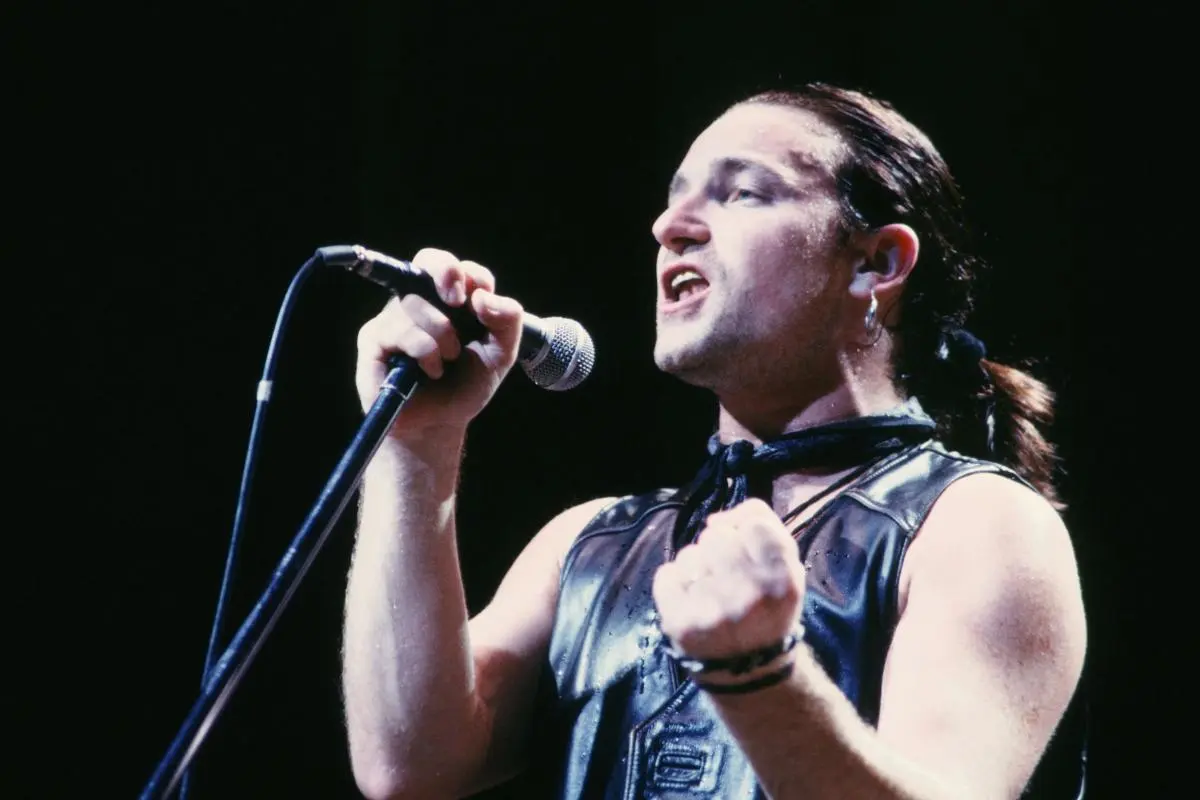
Filming on Fremont Street was not a neutral backdrop choice. It was U2 putting a song about longing into a location engineered to turn longing into spending. In other words: perfect.
The official music video captures the band performing amid pedestrians and street life, letting the environment do the symbolism. Visually, it rejects the glossy “MTV narrative” approach and instead sells authenticity: real street, real passersby, real night energy.
There is also a subtle claim being made: spirituality does not require escape to a monastery. It has to survive contact with the world. And few worlds are louder about temptation than downtown Vegas.
What to watch for in the video (a mini shot-by-shot mindset)
- Proximity: the camera is close enough to feel human, not heroic.
- Lighting: neon acts like modern stained glass, coloring faces and instruments.
- Public space: people drift in and out, like a congregation that did not plan to attend.
If you want the cleanest, widely cross-referenced anchor for the Fremont Street shoot and date, the song’s production and video summary is the easiest single reference point.
Live life: from arena rock to actual gospel collaboration
On tour, the song became less like a “track” and more like a ritual moment. U2 often stretched it, opened it up, and treated the chorus like a communal refrain. That live flexibility is why it has survived decades of setlist churn.
Hardcore show-by-show documentation confirms the Las Vegas stop that surrounded the video shoot, including date, venue, and tour placement. Detailed single-era documentation also helps connect the song’s release, versions, and performance life across formats and eras.
Chart impact and the “mainstreaming” of a spiritual lyric
Even if you do not track chart history, it matters here because it proves a point: a song can carry religious language and still reach people who do not identify with religion. The hook is not doctrine; it is desire.
For UK performance context, the Official Charts singles search provides accessible chart lookup functionality for verifying the song’s appearances and placements over time in that market.
Legacy: why it still hits (and why it annoys some people)
“I Still Haven’t Found What I’m Looking For” is beloved because it gives you a chorus you can shout without pretending your life is resolved. It is also disliked by some listeners for the same reason: it refuses to be cynical, and it refuses to be smug. That combination can feel like a challenge.
Its parent album, The Joshua Tree, is repeatedly framed as a major cultural moment in rock history, with retrospective canon lists keeping it in the conversation as more than nostalgia. A prominent all-time album ranking underlines how central the era remains to rock’s “official” narrative.
And for those who want a clean, industry-facing confirmation of the album’s awards-era stature, the 30th Annual GRAMMY Awards results hub provides a primary reference point for that ceremony’s outcomes and context.
How to play it (without sounding like a karaoke band)
This song is deceptively easy to butcher. The secret is to treat it like gospel: dynamics, breath, and conviction matter more than chops.
Practical tips
- Tempo discipline: do not rush the chorus just because it feels good.
- Guitar tone: aim for clarity and shimmer, not distortion and muscle.
- Backings: if you have singers, stack simple harmony and keep it warm and sustained.
- Ending: resist the urge to “big finish” too early. Let it feel unresolved.
Conclusion: the anthem that refuses to graduate
U2 released “I Still Haven’t Found What I’m Looking For” as a single in May 1987, then shot its video on Fremont Street like they were daring the song to survive under neon. It did more than survive. It turned yearning into a pop event, and it made uncertainty sound like a strength.
If you want a song that will always feel current, pick the one that never claims it has arrived.


