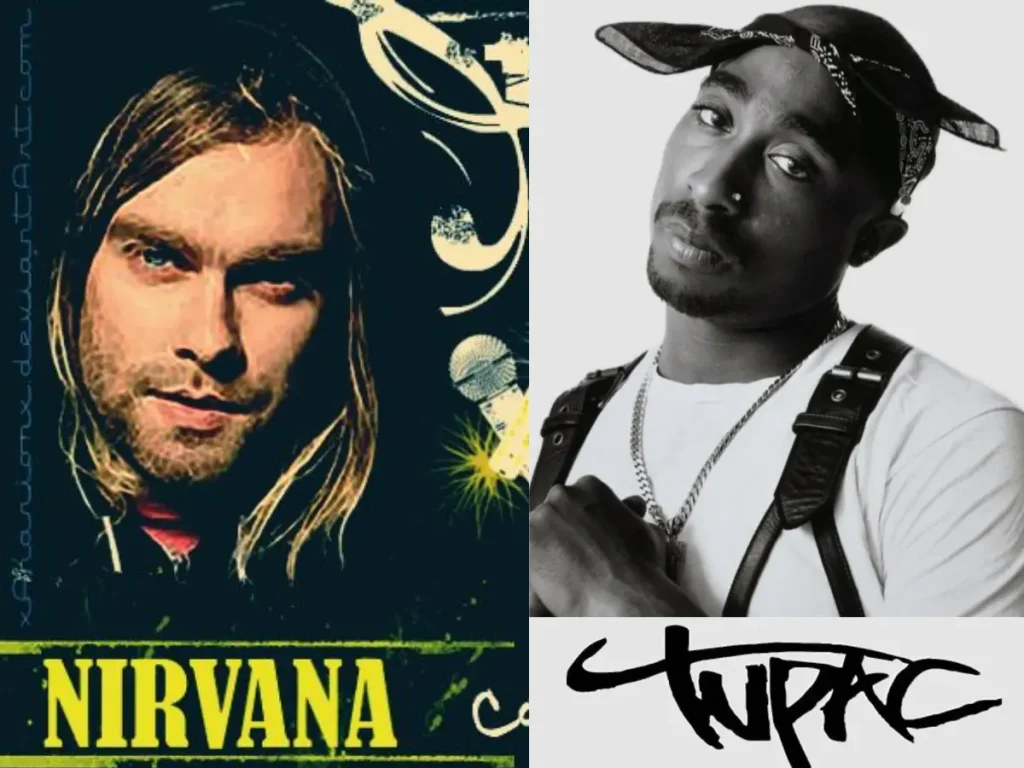
Kurt Cobain and Tupac Shakur did not just make hits. They changed what rock and rap were allowed to talk about, and who those genres were supposed to be for. Their deaths froze them in time, but their music keeps evolving in ways that would probably horrify and amuse them both.
One came from the damp corners of the Pacific Northwest, the other from the fire of Black Panther politics and West Coast streets. Together they turned the pretty, polished pop of the early 90s into something raw, ugly, and honest enough to scare parents again.
Two outsiders who became reluctant icons
Cobain and Tupac were both misfits who accidentally became spokesmen. Neither had the temperament for safe celebrity, and both seemed deeply suspicious of the very fame that paid their bills.
Yet for millions of listeners, they crystallized a feeling: that the system was rigged, that something was deeply wrong under all the marketing gloss, and that someone finally had the guts to say it out loud.
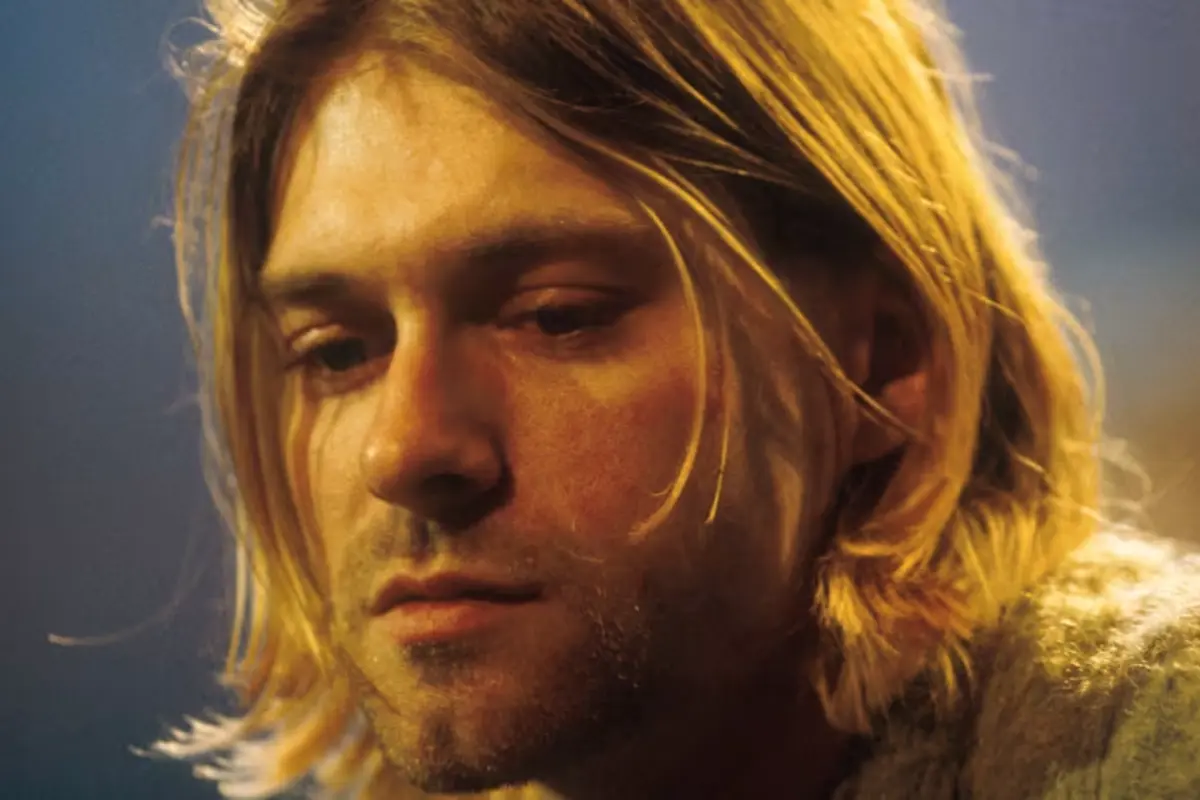
Kurt Cobain: grunge’s martyr and the sound of collapse
When Nirvana released Nevermind in 1991, the label hoped it might sell like Sonic Youth, not like Michael Jackson. Instead it sold over 30 million copies worldwide, dragged grunge and alternative rock into the mainstream, and helped kill off the hairspray era in one distorted guitar riff.
Nevermind ended up in the US National Recording Registry and climbed near the top of Rolling Stone style all time album lists, a position usually reserved for Beatles and Motown classics. Overnight, a scruffy Seattle trio were being treated like the second British Invasion, only this time the invaders wore thrift store cardigans.
The Rock & Roll Hall of Fame now flatly says what older fans felt at the time: Nirvana, and especially Cobain, “led and defined the early nineties alternative rock uprising,” opening the door for everyone from Queens of the Stone Age to Billie Eilish. The sound of one small band made half of mainstream rock instantly feel fake.
Cobain’s writing made that shock stick. Under the noise there were hooks the Beatles would have respected, but the lyrics were all splinters: alienation, gender panic, disgust with macho rock cliches, and a constant refusal to play the simple hero. That unease was exactly why burned out suburban kids heard him as their mirror.
By early 1994, the story turned brutal. After a near fatal overdose in Rome, a failed stint in rehab, and an intervention by friends, Cobain bought a shotgun “for protection” and walked away from treatment. On April 5 he died by suicide at his Seattle home; three days later an electrician found his body along with a note quoting Neil Young’s line about it being “better to burn out than to fade away.”
The shockwaves inside the rock world were immediate. Just eight days later, Pearl Jam played Saturday Night Live, where Eddie Vedder had “KURDT” scrawled on his guitar and opened his jacket to reveal a large “K” over his heart, a silent acknowledgment that grunge had just lost its central figure.
Tupac Shakur: hip hop’s rebel philosopher
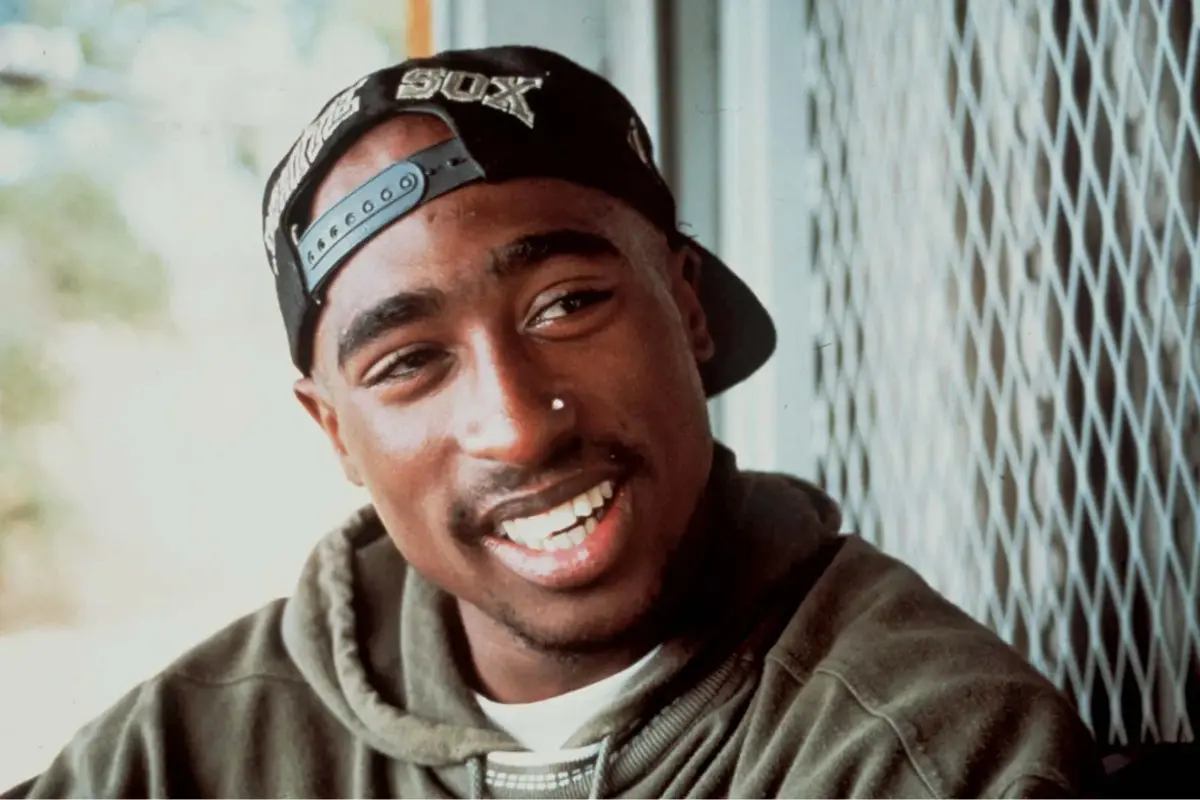
Tupac Shakur‘s origin story reads like a blueprint for radical art. Born in Brooklyn in 1971 to Black Panther parents and renamed after an Incan revolutionary, he grew up between activism and instability, attending Baltimore School for the Arts before being pulled into West Coast street life.
He first surfaced with Digital Underground, then detonated expectations with solo albums that mixed gangsta imagery with pointed attacks on racism, poverty, and police violence. Britannica now simply describes him as one of the leading names in 1990s gangsta rap, whose lyrics tackled social issues and made him an enduring symbol of artistic expression in hip hop.
The Rock & Roll Hall of Fame frames him more bluntly: a legendarily charismatic artist “born to be both a confrontational artist and a fearless activist,” whose intense, reflective West Coast rap expanded what the genre could feel like. They also list the rappers who followed in his wake, from Nas and J. Cole to Kendrick Lamar and Eminem.
Albums like Me Against the World and All Eyez on Me showed two sides of the same storm. The first, released while he was in prison, dug into paranoia, regret, and spiritual doubt. The second turned the volume up on the outlaw persona: a double album of luxury, danger, and defiance that still lands on critics’ lists of the greatest rap records ever made. Pitchfork’s recent 100 best rap albums list puts All Eyez on Me alongside Illmatic and The Miseducation of Lauryn Hill as a defining work of the genre.
Even at his hardest, though, Tupac never abandoned vulnerability. “Dear Mama” stripped away the bravado and wrote directly to his mother and to every parent trying to raise kids amid addiction and poverty. The US Library of Congress added the track to the National Recording Registry as a “moving and eloquent homage” to those mothers and to the realities they face.
The end of his life plays out like a grim parable of 90s hip hop. Leaving a Mike Tyson fight on September 7, 1996, Tupac was shot multiple times in a drive by while riding with Death Row boss Suge Knight in Las Vegas and died six days later at age 25. For decades the killing fed endless conspiracy theories, until 2023, when alleged gang leader Duane “Keffe D” Davis was finally charged with murder in connection with the attack, even as Knight and others publicly floated new accusations and alternate stories.
Parallel tragedies, different Americas
Cobain and Tupac were not singing about the same streets. One was the patron saint of bored, mostly white kids who felt lied to by boomer optimism and 80s excess. The other spoke for communities targeted by police, hollowed out by the drug war, and treated as disposable long before rap made money.
Yet their careers line up with eerie precision. Here is the quick snapshot.
| Aspect | Kurt Cobain | Tupac Shakur |
|---|---|---|
| Core genre | Grunge / alternative rock | West Coast hip hop / gangsta rap |
| Breakthrough album | Nevermind (1991) | Me Against the World (1995), All Eyez on Me (1996) |
| Primary themes | Alienation, gender anxiety, anti consumerism, self loathing | Racism, police brutality, poverty, violence, loyalty, redemption |
| Iconic image | Slouching, androgynous, thrift store anti rock star | Bandana, tattoos, defiant stare of a ghetto prince |
| Age at death | 27 (suicide) | 25 (unsolved murder in court’s eyes for decades) |
| Key posthumous honor | Band and catalog enshrined in the Rock Hall as alt rock pioneers | Solo induction into Rock Hall as activist and one of rap’s greatest voices |
Authenticity, commerce, and being used by the system
Both men were obsessed with authenticity, and both watched as labels and media turned their authenticity into a brand. Cobain’s refusal to play the rock god only made him a bigger rock god. Tupac’s conflicted talk of “thug life” made him the template for a million shallow imitations.
The irony only got darker after they died. In one grotesque twist, US interrogators at CIA black sites later blasted songs including Tupac’s “All Eyez On Me” at detainees as part of psychological torture regimes, turning anti establishment music into literal weapons of the state. It is hard to imagine a more perverse use of an artist who wrote about systemic brutality.
Grunge suffered its own commodification. The sound that once terrified program directors now sells deodorant and SUV commercials; Nirvana’s smiley face logo hangs in fast fashion chains that represent everything Cobain despised. If you ever wanted proof that capitalism can digest anything, look at a mall rack full of “authentic” distressed Nirvana shirts.
Legacies that refuse to stay in the 90s
For younger listeners, Cobain and Tupac are not nostalgia acts. They are living source code. You can hear Cobain’s quiet loud dynamic and emotional rawness in everything from early Foo Fighters to modern pop stars who chew their consonants and sing about anxiety like it is ordinary weather.
Nirvana’s surviving members keep that code in motion. In February 2025 they reunited at the SNL50: Homecoming Concert, with Post Malone handling vocals and guitar on “Smells Like Teen Spirit,” an image that neatly captured how a once underground band has become common language for rock, pop, and hip hop audiences alike.
Tupac’s voice keeps resurfacing too: posthumous albums, samples on contemporary tracks, and that infamous hologram that shared a Coachella stage with Dr. Dre and Snoop. His 2017 induction into the Rock & Roll Hall of Fame formalized what fans already knew, but the more interesting story is how younger rappers borrow his blend of anger and vulnerability without always matching his moral complexity.
Why Cobain and Tupac still unsettle us
Many rock and rap stars have died young. What keeps Cobain and Tupac different is that their deaths feel like unfinished arguments. Cobain never got to show whether he could grow out of self destruction without losing his intensity. Tupac never had the chance to age into the political elder he sometimes hinted he wanted to be.
There is something uncomfortable about how we treat them as saints. Cobain abandoned a child and a partner in agony; Tupac could be reckless, cruel, and complicit in the very cycles of violence he described. Turning them into flawless martyrs is just another way of refusing to hear what they were actually saying.
Maybe that is why their best work still hits harder than most modern outrage rock or performative “conscious” rap. Behind the myth, you can hear two damaged young men trying to describe systems that were designed to break them. One screamed into a cheap mic in a dirty Seattle room. The other wrote himself into the role of outlaw prophet and then watched the streets answer back with bullets.
Conclusion: two warnings disguised as legends
If you strip away the T shirts and the posters, Cobain and Tupac left us two grim warnings. Fame will not save you from your own ghosts, and a culture that profits from your pain will not lift a finger to keep you alive.
For listeners who came of age in the 90s, their music soundtracked the end of a certain kind of innocence. For younger fans, it offers something rarer: proof that pop can still carry real risk. Put on Nevermind or All Eyez on Me at full volume and you can feel it. Under the riffs and the hooks, the real subject is not grunge or gangsta. It is what happens when broken people tell the truth in a world that would rather sell the lie.