
Eric Clapton and Jack Bruce are often introduced as two-thirds of Cream, but their real story is bigger: a long professional relationship built on mutual respect, musical risk, and the kind of interpersonal friction that can either kill a band or make it historic.
If you want the neat version, it goes like this: they formed a supergroup, conquered the world, split up, reunited decades later, and bowed out. The more honest version is messier and more interesting: Clapton and Bruce kept circling the same question for years – how do you keep a band explosive without letting it literally explode?
The origin: a “supergroup” built on talent and tension
Cream’s public image was virtuosity and volume, but its private reality was a three-way push-and-pull. Even the basic biographical outline makes the point: Cream formed in 1966 and ended in 1968, which is astonishingly short for a group that cast such a long shadow.
Bruce came into the project with a deep musical vocabulary and a strong will; Clapton came in as a already-minted guitar hero of the British blues boom. The band’s very premise was ambitious: take blues forms, stretch them into improvisational workouts, and do it loud enough to fill big halls.
Bruce as a frontman, not “just” a bassist
Professionally, the most important dynamic was that Bruce was not content to be a background anchor. He sang, wrote, arranged, and steered the harmonic direction, which put him in a different category than the typical rock bassist of the era.
Clapton, for his part, was happy to be in a band that could match his intensity, but it also meant sharing the center. In Cream, the bass is a lead instrument, and Bruce’s voice is often the band’s signature human sound.
How the Clapton-Bruce “job description” actually worked
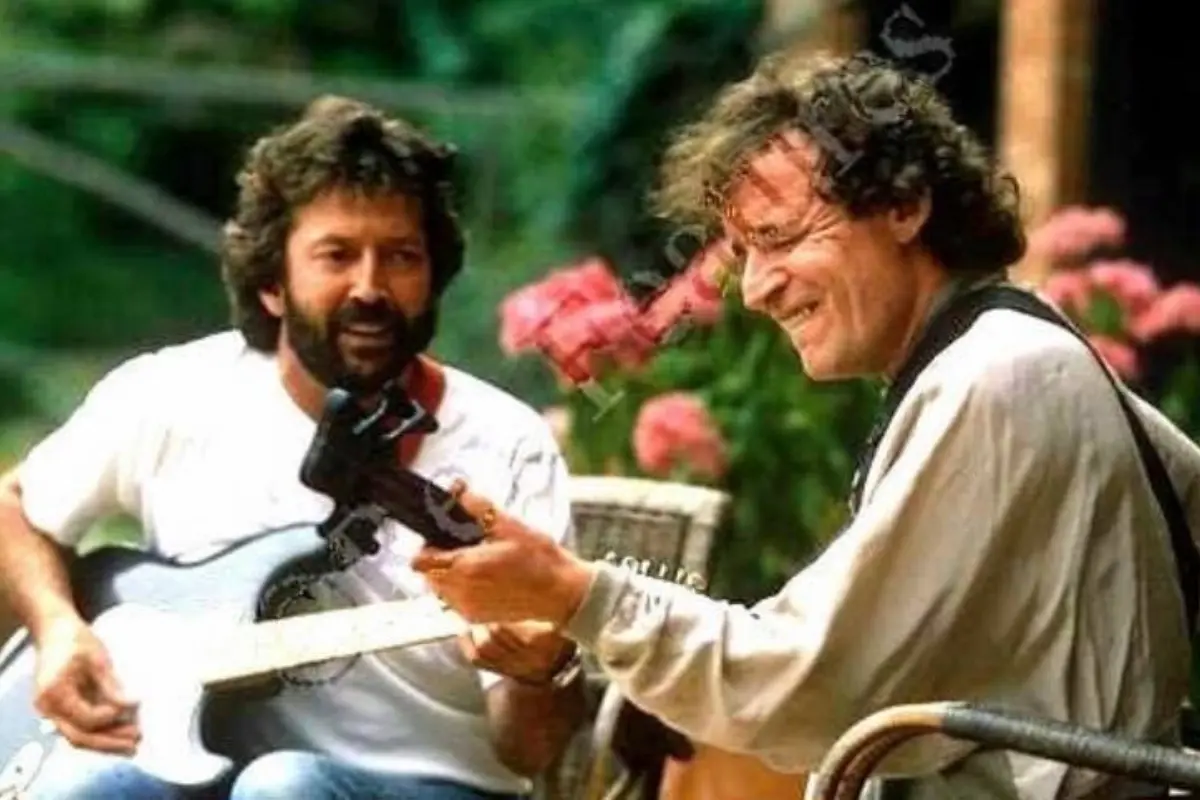
To understand their professional relationship, it helps to strip the mythology and look at roles. In Cream’s best moments, Clapton and Bruce weren’t competing for space; they were building a two-person engine with Ginger Baker as the combustion.
| What Bruce brought | What Clapton brought | What it created together |
|---|---|---|
| Melodic bass lines that act like counter-leads | Blues-based phrasing with a modern, higher-gain edge | “Conversation” improvisation, not just guitar with backing |
| Lead vocals and a dramatic, elastic delivery | Iconic riffing and solo architecture | Songs that could be pop-length or turn into extended live suites |
| Compositional ambition and harmonic movement | Tonal identity and star power in the guitar chair | A band that felt larger than three people |
That “conversation” idea is why Cream still feels modern to players. It is also why it was hard to live with. When everyone is a lead voice, someone always feels unheard.
The volatility: chemistry with a short fuse
Clapton and Bruce’s working relationship is impossible to separate from the larger band dynamic, especially the famously combative Bruce-Baker pairing. Bruce’s official site is blunt about it, describing how conflicts in the group contributed to Cream’s breakup.
Here’s the uncomfortable truth: friction wasn’t an accidental side effect, it was part of the band’s operating system. The same stubbornness that made Bruce refuse to play “safe” bass also made day-to-day collaboration tougher.
“I think we played better when we were on the edge.”
Eric Clapton
Clapton has expressed versions of that sentiment in various interviews over the years, and you can hear it in the performances: the urgency, the brinkmanship, the sense that the band might derail at any second. It is thrilling, and it is not exactly a recipe for longevity.
After Cream: professional distance, artistic respect
When Cream ended, Clapton and Bruce did not become a consistent long-term partnership in the way, say, Lennon and McCartney did. Instead, their relationship became something more common in the high-level music world: periodic alignment.
Clapton built a career that balanced roots music, pop craftsmanship, and later, a highly personal singer-songwriter identity. Bruce kept moving through rock, jazz, classical-leaning projects, and collaborations that prized complexity over commercial predictability.
That divergence matters, because it explains why they did not simply “get the band back together” whenever nostalgia called. Their musical priorities overlapped, but their day-to-day instincts were different.
The 2005 reunion: maturity, money, and unfinished business
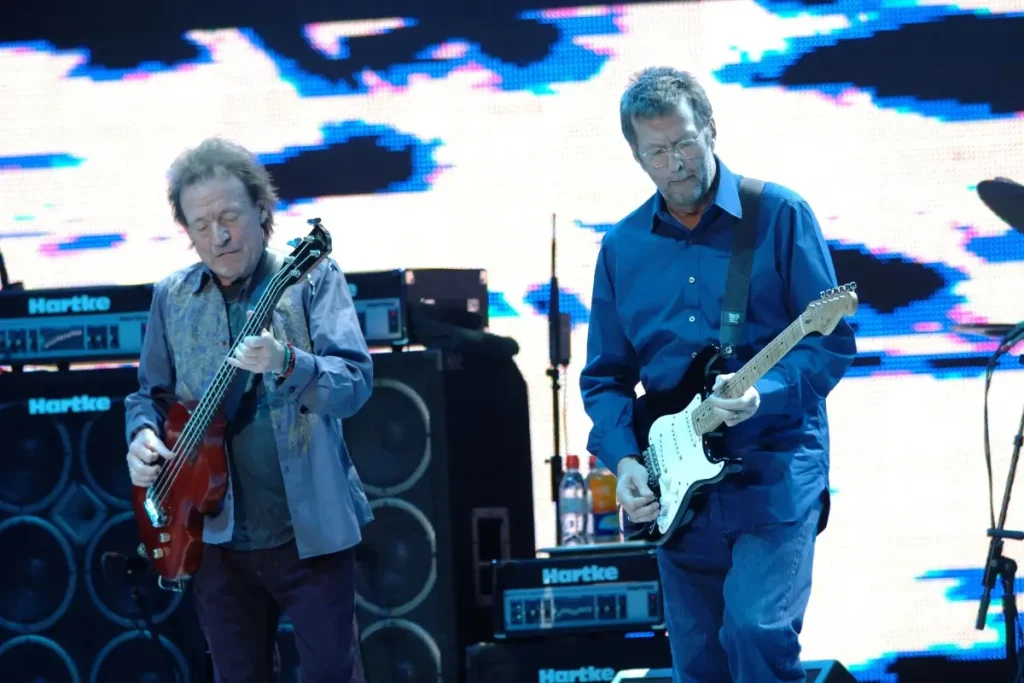
The defining late-era chapter in their professional relationship is the Cream reunion in 2005. Those concerts at London’s Royal Albert Hall were both an event and a test: could the same personalities recreate the magic without re-creating the misery?
Clapton has acknowledged the Royal Albert Hall reunion as a significant moment in his career chronology, with the band returning to the stage decades after the breakup.
The reunion was also documented as a live release, making it easier to compare “young and dangerous” Cream with “older and surgical” Cream. The playing is tighter, the tempos sometimes more controlled, and the musical choices often feel like grown-ups honoring the arrangements rather than trying to win a bar fight with them.
Why it worked (mostly)
- Clear boundaries: a limited run reduces the chance that old resentments become daily routine.
- Shared legacy: both men understood what Cream meant historically, and that changes the stakes.
- Refined listening: maturity can turn “competition” into “contrast.”
For many fans, the reunion is proof that Clapton and Bruce’s relationship was not primarily about personal closeness. It was about professional recognition: they knew what the other could do, and they trusted that level of craft.

Where the relationship shines: specific musical “tells”
If you listen like a musician, Clapton and Bruce have identifiable habits that reveal their working bond. Bruce tends to move under chord changes with melodic intent, sometimes implying substitutions or pushing the harmony forward. Clapton responds by simplifying, bending into the pocket, and letting tone and timing carry the emotional weight.
That’s why the pairing still influences modern rock and jam-oriented bands. They model a principle that is deceptively hard: you can be virtuosic without everyone soloing at once.
A practical listening checklist
- Listen for counter-melodies: Bruce often plays lines that answer the vocal or guitar, not just the kick drum.
- Notice the “handoff” moments: Clapton often cues dynamic shifts by changing articulation rather than changing volume.
- Track the chorus impact: in Cream, choruses hit because the bass line often becomes more declarative, not because the guitar suddenly gets bigger.
Public narratives: admiration, conflict, and the myth of “inevitable” breakup
Rock history likes simple morals: geniuses cannot get along, therefore bands must die. The Clapton-Bruce story is a better lesson: a band can be both functional and fractured, sometimes in the same week.
When Jack Bruce died in 2014, mainstream coverage emphasized his centrality to Cream and his broader musicianship, reinforcing that he was never merely “Clapton’s bassist.” Coverage of his death highlighted Bruce as Cream’s bassist and singer, underscoring his visibility in the band’s identity.
Other tributes made the emotional subtext clearer: the world remembered Bruce as a force of nature. That remembrance implicitly rebalances the common guitar-hero narrative and points back to what Clapton had to navigate professionally: sharing a band with an equally dominant musical personality.
The edgy take: Clapton and Bruce were the real “power struggle,” not the obvious one
The easy headline is that Ginger Baker and Jack Bruce were the combatants. Yet musically, the deeper tug-of-war in Cream was between Clapton’s blues purism and Bruce’s broader compositional appetite. That is not an insult to either man; it is why Cream sounds like Cream.
Clapton often prefers the direct line: riff, solo, vocal, release. Bruce often prefers the scenic route: modulate, reshape the groove, make the melody do more work. Put them together and you get a band that can feel like a blues trio one moment and a miniature orchestra the next.
Legacy: what their relationship teaches working musicians
Clapton and Bruce demonstrate a professional truth that still applies in rehearsal rooms: musical compatibility is not the same as personal compatibility. Some partnerships thrive on friendship; others thrive on respect and clear limits.
If you’re in a band, the actionable takeaway is not “avoid conflict.” It’s this: decide what the conflict is for. If arguments are about the music, you can sometimes channel them. If they’re about status, credit, or control, the band becomes a courtroom.
Three lessons worth stealing
- Define roles, then break them creatively: Bruce broke the bassist role, but he did it with skill, not ego alone.
- Leave space on purpose: Clapton’s best playing with Bruce often comes from restraint, not domination.
- Reunions work when they are finite: a limited run can protect the music from the machinery.
Conclusion: a relationship bigger than the band
Eric Clapton and Jack Bruce were never a tidy duo, and that is precisely why their professional relationship matters. At their peak, they proved that rock can hold virtuosity, melody, and risk in the same frame.
Cream may have been short-lived, but the Clapton-Bruce dynamic remains a masterclass in how two strong musical identities can clash, collaborate, and still leave something timeless behind.