
Two icons, zero duets, huge impact
If you are waiting for the lost Elton John and Joni Mitchell duet album, you will be waiting forever. That record does not exist. Yet their strange, slow-burn relationship – part mutual admiration, part late-life collaboration – has shaped rock more than many official superstar pairings.
He is the glam-suited piano brawler who turned stadiums into church services. She is the wary Canadian poet who treated pop songs like short stories and jazz charts. Put their careers side by side and you get a map of how rock learned to handle both bombast and brutal honesty without collapsing under its own weight.
Different planets, same revolution
Mitchell came out of the 1960s urban folk revival – the coffeehouses, the protest songs, the Newport Folk Festival – that dragged traditional folk into the mainstream and then into rock-friendly territory. Her early sets were closer to whispered confession than rock show, but they carried the same disruptive energy that powered protest anthems.
John arrived through a different door: a classically trained pianist turned session player who discovered that Little Richard’s ferocity could be married to Tin Pan Alley harmony and then shot through a Marshall stack. By the early 1970s, his piano-driven rock, outrageous outfits and high-wire vocals made him the most extroverted thing on radio.
Mitchell moved in the opposite direction. Across albums like Blue, For the Roses and Court and Spark, she pulled folk-rock toward jazz harmony, elastic song forms and narrative lyrics, reshaping folk, pop and rock all at once. Where John made rock wider and louder, Mitchell made it deeper and stranger.
Mutual admiration instead of a formal duo
For all that, they never became a Lennon and McCartney style writing team. Their “partnership” has always been more subversive: one of influence, advocacy and symbolic gestures. John has openly called Mitchell one of his key musical influences, raved about Blue as her masterpiece, and even admitted he later recognised his own song “Madman Across the Water” as secretly “Joni-esque” in its psychological detail.
That is not casual flattery. It is a mainstream rock giant quietly admitting that the gold standard for emotional and harmonic daring was set by a woman often dismissed as too “folk” for rock radio. Their relationship works precisely because it is not a tidy co-branding exercise. It is one rock monarch pointing at another and saying: this is the bar.
Rocket Hour: when the private writers went public
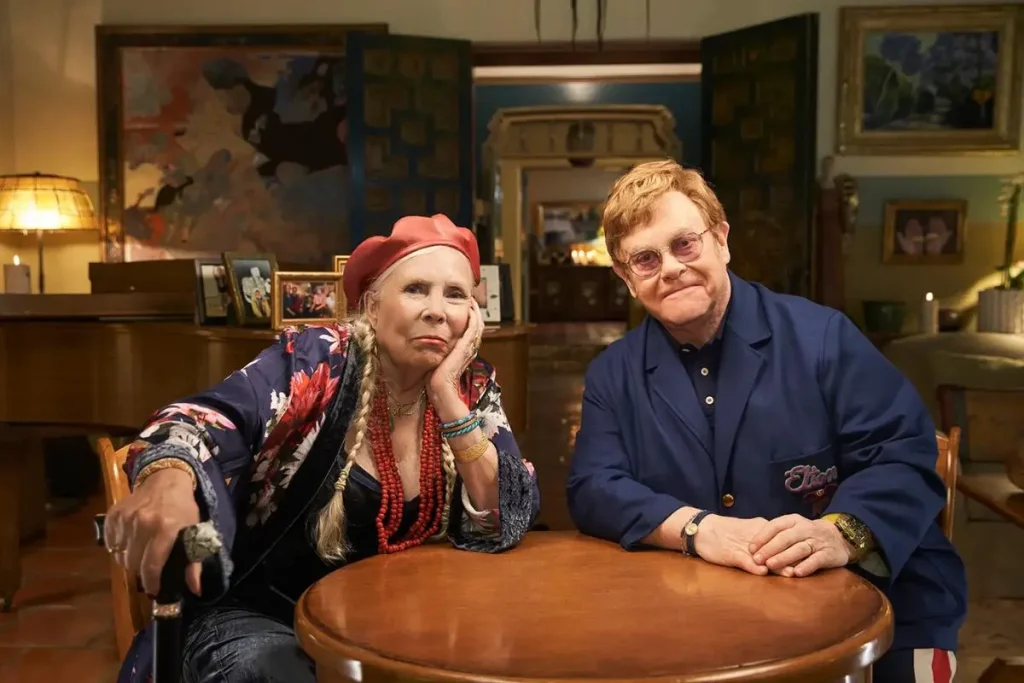
Their most revealing encounter did not happen onstage, but in a living room. In 2022, John devoted a special episode of his Apple Music show Rocket Hour entirely to Mitchell, visiting her home for a rare, hour-long conversation. There, she casually dropped that she was trying to turn her surprise 2022 Newport Folk Festival comeback into a live album, while John urged her to cut a new studio record right there in the house because, as he put it, every corner of the room “is Joni.”
In the same run of interviews, Mitchell laughed about how her hyper-intimate 1970s writing “upset” male singer-songwriters, because it forced them to consider baring their own souls instead of hiding behind poses. That is the dirty little secret of classic rock: the piano fireworks of someone like Elton only hit as hard as they do because writers like Joni changed the emotional rulebook underneath.
Joni’s comeback, Elton’s megaphone
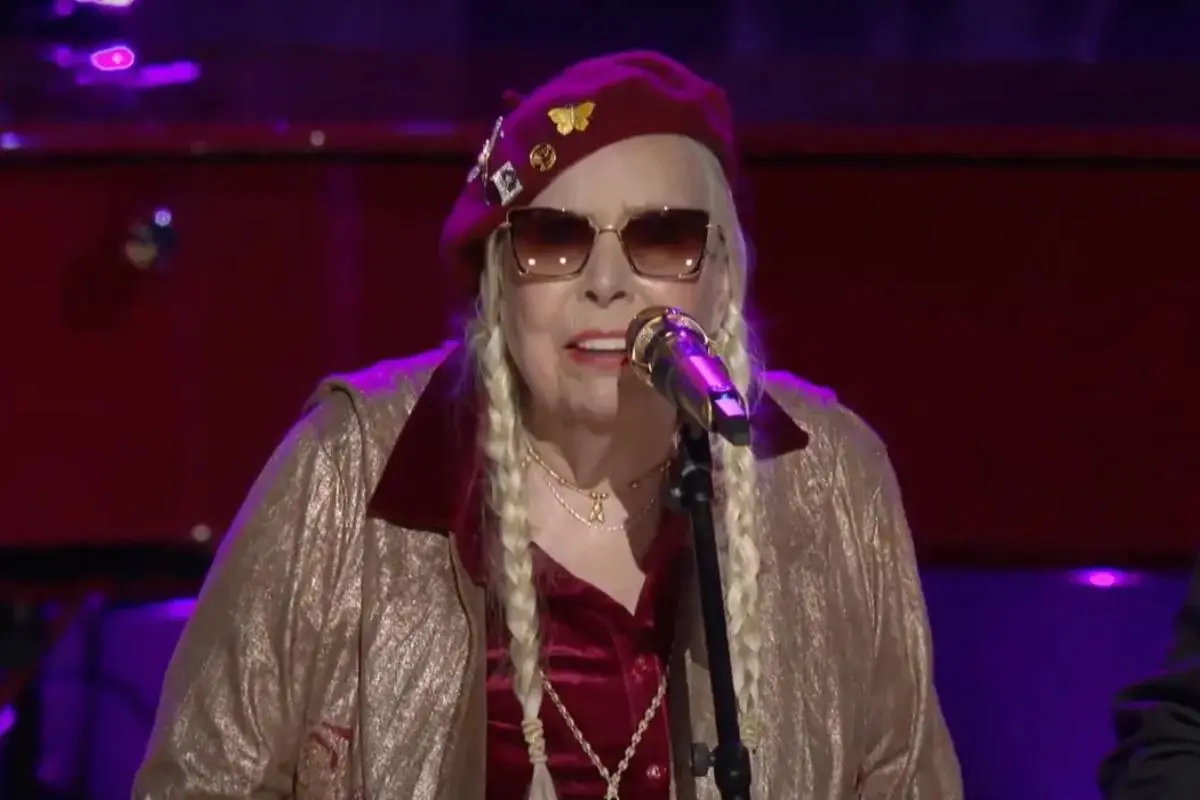
After a near-fatal brain aneurysm in 2015, Mitchell had to relearn how to walk, talk and play guitar. Her first full performance back, at Newport, became the live album Joni Mitchell at Newport, and by the time she sang “Both Sides, Now” at the Grammys her weathered alto and reflective delivery turned a 1960s song into a meditation on aging that critics described as one of the most powerful moments in the show’s history.
John did not just applaud from the sidelines. On a 2023 Rocket Hour episode where he picked his favorite tracks of the year, he singled out the live “Both Sides, Now” from Joni Mitchell at Newport as one of the year’s standout recordings, putting her late-career work in the same playlist space he usually reserves for hungry new artists.
That is the real collaboration: a megastar who could coast on his own back catalogue instead uses his platform to burn Mitchell’s name into younger listeners’ algorithms. Rock elders rarely do that for each other. Most are too busy protecting their own mythologies.
Trading anthems: “I’m Still Standing” goes full circle
Their most literal musical crossovers have been perversely symbolic. At a Library of Congress event honoring John and lyricist Bernie Taupin with the Gershwin Prize for Popular Song, Mitchell stood up and sang John’s 1983 hit “I’m Still Standing,” twisting lyrics with their blessing and turning his defiant pop stomp into a sly, jazz-inflected survival tale from a woman who had quite literally clawed her way back from silence. That Gershwin Prize performance reframed the anthem as her own post-aneurysm statement.
Not long after, at Mitchell’s rare “Joni Jam” concerts at the Hollywood Bowl, the tables turned. John appeared as a surprise guest and joined her on “I’m Still Standing” again, this time as part of an extended, almost family-style jam with Brandi Carlile, Marcus Mumford and even Meryl Streep in the chorus line, during their Hollywood Bowl collaboration. It was messy, joyful and miles away from a choreographed superstar duet – which is exactly why it felt like real collaboration instead of product.
Two approaches to rock, one shared set of rules
Elton: piano as demolition crew
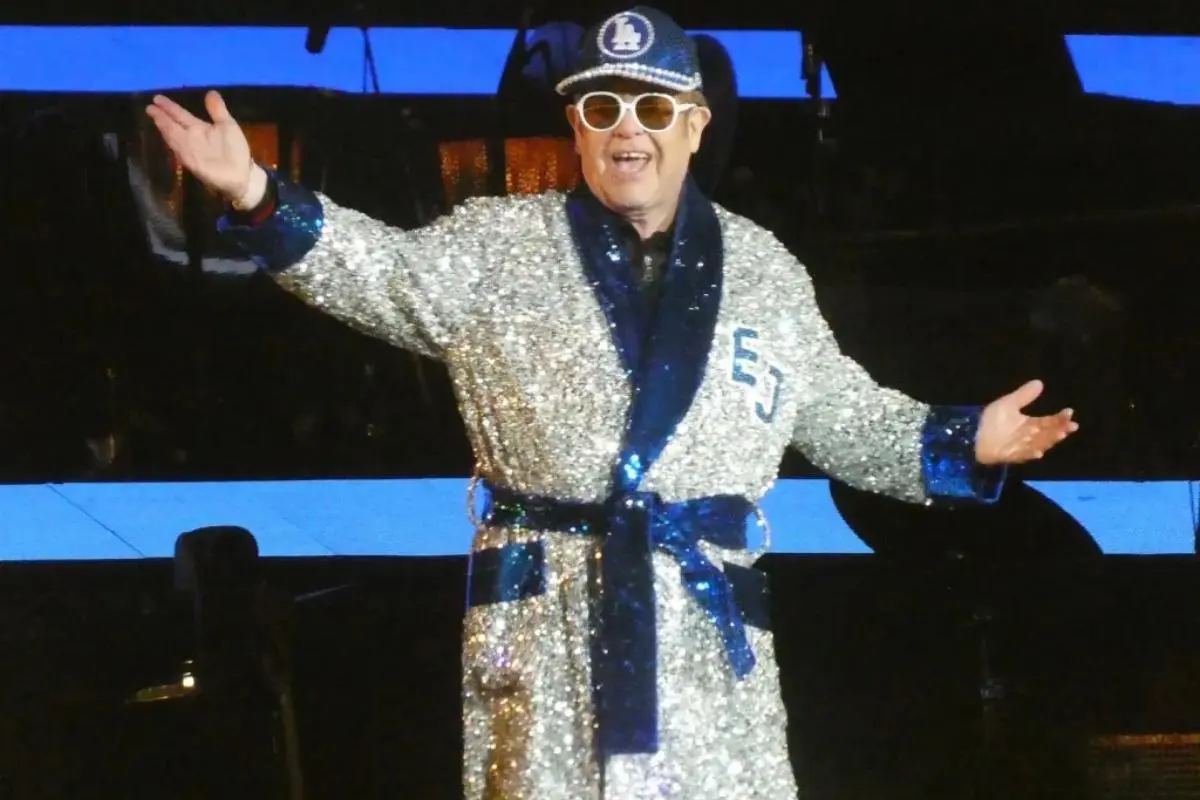
John treats the piano like a blunt instrument and a scalpel at once. Those rolling left-hand octaves, gospel chords in songs like “Tiny Dancer,” and theatrical key lifts in “Rocket Man” pull tricks from church, music hall and classical repertoire, then shove them into rock backbeats. The lesson for players is simple: if you know your instrument deeply, you can steal from anywhere without losing the song.
Joni: guitar tunings as emotional X-ray
Mitchell did the opposite of most rock guitarists. While others bragged about speed, she quietly built a private universe of alternate tunings, strange chord shapes and melodies that dodge obvious resolutions. The point was not virtuosity; it was emotional specificity. Different tunings forced different melodies and different kinds of confession.
- For pianists: take one Elton staple and dissect it. Map where the bass line walks, where the chords borrow from gospel or jazz, and where the dynamics jump from lullaby to roar. Then apply that architecture to your own song instead of copying the surface licks.
- For guitarists and writers: steal one Mitchell move. Pick a non-standard tuning, ban yourself from power chords, and write a lyric that is uncomfortably specific about one relationship or regret. If the tuning and the truth-telling do not change each other, you are not pushing hard enough.
- For aging musicians: notice what they are doing with time. Mitchell turned a 1960s song into a devastating late-life aria; John turned his lockdown boredom into a wild collaboration record with artists half his age. If your new work sounds like a tribute band to your old work, you are playing it safer than either of them.
Did they change rock together?
On paper, they are not a duo. There is no “John/Mitchell” songwriting credit, no joint tour, no shared classic LP. But in practice, they form a pincer movement on rock history: Mitchell drags the genre toward emotional and harmonic risk, John proves that risk can still fill arenas and top charts.
Look at John’s pandemic-era album The Lockdown Sessions, a sprawling set of collaborations with everyone from Dua Lipa and Lil Nas X to Brandi Carlile and Stevie Wonder, built almost entirely on the idea that rock’s elders should be in constant conversation with the present. Put that next to Mitchell’s willingness to sit in a throne at the Grammys and let her 80-year-old voice crack on national television, and you see the same instinct at work: refuse to become a museum piece.
Conclusion: a quiet alliance that still shapes the playlist
So no, there is no secret Elton-and-Joni album gathering dust in a label vault. What we have instead is more interesting: two artists who spent decades on parallel tracks, only to start weaving their stories together just as most of their peers were heading for retirement homes and Vegas residencies.
Sequence “Rocket Man” into “Both Sides, Now” and you can hear the whole argument. One song blasts off; the other admits it never really understood the sky in the first place. Somewhere between those two truths – between Elton John’s fearless showmanship and Joni Mitchell’s forensic honesty – is where rock grew up. Their late-life alliance just made that obvious enough that nobody paying attention can pretend not to hear it.


