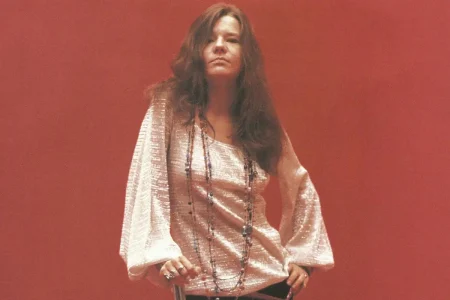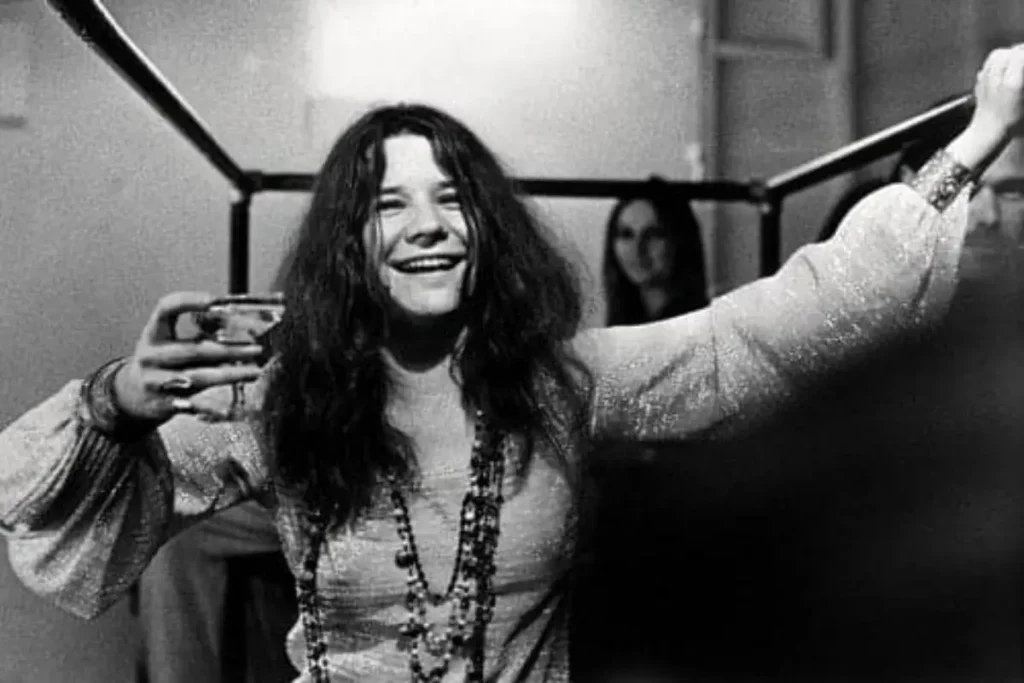
In 1969, Record Mirror tried to pin Janis Joplin down by calling her “a kind of mixture of Lead Belly, a steam engine, Calamity Jane, Bessie Smith, an oil derrick and rot-gut bourbon, funnelled into the 20th century between El Paso and San Francisco.” That is not a description, it is a detonation.
Around the same time, Joplin offered her own epitaph: she would rather have “10 years of superhypermost” than spend old age parked in front of a television. To the postwar generation, that sounded like a suicide note dressed up as a lifestyle tip. To the kids in denim and beads, it sounded like freedom.
Half a century later, those lines are still doing the rounds on posters and clickbait lists. What gets lost is the real woman Amy Berg’s documentary unearthed – a fragile, driven Texan who could not find a way to live at stage volume in an ordinary life.
The critic who saw a steam engine
The Record Mirror line is one of the wildest portraits any rock singer ever received. It mashes together prison blues (Lead Belly), frontier chaos (Calamity Jane), classic blues royalty (Bessie Smith), industrial might and cheap liquor. In a single sentence, Janis becomes folklore, heavy machinery and a hangover.
There is truth in that pile up. On stage she did move like a runaway locomotive, hauling a band that sometimes barely kept up. Her phrasing came straight out of the Black blues singers she worshipped, pushed through a white Texas body that never forgot it was the butt of someone else’s joke at school.
What the metaphor gets wrong
But look again at the ingredients in that sentence. Every image is loud, hard, or drunken. Not one suggests vulnerability, intelligence or craft. It is a perfect snapshot of how late 60s rock writing dealt with a woman who sang like a bluesman: turn her into an exotic machine and ignore the scared kid driving it.
That is the danger of myth. When you keep repeating that someone is an “oil derrick and rot gut bourbon,” you give the audience permission to cheer as she destroys herself. After all, what else is an oil derrick for except pumping the well dry.
“10 years of superhypermost”: creed or death wish?
Joplin’s most quoted line comes from interviews where she joked and bragged that she would rather burn out in a decade of intensity than live to be 70 “sitting in some goddamn chair watching television.” She added that people were not supposed to drink, love or live the way she did, “but now they’re paying me $50,000 a year for me to be like me.” Those interviews turn a messy life into a slogan the press could not resist.
That is not just a wild child talking. It is a brutally accurate summary of the rock economy. Her self destruction was no longer a private problem. It was the product the industry bought, packaged and sold back to a youth culture that wanted proof that someone out there was really living.
The nervous laughter behind the slogan
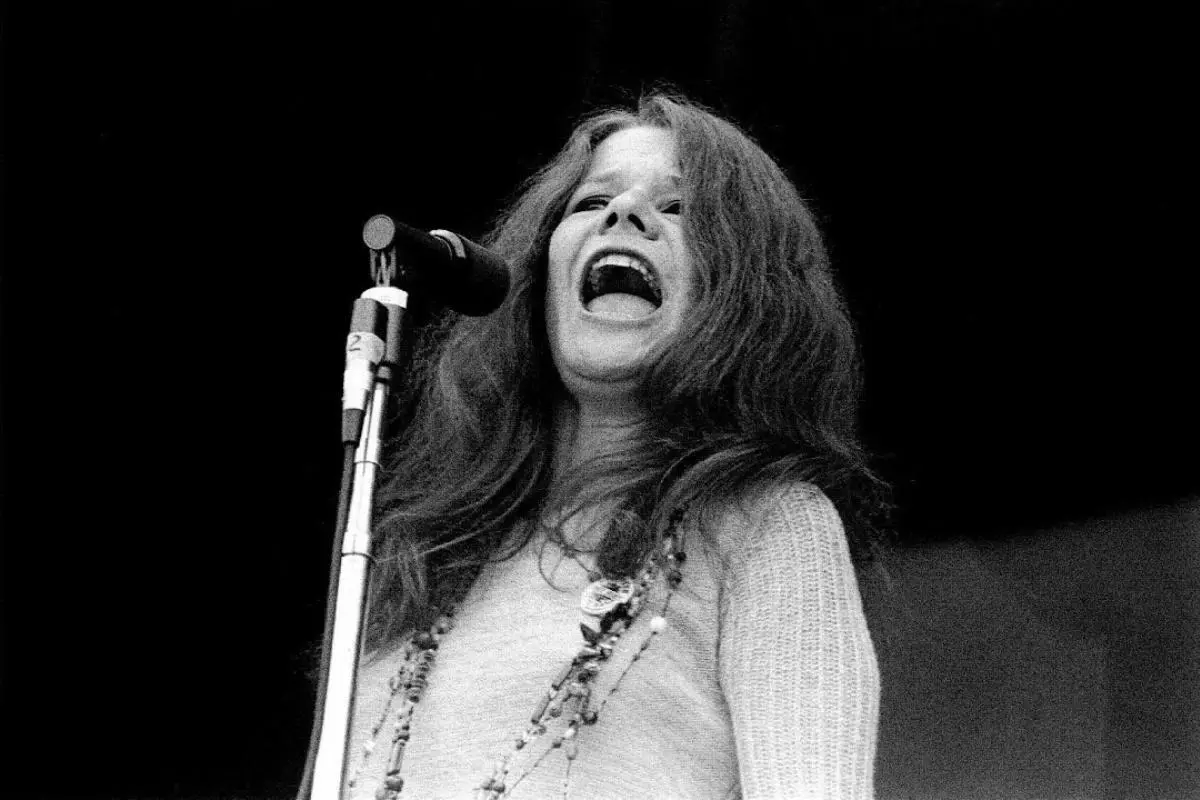
In one 1969 New Musical Express piece, the writer notes how Janis cracked up at hearing herself say something “meaningful” about wanting those 10 years of superhypermost. The detail matters. She knew she was playing a role for the press, a dangerous cartoon version of herself that the public was desperate to see.
It is tempting to read the quote as pure philosophy, but it is at least half bravado. When you have been mocked as ugly, weird and “pig” in a Texas refinery town, hearing that the world will finally love you for being too much is intoxicating. You double down, even when some part of you knows the bill is coming.
The Southern Comfort myth vs the real Janis
By the time Amy Berg made her documentary Janis: Little Girl Blue, the stock image was fixed: a bawling, Southern Comfort swigging wild woman who lived to get high and scream the blues. Berg, working from letters and diaries, found something harsher and more human – a woman fighting body dysmorphia, humiliation and a bottomless need for approval, even as she sold a fantasy of liberation.
Berg is blunt: Joplin enjoyed the high, and especially what happened to her on stage when she gave the audience everything inside her. At the same time, she had a miserable time trying to balance that rush with the boredom and loneliness of real life, and finding people who did not simply want a piece of the legend.
Small town scars that never closed
A major biography, Scars of Sweet Paradise, and a sharp Fresh Air review underline how deep those wounds went. In high school she was taunted as a pig, shunned for her looks and curiosity, and finally fought back by adopting an outrageous beatnik persona – louder than the insults, riskier than the safety rules her town tried to impose.
That defensive armor carried over into sex and drugs. The same sources describe a tangle of relationships with men and women, heavy drinking and later heroin, all rooted less in hedonism than in the conviction that she was unlovable unless she stayed permanently off the leash.
Onstage ecstasy, offstage free fall
Everyone who saw her in her prime talks about the transformation. Offstage, she could be shy, needy, even awkward. Walk into the lights, and suddenly she was the steam engine Record Mirror heard, a human siren blasting out pain and desire at brutal volume.
That switch did not come free. The years between Big Brother and her final band were a mess of artistic ambition and self sabotage. She quit Big Brother in frustration at their sloppy playing and her own desire to move into more complex soul and R&B terrain. The Louder account of the Kozmic Blues period paints a picture of a singer trying to grow up musically while drowning in the very alcohol and pills that had become part of her brand.
Berg’s remark that Janis could not reconcile the high of performance with the “mundane aspects of life” is not poetic flourish. It is the core of the tragedy. When the only place you feel fully alive is on stage, the rest of the day becomes an enemy to be killed with substances.
The voice built for extremes
Part of the problem was that her instrument was not designed for moderation. Listen to “Ball and Chain” or “Piece of My Heart”: the notes are less sung than clawed out of her chest. There is almost no middle register in her emotional palette. It is sob or scream, beg or explode.
That intensity thrilled audiences. It also meant she could not fake it. A lazy show, a half powered vocal, would feel like betrayal. So she pushed harder, night after night, until the only way to reach that emotional cliff edge again was to pump herself full of something stronger.
Pathfinder at 27
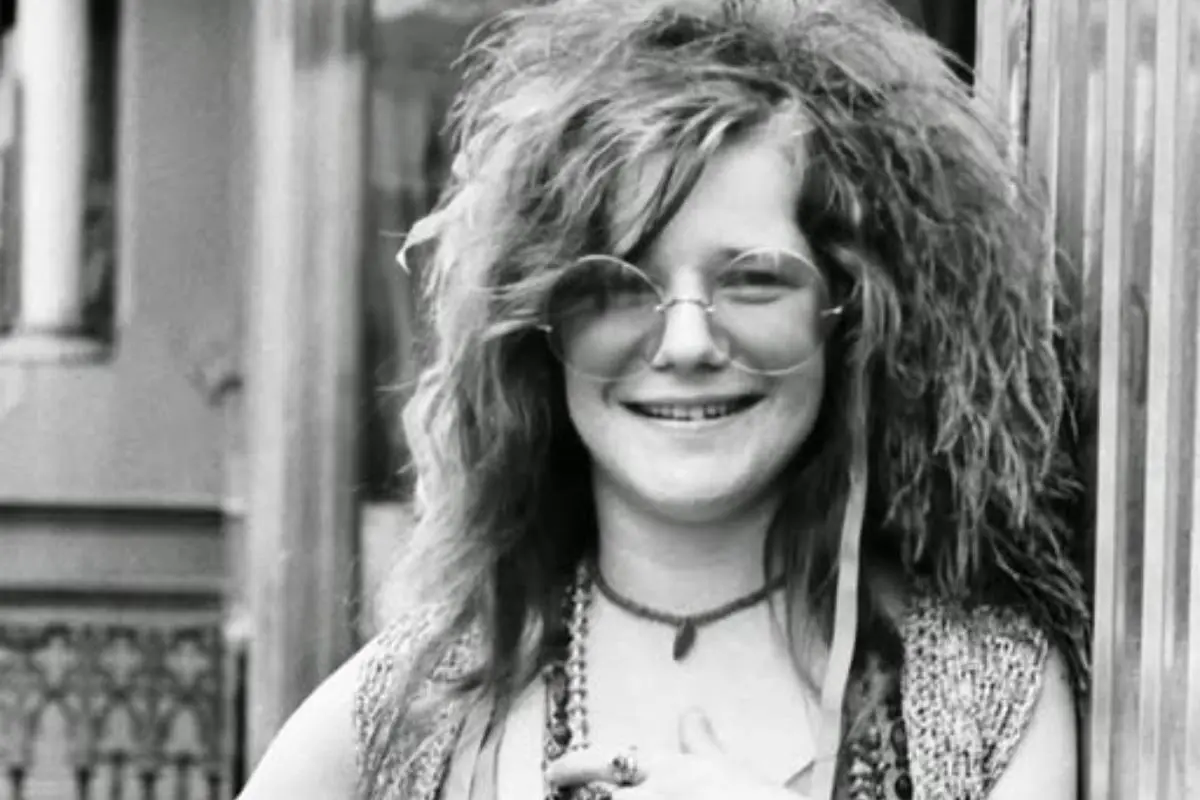
Strip away the slogans and what remains is a stark timeline. Born in 1943 in Port Arthur, Texas, she crashed San Francisco’s scene in the mid 60s, blew the roof off Monterey Pop in 1967, scorched Woodstock in 1969, and was dead of a heroin overdose in a Los Angeles motel room at 27. Her biography reads like a compressed tour through 60s rock history.
Contemporary coverage could be both admiring and morbid. A 1970 retrospective called her “the superhypermost,” stressing her brief, blazing run through rock history and folding her straight into the romantic tradition of doomed music rebels. The line between honoring her talent and fetishizing her death was thin, and the industry happily walked it.
Yet for women watching from the cheap seats, she did something no one else had managed: she grabbed center stage in a heavy rock band without playing the pretty girlfriend, the folk angel or the novelty act. She was messy, sexual, furious and loud, insisting the microphone was hers, not borrowed from a man.
How to listen to her now
If you grew up with Joplin on the radio, it is worth going back with fresh ears and that tension in mind. A few starting points:
- “Ball and Chain” (Monterey Pop) – the purest blast of the “steam engine” voice, dragging Big Brother behind her as she wrings every ounce of hurt from the lyric.
- “Piece of My Heart” – listen to how she flips between pleading and taunting in a single line. That is the sound of someone who expects to be rejected and dares you to do it.
- “Maybe” – a reminder that she could sing softly, too. Under the rasp is a phrasing sense as subtle as any jazz singer.
- “Kozmic Blues” – horns, organ and a singer trying to escape the psychedelic box. You can hear the frustration and the ambition colliding.
- “Mercedes Benz” – a dry, a cappella joke about consumer culture that became her accidental farewell. The wit is as sharp as the voice is raw.
Conclusion: the price of living superhypermost
Janis Joplin did not die because she loved life too much. She died because a brutal cocktail of shame, sexism, addiction and commerce taught her that the only acceptable version of herself was the one turned up past ten.
The Record Mirror image of a human steam engine full of bourbon captured the spectacle but not the cost. The woman who joked about 10 years of superhypermost was also writing anxious letters home, begging to be seen as more than a freak in beads. If her story still hits a nerve, it is because it forces a hard question: how much of your true self are you willing to sacrifice for a little borrowed transcendence.
Next time her voice rips out of your speakers, enjoy the high. Just remember it came from someone who could never find a way to come down safely.