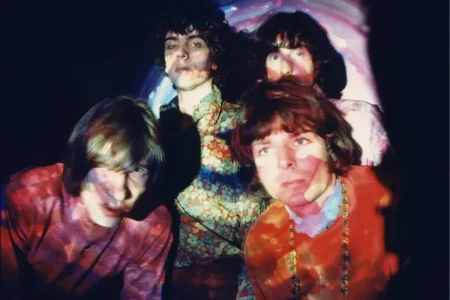

Rock stars usually cling to their most famous guitars like relics. In 2019, David Gilmour did the opposite. He gutted his collection, sold the very instruments that defined Pink Floyd’s sound, and handed the money to a climate law charity.
For a generation that grew up hearing the solos from “Money” and “Comfortably Numb” leak out of car radios, the idea is almost indecent. Gilmour did not just cash in on nostalgia. He weaponised it.
Inside the auction that melted the record books
On 20 June 2019 at Christie’s in New York, The David Gilmour Guitar Collection went under the hammer. All 126 guitars sold, making it the most valuable musical instruments sale in auction history at 21,490,750 dollars including buyer’s premium, with every cent pledged to environmental law charity ClientEarth.
The sale was a feeding frenzy. Over 2,000 bidders from 66 countries registered, the start was delayed to squeeze an overflowing crowd into the room, and record after record fell for individual instruments.
| Guitar | Pre-sale estimate | Hammer price | Record set |
|---|---|---|---|
| 1969 Black Fender Stratocaster | $100,000 – $150,000 | $3,975,000 | World auction record for any guitar |
| 1969 Martin D-35 acoustic | $10,000 – $20,000 | $1,095,000 | Record for a C.F. Martin guitar |
| 1954 White Fender Stratocaster #0001 | $100,000 – $150,000 | $1,815,000 | Record for a Stratocaster (briefly) |
The Black Strat alone accounted for nearly 4 million dollars and briefly held the title of the most expensive guitar ever sold at auction. Gilmour’s workhorse acoustic, the Martin D-35 that carried the shimmering parts of “Wish You Were Here”, went from a five-figure estimate to a seven-figure reality in minutes.
Observers at the time were not exaggerating when they said Gilmour’s guitars had “shattered records”. Guitar World highlighted how the D-35, estimated in the low tens of thousands, roared past a million on the strength of its connection to Pink Floyd’s most beloved tracks. It was not a sale so much as a referendum on how much people were willing to pay for a slice of rock history.
The instruments that wrote Pink Floyd’s mythology
For fans, the numbers hurt because these were not museum queens. The Black Strat was the tool of choice for Gilmour from 1970 through the early 1980s, shaping The Dark Side of the Moon, Wish You Were Here, Animals and The Wall with its endlessly tweaked electronics and swapped necks. That battered black body is effectively the sound of classic-era Pink Floyd.
The white 1954 Stratocaster, serial number 0001, may be more collectible on paper, but in Gilmour’s hands it was just another workhorse. He used it for sessions including “Another Brick in the Wall (Parts 2 and 3)”, turning a trophy-grade guitar into a studio tool and, in 2019, into a seven-figure fundraising weapon.
Then there is the D-35. That unassuming Martin was the main studio acoustic for Pink Floyd in the 1970s, the guitar you hear when “Wish You Were Here” fades in over radio static. When that instrument smashed its estimate and set a Martin record, it proved buyers were paying for emotion as much as spruce and rosewood.

From Comfortably Numb to uncomfortably awake
The obvious question is why a rock legend in his seventies would strip his arsenal so drastically. Gilmour’s own explanation was blunt: he called the climate crisis “the greatest challenge that humanity will ever face” and warned that the window before warming becomes irreversible is frighteningly short. Selling the guitars was, in his words, a way to turn instruments that had already “earned their keep” into leverage for change.
ClientEarth’s CEO James Thornton described the donation as “humbling” and framed it as a massive boost to legal work aimed at forcing governments and companies to clean up their act. Guinness World Records later highlighted that the auction established the most expensive guitar sold at a charity auction, with the Black Strat’s 3.975 million dollar price tag becoming a benchmark for philanthropic rock memorabilia.
If that sounds a little grandiose, it fits Gilmour’s track record. Years before this auction he sold a London house and handed the 3.6 million pound proceeds to homelessness charity Crisis, and he has backed groups from Oxfam to the Teenage Cancer Trust. For him, cashing out comfortable assets in order to fund uncomfortable causes is not a late-life whim, it is a pattern.
Why ClientEarth, and why it matters
Using lawsuits as amplifiers
ClientEarth is not a feel good tree-planting brand. It is an environmental law organisation whose basic thesis is that the most powerful instrument against climate breakdown is not a protest sign but a courtroom. The group has helped block Europe’s largest planned coal plant, forced governments to tighten air quality plans, and pressured major lenders to retreat from fossil fuel finance.
That strategy sits inside a wider wave of climate litigation. Environmental lawyers now argue that governments failing to rein in emissions are violating fundamental human rights, and courts are starting to agree. In that context, 21 million dollars dropping into a legal war chest is not symbolic, it buys years of investigations, expert witnesses and cases that can shut down entire coal plants rather than one pipeline.
Gilmour the enabler, not just the soloist
There is a curious echo here of Gilmour’s earlier role in music history. In the mid 1970s he quietly bankrolled a teenage Kate Bush, funding professional demos that persuaded EMI to sign one of the most unconventional pop artists of her era. He has always been the kind of guitarist who uses his stature to get other voices heard.
The ClientEarth donation is the same impulse on a different battlefield. He is still playing the enabler, only now the artists are environmental lawyers willing to take governments and energy giants to court.
Record prices and the new guitar economy
For about a year, the Black Strat ruled the auction world. Then in June 2020, Kurt Cobain’s 1959 Martin D-18E from Nirvana’s MTV Unplugged performance sold for just over 6 million dollars, taking the Guinness title for the most expensive guitar sold at auction and pushing Gilmour’s instrument down the podium. The market had spoken again, this time for grunge.
That shift underlines something uncomfortable for purists. Vintage guitars have become financial assets, traded by billionaires and funds with the same detachment once reserved for art. Gilmour hacked that system. Instead of letting the instruments vanish into vaults, he turned speculative mania into climate finance in a single eight hour sale.
It is fair to ask whether the planet needs millionaire collectors to save it. Of course it should not. But when a single afternoon can redirect as much money as many governments allocate to environmental enforcement, it is hard to argue that this was just another celebrity gesture.

The Black Strat’s second life
After the gavel fell, the Black Strat did not disappear. It was acquired by Indianapolis Colts owner Jim Irsay, whose guitar collection rivals major museums in both price and cultural weight. Crucially, Irsay has made a point of keeping these instruments on the road, loaning them to players for live performances rather than entombing them in glass.
That detail quietly fulfils Gilmour’s stated hope that the guitars “carry on” in other hands while serving a new purpose in the world. The Black Strat is now doing double duty, turning up on stage with new players even as the money it raised funds lawsuits against polluters.
In a sense, the guitar has become what it always sounded like on those long Floyd solos: a bridge between eras. Once it connected psychedelic London to stadium rock. Now it connects a boomer’s record collection to a set of twenty first century climate battles.
The verdict
There is something almost punk about Gilmour’s move. Instead of clinging to his gear, he cashed out the ultimate security blanket of any guitarist and threw the proceeds into a fight most of his generation was slow to acknowledge.
Whether you see that as heroic, hypocritical or simply pragmatic, it is hard to deny the scale. The solos that came out of those guitars helped soundtrack an age of excess. Selling them may turn out to be the most subversive encore of his career.
If rock history has usually been about how loudly a musician can play, Gilmour’s auction asked a sharper question: how much is that sound actually worth when the bill for the planet finally comes due.