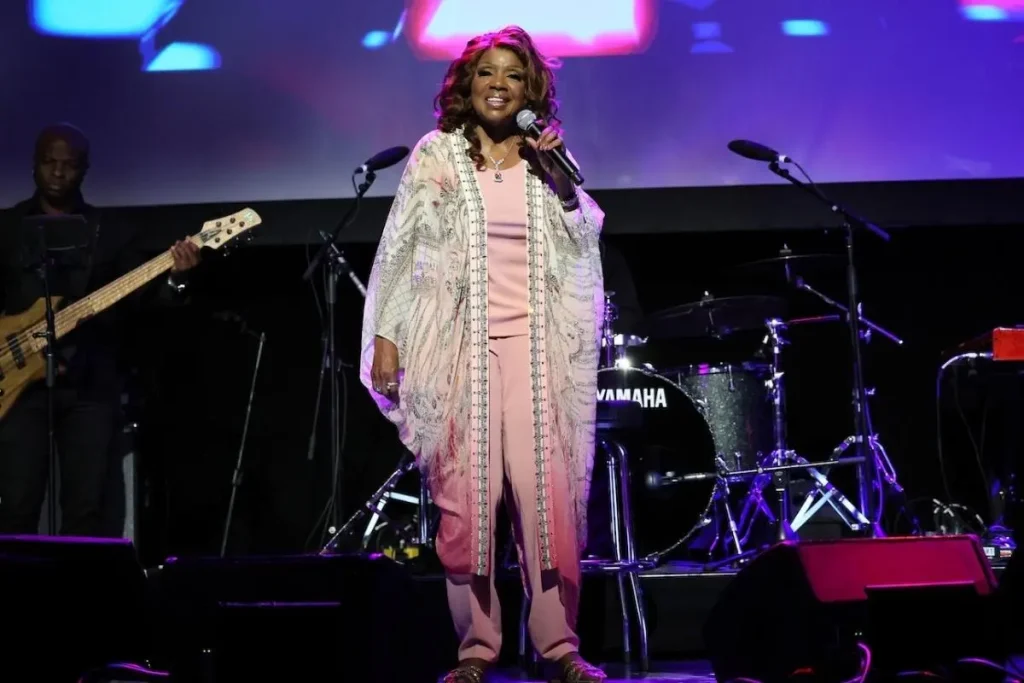
Disco has always been accused of being disposable: glitter today, landfill tomorrow. Then Gloria Gaynor fell off a stage, got her spine rebuilt, and walked into a studio in a back brace to record a song that refuses to die.
“I Will Survive” is often treated like a karaoke meme or a wedding-floor ritual. But the record’s origin story is closer to a hardback thriller: injury, doubt, an industry that quietly moves on without you, and a singer who did not get the memo.
“The fact that I’m in a back brace and hoping that I’ll survive this surgery… it celebrates the tenacity of the human spirit.”
Gloria Gaynor
The fall that could have ended everything
The most repeated version of the story is simple: Gaynor fell backward over a stage monitor at New York’s Beacon Theatre in 1978, finished the performance anyway, and only the next morning discovered she could not move her legs. The incident has been retold so often because it perfectly matches the song’s later message: survival as an act, not a mood.
Even the location matters. The Beacon is not a casual club stage; it is one of New York’s famous theaters, built for big nights and big reputations. That kind of room turns a misstep into a headline, and a rumor into an obituary – something you can feel in the Beacon Theatre’s venue profile and history.

What spinal surgery and a back brace imply in plain English
Most pop narratives skip the medical reality, but the physical details explain the vocal intensity. A ruptured or herniated disc can cause pain, weakness, and neurological symptoms that radiate into the legs, depending on the level and severity; Mayo Clinic’s herniated disk overview spells out why leg symptoms can be part of the picture.
When surgery escalates to removing disc material and fusing vertebrae, recovery is not a glamorous arc. It is immobilization, careful movement, and months of rebuilding stability. The standard reference summary for “I Will Survive” also captures how tightly this recording’s lore has fused to the public memory of Gaynor’s ordeal.
If this sounds like the opposite of disco life, that is the point. The era sold effortless cool, but Gaynor’s comeback was not effortless. It was engineered, measured, and fought for one day at a time.
From “B-side” to battering ram: how the record was positioned
The piece of industry cynicism that still shocks people is that “I Will Survive” was initially released as a B-side. In the late 1970s, that did not automatically mean “throwaway,” but it often meant “not the horse we’re betting on.” In Gaynor’s case, the A-side was “Substitute” – a detail preserved in the official awards-era documentation surrounding the record’s moment, even as the public later flipped the script.
Here’s the part modern listeners miss: DJs had real gatekeeping power. A B-side could become a phenomenon if the booth loved it, because the booth controlled repetition. Record buyers often followed what the floor told them was true, not what a label memo suggested.
Why the B-side flip mattered culturally
Calling “I Will Survive” a “hit” is too small. It became a social tool people used to speak back: to breakups, layoffs, grief, and entire systems that expected them to stay quiet. That is why it later got framed as an anthem across communities that did not always see themselves centered in mainstream pop narratives.
Its endurance is measurable in one unromantic way: institutions keep validating it. The GRAMMY Awards archive entry for the 22nd Annual GRAMMY Awards shows “I Will Survive” winning Best Disco Recording.
The songwriting DNA: it was built to feel like a comeback
The record’s power is not only in Gaynor’s biography. It is in the way the song is constructed: a slow-build intro that feels like someone collecting themselves, then a rhythmic lock that turns resolve into movement. Even if you never heard the story, the arrangement tells you, “Something awful happened, and I’m still here.”
For the cleanest confirmation of the core identity of the track itself, the record’s core credits and release framing have been kept stable across decades of documentation.
A quick musical breakdown for non-musicians
- Intro as narrative: The opening is almost conversational, like someone rehearsing bravery out loud.
- Rhythm as therapy: Once the groove settles, it becomes a treadmill for the soul: steady, repeatable, hard to stop.
- Hook as command: The chorus is not a description – it is an instruction you can borrow.
This is why the song survives streaming trends. It does not rely on the production tricks of one year. It relies on a structure that mirrors how people actually recover: hesitant steps, then forward motion.
The one-session myth and what we can say with confidence
Many retellings include a striking detail: Gaynor recorded the vocal in one session, sometimes with claims about a narrow time window. Those specifics can vary depending on who is telling it and when, and music history loves to sharpen timelines into legend.
What can be stated without overreaching is this: Gaynor herself has repeatedly tied the song to her real-life recovery and emotional strain, and her interpretation sounds like a person with something at stake. When an artist says the lyric lined up with surgery recovery and personal grief, that is not trivia. It is performance context.
That context is echoed in broader reporting about the song’s legacy and Gaynor’s reflections across years, including how music coverage has framed the track as resilience rather than novelty.
DJs, dance floors, and the moment America chose the “wrong” side of the single
The music business likes to present itself as a science: market research, radio strategy, perfect release schedules. Disco-era reality was messier and more democratic. The dance floor could overrule the label.
That is why the B-side story remains provocative. It implies the “official” tastemakers missed the point, and the unofficial tastemakers saved it. If that feels familiar today, it should. Replace “DJ” with “playlist curator” or “TikTok sound,” and the mechanism is basically the same: communities decide what they need.
Chart impact: beyond the U.S. narrative
In the UK, the song’s chart life has had multiple waves, which is exactly what you would expect from an anthem that keeps being rediscovered. The Official Charts record of repeated chart appearances illustrates how the track and artist continue to register across different periods.
Why “I Will Survive” became bigger than disco
Disco backlash in the late 1970s was not just about taste. It carried cultural baggage: race, sexuality, urban identity, and who gets to define “real” music. In that climate, a disco record that refused to disappear became a small act of defiance.
And then the song escaped its genre. Rock bands cover it. Punk crowds scream it. Sports arenas use it as a taunt. People who claim to hate disco still know every word. That is what a hymn does: it stops belonging to its original church.
If you want a mainstream snapshot of how deeply the song has embedded itself, pop-canon coverage that keeps returning to the track’s empowerment legacy shows how often it gets treated as a record that outgrew its era.
The uncomfortable truth: the industry profits from your “comeback” narrative
Here is the edgy claim that makes older music fans nod: the business loves a comeback story, but it rarely invests in the person during the collapse. The label that buries a track is often happy to celebrate “vision” once the public makes the choice for them.
That is not a conspiracy; it is incentives. Risk is expensive. Certainty is profitable. “I Will Survive” is the kind of record that reminds you certainty can come from the crowd, not the boardroom.
Lessons musicians can steal from Gaynor’s moment
- Record the truth you actually have: Technical perfection matters less than believable emotion.
- Do not accept the label’s first framing: A-side and B-side are marketing, not destiny.
- Protect your body like it is your instrument: A back injury does not care about tour schedules.
- Let the audience vote: If a room reacts, chase that reaction with focus, not ego.
Survival as a performance choice, not a slogan
At the center of the story is a singer in pain delivering a vocal that sounds like a verdict. That is why the song never quite becomes background music, even when it is overplayed. The voice feels like someone standing up in public.
And in a world where pop is constantly replaced, that is the rarest kind of success: not just being remembered, but being used. “I Will Survive” is less a disco artifact than a reusable piece of courage.
Some hits age. Some hits fossilize. This one keeps walking.
Quick fact check table
| Claim | What we can verify cleanly |
|---|---|
| Originally released as a B-side to “Substitute” | Documented in standard discographies and reference summaries tied to the song’s release history. |
| Won the Grammy for Best Disco Recording | Listed in the GRAMMY Awards archive for the 22nd Annual GRAMMY Awards. |
| Songwriter credits | Confirmed via long-running public reference documentation of the work. |
| Beacon Theatre is a major NYC venue | Venue overview and history are described in the Beacon Theatre’s official venue profile. |
| Herniated discs can cause leg symptoms | Explained in Mayo Clinic’s herniated disk overview. |
Conclusion: the anthem that keeps paying rent
Gloria Gaynor’s legend is not that she got knocked down. It is that she delivered the “getting up” part so convincingly that everyone else started borrowing it for their own lives.
Disco promised escape. “I Will Survive” promised something tougher: you can dance while you rebuild yourself.