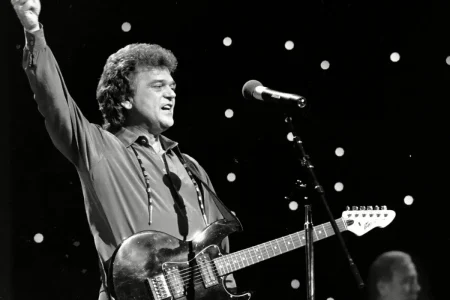
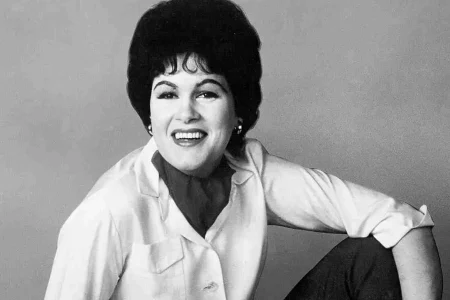
Before Willie Nelson became the bandana-wearing outlaw-country icon, he was a working songwriter grinding through Nashville with a stack of tunes and a sound that didn’t fit neatly in any box. The twist is that his earliest “takeover” wasn’t loud. It was quiet, almost awkward: a song called “Crazy,” delivered with the kind of humility that makes you underestimate the person holding the guitar.
“We went over to [Patsy’s] house and had a couple of beers. I didn’t get out of the car. Charlie [her husband] went in, and Patsy came out and made me get out. I went in and sang it for her-and she recorded it the next week.”
Willie Nelson (recounted in a published biography)
That story has traveled for decades because it captures something true about the song itself: “Crazy” feels like a confession you weren’t meant to hear. And once Patsy Cline recorded it, American popular music never really went back to the old rules.
“Crazy” didn’t start as a Patsy Cline song (and that matters)
Today, “Crazy” is so tied to Patsy that many listeners assume it came from her pen. It didn’t. Willie wrote it, and it arrived in Nashville at a time when the city loved “professional” songs but often distrusted “different” writers.
If you want a clean, reference-style verification of the song’s authorship and early-1960s release details, the standard summary is straightforward: it’s Willie Nelson’s composition, famously recorded by Patsy Cline in the early 1960s.
The bigger point is artistic: Willie’s writing came from the edges. He leaned toward jazz-like phrasing, odd emotional angles, and melodies that didn’t behave like typical assembly-line country.
Why the song feels “too honest” (and why that’s the hook)
Plenty of country songs talk about heartbreak. “Crazy” talks about self-incrimination. The narrator doesn’t blame the other person or fate; they blame their own mind, their own choices, their own inability to stop wanting what hurts.
That’s the provocative claim: “Crazy” is practically anti-country for its era. Not because it rejects country themes, but because it refuses the usual moral posture. There’s no righteous victim here, just someone saying, “Yeah, it’s me. I’m the problem.”
That perspective is one reason the song didn’t just succeed in country circles. It migrated across pop, jazz, and adult standards, because the emotion is universal and the language is plainspoken without being simplistic.

The demo problem: Willie’s voice was the wrong sales tool
Here’s the part that makes the origin story so deliciously human. Willie, by his own telling, didn’t feel like the guy who should be front-and-center pitching a ballad to a star vocalist. He was a songwriter with a distinct, nasally tone and behind-the-beat delivery that Nashville executives didn’t always know how to package.
So he did what a lot of writers did: he tried to get the song in the hands of an artist who could turn it into a hit. Patsy Cline was already a force, and her relationship with producer Owen Bradley would become one of the defining partnerships of the Nashville Sound.
For a broad, authoritative overview of Willie’s career arc (songwriter to star to cultural institution), PBS’s American Masters Willie Nelson page is a solid anchor.
Patsy, Owen Bradley, and the Nashville Sound: polish with a pulse
Patsy Cline’s recordings are often described as “countrypolitan,” and that can sound like a backhanded compliment if you’re the type who worships raw honky-tonk. But the truth is sharper: the Nashville Sound wasn’t country diluted into pop. It was country engineered for maximum emotional impact on radio.
Producer Owen Bradley’s approach favored smooth arrangements, carefully voiced background parts, and studio players who could deliver precision without losing feel. That sonic framing gave “Crazy” a kind of cinematic loneliness. It’s heartbreak with good lighting.
If you need a reliable, institutional reference point for Patsy’s place in the canon, the Country Music Hall of Fame’s profile is a useful citation.
What “Crazy” teaches musicians: three practical lessons
1) Great songs survive “wrong” performances
Willie’s early demo may not have sounded like a hit to gatekeepers, but the core material was undeniable. If you’re writing, this is permission to stop obsessing over whether your first recording is “radio-ready.” Write something that still works when it’s stripped down.
2) The melody is conversational, not athletic
“Crazy” doesn’t rely on vocal gymnastics. It relies on subtle contour: small rises where the emotion tightens, gentle falls where resignation sets in. The melody acts like speech that’s trying not to cry.
3) The lyric lands because it’s specific and plain
There’s no fancy metaphor maze. The word “crazy” is doing a lot of heavy lifting, but it’s a word real people say. That gives the song a directness that translates across generations.
A quick timeline: from writer’s tune to cultural artifact
| Moment | Why it matters |
|---|---|
| Willie writes “Crazy” in his early Nashville years | Establishes him as more than a singer – he’s a writer with a new kind of emotional voice. |
| Patsy Cline records it with Owen Bradley | The Nashville Sound becomes a delivery system for a song that cuts deeper than its polish suggests. |
| The song becomes a standard far outside country | Proof that country songwriting can be American songwriting – full stop. |
How big was the hit? Big enough to keep showing up
Chart history varies by country and by reissue, but “Crazy” has had an unusually long shadow, resurfacing through compilations, films, and cover versions. One easy way to confirm that the song’s afterlife includes later chart activity in the UK is the Official Charts Company entry for Patsy Cline’s “Crazy”.
And yes, Willie’s publishing legacy is the quiet engine behind his public legend. If you want a clean biographical snapshot of Willie’s early struggles and eventual breakthrough, it’s a practical way to frame the long arc from staff writer to household name.
The outlaw angle: “Crazy” is the seed of Willie’s rebellion
It’s tempting to split Willie into “early clean-cut songwriter” and “later outlaw poet.” That’s a convenient myth. The rebellion is already present in “Crazy,” just aimed inward instead of outward.
Outlaw country later sold freedom as a lifestyle: long hair, loud bands, Texas attitude, refusal to play the Nashville game. But the deeper outlaw move is emotional. It’s refusing to lie about what you feel, even when it makes you look weak.
That’s why “Crazy” belongs in the same conversation as Willie’s later masterpieces. It’s not the aesthetic that’s outlaw. It’s the honesty.
Listening guide: what to focus on when you play it again
- The vocal entrance: Patsy doesn’t “announce” the song; she slips into it like a private thought.
- The phrasing: Notice how lines stretch and relax, more like jazz ballad timing than strict country meter.
- The arrangement: The backing feels controlled, almost polite – which makes the lyric’s self-blame feel even more exposed.
- The last word: The ending doesn’t resolve emotionally. It just stops, like the narrator ran out of defenses.
Why the parking-lot story endures
The tale of Willie hesitating in the car isn’t just cute trivia. It’s the perfect metaphor for the way great songs enter culture: not through swagger, but through persistence, luck, and one person brave enough to say, “Get out of the car. Sing it.”
For readers who like a clean biographical frame for Willie’s early struggles and eventual breakthrough, the origin-story lore around how “Crazy” got to Patsy is often summarized in accessible, narrative form.
And if you want Patsy’s career context in the same accessible format, Willie’s official site is a handy hub for the larger story surrounding the song’s songwriter as his legacy continued to grow.

One more edgy thought: “Crazy” is a pop song wearing country clothes
Purists may argue, but hear it out. “Crazy” succeeds because it has pop efficiency: a memorable title, a hook concept, and a melody you can hum after one listen. The country part is the emotional posture and storytelling, not a banjo checklist.
That’s why the song keeps getting covered, reinterpreted, and absorbed into the broader American songbook. It’s a bridge between radio formats that usually pretend they hate each other.
If you want a modern, narrative recap of the song’s lore and its unusual path into Patsy’s hands, a recent look at Willie’s enduring cultural footprint helps explain why stories like this keep getting retold.
Conclusion: Willie’s “quiet magic” was always the real outlaw move
“Crazy” is the rare hit that doesn’t feel like a product of its era; it feels like a human truth that happened to get recorded. Willie Nelson wrote it before the outlaw brand existed, and Patsy Cline delivered it with a voice that made the confession sound inevitable.
The result is a classic not because it’s old, but because it’s still dangerous: it asks listeners to admit they’ve been irrational, tender, and wrecked by wanting. That’s not just country music. That’s American music.