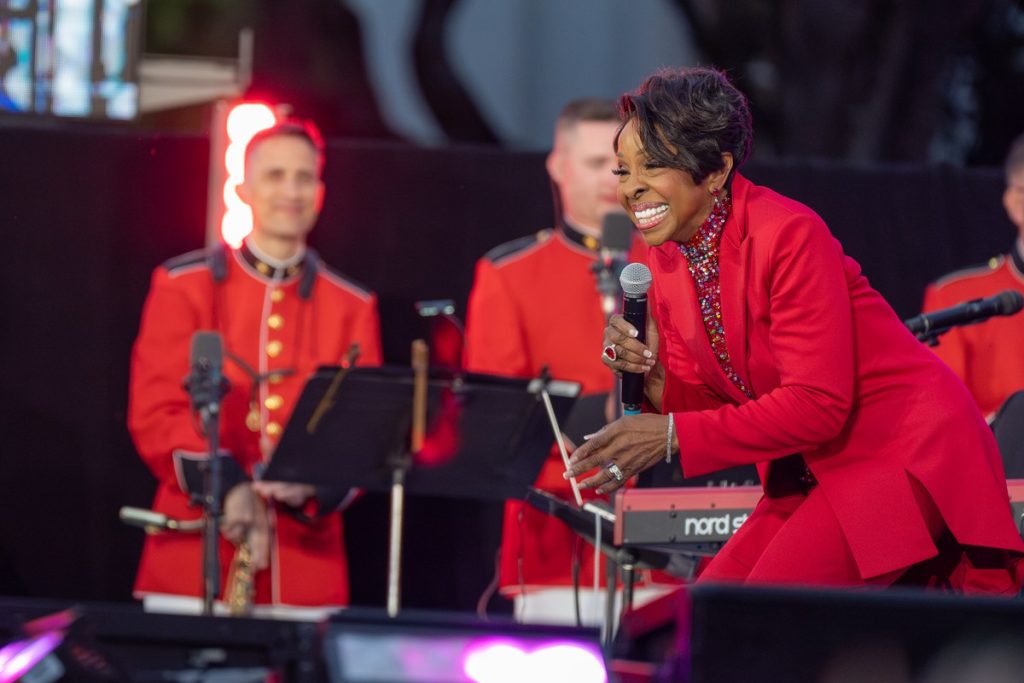
Gladys Knight is coming off the road. On Thursday night the 82-year-old posted a statement to her Instagram account confirming what fans have spent the better part of a year asking about, and it was characteristically gracious rather than defensive.
“After much soul searching I’ve decided that I will be easing into fewer performances while focusing on transitioning into the next stage of my career and life moving forward,” she wrote. “I’ll be spending more time on projects with my husband and visiting with my grandbabies and am looking forward to this new era.”
She closed by thanking her audience “over this last three quarters of a century for making a little girl’s dream come true and supporting her every step of the way.”
It is worth being precise about what she said and what she did not. This is not a retirement announcement and it is not a farewell tour. Knight has dates on the books into November, and the language she used — easing, fewer, transitioning — describes a taper rather than a stop. But for a performer who has been working since the Eisenhower administration, and who as recently as the spring was insisting publicly that she was fine, it is a significant change of position.
The year of worried fans
The concern did not begin this week. Knight has been touring solo and, at points, alongside Smokey Robinson, and audiences have been posting about her condition after shows for months.
Roger Friedman of Showbiz411, who saw her at the Ridgefield Playhouse in Connecticut last December, described a performance that was both remarkable and difficult to watch. The voice, he wrote, was essentially undiminished — no age-related raspiness, the same rich light baritone that carried “Midnight Train to Georgia” to number one in 1973. But the show had shrunk to a single hour, the costumes and choreography of the Pips era were long gone, and Knight sang mostly opening verses and choruses while three backup singers carried the rest. She no longer spoke to the audience between numbers, and at times held the singers’ hands and looked to them for her opening lines.
TMZ reported Thursday that people working on the tour had grown alarmed. According to the outlet’s sources, staff raised objections before her July 25 show at the Hollywood Bowl, saying it was “not suitable” for her to be on stage. During “Midnight Train to Georgia” that night, the report says, Knight turned her back on the crowd and began walking off; when a backup singer reached for her arm, she shook the hand away. One source told TMZ that an April date in Las Vegas with Robinson was worse still, and called it “shameful” that she was being put on stage night after night. Concertgoers in Detroit reportedly left early after she took repeated breaks offstage.
Those are anonymous accounts, and they should be read as such. Some of the same sources told TMZ they believed Knight was showing symptoms of dementia. Her husband and manager, William McDowell, told the outlet directly that she has not been diagnosed with the condition, and said they are seeing a doctor in the near future to evaluate whether she has it.
A family already at odds
The awkward part of this story is that the argument has been running in public for a year and a half, with Knight herself on the other side of it.
In March, her son Shanga Hankerson said he had filed a complaint with the North Carolina Department of Health and Human Services, telling The Shade Room he was worried about his mother’s cognitive health and alleging that McDowell was pushing her to keep working. Knight responded through a statement to People, saying her “health and performances have been misrepresented” and that she was “healthy and happy.” Her publicist went further, calling Hankerson’s claims defamatory and saying Knight’s lawyers had no choice but to explore legal remedies. Mother and son have had no substantial contact for years, following a 2017 legal fight over his use of her name for the Gladys Knight’s Chicken and Waffles restaurants.
Friedman, who has covered Knight for decades, writes that he called the couple when the allegations first surfaced and that Knight got on the phone herself to tell him she was all right. In her own mind, he says, she was fine and happy.
McDowell’s language this week is notably different from the family’s position in March. “No one is ever gonna make me say, ‘My wife is well,'” he told TMZ, “but all she wants to do is sing.” He said she has good days and bad ones.
What happens next
Knight’s remaining dates run to mid-November. McDowell told TMZ he is treating her September 5 show as the test: if that night goes badly, he will cancel the rest. He also said he is building a facility near their North Carolina home so she can keep performing without living on a tour bus.
There is a plain financial dimension here that is easy to miss. As Friedman pointed out in December, Knight did not write her signature hits, so she collects no publishing royalties when they play on the radio or in a store. Until US law grants terrestrial radio performance royalties, live work is the main way an artist in her position generates income. That is not the whole explanation — by every account she also loves the stage, and Friedman wrote on Thursday that she looked genuinely happy entertaining audiences all year — but it is part of it.
What is not in dispute is the record. Seven Grammys. A Rock and Roll Hall of Fame induction in 1996. A James Bond theme. “Neither One of Us,” “Best Thing That Ever Happened to Me,” “That’s What Friends Are For,” and the song about a midnight train that has outlived most of the people who first heard it. She is not stopping singing. She is coming home.