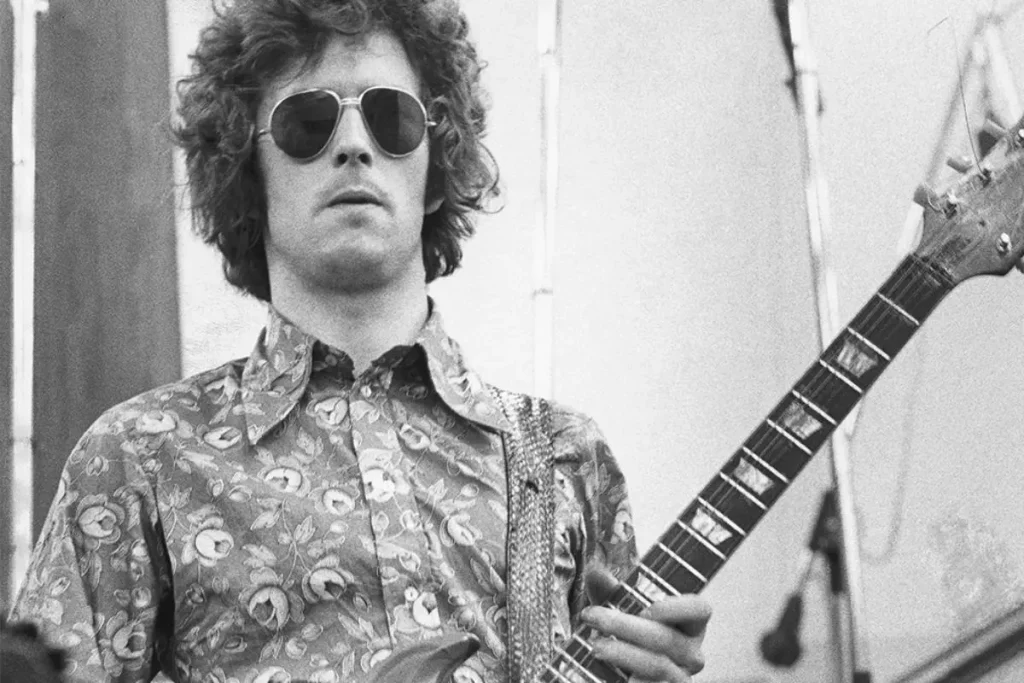
Eric Clapton and Frank Zappa are often filed in opposite drawers: Clapton as Britain’s blues purist turned stadium giant, Zappa as America’s satirist-engineer who treated rock like a lab experiment. In the late 1960s, though, their worlds briefly overlapped in a way that matters: not as a neat “they made a record together” moment, but as a high-voltage collision of aesthetics that helped define where rock guitar could go next.
Here’s the provocative claim: Clapton and Zappa’s closest “collaboration” in the late 60s is really a story about insecurity and permission. Clapton, already canonized, admits he was bored and out of ideas; Zappa, the supposed iconoclast, becomes the guy who gives him a practical nudge. That nudge lives on as one of Cream’s weirdest recorded moments, and as a case study in how rock myths are built.
First, the reality check: did Clapton and Zappa actually play together in the late 1960s?
Not in the clean, creditable way fans like to imagine. There is no widely documented late-60s studio session where “Eric Clapton featuring Frank Zappa” appears on the tape box, and there is no confirmed late-60s live bill where they traded solos onstage as an official pairing.
What is real is a chain of influence and personal contact that functioned like collaboration: a conversation, an artistic push, and a public artifact (a recorded solo) that became the souvenir. That is a collaboration in the way musicians mean it: one artist changes another’s outcome.
The late-60s moment that ties them together: Cream, studio pressure, and a “novelty” track
By 1968, Cream were both huge and fraying. Their double album Wheels of Fire captured a band trying to satisfy two audiences at once: the live improvisation crowd and the studio hit machine. The record’s story often centers on the epic tracks, but the Clapton-Zappa overlap hangs on a smaller, stranger cut.
“Pressed Rat and Warthog” is essentially a Jack Bruce spoken narrative set to music, and it’s a tonal left turn inside Cream’s catalog. The broader album context is well summarized in a retrospective noting the album’s unusual double-LP structure mixing live and studio sides.
Why the solo sounds like Clapton breaking character
Clapton’s playing on “Pressed Rat and Warthog” has long been described as intentionally odd: less heroic blues phrasing, more jagged commentary. It lands like a guitarist trying to sabotage his own legend, which makes sense if you accept Clapton’s later recollections that he felt boxed in by expectations and his own reputation.
“I’d hit a dead end. I was bored.”
Eric Clapton, quoted in the Daily Mail
Clapton has described that period in blunt terms, calling the solo a product of boredom and uncertainty, and tying his eventual solution to something Zappa told him afterward in a retelling of how Frank Zappa gave Eric Clapton the greatest advice.
So where does Zappa come in? The advice that became the “collaboration”
The most repeated, credible core of the story is this: Clapton did the bizarre “Pressed Rat and Warthog” solo, then spoke with Zappa, and Zappa’s response reframed Clapton’s dilemma. Instead of judging the solo against blues purity or “taste,” Zappa treated it as an artistic choice and effectively granted permission to make it weirder if needed.
That single exchange is why this topic refuses to die. It’s the rare instance where Zappa, often painted as ruthless, plays mentor, and Clapton, often painted as untouchable, plays student.
What the advice really implies
Stripped of mythology, Zappa’s message is almost anti-mystical: stop worrying about what people think your “proper” sound is, and commit to the choice in front of you. That is the opposite of the “Clapton is God” narrative, which requires the guitarist to be effortlessly right.
In other words, their “collaboration” is an early example of rock guitar splitting into two value systems:
- Tradition (tone, feel, lineage, blues vocabulary)
- Concept (sound as decision, performance as commentary, weirdness as strategy)
Late-60s parallel universes: what each man was building
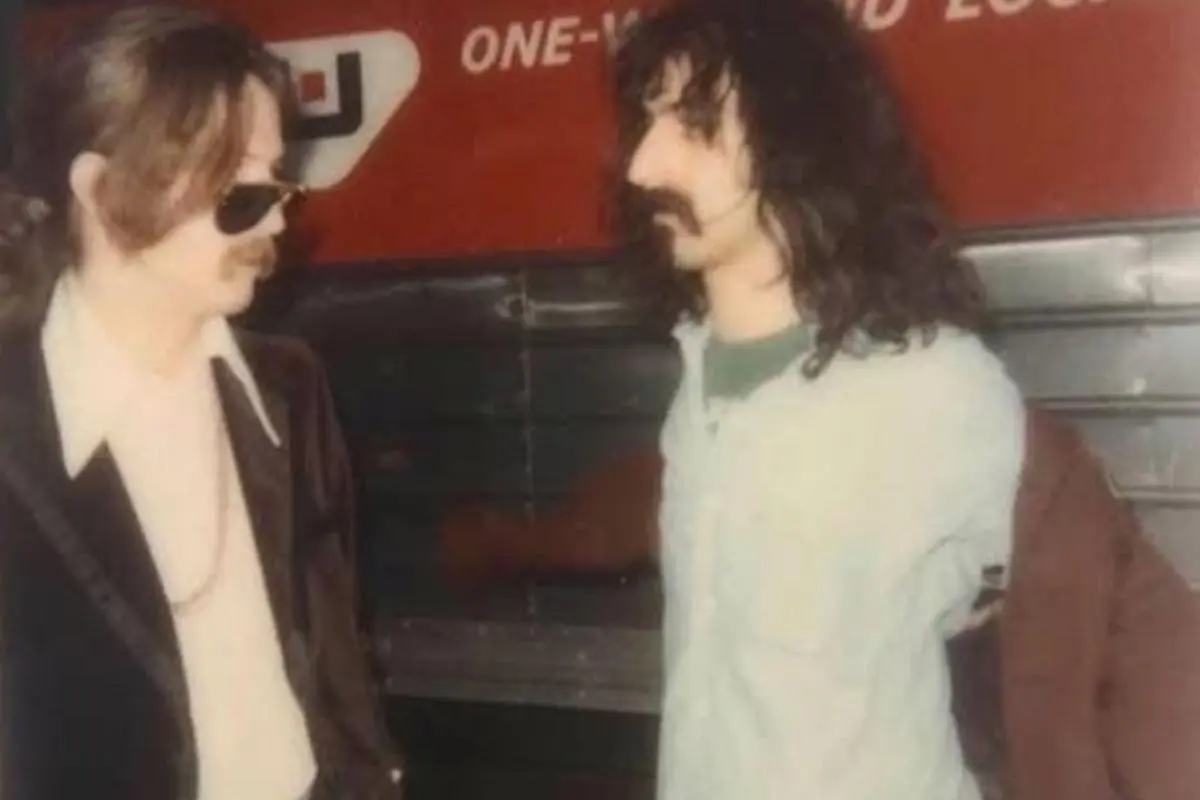
To understand why Zappa’s comment mattered, you have to see how different their missions were in 1967-1969. Clapton was emerging from British blues into psychedelic-era mega-visibility. Zappa was building a project where rock was allowed to be satirical, compositional, and deliberately uncomfortable.
Zappa’s breadth across composition, production, guitar, and social commentary helps explain why his approval would hit differently than a typical peer compliment.
Meanwhile, Clapton’s larger public arc has been enshrined as both band-driven and era-defining, with his Rock and Roll Hall of Fame profile underscoring his centrality to multiple major groups and phases.
The uncomfortable truth: Clapton needed “permission” because guitar hero culture was already a trap
By the late 60s, Clapton’s status wasn’t just fame; it was a rigid brand. When your audience expects transcendence every eight bars, experimentation feels like failure before you even play the first note. Zappa, who never chased sanctification, could afford to treat a strange solo as simply a move on the chessboard.
That tension is why this story resonates with older listeners: it captures the moment rock stopped being a youth revolt and started becoming an institution that policed its own heroes.
Documented “collaboration” vs. real-world collaboration: a practical scorecard
| Claim | Late-60s evidence level | What you can safely say |
|---|---|---|
| They recorded a track together | Low | No confirmed joint studio credit from the late 60s. |
| Zappa influenced a specific Clapton recording outcome | Medium to high | Clapton publicly attributes key perspective/advice to Zappa afterward. |
| They shared late-60s scenes and mutual awareness | High | Both were major figures in the same transatlantic rock ecosystem; the story presumes direct contact. |
Listening guide: hear the “collaboration” in the music (without needing a duet credit)
If you want to experience the Clapton-Zappa overlap as a listener, do it like a forensic audiophile: focus on intent, not virtuosity.
1) Start with “Pressed Rat and Warthog” as a deliberate anti-solo
Listen for phrases that sound like Clapton dodging his own instincts. It’s less “build to a climax” and more “interrupt the story,” which is closer to Zappa’s conceptual approach than Cream’s usual guitar hero grammar.
2) Then compare it to Cream’s established language
Use other Wheels of Fire material as contrast: when Clapton is in familiar territory, his phrasing resolves and sings. The weird solo becomes more meaningful when you hear how “normal” he could have sounded if he wanted to.
3) Flip to Zappa’s late-60s ethos
Rather than chasing a specific Zappa track as the “source,” zoom out: Zappa’s late-60s work made room for irony, sudden structural pivots, and textures that mock rock’s seriousness.
The myth-making machine: why this story keeps getting bigger than the facts
The Clapton-Zappa anecdote thrives because it offers a tidy moral: the avant-garde genius frees the mainstream hero. That’s romantic, and it flatters both camps. It also lets guitar culture pretend it’s open-minded while still worshipping the same icons.
You’ll see the story repeated in many forms, including on major platforms where the “best advice” framing dominates, and one persistent clip version is the Clapton/Zappa “Pressed Rat and Warthog” story.
The danger is that repetition turns nuance into certainty. The safe, factual takeaway isn’t that Zappa “produced” Clapton or secretly directed Cream. It’s that one musician’s worldview can unlock another musician’s paralysis, and that’s a kind of collaboration the credit sheets never capture.
What this late-60s crossover says about rock history (and why it still stings)
Clapton and Zappa represent two competing ideas of authenticity that solidified at the end of the 60s. Clapton’s camp argues authenticity is roots. Zappa’s camp argues authenticity is intent. In “Pressed Rat and Warthog,” you can hear those philosophies rubbing against each other in real time.
Even their institutional legacies now sit comfortably inside the same museum walls, with Hall of Fame pages treating each as part of the canon’s permanent record.
Conclusion: the late-60s Clapton-Zappa “collaboration” is a conversation you can hear
If you came looking for a lost duet tape, the late 1960s won’t give it to you. What it gives you instead is better: a documented story of an artistic course correction, preserved in a famously strange Cream solo and in Clapton’s willingness to admit he needed a shove.
That’s the real takeaway for players and listeners: sometimes the most important collaboration isn’t two names on a label. It’s the moment one musician tells another, “Stop apologizing for the choice. Make it a choice.”