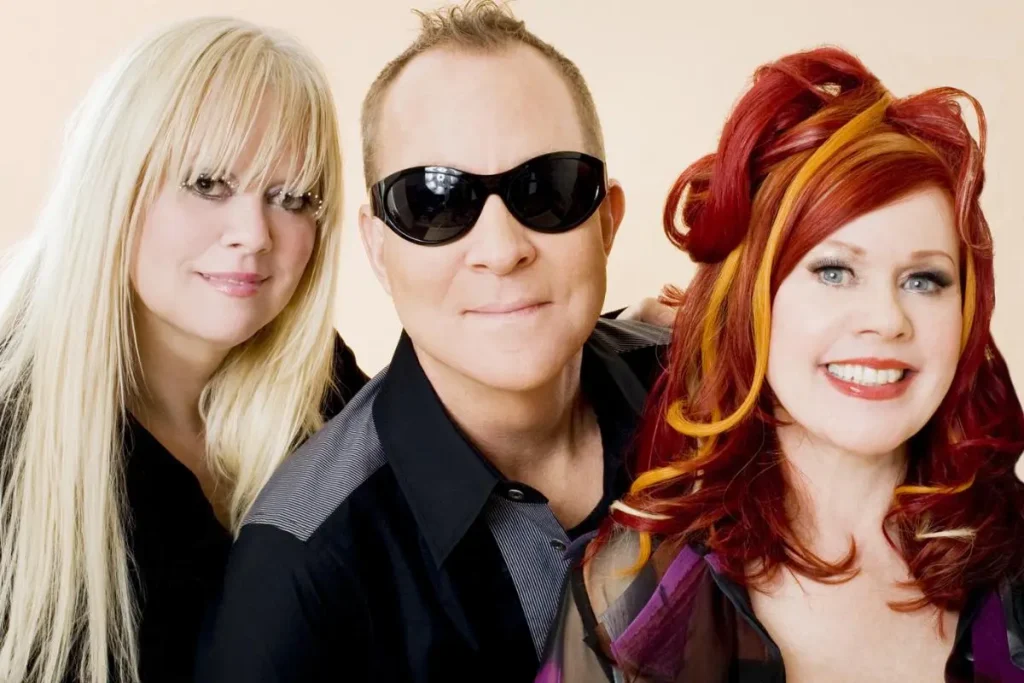
Everyone knows The B-52s as the band that crashes every wedding reception with “Love Shack.” Far fewer know that their biggest party was born out of one of rock’s bleakest moments. In the mid 80s the band was shattered by the AIDS related death of guitarist Ricky Wilson and quietly considered calling it a day.
Instead they came back with Cosmic Thing – a record that turned grief, rage and queer outsider energy into some of the most exuberant pop of the era. That late 80s comeback is the most fascinating chapter of their career, and it is much darker, stranger and more radical than the karaoke chorus suggests.
Before the party stopped: Athens weirdos become cult heroes
The B-52s began as an art gang in Athens, Georgia, bonding over a flaming volcano cocktail, B movies, African records and kitschy 50s and 60s pop rather than any grand career plan. Their shows were essentially costumed pranks set to surf guitars and Farfisa keyboards, with Fred Schneider barking spoken hooks while Kate Pierson and Cindy Wilson wailed in deliberately odd harmonies.
From the start they blurred gender and sexuality on stage, long before “queer visibility” was a marketing term. Band members have described their Athens circle as a place where “we’re queer, we’re here, we’re weird” was just daily life, and their wigs, bouffants and thrift store gowns functioned like camp armor in hostile clubs. That mix of silliness and defiance would become crucial later.
1985: Ricky Wilson, AIDS and the band that almost died with him
By the mid 80s the B-52s were respected cult stars but not yet true hitmakers. Behind the scenes something worse than career stagnation was unfolding. Guitarist Ricky Wilson, whose jagged open tuned riffs defined the band’s sound, secretly dying of AIDS related illness.
Wilson kept his diagnosis from everyone except drummer Keith Strickland until shortly before he died, telling worried bandmates that his weight loss was just from changing his diet When he passed in 1985 at 32, the group was devastated; they released the already finished Bouncing Off the Satellites but did not tour it and quietly slipped into hiatus, assuming the band might simply be over.
Cosmic Thing: a grief record disguised as a beach party
The twist is that the most neon, upbeat B-52s album began as private therapy. Strickland retreated to Woodstock, New York, started writing new music on guitar in Ricky’s tunings, and eventually played the tapes for Pierson, Cindy Wilson and Schneider. They decided to try again, not to chase radio but to see whether making noise together could help them survive their friend’s death.
The four spent about a year writing what became Cosmic Thing, commuting between upstate New York and a downtown Manhattan rehearsal space where they worked four days a week. They have described those sessions as equal parts songwriting and group therapy, with long conversations about Ricky and their shared history woven between jams.

Writing together as a survival tactic
Unlike many 80s pop albums assembled by outside hit doctors, Cosmic Thing was written collectively from the ground up. Strickland supplied instrumental tracks, then the three vocalists would jam melodies and phrases, rearranging sections until the pieces clicked. Songs like “Deadbeat Club” and “Cosmic Thing” pulled directly from their Athens memories, turning lazy days, cheap beer and DIY art stunts into bittersweet myth.
Pierson has said they were not chasing nostalgia so much as summoning Ricky’s spirit back into the room Strickland recalls imagining Ricky playing along as he wrote, and the band became its own support group, proof that they could still create something vital without the guitarist who had defined them.
Politics in hot pink
For all its party vibes, Cosmic Thing is one of the slyly angriest mainstream records of its time. Lead single “Channel Z” rants about ozone holes, secret wars and lying good old boys over a pounding dance rock groove, an eco panic bulletin wrapped in cartoon sound effects. Critics at the time heard a band “dancing away from the edge of ecocatastrophe,” serious and silly at once.
Pierson later noted that after Ricky’s death they leaned harder into activism around AIDS, queer rights, animal welfare and the environment, even as they kept politics off the stage banter. The strategy was simple and subversive: smuggle radical ideas and unapologetically queer joy into the suburbs through irresistibly fun singles.
Inside “Love Shack”: queer utopia with a jukebox
From a $15 shack and a Black juke joint to pop mythology
“Love Shack” fuses two very real places. Pierson had once lived in a “funky old shack” five miles outside Athens, paying $15 a month and raising goats there, while the band threw wild art kid parties Schneider, meanwhile, was obsessed with the Hawaiian Ha-Le, a mostly Black club outside town that looked like a rundown hut from the road but exploded into a sweaty soul party once you stepped inside.
Those images merged into the song’s fictional shack where “everyone’s welcome to the party” – a coded vision of the inclusive, mixed crowd spaces the band cherished. In the middle of the AIDS crisis, when queer bodies were being framed as dangerous, the B-52s put a joyous, desegregated, sex positive dance floor on Top 40 radio and dared America to show up.
The hit radio thought was “too weird”
When they delivered “Love Shack” to their label, executives and programmers initially considered it too strange for mainstream playlists. Schneider has recalled personally visiting stations with an A&R rep, lobbying DJs until the song slowly burned its way up the charts.
Released in June 1989 as the third single from Cosmic Thing, “Love Shack” became their first Top 40 hit, eventually peaking at number 3 on the Billboard Hot 100 and selling over a million copies, while its video took Best Group Video at the MTV Video Music Awards. It is no exaggeration to call it one of the most overexposed yet least understood party anthems of the late 20th century.
Why “Love Shack” still detonates every dancefloor
On the surface it is pure novelty: honking horns, shouted instructions, that nonsense “tin roof rusted” tag. Underneath is something tougher. The song comes from musicians who had just buried a bandmate and watched friends “dropping like flies” from AIDS, yet refused to bow to fear or respectability politics.
You could argue that “Love Shack” is a queer church service disguised as a frat party jam. The call and response vocals, the breakdown, the ecstatic chaos at the end – it all functions as a ritual where outsiders, weirdos and anyone sick of good old boys on Channel Z can claim temporary freedom. When you yell that final line, you are, knowingly or not, participating in the band’s decision to answer death with louder joy.
“Deadbeat Club” and weaponized nostalgia
“Love Shack” was not the only song where the B-52s rewired their past. “Deadbeat Club” turns their early Athens days – coffee shop loitering, aimless drives, strange performance art in gardens during rainstorms – into a slow motion home movie. Strickland wrote the music imagining Ricky beside him, and the lyrics captured a time when they had no money, no careers and no clue that “Rock Lobster” would escape the college radio ghetto.
That track matters because it shows what Cosmic Thing really is: not a sellout move but a reckoning. The album accepts that the band will never get its exact youth back yet insists they can still dance in torn sheets in the rain, only now under arena lights with millions watching. Few late career comebacks have this much emotional bite under the gloss.
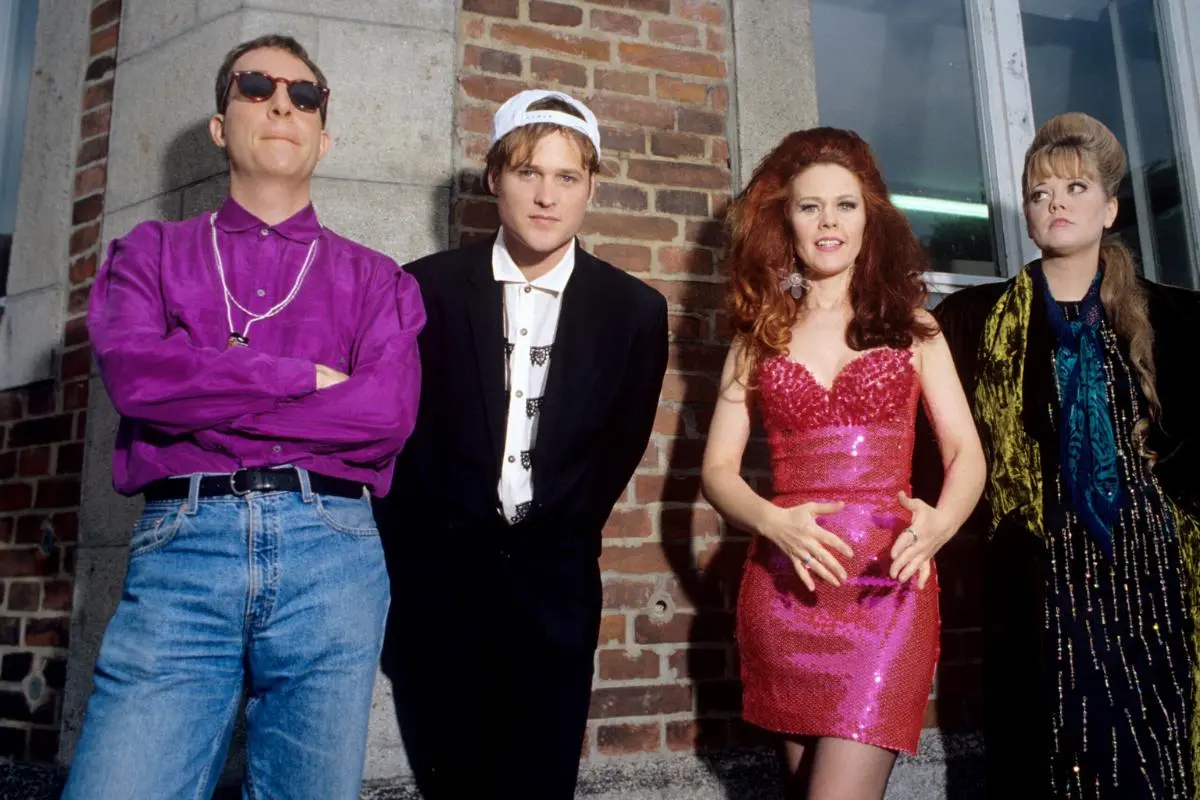
From comeback kids to permanent fixtures of pop nostalgia
Cosmic Thing did exactly what it was never designed to do: it blew up. The album hit the Top 5 of the Billboard 200, reached the Top 10 in the UK and topped charts in Australia and New Zealand, ultimately selling millions worldwide and becoming one of the best selling albums in the US the year after its release.200 Singles “Roam” and “Deadbeat Club” extended the run, proving the band was not a one song novelty.
The tour that followed lasted roughly a year and a half and finally turned the former underground oddballs into full scale pop stars, complete with epic tour bus parties and surreal “rock and roll army” fatigue.Yet at heart they stayed what they had always been: a tight knit clique of weird friends in wigs, now operating at arena volume.
Decades later, their farewell tour ended where it began, in Athens, with a set that leaned heavily on Cosmic Thing cuts like “Roam” and “Deadbeat Club” alongside the early freakouts. Even that goodbye proved provisional; the band went on to Vegas residencies and, in 2025, a co-headlining Cosmic De-Evolution Tour with fellow new wave survivors Devo, playing “Love Shack” and “Rock Lobster” to amphitheaters full of multi generational fans.
They may joke about retirement, but the truth is simple: once you have written the definitive party record for people who never fully fit in, culture does not let you quietly leave.
Why the Cosmic Thing era still matters
The B-52s’ late 80s comeback is the rare pop story that gets more interesting the closer you look. A band gutted by AIDS and industry indifference regrouped not by chasing trends, but by doubling down on everything that made them misfits – the queer camp, the eco rants, the goat filled shacks and outsider romance the queer camp, the eco rants, the goat filled shacks and outsider romance
If you only know “Love Shack” from drunk relatives at weddings, revisit Cosmic Thing front to back. Hear how “Channel Z,” “Deadbeat Club” and the title track stitch anger, mourning and absurd humor into something genuinely liberating. In a decade obsessed with polish and cynicism, The B-52s proved that the strangest band in the room could also be its most life affirming.