
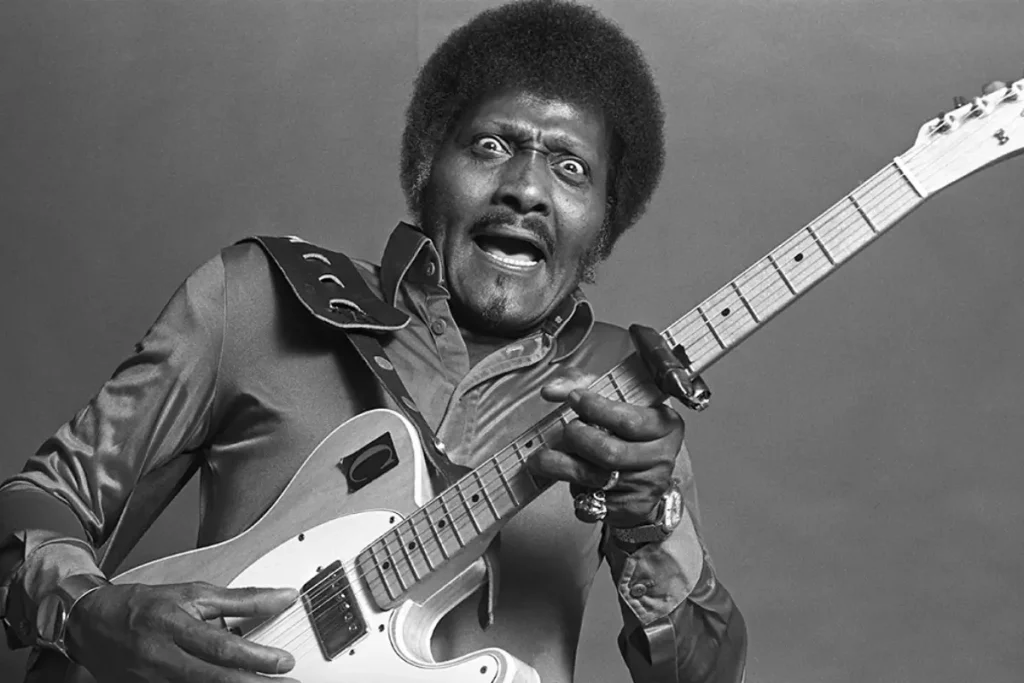
Albert Collins did not play the blues to comfort you. He played it like a heat-seeking alarm: clipped, bright, and borderline rude in the best way. If you have ever wondered how a single-note line can feel sharper than a full power chord, Collins is your missing link.
Born in 1932 and gone in 1993, he earned the nickname “The Iceman” and made it sound less like a marketing tag and more like a warning label. His sound is a masterclass in attack, space, and the kind of phrasing that can turn a slow shuffle into a street fight.
Who was Albert Collins, really?
Collins grew up in Texas and became one of the defining voices of modern electric blues, famous for a stinging Fender-style bite and relentlessly rhythmic solos. The broad strokes of his biography and influence run from his Texas roots to international recognition.
His legend is also institutional, not just fan-made: Collins is an inductee in the Blues Hall of Fame. That matters because it places him alongside architects of the genre, not merely a “great guitarist” footnote.
The “brusque and saw-toothed” thing: why his solos feel different
Collins’ lead playing is often described as jagged for a simple reason: he prefers strong consonants over long vowels. Lots of blues guitar leans into smoothness, wide vibrato, and lyrical arcs. Collins is the guy who walks in and starts speaking in short, hard sentences.
He also treats silence as part of the riff. The gaps are not polite pauses, they are pressure. When the next note arrives, it feels inevitable, like the band just got yanked forward by the collar.
“His solos are brusque and saw-toothed – fast, jagged phrases, single notes that bend and shriek.”
– Jon Pareles, The New York Times
That description is not poetry for its own sake; it’s an accurate technical report. Collins attacks notes with a bright transient, pushes bends to the edge of pitch, and leans on upper-register sting so hard the guitar can sound like it’s throwing sparks.
“He’s good. Really good.” Hendrix knew what he was hearing
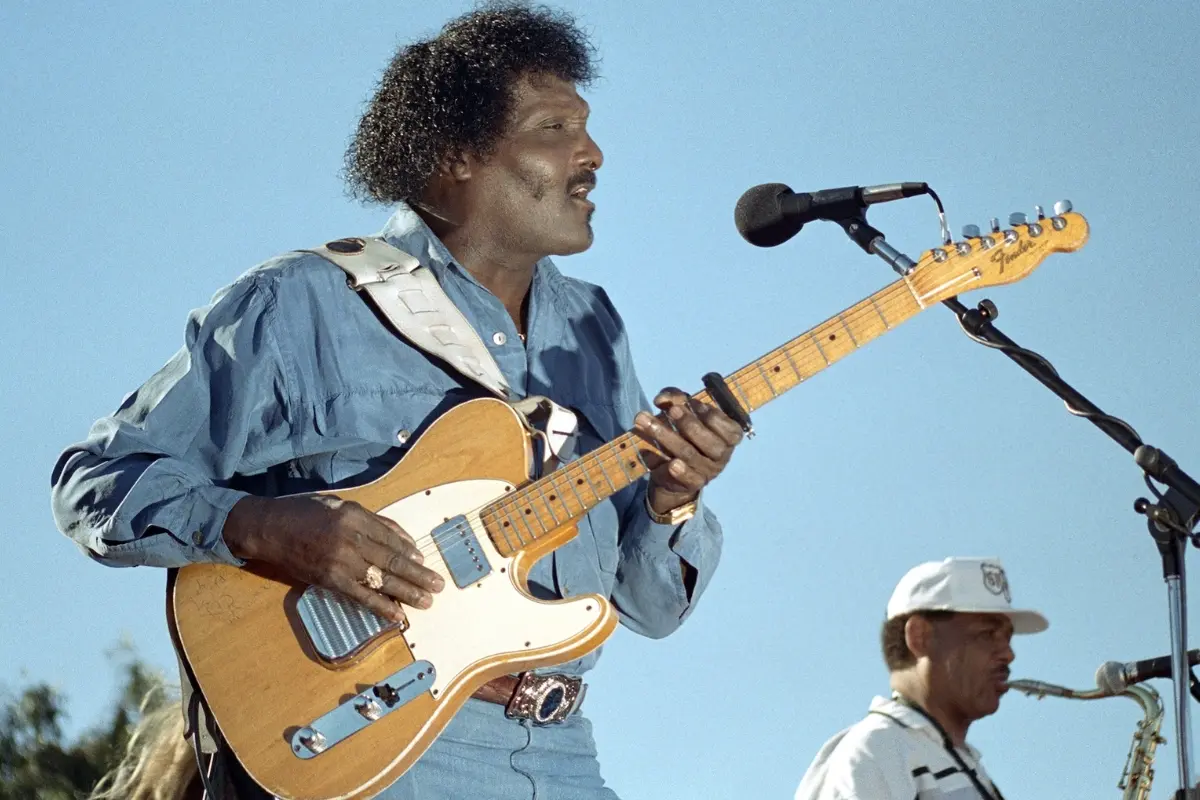
When guitarists praise other guitarists, it is usually vague. Collins inspired a rarer kind of endorsement: the kind that sounds like someone is genuinely trying to recruit the world to pay attention.
“There’s one cat I’m still trying to get across to people. His name is Albert Collins… He’s good. Really good.”
– Jimi Hendrix
Hendrix was not applauding chops in a vacuum. He was recognizing an identity: that biting, high-voltage Texas attack; the refusal to smear notes into a blur; the way Collins makes a simple line feel dangerous.
The Iceman’s signature tone: bright, cold, and brutally honest
Many players chase “warmth” as if it is automatically musical. Collins is proof that cold can be musical, too. His tone is defined by clarity and treble-forward presence, the kind that makes every micro-bend and every pick scrape audible.
That honesty is why he can sound intimidating. A forgiving tone hides messy technique. Collins’ tone spotlights it, then laughs. The result is a style that feels confident even when the lines are minimal.
Capo + minor key bite: the sneaky Albert Collins move
One of the most practical lessons from Collins is how he uses a capo to reposition familiar shapes and open-string sounds into brighter, tighter registers. That approach also helps explain why his riffs can feel “higher tension” than typical blues licks, even at the same tempo.
Players also associate Collins with minor blues flavors that cut harder than standard major-pentatonic comfort food. The commonly discussed elements of his style and gear-and-technique lore tend to follow him almost as closely as the recordings do.
Listening roadmap: 6 Albert Collins moments that explain the hype
If you only sample one or two tracks, you might miss the full range of what he does. Here is a faster path into the heart of his sound, focusing on what to listen for rather than just a list of “best songs.”
| Moment | What to listen for | Why it matters |
|---|---|---|
| “Frosty” | Knife-edge tone, minimal notes, maximum swagger | A blueprint for making a riff feel like a signature |
| Slow blues solos | Space, timing, and “mean” bends | Shows why he never needed speed to dominate |
| Shuffle grooves | Rhythmic phrasing that locks with drums | He solos like a percussionist with pitch |
| Call-and-response vocals | Guitar answering the lyric, not ignoring it | Classic blues structure with a modern bite |
| Live stage banter | Loose, funny, commanding vibe | The “Iceman” persona is more playful than stiff |
| Later-era recordings | Polished production, still nasty guitar | Proves the tone is in the hands, not the decade |
For immediate immersion, live footage helps because you can see how much of the “sting” is right-hand attitude and timing. A widely circulated performance of Collins playing “Frosty” live captures his stage presence and the guitar’s laser-like cut in a band mix.
How to play like Albert Collins (without faking it)
You cannot copy Collins by memorizing licks. His power comes from decisions: where to leave space, when to go sharp, and how to make one note feel like a plot twist. The goal is not to become a tribute act. The goal is to steal his principles.
1) Make your pick attack the “lead vocal”
Collins’ lines often work because the front edge of the note is aggressive and clean. Practice playing single notes with the same volume and brightness across strings. If your tone collapses when you dig in, that is your technique asking for attention.
2) Use bends like punctuation
Instead of bending constantly, try bending on key lyric-like moments: end of a phrase, top of a chorus, or right before the band hits a stop-time figure. Collins’ bends feel like exclamation points because they are not everywhere.
3) Don’t “fill,” threaten
Most blues players fill space. Collins creates suspense. Practice playing a two-bar phrase, then leaving a full bar empty while keeping your body and timing locked with the groove. That silence should feel intentional, not like you ran out of ideas.
4) Try the capo as an arranging tool
Even if you are not sure of Collins’ exact setup, the concept is gold: a capo can reposition your favorite shapes into a register where the guitar slices through the band without turning up. Use it to find tighter voicings, sharper double-stops, and more “ice” in the upper mids.
The provocative claim: Albert Collins is the blues guitarist rock players should study first
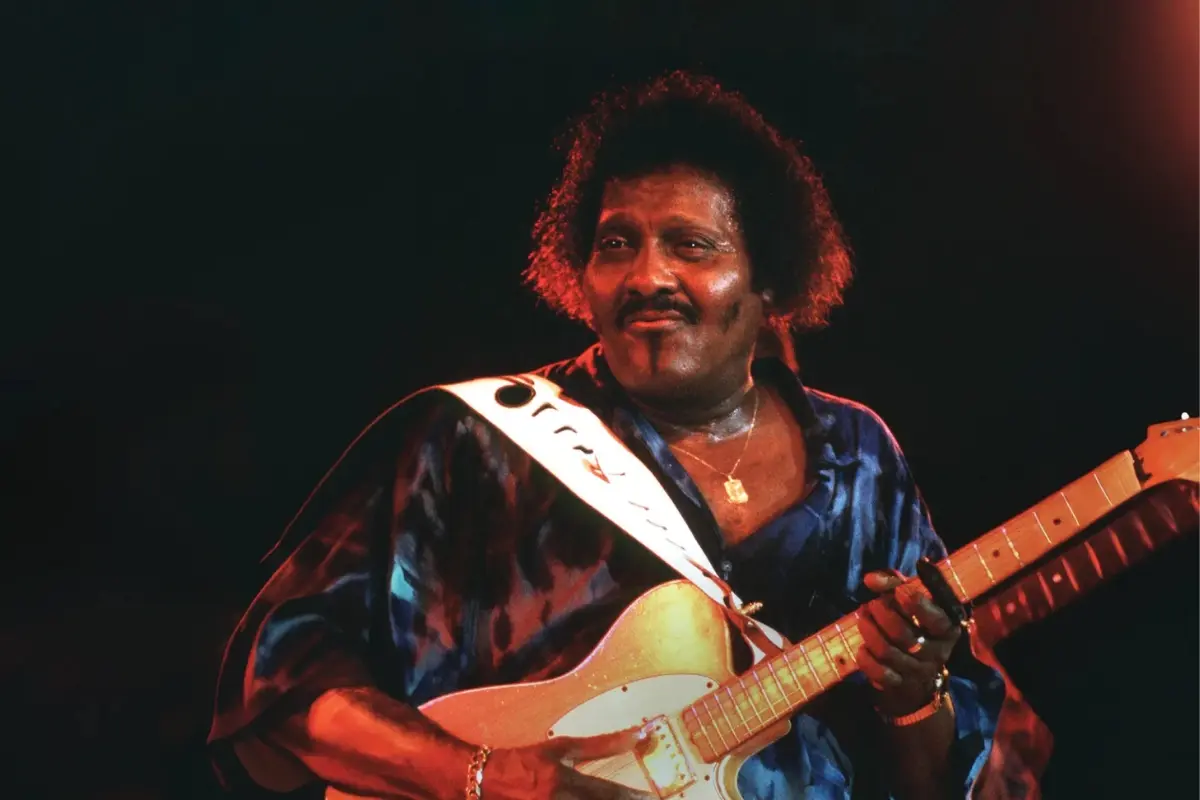
Here is the spicy take: if you play rock guitar and want to “sound bluesy,” Collins may be a better first teacher than the smoother kings. Why? Because rock is about attack, attitude, and contrast. Collins gives you those in pure form, and he forces discipline because his tone exposes everything.
It is also why he is such a useful antidote to endless pentatonic noodling. Collins’ vocabulary is smaller than many shredders, but his conviction is bigger. That trade is the whole lesson.
A quick gear-and-sound checklist for chasing the Iceman vibe
- Bright, clear single-coil voice (or a humbucker setup that can convincingly fake it).
- Strong right-hand dynamics so the note speaks before it sings.
- Less gain than you think so the transients stay sharp and the band mix stays defined.
- Capo experiments to shift familiar licks into unfamiliar tension.
- Rhythmic practice with a metronome focusing on rests and off-beat accents.
Legacy: why “The Iceman” still matters
Collins is often filed under “Texas blues,” but that label undersells him. He is a master of musical intimidation: how to command a room with a few notes, a bright tone, and perfect timing.
His name keeps showing up in serious guitar conversations for a reason. Rolling Stone’s guitar canon includes Collins among notable greats, reinforcing how widely his approach has been absorbed into the larger guitar story.
And if you want the long view, the Recording Academy listings and awards context are an easy way to verify his GRAMMY presence without relying on fan recollection.
Conclusion: the cold truth behind the heat
Albert Collins is the reminder that blues guitar does not need to be smooth to be soulful. His gift is a kind of musical toughness: jagged phrases, screaming bends, and ruthless control of space.
If your playing feels polite, study the Iceman. Not to become mean for its own sake, but to learn how conviction, tone, and timing can turn a handful of notes into a personality.


