
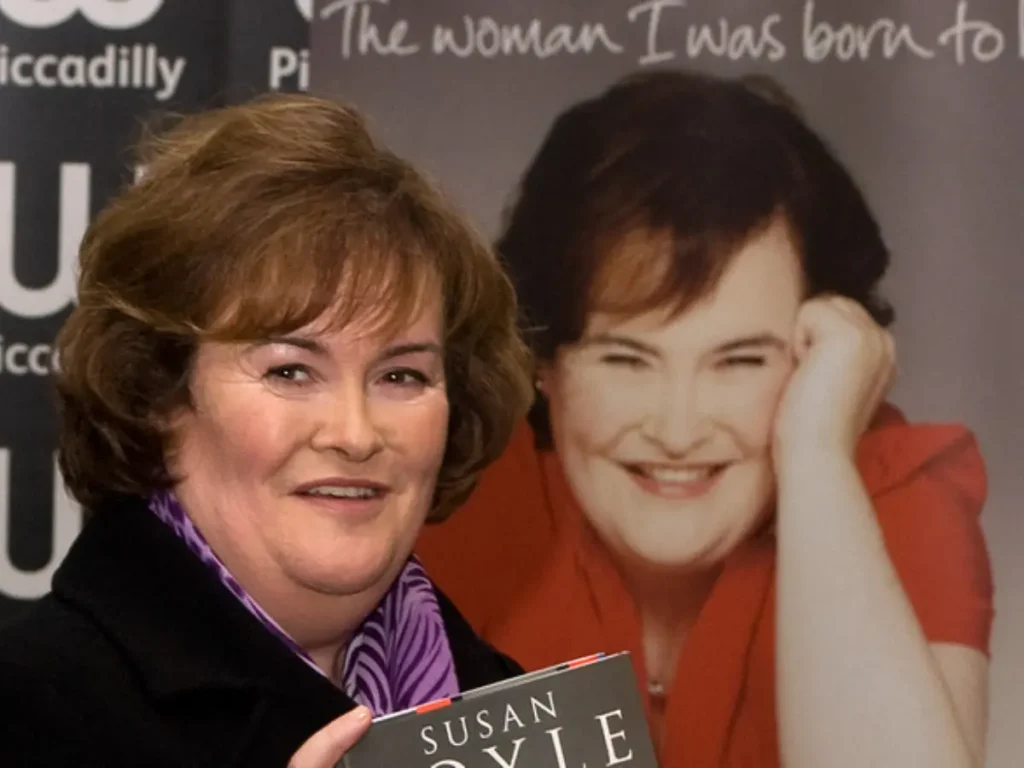
For 47 years, Susan Boyle lived the sort of life TV usually edits out. Same small Scottish town, same modest house, same routines, the occasional local performance, and a stubborn belief that her voice was worth more than the world seemed to think.
Then she walked onto the Britain’s Got Talent stage, cracked a joke about never being kissed, and unleashed a performance of I Dreamed a Dream that detonated across the globe. In seven televised minutes, a quiet life and a ruthless entertainment machine collided, and talent finally won.
Forty-seven quiet years before the world listened
Boyle grew up the youngest in a large working-class family in Blackburn, West Lothian, in a council house she never really left. Even after millions of records sold, she chose to buy and renovate that same house rather than escape it, saying she felt her mother’s presence there and that the place kept her grounded and humble.
Long before her viral moment, she was not some deluded non-singer stumbling into fame. She sang in school shows from her early teens, studied at Edinburgh Acting School, appeared at the Edinburgh Fringe, recorded a studio demo including a haunting version of ‘Cry Me a River’, and even popped up on the TV talent show ‘My Kind of People’ in the 1990s. What she never got was a serious industry shot.
Instead she cycled through short-term jobs and unemployment, sang in her parish church, cared for her ageing mother into her 40s, and quietly kept training her voice. By the time Britain’s Got Talent came along, she was not chasing a fantasy so much as cashing in a lifetime of unpaid preparation.
The night a TV audience queued up to laugh – and ended up cheering
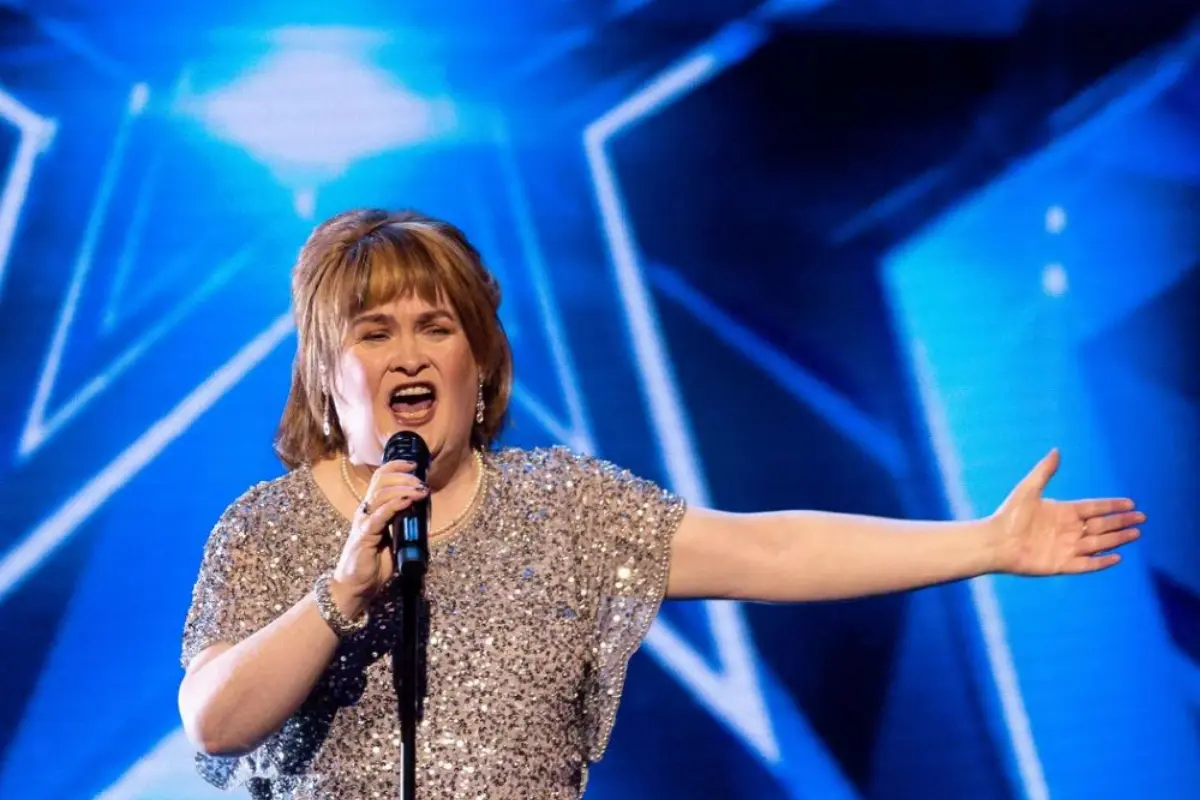
When Boyle stepped out in that simple dress and unstyled hair, the studio audience reacted exactly how producers had trained them to react. The Los Angeles Times described people booing and hissing based purely on her appearance, judges wincing, and Susan joking that she had ‘never been married, never been kissed – shame, but it’s not an advert’, as the cameras lingered on her hips and her age.
She told the panel she wanted a career like West End star Elaine Paige and you can practically hear the sniggering through the screen. Then the orchestra hit the intro to I Dreamed a Dream, she landed the opening phrase dead on pitch, and the room flipped: eyebrows shot up, mouths fell open, people leapt to their feet. Years later, Britain’s Got Talent would still single out that audition as the moment when the 47-year-old ‘left the judges and the audience open-mouthed’.
The real twist was not that a middle-aged woman could sing. It was that millions of us realised, in real time, how eager we had been to see her fail.
Why I Dreamed a Dream hit like a confession
I Dreamed a Dream is not a pretty talent-show ballad about generic hope. In Les Misérables, Fantine sings it after being fired and abandoned, looking back on youth, love and all the promises life casually broke. Commentators on the musical have long noted how the song moves from soft nostalgia to raw anguish as she admits that some dreams simply die and stay dead.
Now drop that lyric into the mouth of a 47-year-old unemployed church volunteer who has spent decades being underestimated. The line about life killing the dream is no longer a theatrical flourish; it sounds like autobiography. Boyle later said she chose the song because she related to a woman left on her own with nothing who has to rebuild her life from scratch, and that performing it on stage was her ‘happy place’.
Reality TV wanted an ugly-duckling gag. What it accidentally broadcast was a middle-aged woman singing a prayer for every dream that was supposed to expire quietly at 30.
From viral clip to record-shattering career
The clip ricocheted around the planet in days. News crews camped outside her little house; American morning shows beamed in live; the audition racked up view counts usually reserved for scandals and cat videos. She lost the Britain’s Got Talent final to dance group Diversity, but by then the competition was almost irrelevant.
Simon Cowell has since said her audition effectively turbocharged the entire Got Talent franchise, helping him sell the format into dozens of countries and turning it into the most successful reality series brand on earth. He still cites that night as his favourite talent-show moment, the one that taught him, painfully, not to assume what someone can do based on their face or birth date.
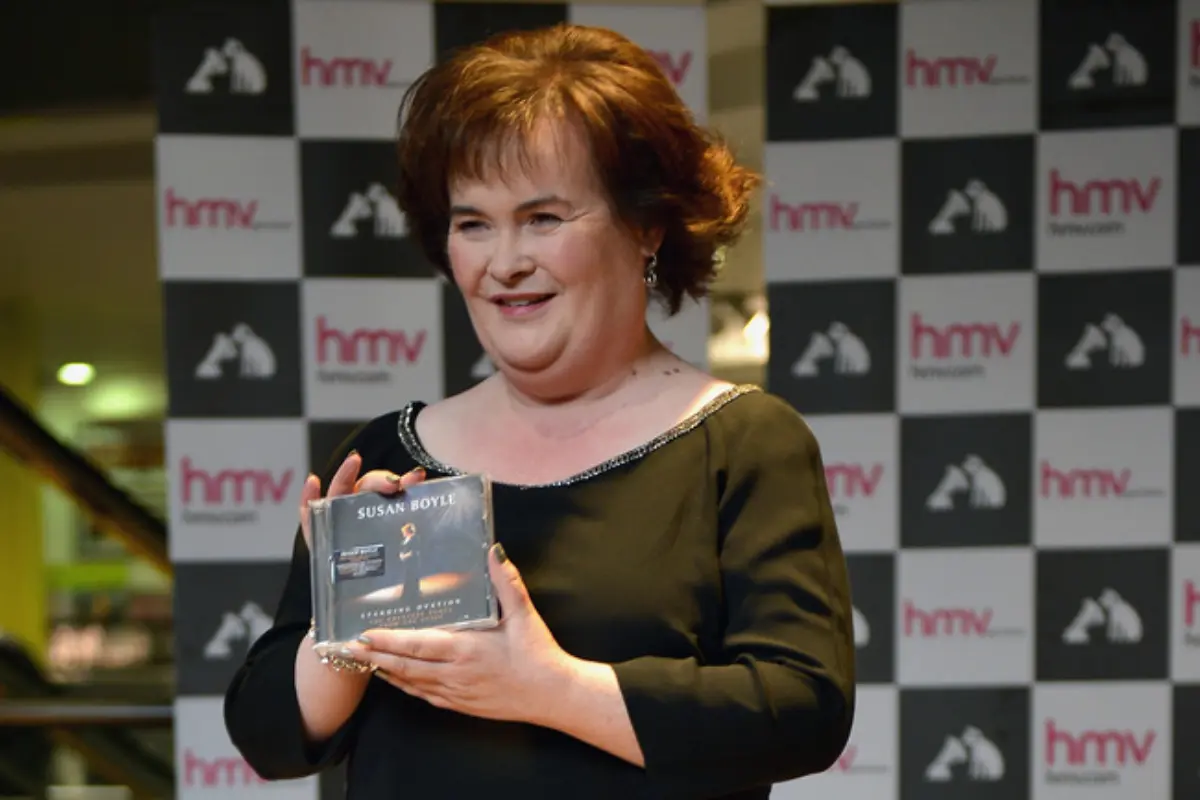
Her debut album, also titled I Dreamed a Dream, came out in November 2009 and exploded. British press reported over 410,000 sales in the first week, sending it straight to number one and outgunning established stars across the charts. Guinness later confirmed it as the most successful first-week UK album sale by a solo singer, with 411,820 copies sold.
| Era | Rough timeline | What changed |
|---|---|---|
| Quiet years | 1960s – early 2000s | Local gigs, church singing, caring for parents, no label interest |
| The audition | April 2009 | Viral I Dreamed a Dream performance shocks judges and viewers worldwide |
| Breakthrough | Late 2009 – early 2010s | Record-breaking debut album, international promo, major TV appearances |
| Working artist | 2010s | Multiple albums, tours, autobiography, return on America’s Got Talent: The Champions |
| Setback & return | 2022 onward | Stroke, rehabilitation, then a carefully staged comeback and new projects |
Across the following decade and a half she released a run of studio albums, toured internationally, wrote a memoir and even returned to TV competition on America’s Got Talent: The Champions, framing her original BGT loss as an ‘unfulfilled promise’ she wanted to revisit. The woman reality TV framed as a one-episode curiosity quietly built a career that most winners would kill for.
What her story says about age, image and real talent
Boyle never played the game the way the industry likes it. She stayed in her childhood home, rode the local bus, sang in church, and talked openly about being on the autism spectrum and about the mental strain of sudden fame, even when PR handlers might have preferred a glossier narrative.
Her audition also slotted into a much older pattern: women with big voices being told their faces do not fit the business plan. Rock singer Ann Wilson has spoken about record executives telling her she was not ‘pretty enough’ for rock, only to watch her four-octave range and emotional ferocity become the entire selling point of Heart. Boyle’s story simply dragged that bias into the brutally lit arena of reality TV, where millions could watch themselves judging, then flinching.
The uncomfortable truth is that audiences were not surprised that an amateur could sing; they were surprised that someone who looked like Susan Boyle was allowed to occupy that much cultural space. In that sense, the standing ovation was not just for her voice. It was also a sheepish apology.
What singers can steal from Susan Boyle’s audition
If you sing at all – in a choir, at karaoke, into a hairbrush – that clip is more useful than half the vocal courses on the internet. Strip away the editing and hype and you get a clean look at what actually moves people.
- Story first, technique second. Boyle does not throw in runs just to show she can. Every phrase serves the lyric of a woman watching her life shrink.
- Dynamics are everything. She starts with a conversational intensity, then lets the voice rise only as the character’s despair rises. The big notes land because the small ones were honest.
- Stillness beats theatrics. She barely moves apart from that awkward pre-song wiggle. Once the singing starts, her body language says, ‘Listen.’ Most singers could lose half their gestures and gain twice the impact.
- Choose a song your life can wear. A 47-year-old belting a teenager’s breakup anthem would have felt hollow. Singing Fantine’s lament about broken promises felt like testimony.
- Ignore the clock. She is living proof that 47 is not ‘too late’ for anything. The charts and the Guinness records did not care that her commercial peak arrived when most pop careers are already nostalgia acts.
A dream that rewrote the rules
Susan Boyle did not stroll out of a Scottish parish and accidentally trip over fame. She waited, worked, and endured for nearly five decades, then stepped through the one door that finally opened and refused to play the clown that door expected.
She still lives in the same town, in the house layered with memories, plotting new music and small comebacks while the world replays that first audition. For every late bloomer, every singer who thinks the moment has passed, her story poses a blunt, slightly uncomfortable question: was the dream really dead, or were we just too prejudiced – or too scared – to hear it yet?


