
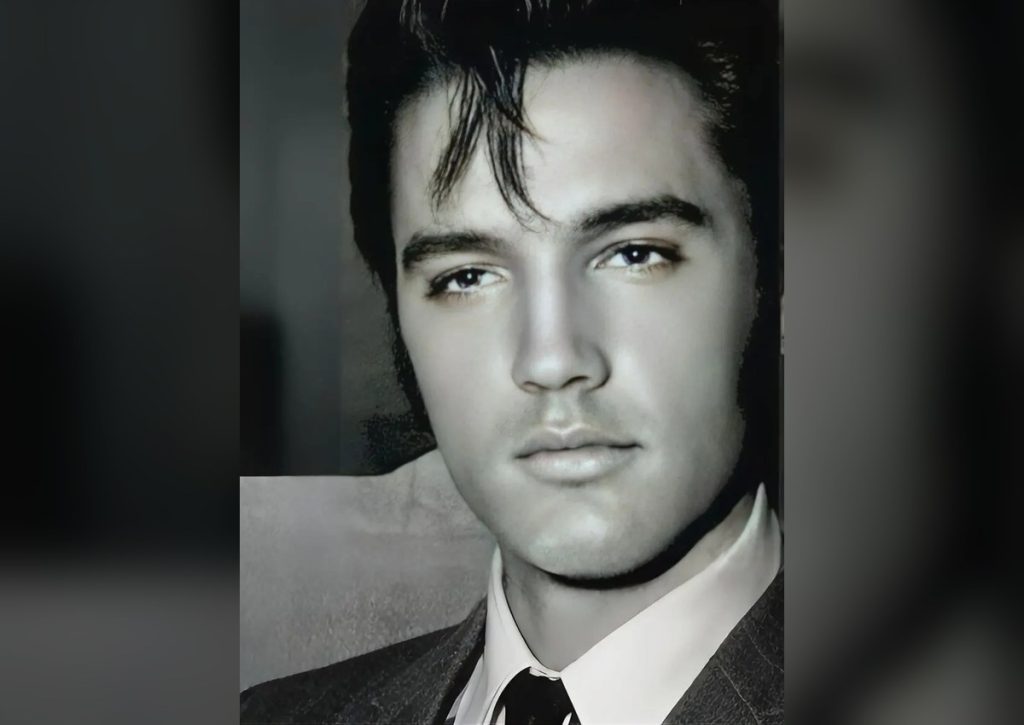
Say “Elvis” and the mind supplies the late-period icon: the white jumpsuit, the Vegas orchestra, the karate stances. It takes a deliberate act of memory to get back to the 19-year-old truck driver standing in a storefront studio on Union Avenue in Memphis in the summer of 1954 — a kid so nervous he sang with his eyes shut. But that kid, on one sweltering July night, made the noise that everything else grew out of.
The night the break became the take
The session on July 5, 1954 was, by every account, going nowhere. Sam Phillips had paired the unproven singer with two local pros — guitarist Scotty Moore and upright bassist Bill Black — and the trio spent the evening working politely through ballads that refused to catch fire. Then, during a break, Elvis started fooling around with an up-tempo, half-remembered version of “That’s All Right”, a blues number by Arthur Crudup. Black jumped in on bass, slapping along. Moore joined. And Phillips, hearing exactly the collision he had been searching for, stuck his head out of the control room and asked them to start again so he could get it on tape.
What they recorded is startling in its smallness: no drums, no overdubs, three instruments and a voice, cut live in single takes straight to tape. The sound is all air and slapback echo — Elvis’s acoustic strumming, Black’s percussive bass doing the work of a drummer, Moore’s clean electric lines darting through the gaps. It doesn’t sound like country, though all three men came from it. It doesn’t sound quite like the blues it borrowed. It sounds like a door opening.
Two days to detonation
The speed of what followed tells you how combustible Memphis already was. Within two days, local DJ Dewey Phillips was hammering the acetate on his “Red, Hot & Blue” radio show, reportedly playing it over and over as the phone lines lit up, and pulling a terrified Elvis in for an on-air interview partly so listeners could work out the question the record deliberately scrambled: what, exactly, was this — and who? The single, backed with a revved-up “Blue Moon of Kentucky”, was in shops by the end of the month.
Sam Phillips had been telling anyone who would listen that he was looking for a white singer with the feel of the Black blues artists he loved recording. The cynical version of that quote gets repeated endlessly; the more interesting truth is what the record itself shows. Nothing about “That’s All Right” was calculated. It happened in a break, between takes, three musicians goofing off — and Phillips’s real genius was recognising, in about four bars, that the goof was the sound.
It helps to remember what the room itself was. The Memphis Recording Service was a modest storefront where Phillips paid the rent by taping weddings and funerals, and where anybody with four dollars could cut a record — which is precisely how Elvis had first walked in, a year earlier, to record two ballads “for his mother”. Marion Keisker, Phillips’s assistant, famously kept a note about the polite kid with the sideburns. The empire that followed began as a memo and a hunch.
The voice before the myth
Listen to the Sun sides today — “That’s All Right”, “Blue Moon of Kentucky”, “Mystery Train”, “Baby Let’s Play House” — and the striking thing is how light Elvis sounds. The famous baritone swagger of the RCA years hasn’t arrived. This voice is higher, twitchier, almost giddy, hiccupping and swooping through lines because standing still was apparently not an option. It is the sound of someone discovering in real time what he can do, with a rhythm section agile enough to chase him.
Much of that agility was Scotty Moore’s doing — the picked runs and double-stops that filled every space a drummer would have occupied, an approach guitarists have been stealing ever since. And under the confidence was a boy raised dirt-poor in Tupelo and Memphis, shaped above all by his mother Gladys, singing partly because it was the one thing that made the shyness stop mattering.
Why the Sun sound still matters
The Sun recordings lasted barely sixteen months before RCA bought the contract and the rocket left the pad. It’s tempting to treat them as a prologue. Musicians tend to treat them as the whole point. The formula — small band, live takes, echo, nerve — became the founding grammar of rockabilly and a permanent reference standard for anyone chasing energy over polish. Whole careers, from the British Invasion players back to Memphis revivalists, have essentially been attempts to get into the room on Union Avenue on that July night.
The jumpsuit years gave the world an icon it will never stop repainting. But the Sun sides gave the world the thing itself: the moment American music’s separate rooms — country, blues, gospel — found a teenager reckless enough to leave the doors open between them. Before he was The King, before he was even famous, Elvis Presley was three minutes of tape hiss and joy recorded during a break. Everything else is commentary.


