George Michael wasn’t just a great singer who happened to be famous. He was the rare pop star who treated chart success like a battering ram, then used it to knock down the walls that fame built around him. He arrived with Wham! as a bright, cheeky slice of the 1980s, then exploded into a solo artist who could out-sing, out-write, and out-think most of his peers.
What makes his story endure is the tension: the smiley pop packaging versus the restless soul inside it. Listen closely and you can hear the fight. Then look at how he lived, and you realize the fight wasn’t marketing – it was the point.
Wham! didn’t just soundtrack the 80s – it advertised them
Wham! was bubblegum with a business plan: hooks big enough for stadiums, looks built for posters, and choruses that made even cynics hum along. “Wake Me Up Before You Go-Go” is practically a primary color, engineered to bounce out of radios and into weddings forever.
That song’s chart performance is part of why Wham! became shorthand for the decade’s pop euphoria, not just a successful duo with a few hits – an arc that’s easy to trace through the early breakout momentum that set up his solo leap. But even in that neon glow, George Michael’s instincts were already sharper than the smile suggested.
The secret weapon: songwriting that moved like a DJ set
Wham! records often feel like motion, because they’re written like motion: quick harmonic turns, rhythmic vocal phrasing, and a producer’s ear for the payoff. George wrote for momentum, and it’s why the songs still feel “fast” even at moderate tempos.
The key detail is that the fun wasn’t accidental. It was craft, and craft is what made his later reinventions believable.
“Faith” was a manifesto: pop star, but on his terms
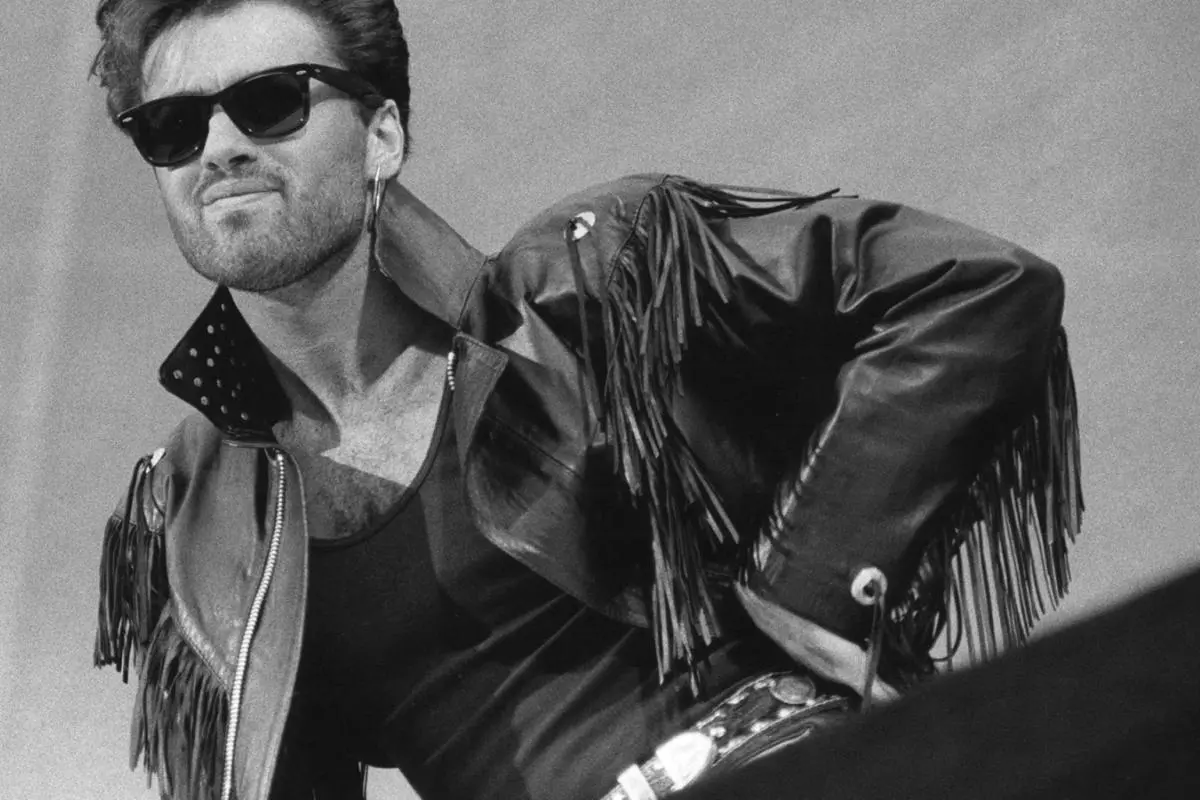
When Faith hit, it didn’t simply prove George Michael could go solo. It announced that he could dominate pop while switching the rules mid-game: mixing dance-floor punch, soul phrasing, rock swagger, and pop minimalism into a signature that was instantly recognizable.
The official site’s Faith-era track list reads like a thesis statement about range: “Faith,” “Father Figure,” “One More Try,” “Monkey,” “Kissing a Fool.”
“I want your sex.”
George Michael, “I Want Your Sex”
That line became controversy, but it also became clarity: he wasn’t asking permission to write adult pop. He was claiming the space. And once he claimed it, a lot of artists who came after him benefited from the new borders he drew.
The Grammy receipts (because pop history is also paperwork)
At the 30th Annual Grammy Awards where Faith won Album of the Year, the industry’s top prize aligned with what audiences were already screaming.
If you want a simple measure of era-defining impact, that award is one of the cleanest. It marked him as more than a heartthrob or hitmaker – he was now “institutional” talent.
That voice: velvet glove, steel fist
There’s a physicality to George Michael’s singing. The tone is smooth, but the attack is confident, and his phrasing often lands just behind the beat, like a soul vocalist refusing to be rushed.
It’s hard to argue with how his stature as a major pop figure came from the way he could sound tender without shrinking, and powerful without shouting.
What musicians can steal from him (use responsibly)
- Vowel control: he held open vowels long enough to feel intimate, then tightened consonants for bite.
- Dynamic honesty: he didn’t “perform emotion” at one volume. He shaded it.
- Genre fluency: he sang pop like pop, soul like soul, and still sounded like himself.
“Freedom! ’90”: the moment the pop mask cracked on purpose
“Freedom! ’90” is one of those songs that sounds like a victory lap until you realize it’s also a demolition. The hook is huge, but the message is blunt: the manufactured image has to go, even if the audience liked it.
Its chart story is part of its legend, with UK chart data available through the duo’s catalog and singles history documenting the track’s commercial footprint. But the deeper point is what the song did culturally: it made reinvention feel morally necessary, not just stylish.
“Sometimes the clothes do not make the man.”
George Michael, “Freedom! ’90”
That’s pop self-critique with teeth. He wasn’t simply switching looks; he was calling out the system that sold the old one.
The courage to live openly (and the cost of being the headline)
George Michael’s personal life became tabloid material, often in ways that were invasive and cruel. Yet his willingness to be candid over time helped push mainstream pop culture toward a less hypocritical relationship with sexuality and privacy.
Public recognition of his impact at the time of his death captured how widely his work traveled beyond any one “scene” or identity label.
Provocative claim: he was punished for being complicated
Plenty of artists have messy lives. George Michael’s mistake, in the public’s eyes, was having a messy life and being articulate about it. Pop audiences often forgive chaos; they struggle to forgive nuance, especially when it disrupts a profitable fantasy.
That’s part of why his later work feels like it comes from a person, not a brand. He refused to flatten himself for easier consumption.
Philanthropy: the loud legacy no one heard at the time
After his death, stories emerged about private donations and help given without PR. This matters because it reframes him: not as a celebrity performing generosity, but as someone who treated money as a tool, not a scoreboard.
Those accounts – like the charitable giving that came into focus after he died – add weight to the idea that his values weren’t just lyrical themes.
Why this changes how you hear the songs
When you know an artist backed up their empathy with action, the “sad songs” stop feeling like aesthetic sadness. They start sounding like lived experience. George Michael’s tenderness wasn’t a studio effect – it was a worldview.
Legacy in numbers, influence in texture
Statistics are blunt instruments, but they do confirm a simple truth: he was massive. You can track that footprint across decades of UK listening habits via the career-spanning impact summaries that followed his passing.

Quick snapshot table: what made George Michael era-level
| Legacy pillar | What it looked like | Why it still matters |
|---|---|---|
| Reinvention | Wham! joy to Faith edge to later adult pop | Proved pop maturity could be commercial |
| Songcraft | Hooks plus emotional structure | Blueprint for modern singer-songwriters in pop |
| Vocal identity | Soul phrasing with pop clarity | Influence that shows up in R&B-pop hybrids |
| Public honesty | Lyrics that argue with fame | Made self-acceptance feel like a pop subject |
| Private generosity | Giving without branding | Counter-narrative to celebrity charity theater |
How to listen to George Michael now (a practical mini-guide)
If you only know the radio singles, you’re missing the architecture of his artistry. Try listening in “modes” instead of albums: dance George, soul George, confession George, and protest George.
- Start with the thesis: the Faith era track list, front to back.
- Then the rupture: “Freedom! ’90” as an anti-brand anthem.
- Then the origin story: Wham! hits to hear the early mastery of pop momentum via Wham!’s UK chart history.
- Finish with context: how major outlets framed his life and impact when the noise stopped through the tributes and retrospectives that followed his death.
Conclusion: an icon, but also a warning label
George Michael’s greatness isn’t just that he made timeless hits. It’s that he kept insisting pop could be honest, even when honesty was expensive. He used his voice to seduce you into listening, then used his songs to tell you something you might not have wanted to hear.
That’s why he still feels like an era: not because he belonged to the 80s and 90s, but because he kept dragging those decades forward, one chorus at a time.