Before they were a merchandising machine and a nostalgia act in Vegas, New Kids On The Block were just five Boston teenagers rapping over cheap drum machines in rented studios. In 1986, their debut album quietly arrived, sold next to nothing, and nearly killed the dream.
If you only met them with “Hangin’ Tough” blaring from every radio, the 1986 version of NKOTB can be a shock. It is raw, oddly innocent, and built on a cold-blooded industry experiment that mixed Black music, white faces, and hardcore rehearsal schedules.
Before the screaming: Boston, New Edition and a big idea
The story really starts with New Edition. After guiding that Black teen group to hits like “Candy Girl,” producer Maurice Starr was pushed out in a money dispute and decided his revenge would be commercial, not legal. He wanted a new act that could be even bigger and more controllable.
His conclusion was blunt: if New Edition’s formula worked with Black kids, it could be supercharged with white kids in a segregated marketplace. In mid 1980s Boston, where busing and race tensions were everyday reality, that was not just a business plan, it was social engineering in four-part harmony.
Maurice Starr’s race-conscious blueprint
Starr openly described his vision as a kind of “New Edition 2.0” with white singers. He later said he believed New Edition would have been “20 times as big” if they had been white, and he set out to prove it by assembling a carefully groomed white boy band.
That idea may sound cynical, but it captured a hard truth about 80s pop: Black styles routinely needed white faces to reach maximum mainstream payout. NKOTB were not an accident of teen-girl taste; they were a deliberate experiment in packaging Black R&B and hip hop rhythms for suburban malls.
Finding the five: Dorchester high schools to Jamaica Plain
In 1984, Starr and talent scout Mary Alford combed working class Boston neighborhoods for kids who could rap, sing or dance. Fourteen year old Donnie Wahlberg from Dorchester auditioned with a freestyle rap so fierce he became the first recruit on the spot.
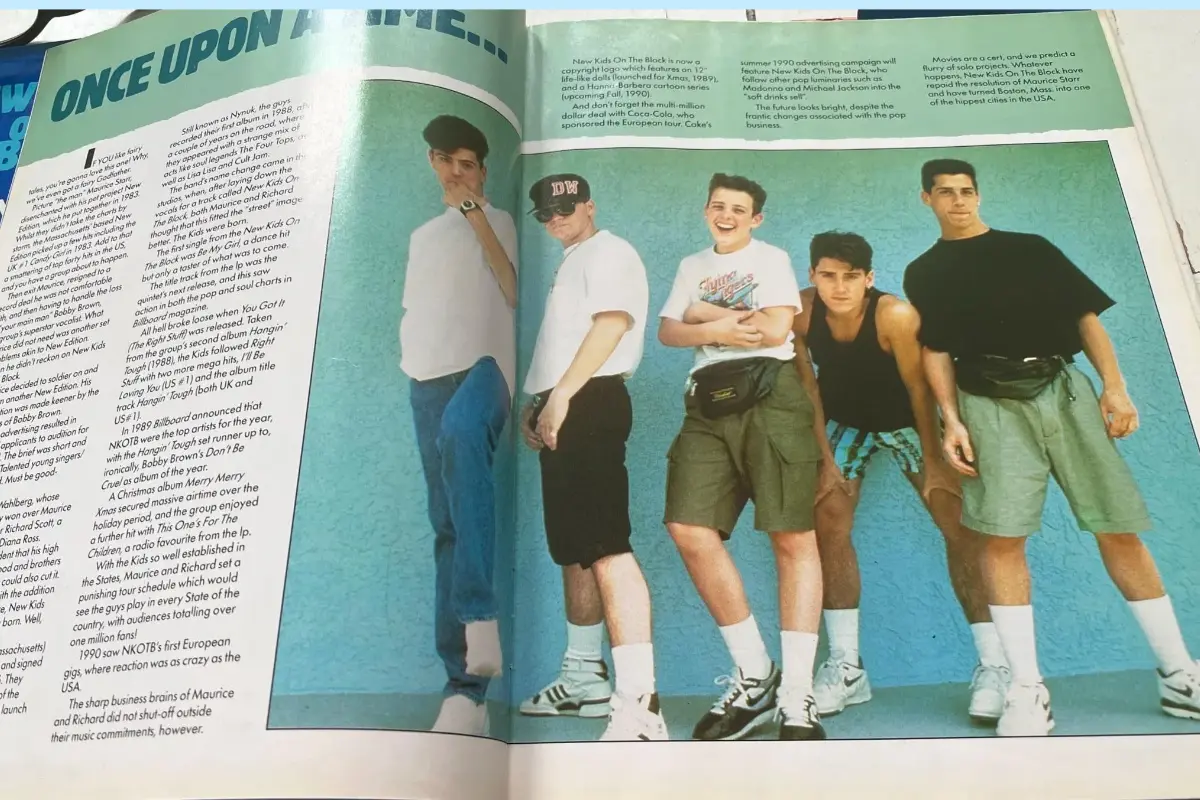
Donnie pulled in familiar faces: his younger brother Mark, school friends Jordan and Jonathan Knight, break dancer Danny Wood, and early member Jamie Kelly. Mark and Kelly both bailed out, leaving Starr to plug the final hole with 12 year old theater kid Joey McIntyre from nearby Jamaica Plain, who won the job singing Nat King Cole in his audition.
The chemistry was far from instant. The older boys hazed Joey, the only non Dorchester kid, hard enough that he nearly quit. What kept him in was Donnie on the phone, tapping into the underdog mentality that would define the group: stick it out, we can make this great.
Gigs that hurt – literally
Before there were arenas, there were talent shows, social halls and even a prison gig where they tossed cigarettes to get inmates on their side. At a kite festival in Boston’s Franklin Park, the crowd threw objects at them until a record split Danny Wood’s face.
Most young bands would have walked off. Donnie insisted they go back onstage so the kids from school would not see them back down. They finished the set bleeding and humiliated, but they also learned the first rule of the boy band economy: never flinch in front of a crowd.
Nynuk: the worst band name of the 80s?
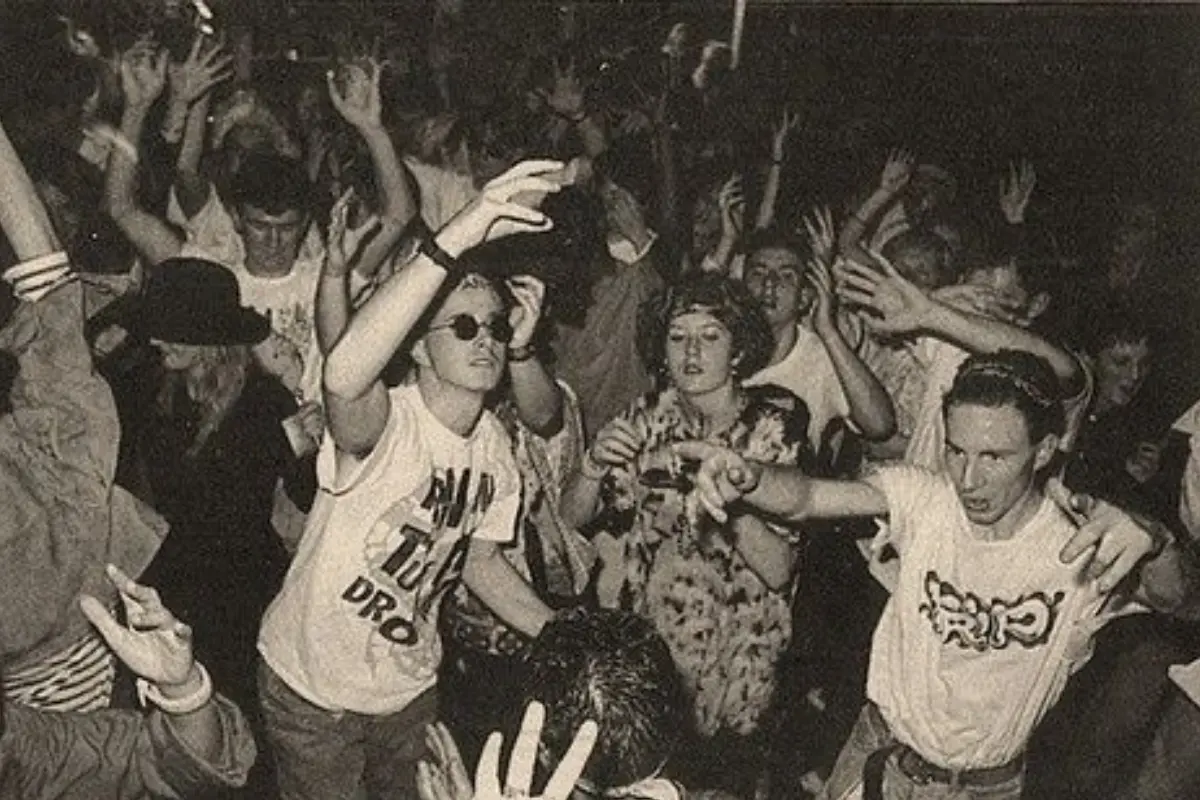
In the middle of this chaos, Starr saddled the group with a bizarre name: Nynuk, pronounced “na nook.” Even years later, their official biographer Nikki Van Noy called the word essentially meaningless, while a Rolling Stone piece guessed it might nod to “Nanook of the North.”
Under that clunky name, the kids rehearsed after school and on weekends, drilling vocals and choreography like a junior Motown camp. When Columbia Records finally showed interest, it came through the label’s Black music division, which saw potential R&B appeal but hated the name, the spelling, and probably the pronunciation.
Columbia told Starr to pick something that sounded like a hit, not a typo. The solution came from inside the group: “New Kids on the Block,” the title of a rap track Donnie had written. The song later appeared on their debut album and doubled as a mission statement about rough neighborhoods, sucker MCs and hip hop bravado.
Official history, offstage reality
Years later, Van Noy’s authorized biography “New Kids on the Block: Five Brothers and a Million Sisters” would let the band tell this origin story from their own side. The book draws on fresh interviews with all five members and digs into how much of the glossy fairytale was built on exhaustion, self doubt and very un glamorous Boston grind.
Selling Black music with white faces
By late 1985, Starr had a deal with Columbia and a clear strategy: record R&B driven pop tracks, then break the band on Black radio first. The label slotted NKOTB into its Black music division, treating them as an R&B act in spite of their skin color.
Jordan Knight later recalled that in the early days “we were in the black division” at CBS and nobody seriously thought white kids would be the primary fans. The music had such obvious R&B roots that the label focused on urban stations, an approach that did not really change until a Florida pop station blew up “Please Don’t Go Girl” in 1988.
1986: recording a flop that refused to die
Starr put himself in charge of nearly everything on the debut: writing, production, choreography, image. The result was the self titled album “New Kids On The Block,” released by Columbia in 1986 with ten tracks that mashed bubblegum hooks, Philly soul covers and primitive drum machine funk.
For fans who discovered NKOTB on “Step By Step,” that first record sounds almost alien. Songs like “Stop It Girl” and “Popsicle” are packed with sugary choruses, but they are framed by rapped verses and street boasting that feel closer to early Run DMC than to later boy band balladry.
Commercially, though, it was a brick. The lead single “Be My Girl” scraped minor airplay in Boston, and “Stop It Girl” barely made a ripple. Contemporary accounts estimate the album initially moved only around 5,000 copies, while “Be My Girl” stalled at number 90 on Billboard’s Black singles chart, not even touching the main Hot 100.
Life on the 1986 grind
With no real radio hit, the group worked the old fashioned way. They hit any stage their management could find around New England – bars, school dances, tiny clubs, outdoor festivals, even places where teen pop was a terrible fit. Set lists leaned heavily on the debut album, along with covers and extended dance breaks.
There were no headlining tours yet, just scattered dates and the constant sense that the label might pull the plug. Inside Columbia, NKOTB were already a problem act: too Black for pop radio, too white for R&B authenticity, and too unproven to justify more marketing spend.
1986 at a glance: the year that nearly ended it
| Date | Milestone | What Actually Happened |
|---|---|---|
| Early 1986 | Signed fully to Columbia | Slotted into the Black music division with modest expectations and a tight budget. |
| Spring 1986 | Debut album released | “New Kids On The Block” arrives quietly in stores, mostly ignored by press and radio. |
| 1986 singles | “Be My Girl,” “Stop It Girl” | Both get scattered local play, but neither cracks the Billboard Hot 100 in any meaningful way. |
| Late 1986 | Label frustration | Columbia begins debating whether to cut their losses, effectively ending the band before it ever really started. |
From flop to foundation
History remembers the album as a slow burn. When “Hangin’ Tough” exploded a few years later, Columbia dusted off the 1986 tapes and re released “Didn’t I (Blow Your Mind This Time)” as a single. The tactic worked, turning that forgotten debut into a multi platinum back catalogue piece instead of an embarrassing write off.
Listen closely and you can hear why. The first album captures something later NKOTB lost on the way to cartoon level fame: a rough, slightly awkward mix of hip hop posturing and blue eyed soul that still feels more neighborhood talent show than billion dollar brand.
What 1986 NKOTB can teach musicians now
- Your first record can tank and still matter. NKOTB’s debut basically failed on release, yet it gave them stage experience and a sonic identity they could refine rather than invent from scratch.
- Stagecraft beats hype. Those brutal early gigs – from prisons to hostile festival crowds – trained them to hold their nerve in front of any audience. No choreography camp can replicate that.
- The market is never neutral. Starr’s “white New Edition” concept shows how race, genre and radio formats shape who gets promoted and who does not. NKOTB benefitted from that system even as they tried to pay homage to Black R&B.
- Real friendships can survive manufactured origins. However calculated the project was, the five kids who walked into those 1986 sessions built bonds strong enough to survive flops, scandals, adulthood and a reunion decades later.
From Nynuk to mania
Circa 1986, New Kids On The Block were closer to a failed science project than to a cultural phenomenon. A bad name, a modest contract, a flop album and a skeptical label should have been the end of the story.
Instead, that rough year became the crucible that hardened them into lifers. When the hits finally came, they had already done the ugly work: bleeding onstage, bombing on radio and learning how to perform like it mattered even when almost nobody was listening. That is the real beginning of New Kids On The Block – and the part that makes their later hysteria worth talking about.