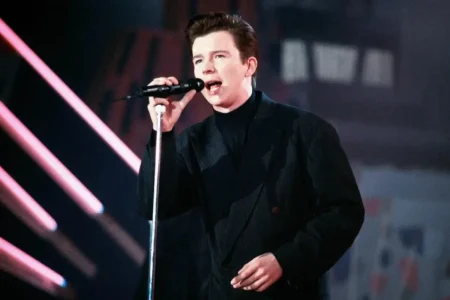

Wham! sold sunshine as a product: bright clothes, bright hooks, bright smiles, bright TV-friendly movement. But the band’s biggest trick was making a studio-built pop machine feel like a living, sweating, shout-along party onstage.
The unglamorous truth is that it takes more than two frontmen to pull that off night after night. Enter Pepsi DeMacque and Shirley Holliman (later Shirlie Kemp): the backing vocalists and dancers who did far more than fill space. They helped make Wham! feel big in the room, and when the main act ended, they briefly proved they could front a pop act of their own.
“Backings are everything. They’re the glue.” – Shirley Kemp, quoted in an interview about life inside the Wham! machine
Who were Pepsi and Shirley, really?
Helen “Pepsi” DeMacque and Shirley Holliman were hired into Wham!’s live and TV world as backing singers and dancers during the group’s rise. In the popular imagination they’re sometimes reduced to a visual footnote: two smiling faces behind George Michael and Andrew Ridgeley.
That “two girls at the back” label misses the point. Wham! was engineered for mass television, and Pepsi and Shirley were part of the engineering: vocals, movement, styling cues, and the kind of stage confidence that keeps a pop show from collapsing into awkward space between choruses.
After Wham! split, the pair became a duo, Pepsi & Shirlie, releasing singles and an album in the late 1980s. Their basic story and discography are summarized in a single place most fans check first.

What they actually did for Wham!: the stuff you notice when it’s missing
1) They thickened the live sound (and protected the illusion)
Wham!’s records are famously clean, layered, and “constructed” in the way 1980s pop often was. Live, that kind of arrangement can turn into a thin skeleton fast, especially when a chorus is built around stacked harmonies and call-and-response.
Pepsi and Shirley supplied the extra vocal mass: doubling hooks, punching in harmonies, and throwing back lines that turned choruses into a conversation rather than a soloist shouting into the void. If you’ve ever wondered why Wham!’s choruses still felt like a crowd even in a cold TV studio, that’s a lot of their work.
Even a basic song overview of “Wake Me Up Before You Go-Go” emphasizes how much the choruses are designed for group energy and repetition, not intimate singer-songwriter nuance.
2) They made the choreography readable on camera
Wham! wasn’t just a band; it was a moving graphic. The dance-pop era rewarded acts that understood framing, symmetry, and momentum, especially on TV shows where a performance might be the entire marketing campaign for a single.
Pepsi and Shirley helped create what you could call “pop legibility”: steps that matched the beat, shapes that made sense in wide shots, and a constant sense that something was happening even when the lead vocal was between phrases. That’s not decoration; that’s direction.
3) They balanced the stage persona: party without chaos
George Michael’s charisma could be playful, sharp, flirtatious, and occasionally cutting. Andrew Ridgeley’s presence added physical energy and a more carefree vibe. Pepsi and Shirley were the stabilizers: always in time, always selling the moment, never pulling focus in the wrong places.
It’s an underrated skill. In pop, “support” is often a coded word for “replaceable.” In reality, the best backing performers are the ones you only fully appreciate when they’re gone and the show suddenly feels empty.
The 1985 China visit: why the supporting cast mattered even more
Wham!’s 1985 trip to China is remembered as an attention-grabbing cultural moment: a Western pop act playing to audiences with different expectations, different rules, and a political context far removed from UK youth TV. In a setting like that, the visual clarity of a performance becomes as important as the songs themselves.
A period trade-industry archive item touching on the SAW-era pop ecosystem frames the China concerts as a media event as much as a musical one, with staging and optics central to how the story traveled globally.
In that environment, Pepsi and Shirley’s job expanded. They weren’t only helping the band sound full; they were helping the show communicate nonverbally. Dancing, smiles, synchronized movement, and visible “togetherness” are a universal language, and Wham! leaned hard on that language.
After Wham!: Pepsi & Shirlie become a proper pop act
When Wham! ended, Pepsi and Shirley didn’t just fade into the credits. They formed Pepsi & Shirlie and received what can only be described as a serious late-80s pop push: singles, videos, and a label-backed attempt to turn two supporting performers into front-line stars.
“Heartache” (1987): the hit that proves it wasn’t a vanity project
Their biggest success was “Heartache,” which peaked at No. 9 on the UK Official Singles Chart. That one fact matters because it changes the narrative: this wasn’t a novelty release for completists, it was a real chart-performing record competing in a brutally crowded era.
“Heartache” is also a perfect snapshot of the moment: big drum programming, bright synths, and a chorus built to loop in your head. If Wham! had been a masterclass in pop presentation, Pepsi & Shirlie were now applying those lessons with themselves in the center of the frame.
Stock Aitken Waterman and the late-80s pop pipeline
To understand Pepsi & Shirlie, you have to understand how late-80s hits were manufactured and marketed. Stock Aitken Waterman (SAW) weren’t just producers; they were an ecosystem that could create a sound, a campaign, and a sense of inevitability around a release.
Trade coverage of how records are built from arrangement layers to final production captures why “hit factory” thinking mattered: polish, repeatable sonic signatures, and a workflow that could keep radio-fed momentum going.
The edgy take: being connected to SAW could make you feel like a star before the public had decided you were one. The upside was instant polish. The downside was that if the singles didn’t stick, the industry moved on with frightening speed.
The album: All Right Now and the “moment in time” problem
Pepsi & Shirlie released an album, All Right Now (1987). A contemporary-style feature on the duo underlines how real the project was in its moment, even if it didn’t carve out a long chart life.
This is where their story gets brutally honest. The duo had talent, experience, and a hit, but they were competing in a marketplace that treated women in pop as interchangeable units: if a new face arrived with a bigger hook and a shinier video, last month’s act could be shelved without apology.
Pepsi & Shirlie’s real legacy: why backing performers deserve credit
There’s a reason music fans obsess over lead singers while the industry obsesses over teams. Pop at Wham!’s scale is closer to theater than garage rock: staging, choreography, harmonies, wardrobe, timing, and crowd control all matter.
Pepsi and Shirley represent a whole class of performers who keep the machine running. They’re proof that “backing” can be central, not secondary: the difference between a thin live replica and a believable party.
Even outside music, discussions of how media gets packaged for mass audiences underline the role of context, presentation, and translation across cultures – especially in Cold War-era public-facing narratives and cultural exchange – which helps explain why performance “readability” mattered so much on big international moments. The Cold War on File educational resource is a useful primer on that broader landscape.

Quick listening guide: hear their role, then hear their leap
| What to listen for | Why it matters |
|---|---|
| Live Wham! choruses and shout-backs | Pepsi & Shirley help recreate layered studio hooks in real time. |
| TV performances with choreography | They make the visual rhythm readable and keep the energy constant. |
| Pepsi & Shirlie – “Heartache” | They move from support roles to center-stage pop delivery with a chart-proven hook. |
What happened next?
Shirlie later became widely known as Shirlie Kemp, and the pair’s story has been revisited in interviews that highlight how intense and professional the Wham! machine was behind the party image.
For fans, the bigger takeaway is bigger than any single credit line. Pop history tends to be written as a list of lead names and chart positions, but the best live pop is built by people whose job is to make someone else look effortless.
“We were a huge part of the show, because it was a show.” – Shirley Kemp, quoted in a review reflecting on the WHAM! documentary
Conclusion: not “two girls at the back” – two pillars of the front
Pepsi and Shirley helped Wham! translate studio pop into a convincing live experience, and they helped define the band’s visual identity at the exact moment MTV-era presentation became non-negotiable. Then they took the risk every supporting performer dreams about: stepping forward, and briefly winning on their own terms with a genuine Top 10 hit.
If you want to understand how 1980s pop really worked, stop staring only at the center mic. Look to the sides, where the real glue was dancing in time and singing the parts that made the whole thing hit.