
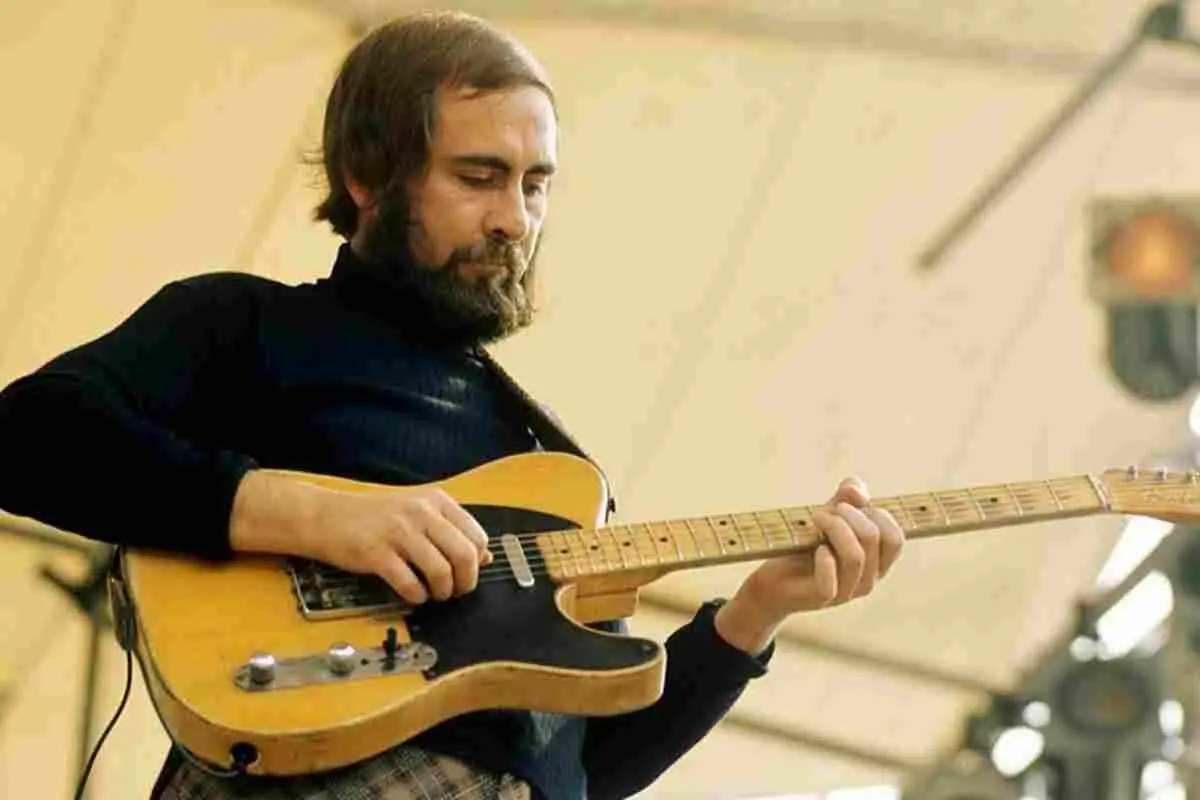
Roy Buchanan did not “discover” the Fender Telecaster. He did something more dangerous: he exposed what it could really do, then shamed the rest of us into chasing tone on purpose.
To understand why Buchanan still haunts Telecaster culture, you have to start with the instrument’s origin story. The Tele wasn’t designed by a virtuoso or a romantic. It was built by a guy who treated guitars like machinery and musicians like field testers.
Leo Fender’s Telecaster: born from problems, not poetry
Clarence Leon “Leo” Fender came out of radio repair and amplifier work, not a conservatory. His goal was to make an electric guitar that behaved reliably at stage volume, survived real life, and could be fixed quickly when it didn’t. That “engineer first” approach is why the Telecaster looks almost bluntly simple, and why it became the first commercially successful solid-body electric guitar via the Broadcaster/Telecaster line.
The solid body was a pragmatic answer to feedback and inconsistent resonance in hollow electrics. And the bolt-on neck was the kind of idea a repair-minded person loves: if it breaks, you replace the part instead of the whole instrument. Telecaster construction made the guitar modular decades before “modular” was a marketing buzzword.
The model arrived through a short identity crisis: early versions were called the Broadcaster, then briefly the “Nocaster,” before “Telecaster” stuck. It is one of the few instruments where the name change history is nearly as famous as the instrument itself.
“Existing guitars had big, hollow bodies. They had a tendency to squeal with electronic feedback when amplified.”
– Ed Mitchell, Classic Rock
Why the Tele became the blues-rock Swiss Army knife
The Telecaster’s basic recipe is deceptively brutal: a bright bridge pickup on a steel plate, a neck pickup that can mellow the attack, and controls that are actually usable mid-phrase. That hardware makes it unusually sensitive to picking position, touch, and volume knob changes, which is why it can jump from ice-pick sting to smoky warmth without changing guitars.
Blues players latched onto it because it does not hide sloppiness. The Tele tells the truth. If your vibrato is nervous, the guitar broadcasts it; if your dynamics are controlled, it rewards you with the kind of “talking” response most guitars only suggest. Buchanan understood that honesty and played into it.
The famous Telecaster myth that keeps being true
Plenty of listeners still assume early hard rock was dominated by humbuckers. But stories like Jimmy Page leaning on a Telecaster for the first Led Zeppelin record persist because they match what you hear: a sharp, fast transient, lots of string definition, and a cutting midrange that does not blur under compression in live performance.
Jeff Beck’s Yardbirds-era Tele work also helped cement the idea that the Tele is not a “country-only” tool. It can squeal, bark, and fake exotic textures when you treat the guitar like a control panel instead of a museum piece.
Roy Buchanan’s real contribution: he played the knobs, not just the notes
Buchanan’s genius was not simply speed or phrasing. It was his obsession with the Telecaster as a system: strings, pickup microphonics, amp breakup, and the constantly shifting gain structure created by his right hand and the guitar’s controls. A major museum collection even frames Fender electrics as designed objects with cultural significance, which helps explain why Buchanan’s “plain plank” became such a potent canvas for expression.
That “unknown” part is the tragedy. The “best” part is the blueprint he left behind for anyone willing to practice control, not just licks.
Telecaster + lap steel DNA: Buchanan pulled the past into the future
Leo Fender’s early business was deeply tied to amplifiers and lap steels, and the company’s design language carried over into the first solid bodies. Buchanan, whether consciously or intuitively, leaned into that heritage by using volume and tone control swells to suggest pedal steel phrasing: notes that bloom, cry, and then dissolve.
He didn’t need a volume pedal to fake “steel.” His pinkie could do it. The result is a kind of vocal glide that sounds impossible until you try it and realize it is mostly discipline and timing.
Pick attack as a special effect
Buchanan’s right hand is where the Tele becomes a monster. The bridge pickup hears everything: pick angle, nail contact, the exact moment a string slips off the plectrum. Buchanan turned that into a palette: feather-light harmonics one second, then a snap that feels like a snare drum crack the next.
Modern players call this “touch sensitivity” like it’s a product feature. Buchanan treated it like a moral code: if the guitar is reacting, your job is to control what it reacts to.
“Sweet Dreams”: the Telecaster as a human voice
If you want one recording that makes the case, it’s “Sweet Dreams.” The track is a masterclass in using the Tele’s volume control as an expressive tool, not an on-off switch. Buchanan fades notes in and out so smoothly it resembles a bowed instrument, then pivots into ferocious blues runs without changing the emotional temperature.
There is also a bigger lesson hidden in the drama: Buchanan shows that tone is not a lucky accident. You can engineer it in real time by controlling gain, picking intensity, and the guitar’s own output.
For readers who want to study the physical mechanics, detailed breakdowns of Buchanan’s playing approach make the “how” easier to visualize: watch how often his picking hand relaxes, and how frequently the guitar’s controls become part of the phrase rather than something adjusted between phrases.
Buchanan’s Telecaster tricks you can actually steal
Here is the practical part: you do not need boutique gear to borrow the Buchanan mindset. You need a Tele-style guitar, an amp that responds to volume changes, and the willingness to practice sounding good quietly.
1) Set your amp for the edge of breakup
Dial your amp so medium picking is just starting to grit. The Tele is brutally good at cleaning up when you roll the volume back, which means you get two or three gain “channels” without a pedalboard. The point is to make your volume knob a gain control.
2) Learn pinkie volume swells
Rest your picking-hand pinkie on the volume knob and practice swelling into a note after the pick attack. Start slow with single notes, then move to double-stops. You are training timing, not speed.
3) Fake “phasey” motion with picking position
Buchanan could imply movement by shifting where he picked between the bridge and neck positions, sometimes within the same lick. Practice a simple line and move your picking hand an inch at a time. The spectral change is the effect.
4) Make harmonics musical, not gimmicky
Natural and pinched harmonics on a Tele can be piercing. Buchanan made them feel like punctuation. Practice landing harmonics in time, at controlled volume, and resolve them like you would a sung note.
5) Practice “two gears” phrasing
Buchanan’s calling card is the instant switch from long, aching bends to fast runs. Take a 12-bar blues and force yourself to alternate: two bars of sustained bends, then two bars of tight 16th-note ideas. The skill is switching emotional modes without panicking.
Telecasters in museums: when a working guitar becomes cultural history
The Telecaster’s design significance is not just musician lore. It is literally cataloged by major institutions: The Metropolitan Museum of Art includes Fender electric guitars in its collection records, reflecting the instrument’s role as a designed object, not merely a tool.
That museum-level recognition matters for Buchanan’s story. He made the Tele sound bigger than its parts, but the parts themselves were already revolutionary: mass-producible, repairable, and intentionally plain. Buchanan proved that “plain” can be the perfect canvas.
The uncomfortable claim: Buchanan is the missing link between blues tradition and modern tone obsession
Blues guitar history often gets framed as a straight line from the Delta to Chicago to British rock to arena shredding. Buchanan scrambles that tidy narrative. He was a throwback and a futurist: channeling steel guitar expressiveness while treating electronic control as part of musicianship.
In other words, he foreshadowed the modern era where guitarists debate pickups, pots, and wiring like engineers. The difference is Buchanan did the debating with his hands.
He also occupies a strange cultural space. He is cited constantly by players, yet his name is still a blank stare for casual classic rock fans. Even his biography reads like a cult legend: a revered virtuoso whose mainstream breakthrough always seemed one step away, as profiles of his career and influence continue to underline.
Where Buchanan sits in the blues family tree
Buchanan belongs to the broader blues ecosystem that celebrates individual voice more than technical orthodoxy. The Blues Hall of Fame exists to document and preserve that lineage, giving context to artists whose influence exceeds their chart history.
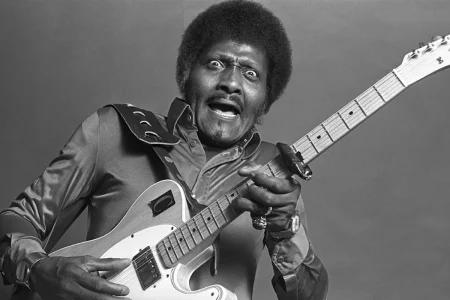
He was not the only Tele blues master. Muddy Waters, Albert Collins, and many others proved the guitar could cover gritty rhythm, cutting leads, and crystalline articulation. Buchanan’s special role is that he demonstrated the Tele can sound like it is crying, laughing, and snarling in the same bar.

A quick Telecaster-to-Buchanan cheat sheet
| Telecaster design element | What it enables | How Buchanan exploited it |
|---|---|---|
| Solid body | More volume before feedback, consistent attack | Controlled sustain and feedback as “notes,” not noise |
| Bolt-on neck | Repairability, stable setup, snappy response | Fast, articulate runs that keep note separation |
| Bridge pickup on steel plate | Bright bite, strong upper mids | Vocal-like sting, harmonic squeals, expressive pick attack |
| Simple controls | Real-time tone shaping | Volume swells, tone roll-offs, “steel” imitation mid-phrase |
Conclusion: the Telecaster didn’t make Roy Buchanan, Roy Buchanan made the Telecaster scary
Leo Fender built a rugged solution to the headaches of amplified guitars. Roy Buchanan took that solution and turned it into a high-wire act: an instrument that could whisper, howl, and mimic steel guitar sobs, all without losing the blunt truth of a Tele’s attack.
If you want to feel Buchanan’s impact, do not start by buying gear. Start by treating your Telecaster’s volume knob like it is part of your vocabulary. Buchanan’s real legacy is not a tone setting. It’s the idea that tone is a decision.