
Putting Willie Nelson, Robert Plant and Alison Krauss on the same bill is not a tour, it is a dare. The 2024 Outlaw Music Festival took that dare and turned it into a traveling roots summit that felt like a crash course in the last 60 years of American and British music.
For fans who grew up on Led Zeppelin vinyl, Highwaymen cassettes and Alison Krauss CDs, this was the year Outlaw stopped being just another summer package and started looking like a once-in-a-generation lineup.
How the 2024 Outlaw lineup came together
The Outlaw Music Festival started life in 2016 as a single-day event in Scranton, Pennsylvania, before mutating into a full-blown touring caravan that crisscrosses the States each summer. By 2024 it had become Willie Nelson’s preferred way to drag half his record collection out on the road with him.
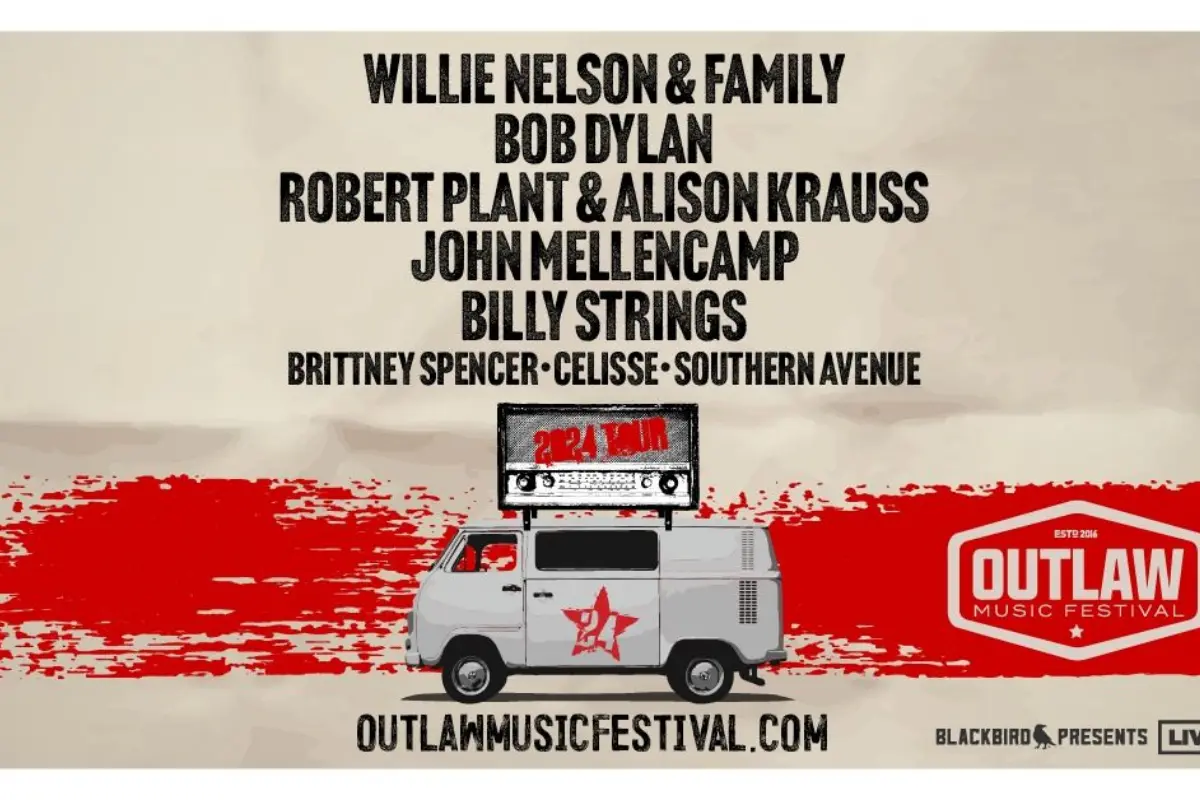
The 2024 edition ran from June 21 to September 17, with Willie Nelson & Family and Bob Dylan locked in as the non-negotiable core every night. Around that axis, the promoters built three distinct legs: the opening run with Robert Plant & Alison Krauss and Celisse, a West Coast swing with John Mellencamp and Brittney Spencer (plus a Billy Strings cameo), and a closing stretch that swapped in Southern Avenue.
| Dates (2024) | Key artists | Leg focus |
|---|---|---|
| Jun 21 – Jul 7 | Nelson & Family, Bob Dylan, Robert Plant & Alison Krauss, Celisse | Deep roots and harmony-heavy first leg |
| Jul 29 – Aug 10 | Nelson & Family, Dylan, John Mellencamp, Brittney Spencer (+ Billy Strings on Aug 10) | Heartland rock and jam-leaning West Coast run |
| Sep 6 – Sep 17 | Nelson & Family, Dylan, Mellencamp, Southern Avenue | Soul-tinged Midwestern and Rust Belt closer |
On paper it looked like an executive’s fantasy: country’s last great outlaw, rock’s most mythologized frontman and bluegrass’s quiet assassin, all parked on the same stage. In practice, the 2024 shows were far stranger and more musical than any nostalgia tour had a right to be.
Willie Nelson: the outlaw who will not retire
From Scranton to ringmaster-in-chief
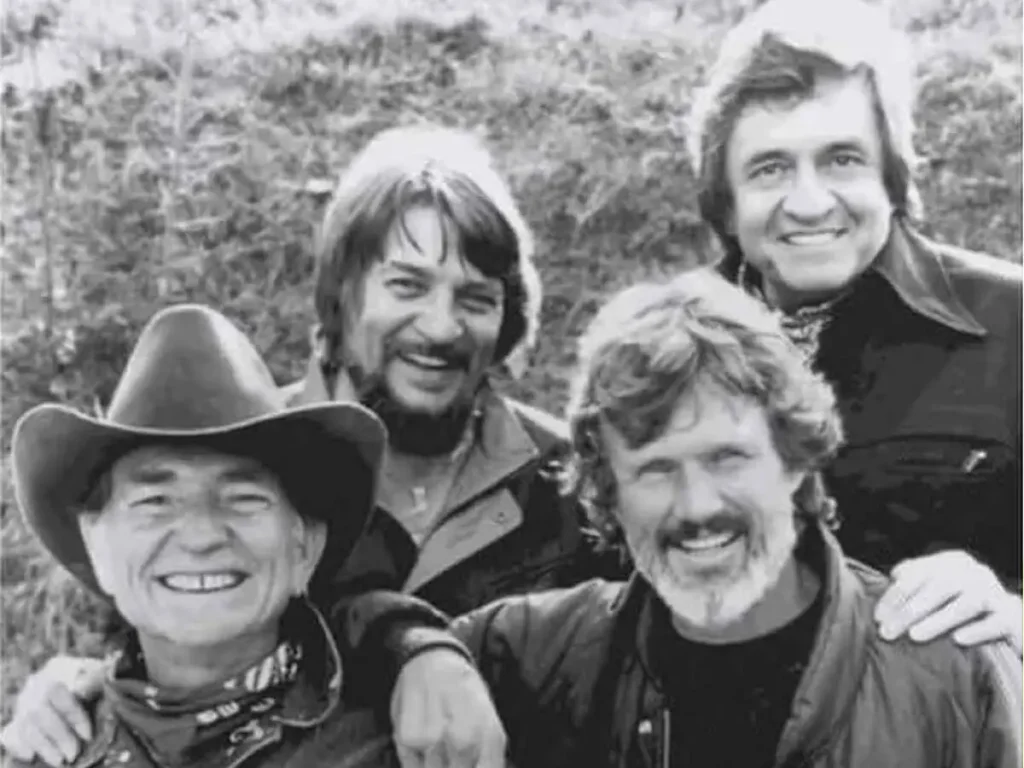
At this point Willie Nelson is less a headliner and more a genre in himself. Outlaw has effectively become his rolling home base, a modern answer to the Highwaymen years when he, Johnny Cash, Waylon Jennings and Kris Kristofferson pushed back against slick Nashville polish. Instead of three other outlaws, he now drags an entire rotating cast of roots royalty behind him.
Festival press materials leaned into that mythology, billing 2024 as the biggest and best Outlaw yet and repeatedly putting Willie’s name first, even above Dylan and Plant. It is his bus, his battered guitar Trigger, his behind-the-beat phrasing and his weed-scented, anti-authoritarian humor that set the tone for the whole night.
When Willie faltered and Lukas answered
Of course, being human sometimes gets in the way of being legendary. The tour’s opening night on June 21 in Alpharetta, Georgia, went ahead without Willie after doctors told the 91-year-old to rest for a few days. In an almost biblical piece of casting, his son Lukas Nelson and the Family Band stepped up to play a set heavy on Willie standards, including a devastating “Funny How Time Slips Away” that felt like a public passing of the torch.
For a lesser artist, missing the kickoff of a marquee tour might have signaled the beginning of the end. Instead, Willie’s brief absence only highlighted what makes Outlaw feel like a family business rather than a faceless brand. The music continues, the bloodline is intact, and when Willie walks back onstage later in the run, the cheers sound like relief as much as celebration.
Robert Plant & Alison Krauss: the unlikely heart of the first leg
From Zeppelin roar to Appalachian whisper
Robert Plant’s late career has been defined by a refusal to become his own tribute act, and nowhere is that more obvious than in his work with Alison Krauss. Their first album, “Raising Sand,” turned a rock god and a bluegrass prodigy into a moody Americana duo. Their follow up, “Raise the Roof,” released in 2021, deepened that formula with swampy rhythms and haunted harmonies that picked up three Grammy nominations.
By 2024 Plant and Krauss were already booked on their own Can’t Let Go North American tour, covering amphitheaters and festivals in support of that record. Folding a chunk of the Outlaw dates into their schedule turned them into the elegant saboteurs of the first leg: a duo that could make a field of classic rock fans fall silent with a fiddle line and a half-whispered harmony.
What they brought to an “outlaw” bill
On the Bethel Woods date in early July, the marquee read like a fantasy playlist: Willie Nelson & Family, Bob Dylan, Robert Plant & Alison Krauss and Celisse, with music starting in the late afternoon and stretching into the night. The contrast worked in Plant and Krauss’s favor. After Dylan’s piano-driven, constantly rearranged set, they walked on with almost no bombast, just a small band, close harmonies and songs that traded volume for tension.
Alison Krauss, holder of 27 Grammy Awards and long regarded as one of the Recording Academy’s most decorated artists, brought an almost surgical precision to the harmonies and fiddle lines. Plant leaned into the lower, grainier end of his range, more haunted storyteller than howling rock shaman. When they eased into material from “Raising Sand” and “Raise the Roof,” it felt less like a side project and more like the spiritual dark side of the outlaw universe: songs about doomed desire, bad choices and people who never quite get free.
The provocation here was subtle but real. For decades, “outlaw country” has meant leather, loud Telecasters and cheap beer. Plant and Krauss smuggled in a different kind of rebellion – the idea that the most dangerous thing you can do at a festival is play slowly and ask people to really listen.
How an Outlaw 2024 night actually felt
Timetable, pacing and comfort for grown-up fans
The 2024 routing leaned hard on big outdoor venues, but the pacing was friendly to fans with backs and bedtimes. At places like ONE Spokane Stadium, doors opened around 4 p.m., the first opener hit at 5:15 p.m., and Willie did not take the stage until close to 10 p.m., leaving generous changeover windows and breathing room between sets.
That schedule mattered for the core audience: listeners old enough to remember when “Blowin’ in the Wind” and “Whiskey River” were new. It meant time to sit, stretch, hit the restrooms and wander the so-called Outlaw village of food, drink and merch without missing entire sets.
Hershey, Bethel and the mood on the ground
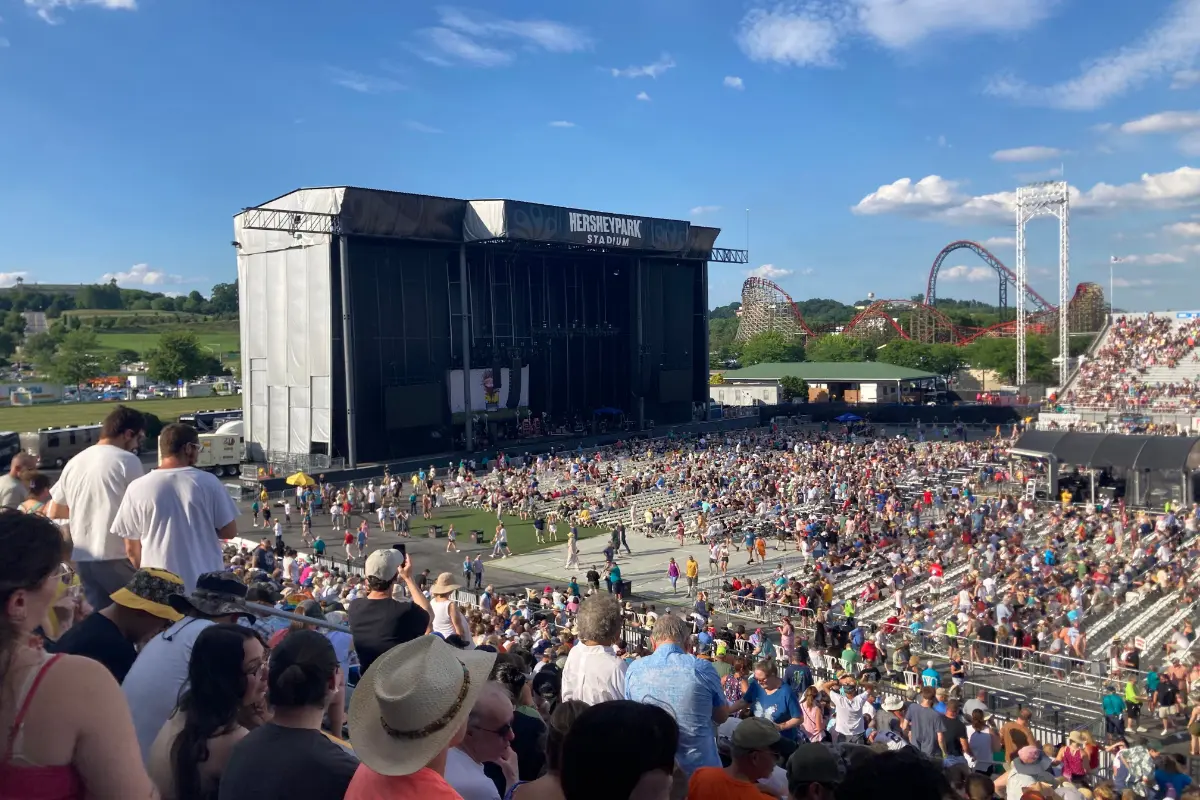
By the time the tour rolled into Hersheypark Stadium on July 7, the machine was humming. Local promotions hyped an all-star bill of Willie Nelson & Family, Bob Dylan, Robert Plant & Alison Krauss and Celisse, and repeated the party line that this would be the festival’s biggest year yet. In practical terms, that meant fuller parking lots, pricier VIP options and a crowd that mixed grizzled Deadheads, Stetson-wearing traditionalists and Zeppelin lifers in faded tour shirts.
Out on the lawn and in the cheap seats, though, the vibe stayed closer to a traveling family reunion than a corporate mega-fest. People traded stories about catching Willie in smoky clubs, seeing Zeppelin in arenas or discovering Krauss on the “O Brother, Where Art Thou?” soundtrack. The through line was simple: everyone in that lineup had once changed the rules of their genre, and in 2024 they were still refusing to behave.
Why this lineup mattered
Strip away the branding and the sponsorships and the Outlaw Music Festival is really a set of questions. How long can an artist like Willie Nelson keep touring without becoming a museum piece. What does it look like when Robert Plant refuses to spend his old age screaming “Black Dog” into the void. How does Alison Krauss, a bluegrass fiddle prodigy turned Grammy magnet, choose to spend her cultural capital.
…
In a way, this was the closest thing we have had to a modern Highwaymen tour: a roaming summit of veterans who have nothing left to prove and therefore feel free to take risks. If the original outlaw movement was about wresting control from Nashville executives, the 2024 Outlaw Music Festival was about wresting attention back from nostalgia and giving it to artists who are still changing shape.
The outlaw future after 2024
Outlaw will keep evolving. Lineups will shift, younger names will climb higher on the poster, and at some point Willie will step off the bus for the last time. When that happens, the 2024 run with Robert Plant and Alison Krauss is going to look like a hinge moment – the year the festival proved it could be more than a retirement victory lap.
If you care about the music that bridged honky tonks, British arenas and bluegrass halls, the message was loud and clear: the outlaws are older, but they are not done. They are just choosing subtler weapons.


