
Tell a rock singer his biggest riff is “wrong” and you might get an eye-roll. Tell Robert Plant, and you get a story.
When his daughter’s psychobilly-playing boyfriend insisted that one bar of “Black Dog” slipped into 5/4 by mistake, Plant snapped, dropped the needle on the record and barked, “Listen, midget, this is not a mistake, this shows you what we were capable of!” He used a word that reads ugly today, but the point was razor sharp: the band knew exactly how off-kilter they were making this thing.
That outburst is more than a funny granddad tale. It is a lens on how Led Zeppelin weaponized rhythm, feel and even their own “errors” to create one of rock’s most unnervingly brilliant tracks.
The monster that opens Led Zeppelin IV
“Black Dog” is the opening track on Zeppelin’s untitled fourth album, the record most fans just call Led Zeppelin IV, which went on to become one of rock’s biggest sellers. As a single it charted around the world and later landed in Rolling Stone’s 500 Greatest Songs list while Q magazine’s all-star panel crowned it the greatest guitar track of all time. Under the hood, it starts with a collage of detuned guitar sounds, then locks into a call-and-response between Plant’s a cappella lines and a riff whose phrase keeps turning back on itself, crossing implied time signatures in the process. On the studio take, the guitars even drift slightly out of sync with John Bonham’s drums around the 40-second mark, a tiny misalignment producers have described as part of the song’s character rather than a flaw.
In other words, the thing your brain hears as “wrong” is baked into its DNA. Zeppelin led with this track for a reason: it announced that hard rock could be both filthy and fiercely sophisticated.
The John Paul Jones riff that wanted to break time
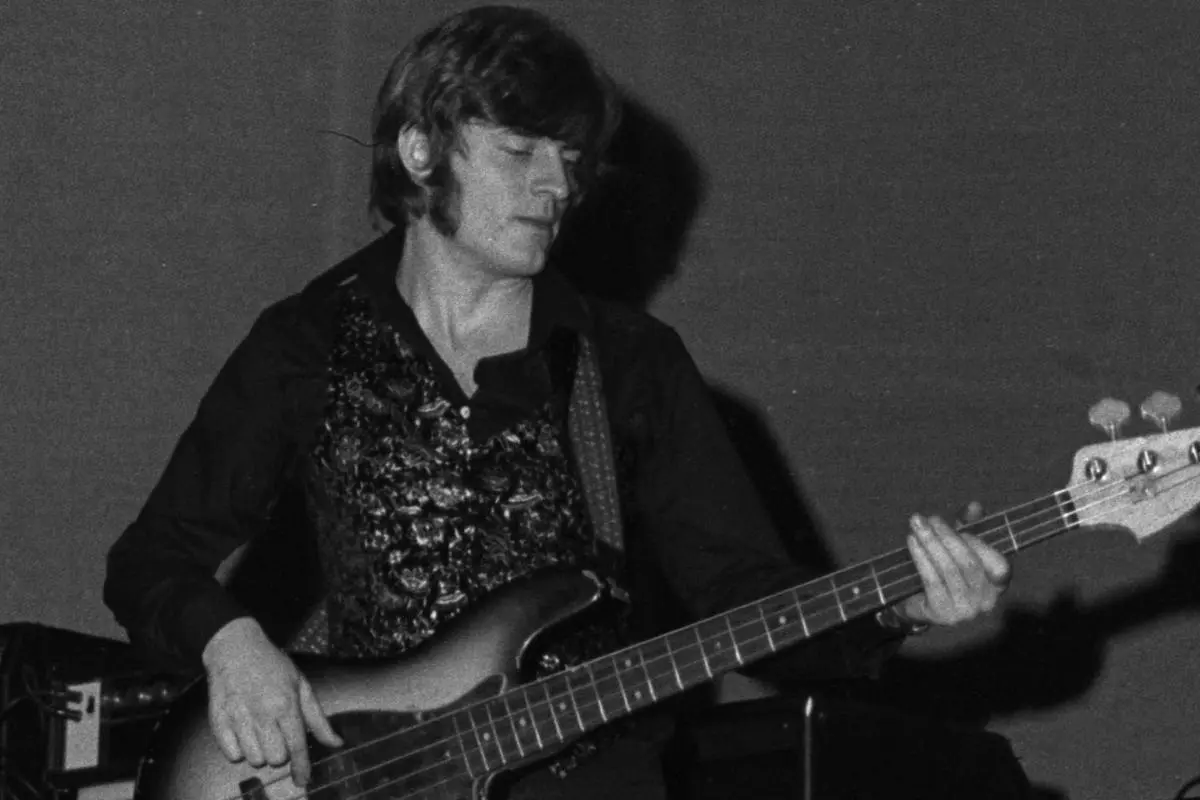
Here is the first shocker for casual fans: that iconic riff is not Jimmy Page’s. It came from bassist and multi-instrumentalist John Paul Jones, the quiet architect in the corner who could out-theory almost anyone in the room. Jones has said he wanted a rolling blues line that behaved like a looped riff in Howlin’ Wolf’s “Smokestack Lightning” or Muddy Waters-style electric blues, something that never quite resolved where you think it will.
He sketched it out on the back of a train ticket on the way home from rehearsal, using numbers and note values instead of manuscript paper. Initially Jones conceived the line in a hyper-awkward 3/16 pulse; the band tried it that way and nobody could stay on top of it for long. The solution was evil and elegant: slow the riff down, keep Bonham hammering a blunt 4/4 under it, and let the phrase length drift across the bar line so it feels like the ground is shifting even while the drummer refuses to budge.
How the groove tricks your ear
If you are from the 50s and 60s R&B school, your instinct is to clap on 2 and 4 and call it a day. “Black Dog” dares you to do exactly that, then pulls the rug away at the turnaround. The drums stay square; the riff wanders.
| Element | What it feels like | What is really happening |
|---|---|---|
| Bonham’s drums | Solid 4/4 rock backbeat | Almost unbroken four-to-the-bar, your only true grid |
| Main riff | A bar that “comes in early” | Groups of uneven beats that spill over the bar line before looping |
| Plant’s vocals | Free, shouty call-and-response | Drop in after the riff cycle lands back on Bonham’s 1 |
| Turnaround | A sudden stumble or skipped beat | An extra fragment tagged onto the riff so the next cycle starts in a new place |
The genius is that you can survive the whole tune simply by locking onto Bonham’s snare. The riff sounds like it is miscounted, but the drums are stubbornly square. That tension – rock-solid versus slithering – is what makes the track feel permanently on the verge of collapse.
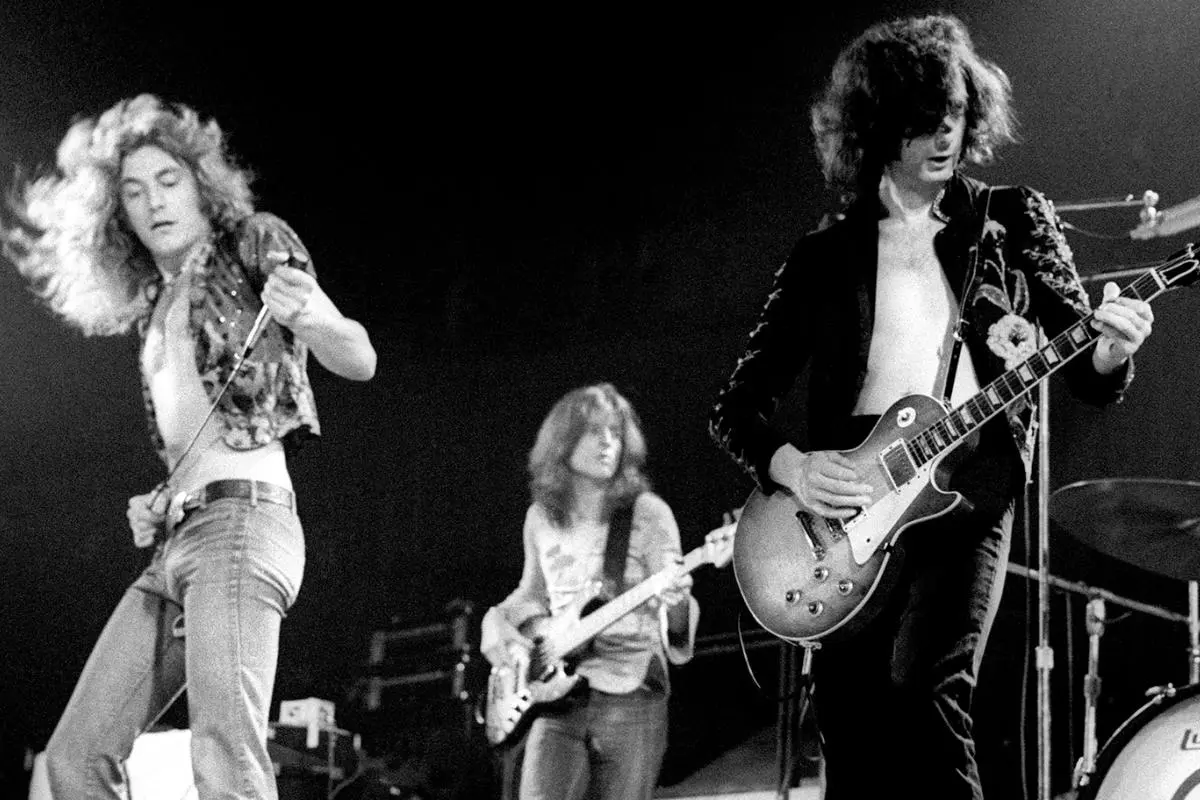
“Wrong” on purpose: rhythmic illusions and happy accidents
Jones has been quoted as wanting a winding riff and rhythm changes that people could not easily “groove” or dance to, a kind of musical trap for anyone expecting straight bar-band boogie. One widely repeated story even claims the shifting pulse was partly designed to frustrate cover bands, a petty bit of revenge from musicians who were sick of hearing their ideas flattened out for Friday-night crowds. True or not, it certainly worked: ask any pub band that has train-wrecked that turnaround.
A detailed breakdown of the song’s structure notes that the studio version builds its lurching feel by setting relatively simple drum patterns against guitar and bass figures that lengthen and contract, with the famous 5/4-flavored variation quietly removed from most live versions so Plant’s a cappella lines could return cleanly to the beat. Turn the studio recording up and you can hear Bonham click his sticks together before the riff slams back in, cueing the band like a field marshal at the front line. The guitar solo, meanwhile, is not some single inspired take but a composite of four overdubbed Gibson Les Paul phrases, further proof that even the apparent chaos in “Black Dog” is carefully engineered.
So when Plant snarls that it is “not a mistake,” he is not just being defensive. He is calling out the laziness of assuming that anything uncomfortable must be accidental.
Jimmy Page’s sonic sabotage
Then there is that guitar tone: thick, grainy, almost like an early analog synth snarling through a broken radio. Page did not get it from simply cranking a Marshall stack. Instead, he ran his Number 1 Les Paul through a direct box straight into a console mic channel, abusing the desk’s mic preamp for distortion rather than relying solely on an amp.
From there, the signal hit a pair of Urei 1176 compressors chained in series, tightening and flattening the sound into that metallic roar, and he triple-tracked the part to make it sound like a small army of guitars marching in lockstep. Page later remarked that, listening back, the guitars almost sounded like a synthesizer, which in the early 70s was practically a dirty word in hard rock. The song’s title itself came from a black Labrador that roamed the grounds of Headley Grange where they were recording, its nocturnal adventures inspiring Plant’s lust-soaked lyric and giving a face to the track’s feral personality.
Put bluntly, “Black Dog” is sonically hostile in all the right ways. It is the opposite of polite hi-fi rock; it is designed to punch through AM radios, cheap stereos and, yes, your memory.
Plant, still dismantling his own beast
Decades after that first studio take, Plant is still pulling “Black Dog” apart. At New Orleans’ Preservation Hall, he stunned a tiny crowd by dropping in after a jazz festival set and delivering a slow, brass-soaked version that turned the tune into a smoky, back-alley shuffle instead of a hard-rock lurch. The call-and-response remained, but now it danced with horns and second-line swing instead of Bonham’s hammering backbeat.
That performance was a reminder that Plant understands just how much rhythmic and emotional information lives inside this song. You do not casually reharmonize and re-groove a tune like “Black Dog” unless you trust its bones completely. In a way, he was proving his point all over again to a new generation: this was never an accident; it was a laboratory.
Conclusion: not a mistake, a flex
For listeners raised on straight 12-bar blues and early rock and roll, “Black Dog” can still feel like it is glitching. The drums say one thing, the riff insists on another, and your body spends four minutes trying to decide which one to trust. That discomfort is the whole thrill.
Robert Plant’s furious defense of the song was not just ego. It was pride in a band that was willing to let tiny misalignments, awkward phrase lengths and mutant guitar tones reach millions of ears, confident that the groove was strong enough to survive. “Black Dog” is rock music that actually fights back: against lazy cover bands, against background-noise listening, and against the idea that heavy music has to be dumb.
So the next time the turnaround makes you stumble, do what Bonham did. Ignore the fireworks, count the four, and realize that the “wrong” bar is exactly where Led Zeppelin wanted you to lose your footing.