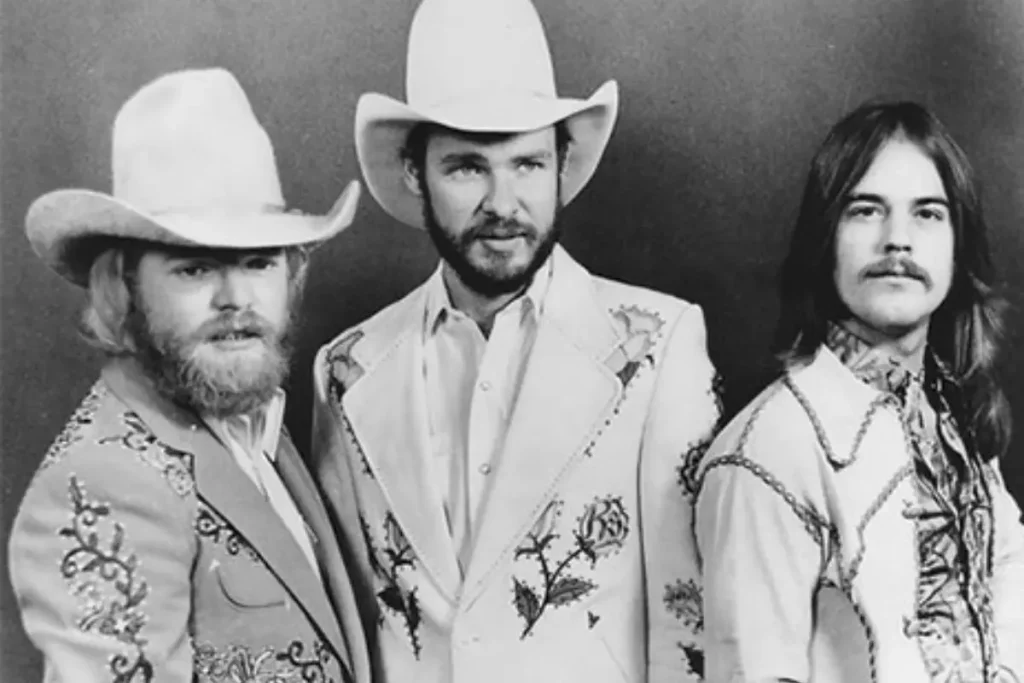
ZZ Top didn’t just “evolve” in the early 1980s. They pulled off something closer to a controlled demolition: take a battle-tested Texas blues-rock machine, vanish long enough for the world to miss it, then rebuild it with drum machines, synth textures, and a visual identity so bold it felt like brand-new hardware.
The result was Eliminator (1983), a record that didn’t abandon the blues so much as weaponize it for the MTV era. The grooves got tighter, the tones got shinier, and the band’s image became instantly recognizable in the living rooms of millions.
The late ’70s grind: when touring becomes the lifestyle
By the end of the 1970s, ZZ Top had already done the hard part: they built credibility the old-school way. Albums, radio, relentless roadwork, and a reputation as a no-nonsense live band that could turn boogie riffs into a physical event.
But there’s a hidden cost to that kind of momentum. Bands don’t always break up because they hate each other; sometimes they just run out of oxygen.
“Dusty Hill… took a break from the band in 1977 and was replaced… for part of their tour that year.” – The New York Times
That detail matters because it shows the pressure was real before the “big comeback” story even begins. When you hear fans describe ZZ Top “disappearing,” it wasn’t a publicity stunt; it was a group recalibrating after years of hard mileage.
Going quiet on purpose: the break that reset their future
After heavy touring and a decade of living like a working band, ZZ Top stepped away for an extended period. In rock terms, that’s a dangerous move: silence can kill a career faster than a bad album.
But it can also be the smartest thing you do, because it forces a question most veterans avoid: “What does our band sound like now?”
ZZ Top came back in an era where rock was being re-lit by new technology and new gatekeepers. MTV had launched and started turning songs into characters you could recognize in seconds.
History is blunt about the timing: MTV went live in 1981, changing how audiences discovered music and how labels marketed it.
Eliminator’s core idea: keep the blues, upgrade the chassis
Eliminator didn’t succeed because it became “new wave” or tried to cosplay as synth-pop. The band kept the fundamental ZZ Top DNA: short, punchy riffs; simple, nasty hooks; lyrics that wink instead of preach.
What changed was the delivery system. The drums got more programmed and metronomic, and the overall sound leaned into modern studio sheen. On paper, that can read like betrayal. In practice, it made the music hit harder on radio and, crucially, on television.
If you want the factual anchor: Eliminator is the 1983 album that delivered “Gimme All Your Lovin’,” “Sharp Dressed Man,” and “Legs.”
What the “synth-blues” move actually did
- Made the groove more repeatable: Machine-stable rhythms translate well to video editing and radio programming.
- Created space for guitar tone to be iconic: A tight, consistent backing track lets a single guitar part become the logo.
- Modernized without sterilizing: The riffs still snarl, but the production reads as “current” for the era.
The videos: turning three guys into a pop-culture symbol
Plenty of rock bands had good songs in 1983. Fewer had an instantly readable “thing.” ZZ Top’s Eliminator-era videos didn’t just promote tracks; they built a universe: the hot rod, the humor, the cool factor, the stylized minimalism, and the band’s deadpan presence.
Those videos became a delivery mechanism for the band’s personality. You didn’t need to know Texas blues history to get it. You just needed a TV and five minutes.
Want proof of how central the visuals are? The Eliminator-era video run is still treated as the defining artifact of that cycle.
And “Sharp Dressed Man” is just as tied to its visual identity and narrative punch.
Why MTV loved this version of ZZ Top
MTV programming rewarded clarity. A viewer flipping channels needed to recognize a song fast, and ZZ Top’s approach delivered:
- A bold silhouette: hats, beards, sunglasses, and that unbothered posture.
- A recurring object: the Eliminator car as a literal moving logo.
- Mini-stories: quick plots that fit the song’s hook-and-release structure.
It wasn’t “selling out” so much as understanding the new language of rock fame. They didn’t beg MTV for credibility; they gave MTV a product it could loop all day.
The sound design: a practical breakdown of the Eliminator formula
If you’re a musician, producer, or gear nerd, the most useful way to talk about Eliminator is not “they used synths.” It’s how the parts are arranged to feel inevitable.
1) The drum feel: less swagger, more propulsion
Classic ZZ Top grooves were loose in the best way: human push-and-pull, barroom swing, and a live-wire pocket. Eliminator leans toward a locked pulse that keeps the riffs marching forward.
That shift makes choruses land like a stomp instead of a sway. It also makes the music cut through small speakers and TV mixes.
2) The synth textures: not the star, the glue
The synth elements on Eliminator tend to function like lighting in a photograph. You notice them more when they’re removed. They widen the soundstage and underline the rhythmic grid.
When fans complain about “too much electronics,” they’re often reacting to the discipline of the record, not a literal keyboard takeover.
3) The guitar: riff as branding
Even with modern production, the guitar work stays front-and-center. The riffs are short enough to stick and sharp enough to be identifiable from another room. That’s not just songwriting; it’s strategy.
Think of it like this: on MTV, your riff is the sonic equivalent of a logo. If it can’t be recognized instantly, it’s not doing the job.
Did they “betray” the blues? The argument, and the counterpunch
Here’s the edgy claim: a lot of “authenticity” talk is just nostalgia dressed up as morality. The blues is full of reinvention. Electric blues was once accused of being too loud and too modern. Rock itself was once accused of being a corrupting simplification.
ZZ Top didn’t replace the blues with machines. They used machines to deliver blues-based rock to a new audience that was being trained to consume music visually and repetitively.
“They never lost their sense of humor, and they never lost the boogie.” – American Masters (PBS)
That’s the key. The wink stayed. The groove stayed. What changed was the frame around it.
Why Eliminator expanded their audience so violently
Eliminator didn’t just do well; it turned ZZ Top into a cross-generational, cross-format act. It worked on rock radio, it worked on MTV, and it worked for people who cared more about hooks than heritage.
And because the imagery was so cleanly packaged, the band became easy to remember and easy to imitate. That’s how pop culture works: repetition plus a strong visual symbol.
Even decades later, the album’s presence is so fixed that it’s regularly reissued and revisited as a major catalog title – you can see the longevity in how the record’s “Legs” video continues to circulate as an official release.
What musicians can steal from ZZ Top’s comeback (without copying it)
This story isn’t only rock history. It’s a practical playbook for any artist trying to survive a format change, whether that’s radio to MTV or MTV to streaming.
Practical lessons
| ZZ Top’s move | What it means for artists now |
|---|---|
| Take a real break | Stop the treadmill long enough to redesign your sound and brand. |
| Keep the core identity | Change the production, not the personality. |
| Use new tech as a delivery tool | Don’t “go modern” for trend points; go modern to communicate clearer. |
| Build a visual world | In a visual-first ecosystem, your aesthetic is part of the song. |
If you want an accessible recap of why Eliminator hit so hard in its era, a Blues Foundation overview of the band’s legacy is a useful snapshot of the broader trajectory.
The myth and the reality: “went into hiding” is catchy, but it understates the craft
It’s tempting to frame ZZ Top’s early 1980s return as a magic trick: disappear, reappear, dominate. But the comeback worked because they did the unglamorous part well.
They adapted their sound to a new medium without sanding off their edges. They embraced stylization without becoming a cartoon of themselves. And they proved that a blues-based band could thrive in a future that looked suspiciously like a machine.
Put bluntly: Eliminator is what happens when a band treats technology like a guitar pedal, not a religion.
Conclusion: the most Texas thing they ever did was change
ZZ Top’s Eliminator era is often filed under “’80s excess,” but that misses the point. This was a survival move executed with taste, swagger, and a ruthless understanding of how people were starting to watch music, not just hear it.
They didn’t become less authentic. They became more efficient at being ZZ Top, and MTV did the rest.