Tom Waits has spent a career proving a point that makes gear-obsessed musicians squirm: the song is the machine. Not your compressor, not your boutique preamp, not your plugin folder that looks like a hoarder’s garage. Waits put it bluntly: “Well, music is emotional, once you transcend the equipment.”
And then he goes further, turning songwriting into a kind of urban birdwatching: sit at the piano, keep the window open, and make yourself “an interesting place for them to land like birds or insects”. It’s mystical, sure, but it’s also practical: he’s describing attention, repetition, and momentum, not magic.
The two Waits quotes that should offend your inner gear collector
The first quote is a dare. “Transcend the equipment” doesn’t mean equipment is useless; it means equipment is not the point. The second quote is a method: treat songs like living things with habits, and build a habitat.
“Well, music is emotional, once you transcend the equipment.”
Tom Waits, quoted in The Paris Review
“I like sitting at the piano… If you want to catch songs you gotta start thinking like one, and making yourself an interesting place for them to land…”
Tom Waits, quoted in The Paris Review
Waits is not anti-technology. He’s anti-distraction. The same man who romanticizes a piano by the window also built records out of clanks, rattles, marimbas, pump organs, megaphones, and junkyard percussion. The difference is intent: he uses sound as narrative, not decoration.
What “transcend the equipment” actually means (in musician language)
Think of it as three layers. Most players get stuck at layer one, which is why so much modern music sounds expensive and emotionally broke.
Layer 1: Gear as identity
At this stage, your tone becomes your personality. You chase “the right” mic the way other people chase a new haircut. It feels productive, but it’s mostly shopping.
Layer 2: Gear as a tool
This is the grown-up stage: you choose equipment because it solves a problem. You pick a darker piano sound because the lyric is bruised, not because a forum told you it’s “warm.”
Layer 3: Gear disappears
This is what Waits is pointing at. The listener doesn’t hear your signal chain; they hear dread, tenderness, humor, menace, regret. If your production choices don’t serve those feelings, they’re just noise with a receipt attached.
Waits’ piano-by-the-window metaphor: a practical songwriting system
Waits’ image is cinematic: ideas drift in, pass through you, and leave transformed. Underneath the poetry is a workflow that older pros recognize immediately: show up, listen hard, and keep a consistent “landing zone” where fragments can become songs.
Step 1: Choose a “song-catching” instrument
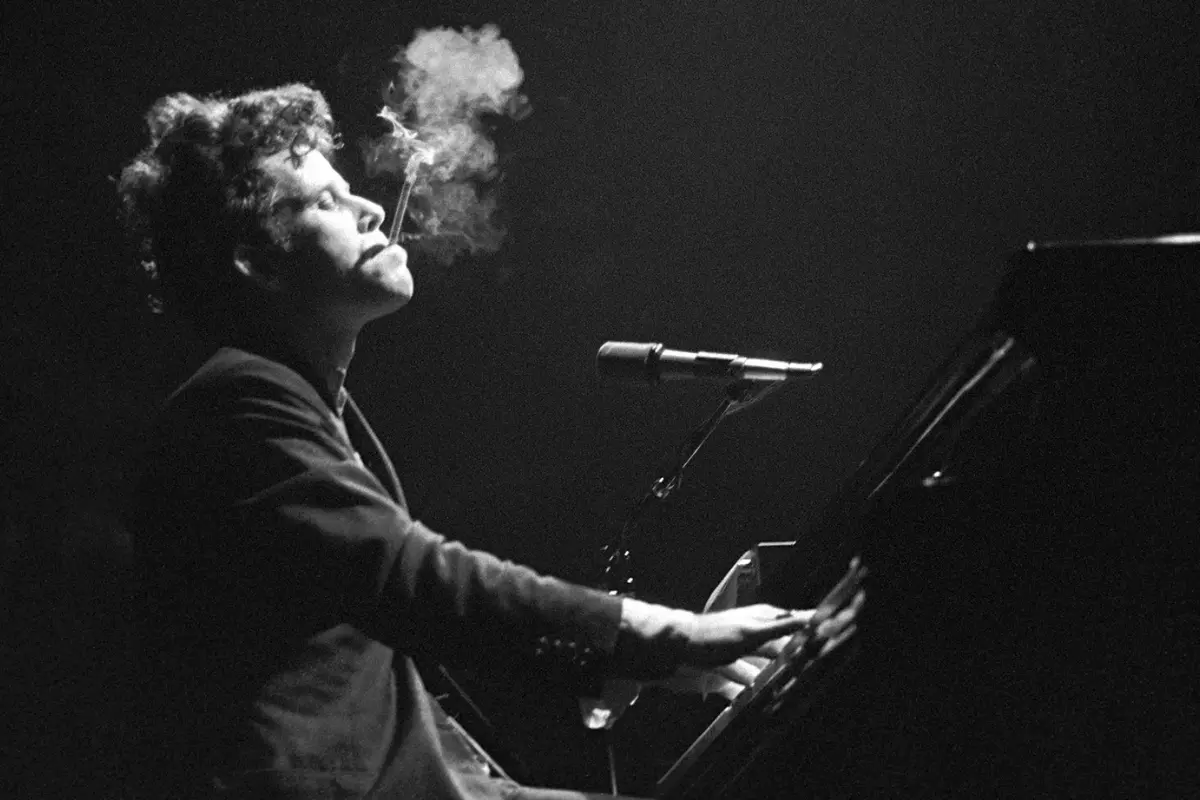
Waits mentions the piano because it’s a whole band under your fingers: bass, harmony, rhythm, melody. Many of his eras still orbit the piano, even when the arrangements turn feral.
But you can substitute: nylon-string guitar, a cheap organ, even a voice memo over a single drone. The key is that it’s immediate and forgiving.
Step 2: Open the window (aka: feed your imagination)
“Things coming in through the window” is not just weather and traffic. It’s books, street talk, old movies, radio preachers, overheard arguments, the sound of a radiator, the rhythm of a train. Waits’ catalog is packed with characters and environments, and his biographies and critical profiles routinely note how central storytelling is to his persona and writing.
Step 3: Make yourself an interesting place for songs to land
This is the part most people skip because it’s not glamorous. “Interesting” means you have inputs (life), skills (craft), and a habit (practice). It also means you tolerate being bored long enough for something good to show up.
- Keep a running “images” list: odd phrases, metaphors, character names.
- Keep a “sound” list: textures you want to hear (tinny, foggy, metallic, whispered).
- Keep a “motion” list: verbs that suggest rhythm (stagger, grind, float, crawl).
Step 4: Use the hot-dog-line rule (momentum beats inspiration)
Waits’ line analogy is dead serious: once you get two or three tunes going, more tunes arrive. That’s not supernatural. That’s your brain switching into a pattern-generating mode, where unfinished ideas connect and recombine.
You can see this “project gravity” across his discography: distinct periods where a sound-world forms and then attracts related songs, from the early barroom singer-songwriter run to the abrasive theater-and-junk-percussion years. Career profiles like this sense of evolving phases across his discography, even when they argue with the results.
Why Tom Waits still cares about equipment (even while telling you to forget it)
Here’s the uncomfortable truth: “emotion over equipment” is not a permission slip to sound sloppy. Waits often sounds rough, but rough is not the same as careless. His records are designed.
A good way to understand this is to separate fidelity from intention. High fidelity captures detail. Intention decides which details belong in the story.
| Production Choice | Gear-Obsessed Reason | Waits-Style Reason |
|---|---|---|
| Distorted vocal | “It sounds cool.” | “The narrator is cracked and cornered.” |
| Out-of-tune piano | “Lo-fi vibe.” | “The room is older than the character.” |
| Odd percussion | “Unique texture.” | “The rhythm should feel like machinery, not a drummer.” |
His most celebrated mid-career albums are often described as a pivot into more experimental instrumentation and studio-as-stagecraft. The critical shorthand varies, but the consensus is that the sound choices are inseparable from the songwriting, as summarized by broad overviews of his stylistic pivot into more experimental work.
Edgy claim: gear culture can be emotional avoidance
Some players hide behind tone because tone doesn’t ask you to confess anything. Lyrics do. Melodies do. A bare vocal over piano does. If the song is weak, the newest pedal is a socially acceptable way to keep working without risking embarrassment.
Waits’ approach is the opposite. He builds a world and then populates it with people who are too broke, too weird, too lonely, too stubborn to be “marketable.” That’s why he’s not a background-music artist; he’s a writer with chords.
Even mainstream outlets that don’t always “get” him still treat his career as singular, with an identity rooted in character, voice, and atmosphere rather than conventional polish.
How to apply the Waits method this week (without copying Tom Waits)
You don’t need to sound like a gravel mixer to learn from him. You need to adopt his priorities: feeling first, craft second, gear third.
1) Write on an instrument that won’t let you hide
Piano is brutal in a good way. Your harmony is exposed and your timing is obvious. If you don’t have one, use a simple keyboard patch and don’t change it for a month.
2) Limit your palette on purpose
Pick one vocal sound, one main instrument, one secondary texture. Constraint forces decisions, and decisions create personality. If you need a precedent, look at how distinct sonic “rules” define different Waits records in collections of album-by-album notes and background.
3) Start a “song line”: capture fragments daily
Make a ritual: 5 minutes of nonsense lyrics, 5 minutes of chord looping, 5 minutes of melody hunting. The goal is quantity, not quality, until momentum arrives.
4) Finish ugly drafts
Waits’ hot-dog-line wisdom implies completion attracts completion. Finish a verse and chorus even if they’re wrong. Wrong endings teach you what the right song was trying to be.
5) Choose production moves that explain the narrator
Before you add anything, write one sentence: “This singer is ________.” Then make every sound support that. If your sentence is vague, your track will be, too.
A quick tour of “emotion over equipment” across key albums
Waits’ catalog is huge, but a few signposts show the philosophy in action. These aren’t “best of” picks so much as “listen for the principle” picks.
- Closing Time: early, song-forward writing where space and restraint do the heavy lifting in his early-era spotlight and retrospectives.
- Small Change: piano-and-barroom noir where phrasing and character sell the emotion more than pristine sound.
- Swordfishtrombones: a hard turn into percussive, theatrical textures that still function as songwriting, not sound design.
- Rain Dogs: the “world-building” peak for many fans, where groove, imagery, and odd instrumentation cohere.
- Bone Machine: abrasive timbres used as emotional weather, not studio flexing.
- Mule Variations: a later-career reminder that raw feeling and mature craft age better than trendy sonics.
Why this matters to older musicians (and anyone tired of modern music)
If you grew up when records were fewer, pricier, and harder to make, Waits’ advice feels familiar: you had to mean it because you couldn’t endlessly revise it. Modern tools are amazing, but they also enable infinite second-guessing.
The irony is that “transcending equipment” is easier today than ever because decent recording is cheap. The hard part is still the same: making a listener feel something real, on purpose, in time.
Conclusion: become the window, not the warehouse
Tom Waits’ genius is not that he ignores gear. It’s that he refuses to worship it. The gear is the paint; the emotion is the story.
So sit down, open the window, and make yourself interesting enough for a song to land. Then finish it, even if it’s ugly. When there’s a line outside your little hot-dog stand, more customers show up.