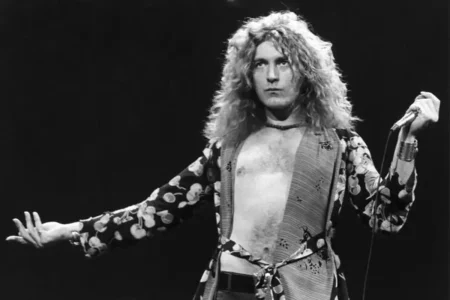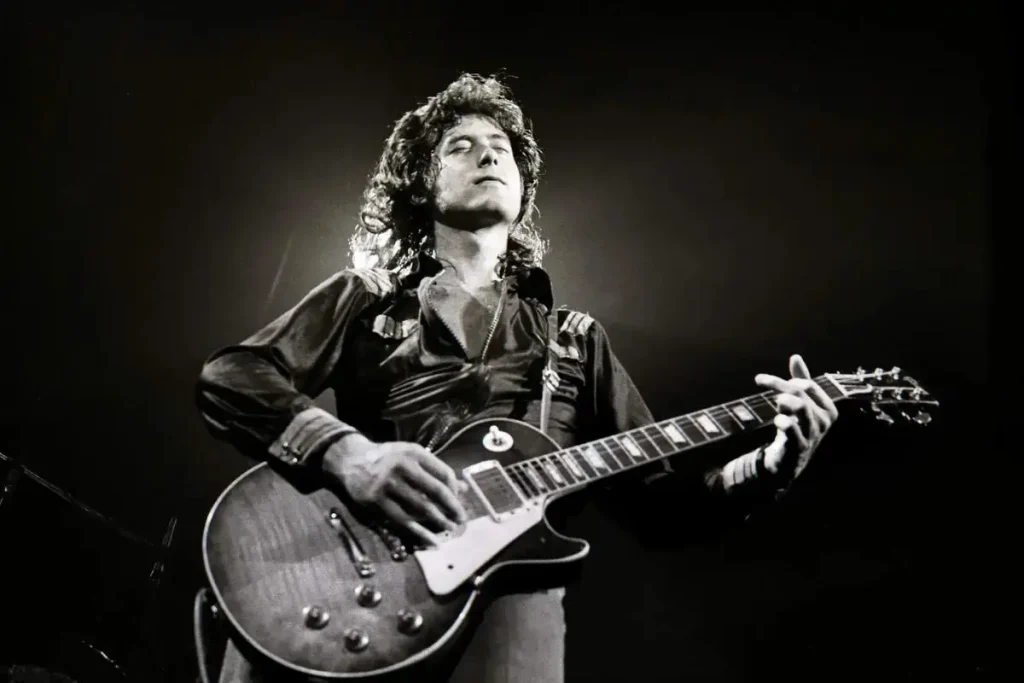
Jimmy Page is the rare rock figure who seems to have hacked the system twice: first as a teenage guitar obsessive who turned studio discipline into art, and then as the musical architect of Led Zeppelin, a band that treated volume, groove, and mystery like sacred tools. Born January 9, 1944 in Heston, England, Page has been credited as a founder of modern rock guitar language: the riff as a hook, the solo as a story, and the studio as an instrument.
But the most interesting thing about Page is not that he played fast or loud. It is that he built worlds. Zeppelin’s music feels inevitable now, yet it was assembled with a producer’s brain, a session player’s efficiency, and a performer’s appetite for danger.
From West London kid to “first-call” session weapon
Page’s early years are the unglamorous origin story that explains the later precision: a young guitarist who learned parts quickly, served the song, and stacked takes until the record sounded bigger than the room. By the mid-1960s he was deeply embedded in the British recording scene, playing on a wide range of sessions while developing the touch and timing that would later make Zeppelin’s riffs feel like they are pushing and pulling time itself.
Session work also trained Page to think like an arranger. When you have to fit into everyone else’s music, you learn what actually matters: dynamics, space, and tone choices that tell the listener where to look.
The Yardbirds: the bridge between blues tradition and sonic ambition
Page’s tenure with The Yardbirds is often treated as a footnote, but it is more like a laboratory. The band sat at the crossroads of British blues and psychedelic experimentation, and Page’s presence pushed the music toward heavier textures and longer forms.
Just as importantly, The Yardbirds era taught Page how quickly bands can implode when money, ego, and momentum collide. When he later formed Led Zeppelin, he ran it like a high-performance machine, not a casual club band that accidentally got famous.
Building Led Zeppelin: a controlled detonation
In 1968, Page assembled the lineup that would become Led Zeppelin: vocalist Robert Plant, bassist-keyboardist John Paul Jones, and drummer John Bonham. If you only know the mythology, it sounds like fate. In reality, it was recruitment, chemistry testing, and ruthless clarity about what the band needed to be.
The official Led Zeppelin timeline captures how quickly that machine began moving once the band formed, with releases and touring stacking up at a pace that would break most modern artists.
Why their “blend” mattered
Plenty of late-60s bands mixed blues and rock. Zeppelin’s difference was how decisively they fused blues feel with folk modality, hard-rock riff craft, and a studio sheen that made the heaviness sound cinematic rather than muddy.
Rolling Stone later ranked Led Zeppelin among the greatest artists in popular music, a recognition that reflects how their catalog became a reference point for hard rock, metal, and even modern alternative bands.
Page’s guitar style: riffs, weird tunings, and controlled chaos
Calling Page an “influential guitarist” is like calling a cathedral an “interesting building.” His style is a full design philosophy. It is less about athleticism and more about how notes behave: how long they ring, how they smear into each other, and how rhythm guitar can be as memorable as a chorus.
The riff as the main character
Page’s signature is the riff that feels carved out of wood: “Whole Lotta Love,” “Black Dog,” “The Ocean,” “Kashmir.” Those are not just hooks; they are structural beams. In an interview, Page framed his approach as a need to “make it intriguing”, which fits the way his riffs pull you forward rather than simply sit in a groove.
Acoustic-electric tension: the Zeppelin superpower
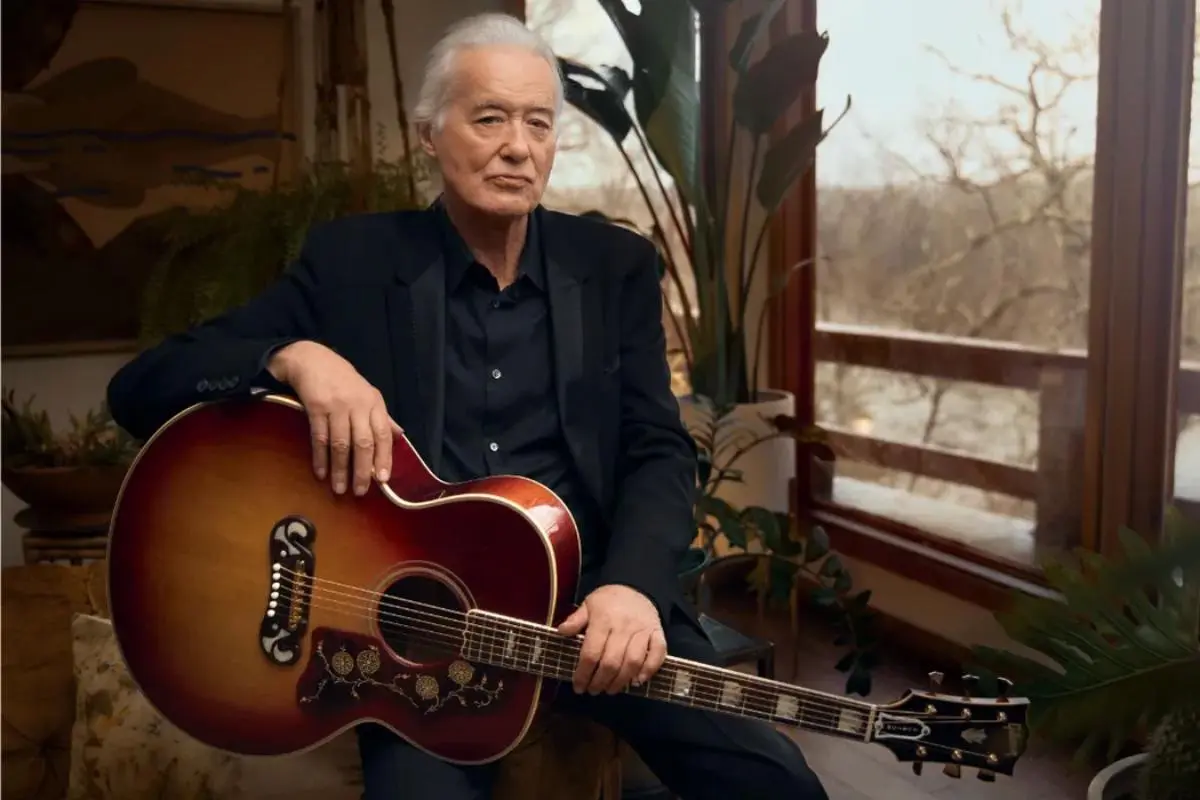
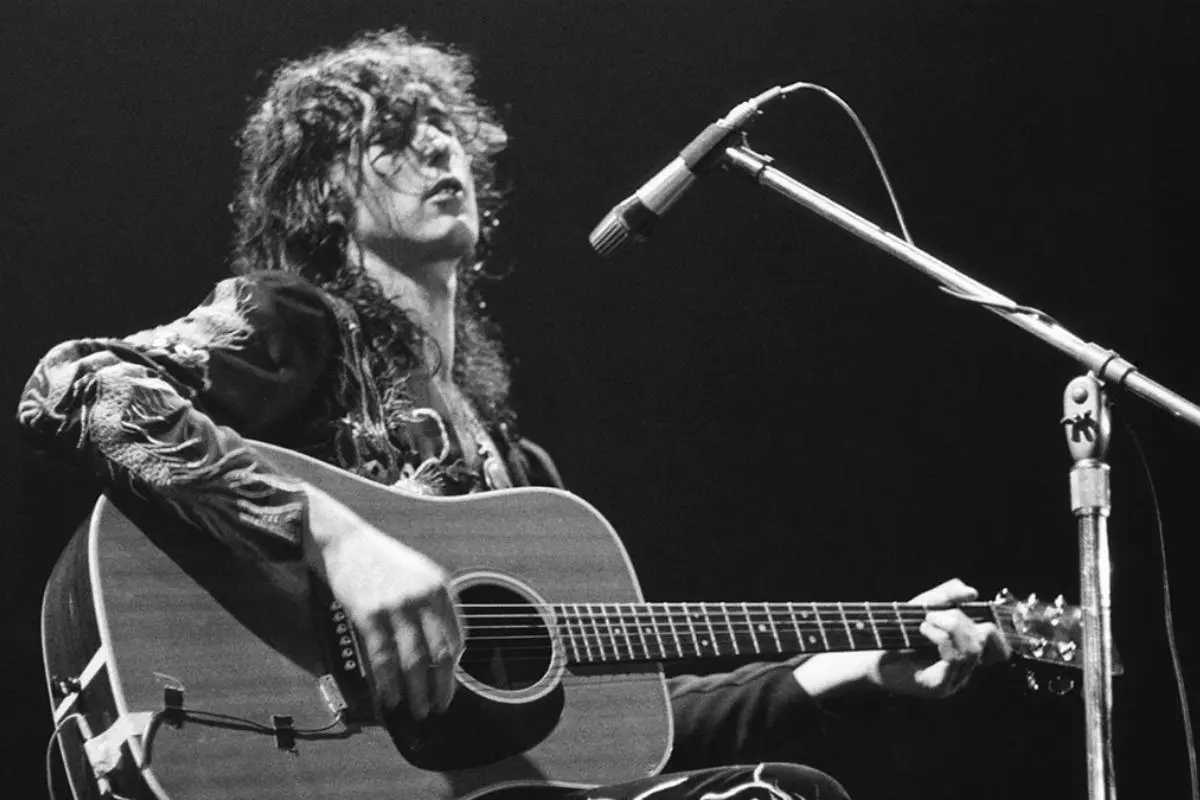
Part of Page’s genius is that he never treated acoustic guitar as a soft interlude. In Zeppelin’s hands, acoustic parts can be hypnotic, even threatening, because they often set up the dynamic drop before the band hits like a wave.
“I had to make it intriguing.” – Jimmy Page
That quote captures his core approach: whether it is an odd chord voicing, a sudden dynamic shift, or a production trick, the goal is always to pull the listener forward.
The violin bow, the theremin vibe, and other headline-grabbing moves
Page’s bow-on-electric-guitar moments became iconic partly because they look outrageous, but also because they sound like a controlled experiment in feedback and sustain. It is stage theater with a sonic purpose: expanding the guitar from “strings and pickups” into a noise instrument that can sing, scream, and hover.
Beyond fan mythology, reference works still treat Page as a major figure – a useful reminder that his influence isn’t only a matter of taste or era.
The real secret: Jimmy Page as producer (and why it changed rock records)
Here is the provocative claim that holds up: Page’s production decisions may have influenced rock more than his solos did. He was deeply involved in arrangement, layering, and the final sound of Led Zeppelin releases, helping define what “heavy” could mean on record without turning everything into mush.
Listen for the contrast between dry, punchy rhythm parts and the ambience around drums or vocal reverb tails. That sense of space is not accidental. It is a producer thinking about depth, not just loudness.
Quick producer moves to steal from Page
- Double-track riffs for width, but keep one take slightly dirtier to add grit.
- Let the drums breathe with room sound while keeping guitars more focused.
- Use dynamics as a hook: quiet sections should feel intentional, not like the band ran out of ideas.
- Arrange like an orchestra: decide who owns low mids, high mids, and sparkle in each section.
Myth, mysticism, and the “Page effect” on rock culture
Led Zeppelin’s aura was not only about riffs and volume. The band’s imagery and lyrical world hinted at folklore, mysticism, and a kind of coded symbolism that invited obsession. Page, in particular, became associated with the idea of the guitarist as curator of secrets: rare records, arcane references, and the sense that rock could be something more than entertainment.
That cultural footprint is part of why Page remains a symbol, not merely a musician. Institutions outside the music press still recognize him as a significant cultural figure, including his appointment as a Fellow of the Royal Albert Hall.
Live power: when the band becomes a weather system
Zeppelin concerts were notorious for volume and intensity, but what made them special was elasticity. Tempos shifted. Songs expanded. Page could drag a riff behind the beat and then snap it forward, turning a familiar track into a different animal.
If you want the practical lesson: the best live rock bands do not play “perfectly.” They play decisively. Zeppelin’s looseness was a feature, and Page was often the driver of that controlled unpredictability.
After Zeppelin: projects, collaborations, and the long echo
Led Zeppelin ended after John Bonham’s death, and Page’s post-Zeppelin career reflects a musician trying to honor an untouchable legacy while still moving forward. He collaborated with Robert Plant on later projects, worked in new band contexts, and curated Zeppelin’s archival releases and remasters with the same obsessive attention to detail that shaped the original records.
Even outside music, Page’s impact shows up in how we talk about the electric guitar: tone as identity, riffs as architecture, and the studio as a creative weapon.
The “Stairway” controversy: influence, borrowing, and the thin line of rock history
No serious discussion of Page can ignore the long-running debates around influence and borrowing in Led Zeppelin’s catalog. The most famous legal battle surrounded “Stairway to Heaven,” culminating in a U.S. appellate decision that favored Led Zeppelin in the copyright dispute over “Stairway to Heaven”.
This is where Page’s story gets messy in a way that is actually instructive. Rock is built from shared language: blues phrases, folk forms, and rhythmic feels that predate any one band. Page’s brilliance was in recombination and amplification, but the larger conversation reminds musicians to document sources, credit collaborators where appropriate, and understand that “everyone does it” is not a strategy.
Gear myths vs reality: how to get closer to Page without chasing unicorns
Page’s gear lore can become a rabbit hole: the Les Pauls, the Telecaster, the amps, the pedals, the studio chains. But the most repeatable part of his sound is not a single instrument. It is the method: articulate picking, dramatic dynamics, and layered parts that work together.
Page-ish tone recipe (practical and affordable)
| Goal | What to do | Why it works |
|---|---|---|
| Thick riff punch | Medium gain, roll guitar volume back slightly | Page often lived in “edge of breakup” territory |
| Wide stereo guitars | Double-track, change pickup or mic position | Small differences create width without chorus |
| Expressive leads | Use vibrato slowly and intentionally | His vibrato is a phrasing tool, not decoration |
| Big dynamics | Practice quiet picking with clarity | Soft parts must stay compelling to make loud parts hit |
Why Jimmy Page still matters (even if you’re tired of classic rock)
It is fashionable to roll your eyes at classic-rock worship. Yet Page’s impact is not nostalgia-based. He helped define the vocabulary of heavy guitar and the workflow of rock recording: riff writing, arrangement discipline, and tonal storytelling.
Even museums that catalog instrument history show how the guitar’s story sprawls across genres and eras, which is exactly why Page remains relevant as one of the players who pushed the instrument’s cultural meaning outward.
Conclusion: the riff architect, the studio alchemist
Jimmy Page is remembered as a guitarist, but his deeper legacy is authorship: he shaped how rock is written, recorded, and mythologized. Whether you love Zeppelin uncritically or prefer to argue about their controversies, you are still living in a world where Page’s ideas about tone, drama, and “intrigue” became the blueprint.
For guitarists, the takeaway is simple: chase a sound, not a shopping list. Page’s most powerful trick was turning curiosity into craft, then turning craft into a storm.