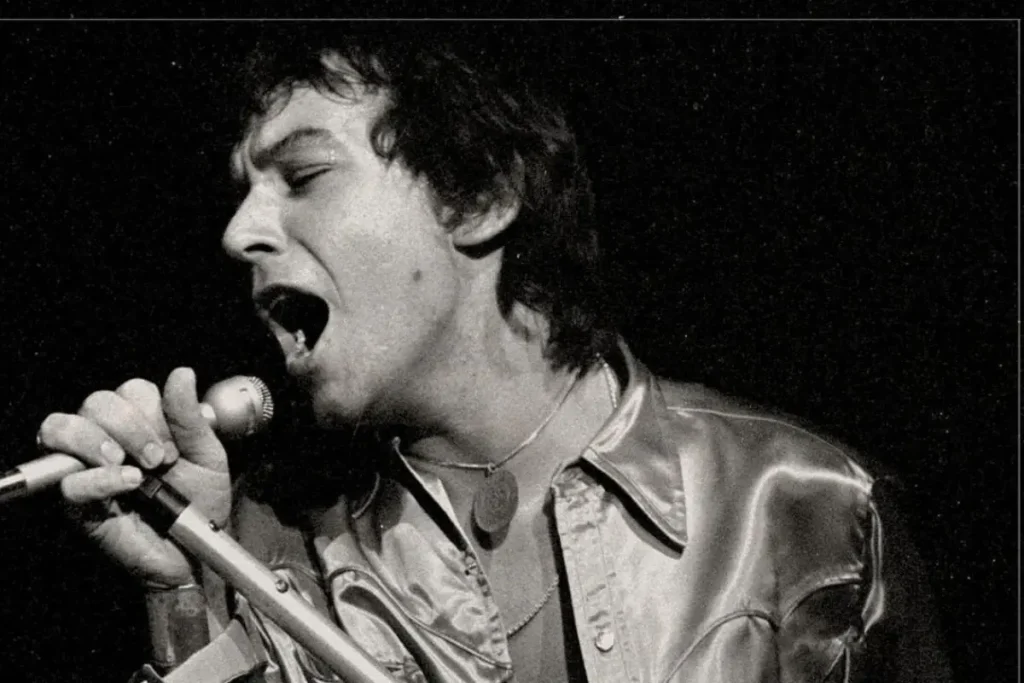
Eric Burdon never bought the idea that a fleet of matching-suit British bands “stormed” America with a master plan. He called it a media basket, a catchphrase that blurred the messy truth: young working-class musicians obsessed with Black American blues and R&B found a way out, and the U.S. got its own musical DNA thrown back at it with fresh heat.
“We always laughed at the notion of a British Invasion, simply because it was just a catchphrase that Walter Cronkite, America’s number-one anchorman at CBS, coined to put us all in one basket.”
Eric Burdon (interview excerpt)
Whether or not Cronkite literally “coined” the phrase is hard to prove cleanly without the original broadcast transcript. Burdon’s bigger point still lands: the label is less a musical movement than a headline that made a complicated cultural exchange easier to sell.
The British Invasion: useful lie, sloppy truth
“British Invasion” works as a shorthand for the wave of U.K. acts that broke big in the U.S. in the mid-1960s, igniting a pop-cultural earthquake and reshaping radio and youth identity. The trouble is that shorthand flattens the differences between bands, scenes, and motives into one dramatic story arc.
The term implies strategy: as if managers drew up invasion maps and labels coordinated a takeover. In reality, it was a collision of timing, television, transatlantic touring, and a generation hungry for something sharper than the teen-idol gloss that dominated parts of early-60s pop.
Even the “British” part gets fuzzy. Many of the core sounds were American: Chicago blues, Delta blues, gospel, New Orleans R&B, rockabilly. The U.K. contribution was not invention so much as reinterpretation, amplification, and re-export.
Why Eric Burdon’s take matters (and why it irritates people)
Burdon’s view can sound provocative because it steals a sacred trophy: the idea that Britain “saved” rock. Fans love that myth because it gives a clean hero narrative, and it flatters the idea of cultural superiority.
But Burdon’s framing is closer to how musicians talk when the cameras are off. It’s less empire-building and more obsession: chasing records, copying phrases, swapping licks, trying to sound like the people who moved you.
It also centers something the “invasion” story often sidelines: the Black American innovators whose work was the foundation. Burdon didn’t pretend The Animals invented the blues. He treated the U.S. as the source and the destination: the place where the music was born, and the place it had to be heard again with full volume.
From Newcastle to the world: “a ticket out” is not a metaphor
Burdon’s line about a “ticket out of Newcastle” is the most revealing part of the quote. The British Invasion wasn’t just sonic. It was class mobility with guitar strings.
In postwar Britain, many artists came from industrial cities with limited prospects. A U.S. tour meant dollars, status, and a sense of stepping into the mythology of American music. For bands like The Animals, the journey was both pilgrimage and escape.
The Animals also carried a specific regional bite. Newcastle’s R&B scene wasn’t the same as London’s, and Burdon’s voice came with grit, not polish. That rasp is part of why their records still feel dangerous: he sounds like he’s testifying, not entertaining.
The Animals as a case study: not cute, not clean, not “invasion-core”
If you want to understand why “British Invasion” is too neat, put The Animals next to, say, Herman’s Hermits. Both count as invasion-era success, but they don’t belong in the same musical sentence.
The Animals’ breakthrough material leaned hard into American folk-blues and R&B structures, often drenched in minor-key drama and organ-driven intensity. The group’s legacy is formally recognized by the 1994 Rock & Roll Hall of Fame induction.
“House of the Rising Sun” and the uncomfortable truth about folk songs
“House of the Rising Sun” is a perfect example of the transatlantic loop Burdon describes. It’s an American folk song with a long, shifting history. The Animals didn’t write it; they electrified it, arranged it into a hit format, and made it unavoidable.
That’s the pattern, and it raises the edgy question people still fight about: is that revival, appropriation, or translation? The honest answer is that it can be all three, depending on who profits and who gets credited.
To grasp how old and adaptable American repertoire can be, it helps to look at institutions that document these recordings and their contexts. The National Jukebox’s preserved American sound history frames early recordings as part of a curated archive built from commercial discs and cultural collecting.
Traditional and folk recordings preserved by Smithsonian Folkways, meanwhile, provide a public-facing gateway into the material that shaped what later became “rock” vocabulary.
The “sympathetic relationship”: Britain didn’t steal the blues, it spotlighted it
Burdon’s most generous claim is also the most challenging: that British bands helped Americans hear what was being created “in their own backyard.” That sounds flattering, but it carries an indictment: why did it take British kids to validate Black American music for mainstream U.S. audiences?
Part of the answer is structural racism in the U.S. music business and media, which repeatedly under-promoted or underpaid Black artists while eagerly monetizing their sounds through white performers. Another part is the fragmentation of American radio and touring circuits at the time, which could make a great artist locally revered but nationally underexposed.
This is where Burdon’s “return” idea becomes useful. The U.K. scene functioned like an amplifier: imported records became sacred texts, bands formed around them, and then those bands came back to U.S. television and arenas with the volume turned up.

Did Walter Cronkite really “coin” the phrase?
Burdon pins the catchphrase on Walter Cronkite to make a point about media framing. Cronkite’s cultural authority is real: he became the defining face of network news for millions of Americans. PBS’s American Experience archive of major American figures and eras captures the kind of media landscape that helped create – and cement – phrases like this.
But the exact authorship of “British Invasion” is murkier than the quote suggests. Media phrases often emerge in multiple places at once, then get cemented when a high-profile broadcaster repeats them. In other words: Burdon’s assignment of credit may be more symbolic than literal.
What matters is the effect of the phrase. It packaged artists into a single export product and encouraged the U.S. audience to consume a “movement” rather than individual records, scenes, and roots.
The real invasion: television, touring, and the American attention economy
“British Invasion” is as much about distribution as it is about music. Once U.S. television and major radio stations decided this story was exciting, the wave became self-fulfilling.
That doesn’t mean it was fake. It means it was accelerated by gatekeepers and momentum. A band could be excellent for years in U.K. clubs and still remain unknown in the U.S. until a single booking, broadcast, or tour slot detonated everything.
Public broadcasters and cultural outlets have repeatedly revisited how mass media made that mid-60s “wave” visible. Minnesota Public Radio’s The Current, for example, revisits the British Invasion as a turning point in pop consciousness rather than a literal military metaphor.
What the British Invasion erased: regional scenes and Black originators
The invasion storyline tends to erase two things at once:
- Regional British scenes (Newcastle vs Liverpool vs London) that shaped how bands played and what they valued.
- Black American originators whose innovations were often filtered through safer, more marketable faces.
That double-erasure is why Burdon’s framing can feel refreshing. He refuses the tidy nationalism of the term. He points back to the blues, to jazz, to rock and roll’s American origins, and he positions the U.K. bands as passionate messengers, not conquering heroes.
A practical listening exercise: hear the “return to sender” effect
If you want to hear Burdon’s argument instead of just reading it, do this in one sitting:
- Play an early American blues or folk recording (seek out Smithsonian Folkways or Library of Congress references).
- Play The Animals’ “House of the Rising Sun.”
- Then play a later American rock record influenced by British blues-rock (late 60s into early 70s).
You’ll notice a loop: American roots – British intensity and packaging – American re-adoption with bigger budgets and bigger stages.

So was it a “musical renaissance” or a marketing campaign?
Both. Burdon is right that “British Invasion” is partly a media label, and labels can be cynical. But he’s also right that the moment opened minds, erased some barriers, and escalated awareness.
The edgy takeaway is this: the British Invasion wasn’t Britain beating America at its own game. It was America realizing it had neglected a part of itself, and needing an external mirror to see it clearly.
| Myth | What actually happened |
|---|---|
| British bands invented rock again | They fused American roots with U.K. scene energy and re-exported it at scale |
| There was a coordinated “invasion” | Media packaging + touring + TV exposure created a wave effect |
| The label describes a single sound | It covers wildly different styles, from pop to hard R&B and blues-rock |
| It was purely about music | It was also about class mobility, race, and American gatekeeping |
Where Burdon lands: gratitude, not conquest
Burdon’s most human line is that they were “thrilled to be in the land where jazz, blues and rock ‘n roll were born.” That’s not the voice of an invader. That’s a fan who got through the door.
And that’s the best way to use the “British Invasion” story today: keep the excitement, ditch the conquest fantasy, and follow the sound back to its sources.
Conclusion: The British Invasion was real as an outcome, but misleading as a concept. Eric Burdon’s perspective cuts through the propaganda: it wasn’t a plot, it was a feedback loop – and once you hear it that way, rock history suddenly makes more sense.